Ukraine: Remember Also Me

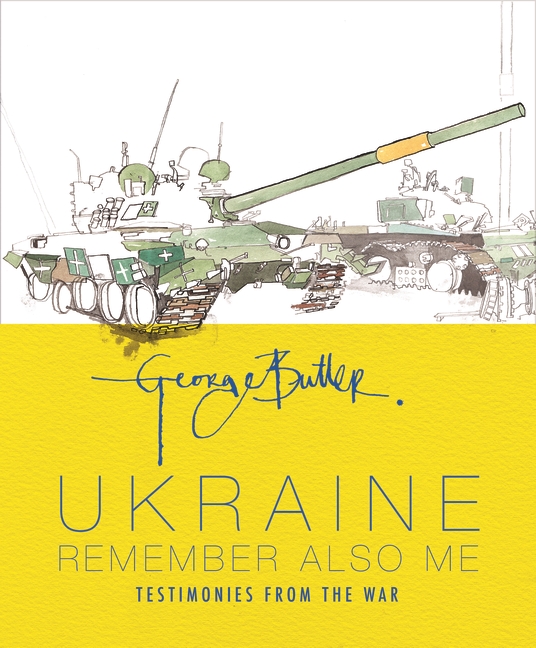
It happens sometimes that I receive a book for review that, for whatever reason, I might love but I hesitate over the audience. One of my go to examples, though I didn’t receive a review copy, I simply bought it repeatedly, enthusiastically, and of my own free will, is A Child of Books. I have no idea what age of child that book was for, lovely as it is. But this book, Ukraine: Remember Also Me, by George Butler (to be released October 1, 2024) strikes me as never having been for a child, though published by Walker in the UK and Candlewick in the USA. To be clear: I do not criticize the publishers or the author-illustrator, George Butler, on this point. The book is clear and succinct, crisp in its diction, unflinching in its text and art. These are all good traits for a YA text. But all of those characteristics are also good for A without the Y. This is part of a bigger conversation about the puzzling categorization of books by age– but also about what we’re willing to publish for whom.

I have not seen a really good book like this for adults, and, frankly, I’m not in the least disappointed in Candlewick or Walker for publishing it for kids, I’m grateful they did; I’m irritated that I haven’t seen this for adults. Or much else, really. I recall early in the war, as Putin’s Russia invaded Ukraine– I remember watching the panicked news coverage and sharing with friends the stupefied feeling that “you can’t just do that anymore… can you?” Of course, the fact is that Putin was doing it, but we all knew it was wrong. And the stories of real people collected in this book indicate that a whole lot has happened to real people there while many of us stopped paying attention in a stupefied panic because we had things that we needed to do, and a whole lot of that was also worthy of the response “you can’t just do that, that’s wrong.” But, on the whole, while diplomatic efforts in the USA have not ceased, the public attention has waned, considerably.

And, no, I have not seen much of what’s in this book elsewhere, even though I do try to keep up with the news from Ukraine, and I’m frankly concerned that this excellent, necessary book, being on a children’s list, which means adults are doing the buying with children in mind rather than with adults in mind– and we’re so careful about what we buy for kids, we clodderheaded adults!– well, it makes me concerned that adults aren’t going to buy this for themselves or for other adults. And, if we’re grimly honest, it’s we clodderheaded adults, we who can’t keep focus on a major, autocratic power invading a neighbouring democracy (speaking as a Canadian and American, I will note that Ukraine is a very important ally, as well), we just can’t do it.

And, maybe, just maybe, if we look at the stories of real people who have suffered brutally from serious war crimes over there, and if we can recall the dangers of the loss of democratic rights, we’ll pay a little more attention.

Yes, I understand that there is always a lot to pay attention to in the world. I, too, have a massive laundry problem and my kitchen will not stay clean. I homeschool one child and the other child is a bundle of energy, ballet, and “reactive airways.” And the world is so very full of problems. How can we care about them all? What, after all, can we do but see what’s in front os us right now?

The answer is simple: Everything is very complicated and none of us will ever do everything right. Nonsense! When did we ever start to expect perfection, simplicity, and completeness? I am a Jew, and I recognize full well that I will never fully understand the words of the Torah I strive to adhere to. I am an academic, and I still find myself puzzling over the same texts which form the basis of my PhD dissertation. I am a mother, and my children surprise me daily with ingredients I’m damned sure I didn’t put into them even though I gave birth to them and have raised them ever since. Why should we expect to be able to understand or solve every problem?

But I want to point out something from George Butler’s Introduction which I highly doubt was intentional, yet struck me with enormous force. “However,” he writes, “the themes are not specific to Ukraine. […] These are experiences shared by others I have met in Gaza and Syria, Yemen and Myanmar.” NB: before anyone shouts, George Butler was in Gaza in 2016, and I’m presuming he’s referring to that time. And, as I write that, I have to smile at the twist here– I already anticipate within that sentence that Ukraine will fade from readers’ notice, readers who are adults not children, because the word “Gaza” appeared. And I didn’t in the least want to bring that up– I wanted to point out that something else in there is interesting. He lists countries and conflicts, but the country name not mentioned is Russia. And yet Russia has a hand in all of those bloody conflicts, whether directly or in allyship with Iran. In that list, in those areas where Russia is quite interested, destabilization of democracy is the baseline, and a leitmotif is brutality.

No, I’m not here to write about how we should all hate Russia, cancel Russians, or throw out Russian art. I have zero interest in any of that. All I am noting is that by sheer power of distraction, of allowing our attention to be misdirected and our focus to be swerved, we can miss a lot of context, lose track of the themes, and, worst of all, forget our own humanity and that of others. By way of illustration, let me share one of the stories in this volume.

In Bucha, a horrific scene took place with many civilians killed in the streets or even shot through windows if movement was seen, and this story is of Mariia (age 76) and her son Oleksandr (51). Mariia’s other son, Oleksandr’s brother, Dima, was killed on his own doorstep. Initially they didn’t dare bring his body in to be cleaned and then buried, lest they also be killed, and then the people hiding in their basement begged them to leave the body there because a dead body outside was protection; the Russian soldiers saw it and didn’t go check for other people to kill. “Dima was a sacrifice and he protected them,” Mariia said.

A few days later, when the situation was calmer and it was safer to walk out, they took him in to be cleaned and then asked for permission to bury him. One helped Mariia dig the grave. Oleksandr: “Mariia spoke to them but I refused to talk to them.”

Mariia said, “There was only one of the Russian soldiers who talked to the people here. He was a young man from Siberia, which is far from here. He answered our questions. He said that he hadn’t known they were coming to Ukraine, to the war, but he thought that they were going to military training. He seemed surprised. But people asked him, ‘Did you see how many people you killed? This is not training.’ And he just didn’t respond.”

An imagination is a curse, and clear and cogent reporting is unquenchable. George Butler’s art speaks more than a photograph can, and these words straight from a mother and a brother say yet more. I can see, as I read, as I look at the art, the people and their loss. And I can see, too, the young Siberian soldier, confused and, as I imagine it, only beginning to realize the level of trauma he’s going to have to live with for the entire rest of his life, trauma stemming from the undeniable knowledge of what he’s done, of the trauma he’s inflicted on others.

And I wonder, again, why this is a children’s book, YA? And I think it’s far too complex for we clodderheaded adults and we’re too scared to face it. Only children’s publishers, Walker and Candlewick, had the courage. All I can hope is that, if you’re an adult who read this far, I may have persuaded you, challenged you, to read it and share it with other adults.

Round and Round the Year We Go

Years and years ago, when I was young and the first universities were burgeoning in Paris necessitating the development of the first form of mass manuscript production, called the pecia system– my very, very dear friend got married to a lovely man and, even though the wedding was on a Saturday and I, being Jewish, wasn’t to be relied on as a bridesmaid, she made me an honorary bridesmaid, including me in everything, because she’s wonderful like that. And as an honorary bridesmaid gift she gave me a copy of Elizabeth Zimmerman’s The Knitter’s Almanac, a beautiful book, and meaningful because she was the friend who taught me to knit. And in that book, that treats the knitter’s year as a Round and Round in its own right, it says of September that “September is the logical beginning of the year.”

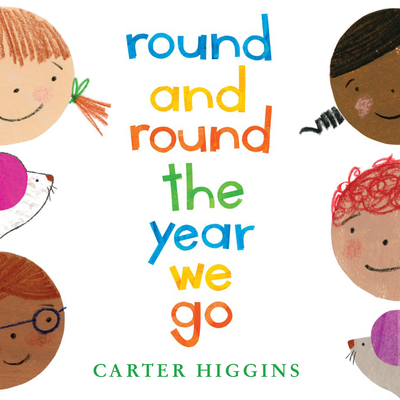
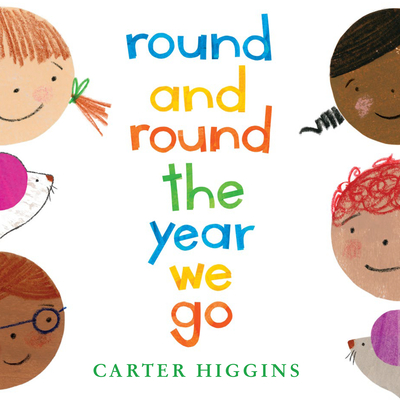
So, even though Carter Higgins’s new book, Round and Round the Year We Go, as logic dictates, begins in January and ends in December, it feels logical to me that it’s out in September, with an event this Friday, September 20 at Politics and Prose in DC– go go go if you’re in the area! And if you’re not in the area, you can do what I did and pre-order a signed copy here. And do I recommend that? Yes, I absolutely do, because that would make your little munchkin a lovely gift. It would also, by the way, make any pre-school or kindergarten teacher really, really happy for a beginning of school “thank you for getting this year off to a good start” gift, if you want to send them over the moon, or, if you’re the planning ahead sort? This is an ideal end of semester gift, something they might really use when starting back up in January. Just saying.

But it feels perfect, somehow, to see it out in September. It’s logical, perfect, and intuitive. As intuitive as each page in the book, as each turn of phrase or art.

I think my Spriggan has really grown up with a Carter Higgins book for each stage of his life. First, we got Circle Under Berry, a lovely rhythmic book that feels like you’re moving coloured block shapes or cutouts into patterns and chatting about them with your munchkin, except the book does it in a way that grows increasingly dynamic, fun, and clever, to both of you at the same time, inspiring giggles and chat along the way. The text is both conversational and lilting– perfect line flowing after perfect line with each page turn. I wondered how Some of These Are Snails would follow that act, and it somehow did, climbing in terms of what the cognitively developing toddler could handle, but without sacrificing the simplicity of form from Circle Under Berry.

Now, my Spriggan has colours under his belt, and is a fan of shapes– but tenses and time are the new puzzle. What, exactly, does “yesterday” mean and what do those names of months mean? What’s a January? It feels like only a month ago that “yesterday” was “any time in the past, generally” and “tomorrow” was “at some point in the future.” Now, in the past week or so, we’ve made another leap: “Once upon a time” refers to the far, far distant past, when once upon a time he had actual marshmallows to eat, oh those halcyon days of yore! Whereas “yesterday” is the more immediate past, when he was at daycare and was playing in the tent with his friends.

And, once again, Carter Higgins hit the nail on the head in terms of the right voice, the playful simplicity of shape and form, for this age. Some things are different: we see children playing in the illustrations, and instead of the lilting prose we have real poetry. But, still, she’s somehow keeping perfectly in synch with my Spriggan’s cognitive development (no, I do not think that’s actually on her work calendar, it’s just serendipity, but let me have this moment of glee): this is the next book his conceptual mind wanted.

But, oh my readers, oh my friends, this is what I want to tell you about this book, so hear me, hear me clearly: The poetry in this book is actually good. I anticipate that people who look at the book instead of finding the nearest kid and reading to them may be confused since the layout of the text doesn’t give away a dull iambic stanza form. It’s creative in its simplicity, like all of her wonderful books. So this book is not for a flip through in the shop, and not for a silent read; it’s for a lap or a classroom, and for that it’s ideal. As soon as a kid giggles, interrupts to repeat words or syllables after you, or excitedly tells you about what they’re going to do for Hallowe’en? The book will immediately become a favourite to you. That’s when you know you’ve got the pre-school/kindergarten hit.

And it’s oh so perfectly logical in art and text– read this out loud:

maybe hazy
maybe hot
maybe chilly
maybe not

Do you hear it? Do you? Trochaic dimeter, where the second and fourth lines, rhyming, are catalectic, meaning that the unstressed foot has been dropped to give it an extra bit of force? Oh, it’s beautiful, beautiful! The overuse of the iamb in children’s books is going to be the topic of my rant to be published in The Atlantic on the first page as soon as I can get the laundry under control and write it up. The title will be this: METRE MATTERS

Rhyme is secondary, in a kid’s book, to metre, but it is not unimportant. And what you’ll notice in Round and Round the Year We Go is that for each month the form of the rhyme shifts, because, and I didn’t quite pick up on this one until I inadvertently bothered the editor of the book (who was super sweet about me thinking I’d written to Carter Higgins, who is just the loveliest person, but I had not and was very embarrassed to be badgering a person I’d never spoken to before!), and she mentioned that they’d worked on basing the rhyme around assonance with the name of the month. A fascinating concept! It gives each month a distinct form, of course, because each month’s name varies in syllabic and accentual construction, of course– January vs May. Yes, that’s all very technical, and I highly doubt that Carter Higgins was pacing her study muttering “Auuu-gust, Auuu-gust… A trochee, after the iambic Ju-LY! But the key will be a short o sound…” And yet, not only did she do that (not just short o, also a short i– I would never have thought of that, but it works brilliantly)– but she seems to have realized that by cleverly dodging a strict rhyme and adhering to a combination of assonance and metre, she could get to the heart of August best… through some delightfully, playfully grouchy superlatives: longest, hottest, and the delicious coinage wrongest. They aren’t really, strictly, perfectly rhyming, but they feel like double rhymes, they do, and the vocalic echoes and the added nasal element of “ng” evoke the dull, sticky dregs of August in a way I’ve never seen done elsewhere.

I am utterly delighted with this book. So is the Spriggan, giggling and jabbing a finger at each page, chatting with the seasons and feeling the turn of the year in his mind and on his tongue as he develops a sense of his place in the cycle of the seasons.

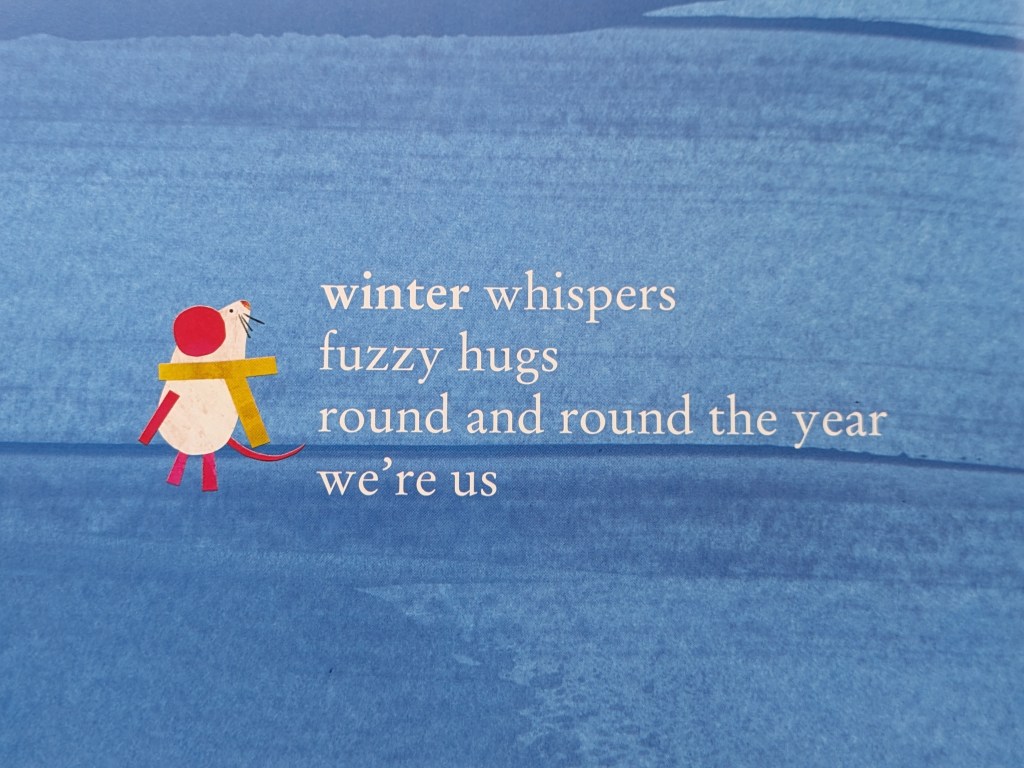
Oh, and did I mention the mouse? I didn’t? Oh– I will leave you only with this, and with a strict injunction to get yourself a copy, or request it from your library, before…

Elisha Cooper: Simple praises

Note that all links to Elisha Cooper’s books below will be to signed copies available at the Eric Carle Museum book shop, both because that place is lovely and because his signed copies are just so very lovely. He often doodles.

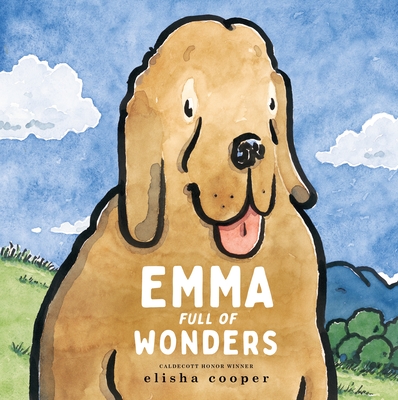
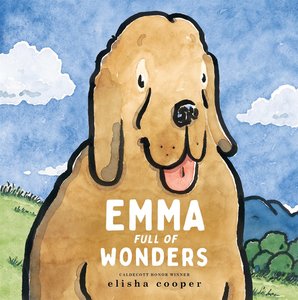
I’ve been wanting to write a review of Emma Full of Wonders since it was released, at the very least. Actually, I knew I’d want to review it before it was released, even though I hadn’t seen it. Elisha Cooper is that kind of writer, that kind of artist, that kind of creator. And, really, that kind of human being. The man sent me a postcard for Emma Full of Wonders even though (and I’m not fishing here, I’m not much for any outdoor sports) I’m not the kind of reviewer you need to woo for a book’s success. He’s simply that kind of person; the kind who, even though I’ve never met him in person, has impressed me with his humanity.

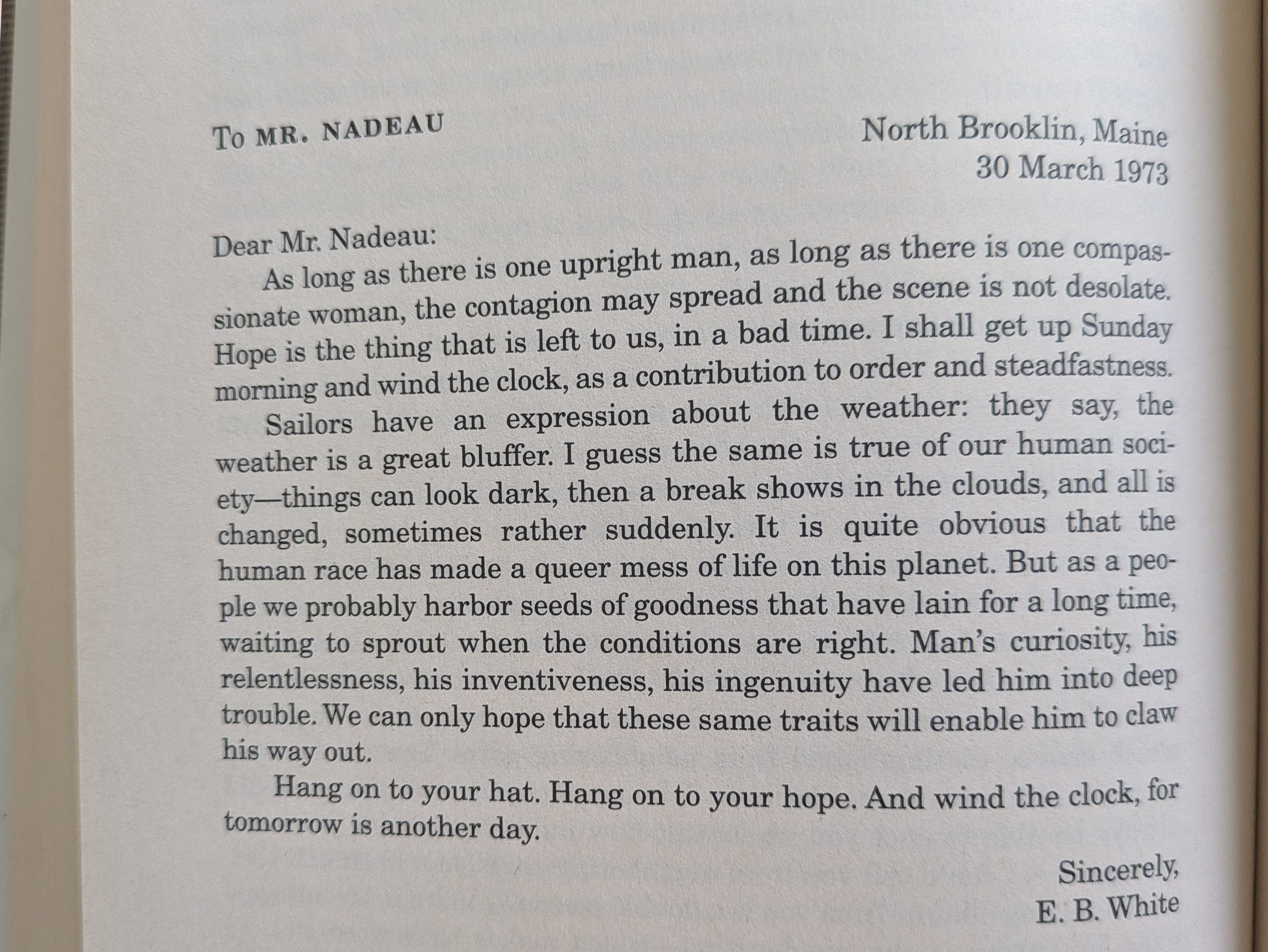
Now, I’ve been reading, in a desultory kind of way, The Letters of E.B. White, and since the Spriggan is on a passionate quest to get me to read every book by Elisha Cooper until the words and images are mutually imprinted on our inner landscapes in indelible lines and watercolours (I have no objection), I wondered whether my association of the two was just me, or have others noticed it, too? A Google search revealed, first, the true reason why I haven’t reviewed Emma Full of Wonders quite yet: Betsy Bird’s interview honestly does everything I may have wanted to. She’s so wonderful as an interviewer and reviewer I just think we’re lucky to have her. And then it turned out the mention of E.B. White Google was handing to me– was Elisha Cooper sharing a quote from him. I can’t find an older and wiser reviewer making the association, so it may all be in my head, but there it is.

And yet I still think there’s a writerly kinship there. At first I thought it was the succinctness of language, “Never a word wasted,” I said, either to my husband or myself. I did so much muttering I can’t recall what I said to whom. Then my mind brought up the much-referenced line from Strunk and, of course, White, regarding omitting or cutting or– well. Excising, in some sense, unnecessary words. As my own mind searched for le mot juste, it hit me, after quite enough years of doing my own writing that I ought to have thought this through earlier– trying to figure out what’s necessary and what’s unnecessary can be a bit of a headache, can’t it? And depends on the author and the work. And if that work is an illustrated picture book, the game changes.

It is not, simply, that Elisha Cooper, like E.B. White, is concise. There are plenty of short picture books which, at very few words, still contain many unnecessary words. Nor is it that each of these two authors takes a strong interest in the natural world. I believe the kinship between them is that each of them is keenly and sympathetically observant, relentlessly honest, and has a knack for and passionate, but quietly displayed, interest in sharing the observations of a world they see with accuracy and justness. I see this in every single picture book by Elisha Cooper I have read.

I can’t emphasize too strongly how much that means to me as a reader: I have not read a book by him which lacks sensitivity, keen observation, and a dedication to sharing those observations with honesty and sympathy.

This is a year, for me, in which I have seen more of death (and anticipate still more) than I would really like. So in reading Big Cat, little cat with my Spriggan, I was hit full force by the quietness and simple honesty of the page in which the older cat is gone: “And that was hard.” I don’t think I’ve had as full and honest a recognition of the pain of missing someone as is in that page. And it was four words and a cat. With it came the sense that he’d been there. He knew cats, and he’d seen it, and he knew people and he’d been there. And you could feel all of that in four lines and one cat on the page and one cat off. It’s a kind of magic, where he whittled away and got to the raw heart and said, “Yep, here it is. And it’s hard. It simply is.” And put that on the page.

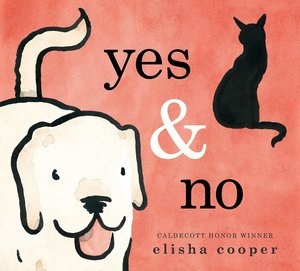
Of course, it’s not all pain! Yes & No has never failed to make every kid I read it with giggle, whether I read it in English or French. And most of the words are “yes” and “no.” There, the simplicity is in the art, and oh the full landscape pages. Oh the beauty. The nuance of a relationship– I defy you, flipping through, not to see your own relationships unfurling on those meandering paths of dog and cat. The words ebb, utterly unnecessary indeed, as the paintbrush flickers into vivid dynamics of sound and scent and the rush of a breeze across a field. Part of me, absurdly, felt that maybe I could just tumble through the page…

Of course, every variety of experience comes together in Emma Full of Wonders. Childbirth, historically and today, carries much of the weight of death alongside new life. It’s a time of pain and danger, anticipation and joy. No wonder Emma is full of so much sensation. So much sparkling wish and so many big feelings. I was quietly relieved, seeing the helping hands as she gave birth, to know that she had loving and helpful attendants to see her through.

But the thing is this: through this entire post, you hear me relating and projecting my mind and feelings through the animal characters. I think every reader, child and adult, even as we bounce out and say, “Oh! What a cute cat! We should get a cat, you know. Yes, I know we already have four…!” (for example) will also find themselves relating to the experiences of the animals in the pages. And yet– Elisha Cooper is not doing that for you.

“A lesser author would– ” is a line that’s kept playing through my mind as we’ve been, as I said, doing a lot of Elisha Cooper reading these days. The animals are adorable, for example, but the books are never cute. Emma’s puppies are the sweetest little balls of energetic joy I’ve seen and I have four cats in my house and know how to look for kitten videos on the internet. But the pared lines of the book hew to the experience of the oddness and responsibility and beauty of bringing new life, of pregnancy and childbirth, not the cuteness of babies. He shows the first puppy coming out of the dog’s vagina. Full in the middle of the page. “Daaang, he went there,” I thought in admiration. [Ensuing sentence excised for being too mean about the tendency of parents to be so blasted restrictive– oh. I’m doing it again.] I love cute animals, cute kids. I do not like cuteness. Especially in books. Children are adorable, of course. But the genius of Gyo Fujikawa’s adorable kids, for example, is how relentlessly real they are, sticky with jam, cranky and overtired, and covered in paint. These books are relentlessly real.

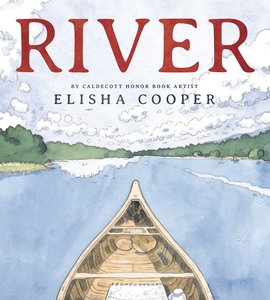
That is, I think, something that E.B. White, a careful observer of humans and animals and places, would recognize in these books. It is where the two meet, for me. Reading his letters, I found myself seeing and hearing New York, seeing and hearing Maine, seeing and hearing people– all in phrases of maybe as many as three to six words: of his little son “your tumultuous little Joe,” or of his wife “the person to whom I return,” or wistfully wishing his son were with him to hear “the lovemaking of the frogs.” I swear I could remember a letter where he joked about how he’ll take his canoe down the Hudson into New York, though of course now I can’t find it! But it brought River instantly to mind.

And then there’s the matter of pure philosophy. Because here’s the thing: I can talk about the writer’s craft, and being concise, and hewing to a point. And I can talk about what a writer might have to say. But then there’s the two together. Farm is a book that more or less pins it. The book is a whopping 18 years old, being published in 2006, [Ed. Incorrect, and I can’t believe I made such a silly mistake– the book was published in 2010, 14 years ago.] so in publishing terms it’s basically antique, but I defy all conventions! I will talk about old books!

The book starts out feeling like it might only be showing off what a farm is. (Precisely how many books of cartoony farm images showing sweet-tempered sheep and goats are out there, now? Too many.) And then we get the introductions to the animals, and the short, clipped phrases give me a feel for the rough boards of a fence and the muck on my shoes even though neither are mentioned. “Cats can look after themselves,” the invisible narrative guide says drily, as we, I imagine, walk along rough ground, leaning on rough fences.

“A lesser author would–” go into those spunky and independent cats, though. Or the cows: “What are they thinking? Are they dreaming? Who knows. They think their own thoughts.” And on we go. Impressively, for a picture book about a farm, a field (hah) so filled with horrifically saccharine books, all of which are so intrusive into the poor animals’ inner lives, giving them never a moment of privacy, the cows are left to their own thoughts, undisturbed. Until, later, they’re “sent to market.” Bye, cows. I loved, maybe, most of all the descriptions of weather. There is a storm– “And then it is over. The corn all bends in one direction as if to say, The storm went that way.” And at the very beginning of the book, we’re told that “weather must be dry for tilling. The farmer will have to wait. Weather can’t be fixed.”

The book is intensely full of challenges. There is no runt piglet about to be killed, but, honestly, there could so easily have been. There is life and death (a disappearing rooster, chipmunks, and more) and delay and the price of crops. Keen observation, the humming of life, the rhythm of reality, and muck, and beautiful views of a big sky and vast fields, and vaster questions. Clipped phrases let us into this world, so far from concrete suburban walls, with questions rumbling under tractor wheels and through named roosters and unnamed hens. Why aren’t you named, hens? What are you thinking, cows?

Elisha Cooper, like E.B. White, shows us. He lets us know he cares, that he sees with acuity and loves these creatures and fields and rivers with a passion, but he is not telling us what to think. He only wants to let us in, and he succeeds, beautifully. Looking with unguarded awe at a field with a cat and a dog ambling along, absurdly, for just a moment… I think I can go in.

Never Wait to Cherish a Life

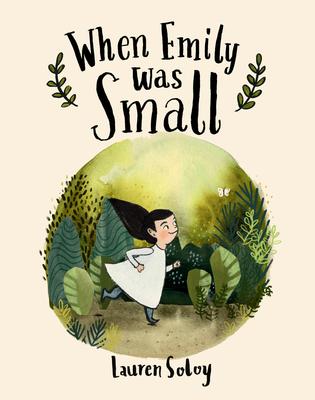
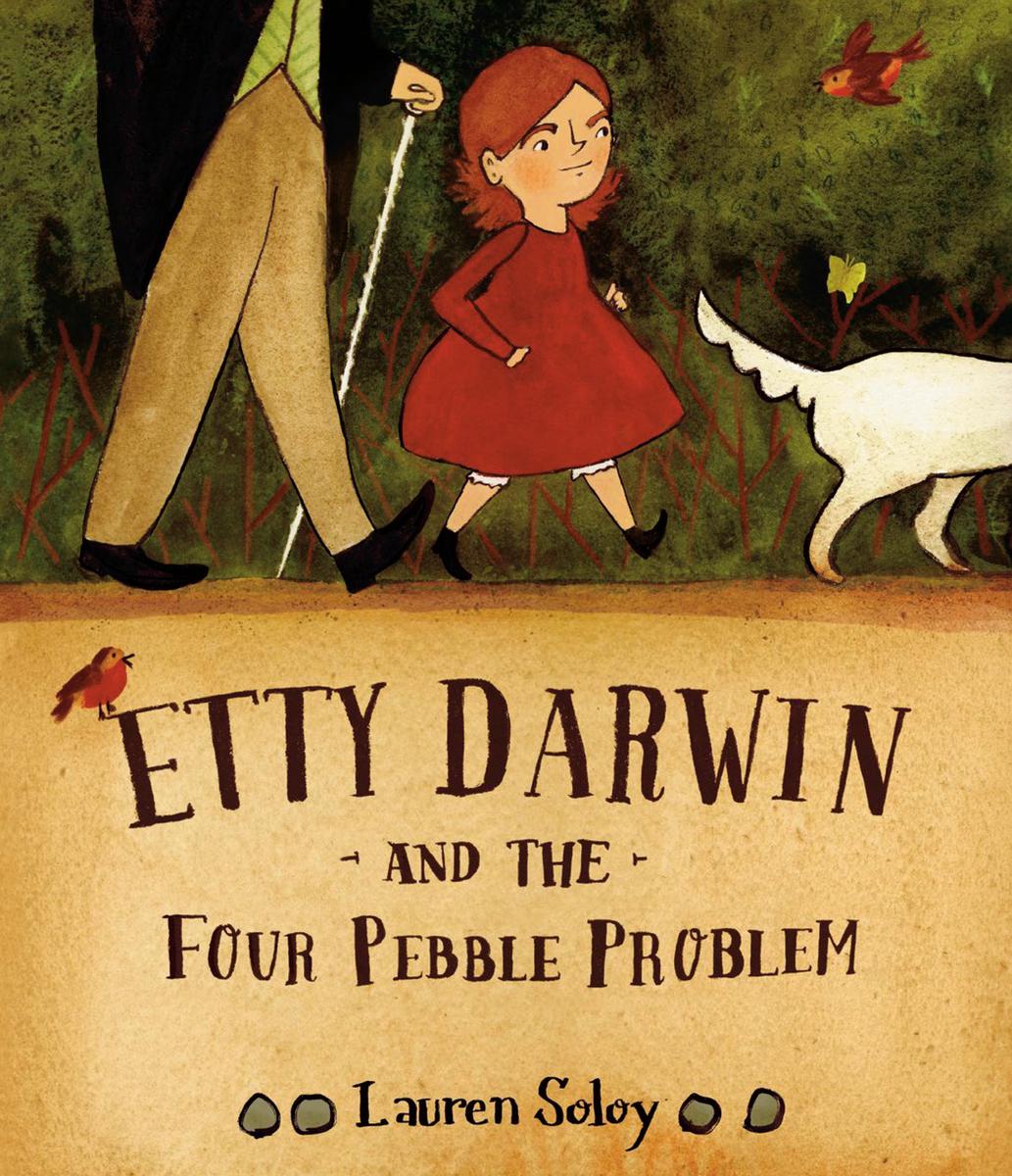
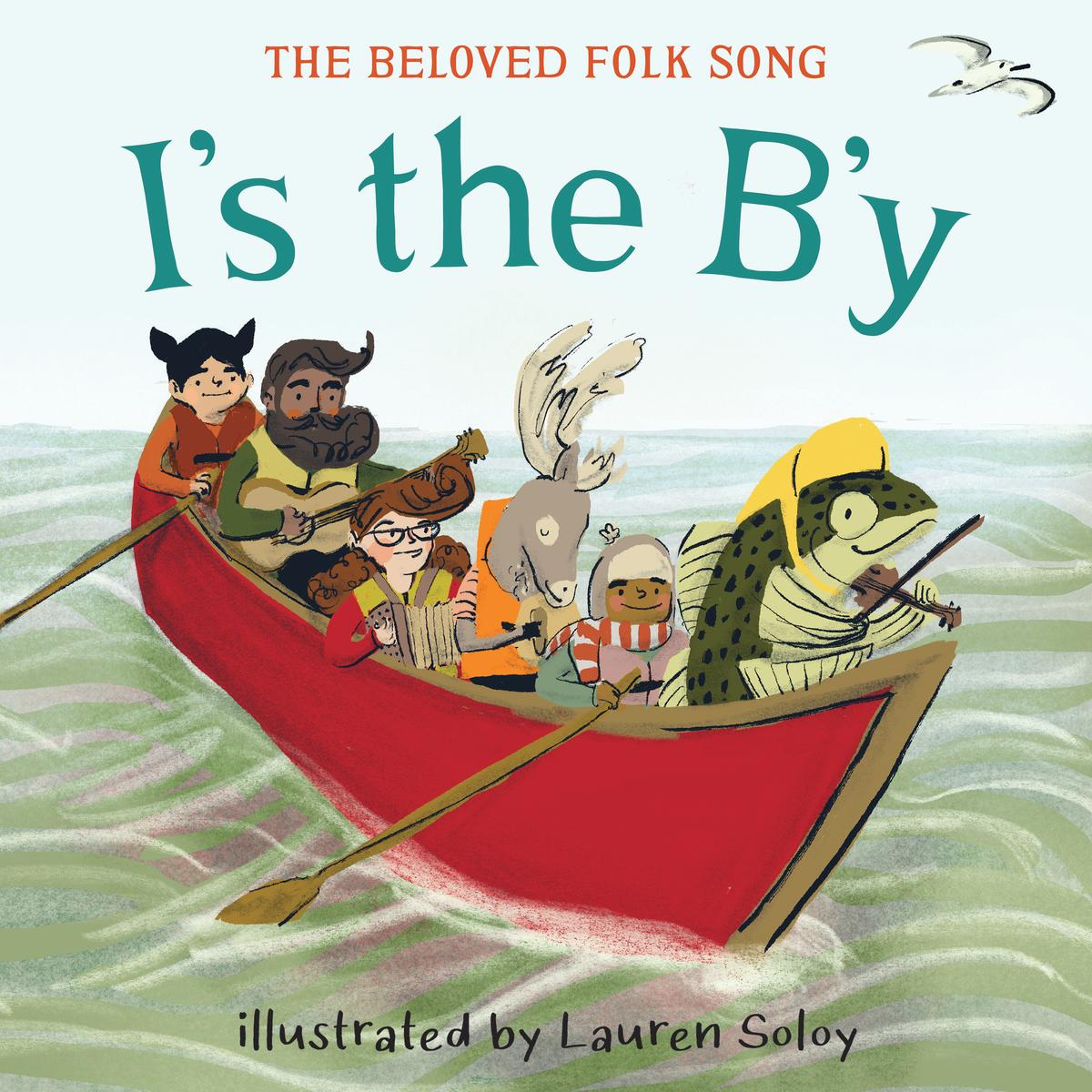
I have written about Lauren Soloy before, though I could never write enough. I wrote about the first book of hers I knew and loved, When Emily Was Small, and about Etty Darwin and the Four Pebble Problem (I still think that’s a stupendous title), and about her illustrated version of the glorious I’s the B’y, and about The Hidden World of Gnomes. I could share her beautiful books forever– because the fact is that you’re not going to go wrong with a book she’s touched. Art and writing are always right out of her, and what she creates comes from her soul and from her skill, joined.

But I don’t think I’ve ever written in praise of Lauren. It’s an occupational hazard of talking about books: if you say nice things about the creator as a person, well, maybe that’s going to undercut what you say about the book because everyone knows that if you like a person you’ll never criticize them, right?

It’s a stupid line of thought and I’ll stop right there.

Never wait to cherish a life, I titled this, and for a reason.

It was around the first time I was chatting online with Lauren, and praising her work, that I learned she was recovering very well from, and, everyone thought, had really overcome, a round of fairly early cancer. I was very quietly happy and thrilled to watch her strength and work building back up: always exploring, posting new illustrations, often small and always vivid, of trees or flowers, and suddenly these little acorn-looking people, making me hope for gnomes… thank Lord we got those delightful gnomes! Giving those gnomes a shape and a space was the kind of lovely thing that’s distinctively “Lauren” in my eyes.

And then came the time I was hoping for, most of all: we were going to Canada, going to Newfoundland– maybe I could meet her in Nova Scotia! Long story short: we didn’t meet, it just didn’t work, and I will never not regret that. (I could say, “I should have…” but I don’t think Lauren would like that.) And, another regret, even though I nearly bought the delightful Woozles out of stock of her books, I never did post my roundup of Canadian bookshops from that trip! I still hope to. I still have the pictures. Why did I ever wait?

And now Lauren’s cancer is back, Stage 4, and hopes for “but we’ll go back– I’ll see her next time,” are in the “unlikely in the extreme” category of life plans. But here’s the thing. I could very easily, being who I am, be really angry with myself about that. Self-recrimination is part of me. But the part of me that’s thinking of Lauren rather than myself won’t let me cast blame because that’s just not how Lauren works.

And even if I’ve never met her in person, and even if I hadn’t had the lovely gift of correspondence with her, I’d still know that from her books. So why separate praise of the book from praise of the person?

Yes, yes, works have a life beyond their author, but they “do contain a potency of life in them to be as active as that soul was whose progeny they are,” says my boy John Milton, and I’ve learned a lot from Lauren’s soul, beautiful both in her and in her books. And the books are so deeply reflective of something right in her soul and spirit, so far as I’ve been able to come to know her through our chats.

Lauren doesn’t put herself forward, but she is honest. Her books are gentle enough to pass muster with the adult guardians whose hands the books must pass through to reach the real readers– kids. And yet they are direct and uncondescending. She deals with hard things. Emily Carr had a tough childhood and she doesn’t disguise that at all. Charles Darwin is a listening father, but he made mistakes. “I’s the B’y” is something else books often disguise but Lauren refuses to: joy. Every one of those elements is something adults can find really hard to grasp. We shy away from the hard stuff, sadness and anger and joy, so very often. Lauren looks it in the eye and puts it into her books.

What a gift– a gift to be cherished.

I’m reminding myself of these things now. Things can be hard and beautiful and wild at the same time, as in When Emily Was Small. You can be a good parent and make mistakes. And don’t fail to grasp joy with both hands!

And every little personality in The Hidden World of Gnomes is so odd, so strange, so entirely beautiful. The worlds of Lauren’s books are and always have been and continue to be peopled with the small, the fierce, the bright-eyed, and the wild.

I think it would be easy to do a quick “does it pass muster” reading (you know how grownups do that at bookstores and libraries?) and see the gentleness or even cuteness in her books without the soul. I call that not a bad thing; it will let the books reach the kids who have a quicker spirit and apprehend the reductiveness of Emily’s mother in scolding her, and, also Emily’s resilience in the face of it all.

But tonight I was having a little cry because I was just so gutted about this blasted cancer. And the Spriggan saw and asked why I was sad and I snuffled inelegantly and told him that my friend was very sick. And he asked who, and I said it was Lauren who made beautiful books. And I promised to read him one at bedtime.

This was the first time I had read him When Emily Was Small (he’s on the young end for it) and you know what? It struck me fully that Lauren Soloy is a genius for this kind of writing. The art almost goes without saying for Lauren; that quick flick through one of her books will show you the artistic skill in a heartbeat: thumpety-bump! In her own way, with her own skills and area of work, she has a wild yet tender deftness, capturing voice, personality, and atmosphere, equivalent in power to Emily Carr’s own.

But to give the story of a fleeting moment– not a full biography, which is often the death of picture book biographies– a moment which, in its very smallness captures an honest essence that can reflect something to the child reader, be an independent story, and also illuminate the person represented on a bigger scale… I don’t think I’ve ever seen anyone else do that quite like Lauren. Moments aren’t pushy and Lauren isn’t pushy. But when you read one aloud with a kid in your lap– that moment can change you.

And I think it’s because that’s who Lauren is. Lauren sees an acorn and the acorn tells her something. She looks at a child and sees a full human soul. And she looks at the life she is leading and says, “We all get the time that we get.” I have never seen another person use and cherish each moment of their life as they live it quite like Lauren.

If you would like to share one of her beautiful books, Canadians, I recommend you get from Woozles! They are near Lauren and I know she’d be happy if you got from them– or from your own indie. Because I love it so very much, here’s a link to When Emily Was Small from bookshop.org. And don’t forget your local library!

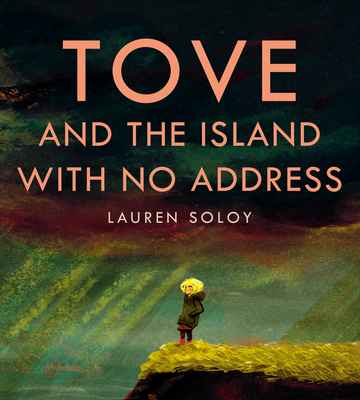
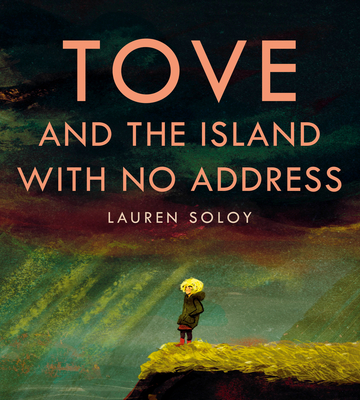
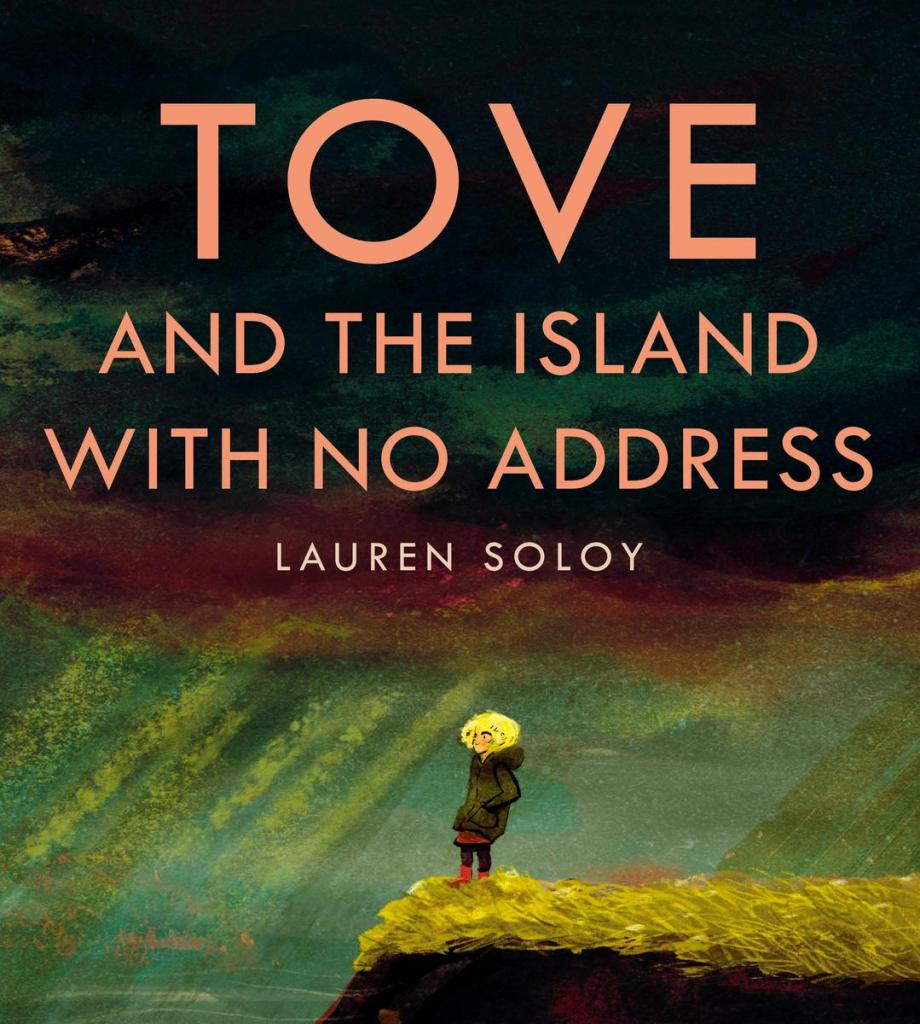
And please consider pre-ordering her new book coming out in October: Tove and the Island with No Address.

Update with a few links

This May has been unusually busy around the Children’s Bookroom given a lot of old things coming together, so I wanted to give a roundup of what I’ve done here and elsewhere!

An older review of mine for Hilary McKay’s Time of Green Magic was featured among other reviews over at Twinkl’s Magical Books for Kids to Beat the Summer Reading Slide. While I’ve never really understood the whole summer slide thing, I think that list of recommended books looks absolutely fantastic and am keen to check out a few of them myself, so I recommend taking a look.

I have already mentioned the review I got to write for Two New Years over at JArts, but if you click this link here, you’ll see all of my reviews there, including Aviva vs the Dybbuk by Mari Lowe, a collection of stories by Etgar Keret, and more.

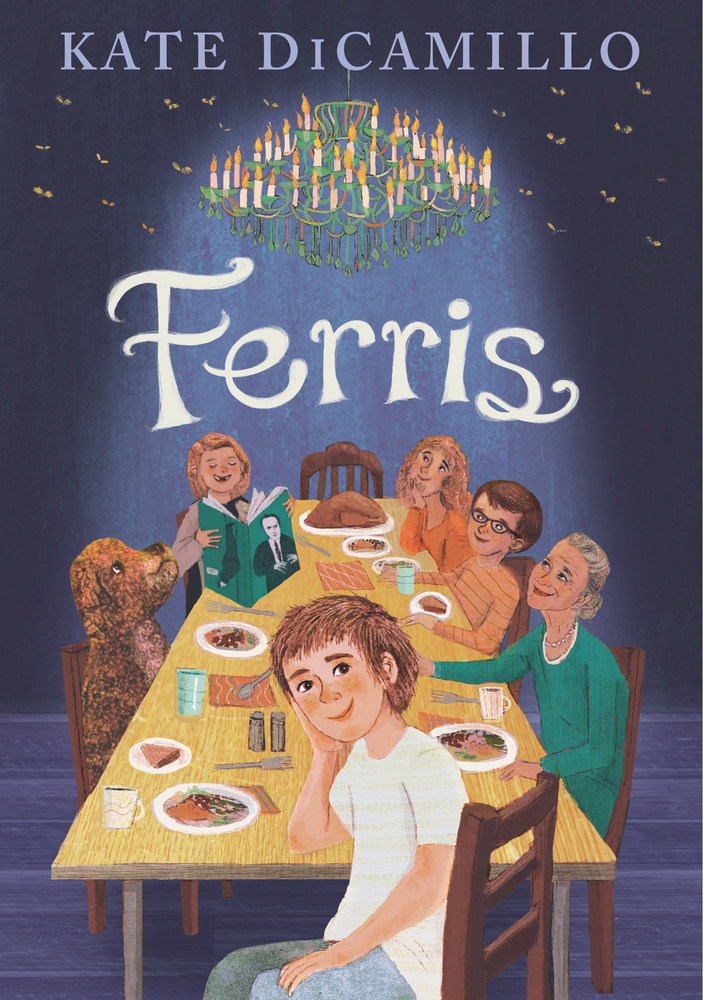
Here, snug in our own Children’s Bookroom, I’ve written about an early reader, Orris and Timble, featuring a cranky rat who seems curiously well-read, and a little owl who wants to hear stories. I have written about characters in Ferris who don’t so much leap off the page as beckon you into it. And I’ve written about A Poem for Peter and how sharing stories, as Orris and Timble do, can turn the misery Olympics on its head and let us all have our say.

I never do have any idea what’s next, here in the Bookroom, because it all depends what’s published, what mood I’m in, and whether a child elsewhere in the house decides to spill my coffee beans on the ground or starts to barf, but since the past few weeks turned out to have so much going on, I just wanted to make sure that anyone who cared could find what they wanted on the shelves, as it were.

Ferris

First thing, before I hop into the review for this page on this day– I have another review up somewhere else, and I’m more than a little pleased with it, so I’m linking here: a review for Two New Years by Richard Ho and Lynn Scurfield over at JArts, a book I reviewed separately here! My review at JArts is a happy reflection on how JAHM and AAPIHM share the same time.

Now, over to Ferris! I wasn’t going to write about another Kate DiCamillo so soon after writing of my love for Orris and Timble, mostly because I didn’t want to seem like a total Kate DiCamillo fangirl. And then I thought… Well. The public has a right to know the truth. I pledge my allegiance to Answelica the Goat.

Some authors and illustrators are just like that for me. And why not? When there’s a new Sergio Ruzzier I rush to find out what the new oddness will be, and I have never once not wanted to revisit his characters endlessly. Kevin Henkes will always, always have me say, “Oh yes, that’s true!” in surprise at some simple view I would never have thought of without his gentle direction. Grace Lin’s deftly painted beauty merges stories so that I get the urge to step right in the way I used to want to walk through the looking glass. And so on.

Kate DiCamillo’s Ferris had me surprised I couldn’t just look up and talk with Charisse or Billy Jackson.

When I wrote about Orris and Timble I spent way too much time talking about signposts, and how elegantly Kate DiCamillo doesn’t use them, and honestly I could have done a better job there. So I’m trying not to repeat that error in talking about her casts of characters, and yet– I’m not fond of how we talk about characters these days. They’re so often either “fleshed out” on the one hand or bland and two dimensional on the other.

Kate DiCamillo does a fantastic job of building characters who leap to life in your mind as humans, just humans. Each is different because each was a human being. And she wastes precisely zero words on telling you anything about them.

Being frank, I have no idea how she does this so elegantly, so deftly. The only other author I can think of who tells you so very little about a character and yet gets you so invested in them is Alan Garner.

You may or may not know what high praise that is from me. I can’t for the life of me write about his books, because they’re so perfect in themselves there’s no point in writing about them. It’s all in the books, and every attempt at writing anything further is useless.

Kate DiCamillo’s characters will have things they do, certain external traits or hobbies. Billy Jackson plays piano, Pinky wants to be on a Wanted poster, and so on. And yet each character has a full inner life, a soul and depth of their own that defies any wordy definition, so she just doesn’t bother with wordy definition. We, the readers, feel and apprehend that full inner life, that soul and depth, but it isn’t defined exhaustively in words on the page. Why bother?

We know that she knows that character. She knows each human in her book so fully that we, too, know them. And we love them, as full humans.

I have no idea how she achieves it, exactly, but she does.

And so, no matter how ready you may be to dismiss a character early in the book, I’m sorry to say that each of them will grow on you. You may think, “Here! This is the person I get to dislike!” Dreadfully sorry, no. As each character explodes into your mind with a human soul, as you see that they’re neither fully good nor fully bad but fully human, flawed and frail and ultimately lovable, you will be unable to cordially loathe them. The best I was able to manage was thinking, “I don’t think I’d want to get coffee with THAT character, but I get what they’re going through, at least.” (And, no, she doesn’t painstakingly spell out that “learning to empathize will help you be a better person!!!” either. She trusts you to learn or fail to learn.)

I can feel a certain impatience from anyone reading: “Right so you’ve told us that one character wants to be on a Wanted poster and another plays piano. But what’s the book about? What age group is it for? Who even are the characters and what do they do? Is the book realist, fantasy…? Can I put it in my social-emotional learning unit?”

You’re asking awful questions! Sit in the corner until you can do better! None of that matters. I have no idea what the book is about. It’s called a middle grade novel, and my end of Grade 5 Changeling loved it so much and dropped yoghurt on my review copy because she wanted to reread it and it’s a horrifically disobedient nuisance. (She is wonderful and you can’t have her, sorry.) Use it in any unit you like, or just give it as a birthday present to every single human you know, which is my personal advice. I’m planning on buying the Brookline Booksmith out of stock this afternoon.

What are books ever about? I have no idea, and I certainly have no idea with Ferris. The book will make you think, make you feel, and if it doesn’t tear your heart open to let you appreciate the richness of what humanity is made of a little more… That’s absolutely not Kate DiCamillo’s fault.

I really don’t know how she does it, but I know that I’m entirely grateful she does.

A Poem for Peter

This month is Jewish American Heritage Month in the USA. (It’s also Asian American Pacific Islander Heritage Month, so I think everyone has to be extra special celebratory about Richard Ho’s Two New Years, just saying.) Now, there’s a big whomping chunk of Jewish American Heritage that a huge number of Americans, and folks across the world, experience and continue to enjoy, but have no idea is Jewish, and while I rather enjoy that it’s so universally relevant and beloved, one thing bothers me. It doesn’t bother me that people read and love Where the Wild Things Are without knowing that Maurice Sendak was Jewish, or that people continue to adore Frog and Toad without knowing that Arnold Lobel was Jewish. I don’t much mind that people have no idea that the author of The Snowy Day was Jewish. I had no idea about any of them for a long, long time myself, and it was a pleasant surprise to learn that, “Oh, hey! They’re like me!” But I wish more people knew about A Poem for Peter, by Andrea Davis Pinkney with art by Lou Fancher and Steve Johnson. Because she completes that story with beauty and vivacity and I want to tell you how. So read on.

I rather regret never writing about this book before; I never knew where to begin. But then another JAHM came and I didn’t see it on any lists, and the book was published in 2016, which, in the fast-moving world of publishers, may as well be 1916, so I was sad about that. I realized I want the staggering influence of Jews– trailblazing, vividly revolutionary, subversive, progressive, and forward-thinking Jews– in picture books to be recognized, and I want to give a huge round of applause to Andrea Davis Pinkney, who is herself part of a revolutionary and trailblazing family of picture book creators (she often collaborates with her husband, Brian Pinkney, an author and illustrator, and Brian’s father, Jerry Pinkney, won the Caldecott Medal for The Lion & the Mouse), for this beautiful book.

I’ll never forget reading The Snowy Day to a class of elementary school Jewish kids. “I know that book,” one kid announced, and the rest murmured that, yeah, they knew it, “it was for babies, though,” one obnoxious kid I particularly loved muttered. (He always started out being a brat and always ended up loving the books I read, and did I preen? Yes, I became an obnoxious brat in my own right, muttering, “Gotcha!” in my own quiet mind.) Not one kid knew the author was Jewish. “His last name was really Katz? But that’s my last name!” And then, as I read and showed the pictures, the room became quiet except for the good kind of interruption: “Crunch, crunch, crunch…” a few kids murmured along with me, remembering the words from years ago. Or: “Oooh that will melt,” a sympathetic kid exclaimed when Peter brought the snowball inside.

Do I need to tell you I got a bit choked up? And that my heart swelled a bit? These kids thought they were too old for a book like that. And they were rapt, attentive, remembering, feeling and noticing new details. And when I picked up A Poem for Peter and said, “Do you know who’s holding Peter’s hand?” they were curious. That’s the author and illustrator, I told them, and his name was Jacob Ezra Katz. And I read them the opening of Andrea Davis Pinkney’s book: “Brown-sugar boy in a blanket of white. Bright as the day you came onto the page. From the hand of a man who saw you for you.” I couldn’t afford the time to read them the whole thing, which pained me, but I gave a summary, and every kid left with a new bit of knowledge and a new bit of pride and a new dose of gratitude to Andrea Davis Pinkney.

Ezra Jack Keats’s family, the Katz’s, came over from Warsaw “a land,” Andrea Davis Pinkney calls it, “filled with impossible odds.” And she doesn’t sugar-coat the situation in America, either. No. It was hard. Jobs scarce, discrimination plentiful.

“But when it snowed,
oh, when it snowed!
Nature’s glittery hand
painted the world’s walls a brighter shade.”

If you’re an east coast kid and remember back when we had seasons– you know that feeling, you know it well. And as you read that, I hope you’re also noticing the lovely cadence and alliteration of her poetry. Her free and lyrical style leans on accent rather than syllable count or rhyme, and the poem is replete with twists of rhetoric and style which add layered richness to the poem. She writes of Benjamin Katz, Ezra’s father, that he’s a waiter “his apron stained with fry-grease / and the longing for something better / than his battered flat on Vermont Street.” Each line break has a twist: first that sensory fry-grease right then and there; twist with an and: yes, it’s a connection, this longing, but also the eyes turn outward, to that “something better”…; twist: plump back to reality, that battered flat, another dash of realism. This is exquisite poetry.

But where is Peter? Peter is yet to come. Young Ezra is growing. The family has moved to America, and they’re struggling to get by, but through the bustle and hardship, Ezra grows and dreams. His dream is to be an artist. His father worries, but still brings half-used tubes of paint home from the artists who hang around Pete’s Coffee Pot, where he works– pinching pennies from his meagre wages to pay for them, but lying, unable to admit that he’s “supporting a pipe-dream / that might never come true.” But Ezra works. And works. Until the day before his graduation with scholarships to art school, his father dies of a heart attack. Grieving, and his mother plunged in depression, he has to turn on all of those dreams and hopes and give up the scholarships, and here is some of the most stunning poetry in the book:

“How to know
which way to turn
when every avenue
is a dead-end street.”

The heart of it all. The heart of being beaten down by circumstance– and onward to rising above. Ezra did what odd work he could to get by, and learned as he went, with the Art Students League giving him a chance to experiment, learn, and play, until finally, when President Roosevelt’s New Deal came along, the WPA gave him a job painting murals. Finally! And onward to drawing comics.

“And that, little child, brought you
one step closer.
Yes, Peter, you.”

After the punch in the gut of those sharp, short lines of pain, the diffuseness and warmth of this direct address opens up so much, and they open us up to Ezra’s mind, wondering why all those heroes in the comics he had to draw were always so white, and, as he caught sight of a series of photos in Life magazine, we see his eventual model for Peter, the sweet-cheeked chubby child.

And this is all true, this is history. This is picture book history that Andrea Davis Pinkney, in her vivid, lyrical poem, opening fact to the warmth and pain and gentleness of her voice in a way no one else could, brings forward to us, to, I hope, kids who might be returning to The Snowy Day with questions as they grow. She shows us the Warsaw-born child struggling through discrimination, losing his dad who couldn’t ever admit to supporting him (though he did), while his mother is bitter and depressed, losing his chance at art school, working and striving, and seeing, with sharp eyes, that discrimination goes to more than just him– and he sees these photos and sees a person, a real person, and he cuts out those pictures and tacks them on his wall for twenty years…

And then he’s drafted.

And, again, Andrea Davis Pinkney minces no words in this book. She describes the war, thus:

“War rose throughout the world.
Hitler, and evil beast of a man,
was on a mission
to rid every crevice and country
of all Jews,
and anyone else born with even a drop
of difference.”

Well. That does just about sum it up.

And off Ezra goes to draw and paint posters and booklets and charts and maps and pictures to support the war effort. And then, coming back from the war, where he had served his country and combatted that “evil beast of a man” who wanted to “rid every crevice and country of all Jews,” Ezra has to find a way to get a job in a country full of want ads that say “No Jews Need Apply.” So he changes his name from Jacob (Jack) Ezra Katz to Ezra Jack Keats. “It was a name that only hinted at his heritage,” Andrea Davis Pinkney drily notes.

Soon, Ezra is asked to illustrate children’s books for others, and is good at it, but the art is all white. “The books on the shelves / made Ezra call out / like a daddy looking for his lost child: / Where are you?” Until he’s invited to write and illustrate his own story.

And then comes Peter. “And yet, you were there all along.” And he was. For twenty years, Ezra had kept those pictures, knowing that child had a story to tell– many, in fact, since Peter turns up again and again. And Peter tells Ezra who he is, with his red snowsuit and sweet-cheeked face, making snow angels and climbing mountains. Peter was eager, as Andrea Davis Pinkney tells it, to race along and have adventures, and Ezra was ready to yank up the shades of the picture book world and reveal “the brilliance of a brown-bright day.” (That alliteration, those firm accents!)

Andrea Davis Pinkney shows gleeful enjoyment in reading the story: Peter cheerfully smacks the trees with his stick, knocking down the ice-packed intolerance from narrow-minded branches. I laugh along, enjoying her reading, but I more love to look at the illustration of tall, hatted Ezra Jack Keats, looking warmly down at the little mite in the red snowsuit he’s holding by the hand. His darling, his child, who wanted to be there and sprang into the world with his love and support. The two go together, the tall Jewish man and the radiant, curious brown-sugar boy.

Ezra Jack Keats quietly and firmly opened that door, putting a Black child in picture books, front and centre, where he had always belonged. But it’s Andrea Davis Pinkney, vividly brilliant Black woman with the lovely, lyrical voice, who gave us a book about this Jewish man who faced discrimination but didn’t let it embitter him. Instead he handed the voice and the page to Peter, seeing that Peter had no voice. And Andrea Davis Pinkney tells that story, right back to us.

There need be no competition, no discrimination Olympics, readers and friends! There is only the story, and the need to tell it. And if you tell the story that needs to be told, and you tell it beautifully, with cadence and rhythm and bright red snowsuits sliding over that packed snow– everyone, yes, everyone will be better for it.

This JAMH month I want to thank Andrea Davis Pinkney for giving us Ezra Jack Keats, who gave the world Peter’s place.

Orris and Timble

The first days of Passover were a severe trial for me. Oh– no, not the holiday itself. No, I mean that I was in Toronto for them. Well, that was ok, too, because I got to visit Mabel’s Fables, which the Spriggan calls Mabel’s Stables. Actually, he fell so deeply in love with Mabel’s Fables that we went twice because he asked every single hour of every day when we were going back until we did go back, and, believe me, I wasn’t the parent who needed to be persuaded. So that was ok. But what was less ok was how I kept getting delivery notifications from UPS that I was getting boxes from Candlewick– and I wasn’t home to open them.

Truly, I was suffering severe torture of the spirit. But I came home to a beautiful pile– just look at these!

Which one calls your name? To me it’s a beautiful mix of authors and illustrators I already know and love and ones I had yet to explore. Some were surprises, some familiar.

Normally I’d be leaping to the unfamiliar, the one you may never have heard of. But there was one book in that pile from a very familiar author, but one who keeps surprising me, and this was no exception: Kate DiCamillo has two books in there, and I want to tell you about Orris and Timble. (I also loved Ferris and I hope you will get it and read it, too. In fact, the Changeling loved Ferris so much that even though she’s not allowed to read my review copies at the table because I keep them tidy so I can donate them, she snuck it to the table and dropped yoghurt on it and got a scolding.)

Why Orris and Timble? What about it got that pull of needing to talk about it? We all know that Kate DiCamillo is a reliable author and what she writes is good, so why bother? Well, the funny thing about Kate DiCamillo is that the first book I read by her was The Miraculous Journey of Edward Tulane and I thought two things: a) I really love this author, and b) I do not click with this book. My very dear friend from Grades 7 and 8 gave me Edward Tulane when I was in undergrad, and we were both fascinated by it, and discussed it happily. And it wasn’t a book I loved, though I fell in love with the author right away. And I’ve returned to Kate DiCamillo over the years, fascinated by her inventiveness, her voice, and her trust in her readers. She is to words what Sergio Ruzzier is to illustration: his method does not alter, but his inventiveness within it is endlessly fresh and brilliant; she writes in a similar fashion from book to book, but with boundless inventiveness.

I think that Orris and Timble strikes a new note again, but, as in The Beatryce Prophecy, she starts out telling us very little because she doesn’t need to. We’ll catch up.

By the way, how do you feel about the term “signposting” in book talk? I kind of hate it because it makes all books feel plot-bound. Now, I hate plots, too. Why do we need them? Tell me a story, and tell it how you like, but you, the author, should know what you’re doing, and I’ll catch up or I won’t. Alan Garner only sometimes bothers with a plot, but he always has something to say, and doesn’t say anything but what he needs to say, and either you catch up or you don’t. Probably, at this point, my husband would mention Proust, and the Changeling would screech, I would roll my eyes, and the Spriggan would throw back his head and giggle and tell him he’s a pie. No one knows what that means, by the way, but I think Kate DiCamillo would absolutely understand and would have a toddler calling his dad a pie in her next book.

I think that Orris and Timble, like The Beatryce Prophecy, is simply telling a story where there’s a plot of some kind (more so in The Beatryce Prophecy, less prominently so in Orris and Timble) but the plot isn’t the point of the story. As readers, we catch on fairly well, fairly early, to who Orris is: he’s a rather cranky rat, a rat we want to know more about. He reaches us, somehow, and we don’t know why, but we want to know why. In fact, we would very much like to know why it is that we want to know more of him, because, really– it’s puzzling.

That’s why we need Timble, the little owl. Timble helps us figure out Orris. And it’s not very long before they become a story we love. Timble loves hearing stories. Orris has stories to tell but no one to hear them. And we? We listen. We are an audience to their story. A cranky, sweet, ornery, and tender story.

It’s a story of stories, a story that goes beyond plot and into voice and into the heart.

Fresh and old, new and deeply rooted– it has everything I love about Kate DiCamillo, but is wholly original.

Also? Please note that the illustrations from Carmen Mok, whose work I first saw on Here Babies, There Babies by Nancy Cohen, are as tender and fresh as the words on the page. Altogether, it’s a lovely book for a fairly new or a more developed reader, and if you’re an old and cranky adult muttering about nothing being good these days, you may well find a new spring by reading this, too.

Excellence in Jewish picture books

I’ve been plagued by a thought for a while, and here it is: I’m dissatisfied with the Jewish picture books I’m seeing. They aren’t good enough.

Let me put it this way: I want a Jewish picture book that will win the Caldecott, not the Sydney Taylor Book Award. Let me be even more demanding: I do not want five books that are STBA level; I want one book that’s so good it can’t be passed over for the Caldecott, no matter what else has come out.

Hear me out.

I was shelving picture books and lamenting that Amy Schwartz, author and illustrator of 13 Stories about Harris and 13 Stories about Ayana, is no longer around to make her beautiful picture books. And as I thought that, I mused for about the thousandth time, at a conservative estimate, about how unJewish not only her books but also those of many of the best Jewish children’s book authors are. Here are some other particularly notable Jewish authors and illustrators of picture books, past and present: Ezra Jack Keats, Ruth Krauss, Maurice Sendak, Trina Schart Hyman, Anita Lobel, Arnold Lobel, Paul O. Zelinsky– shall I go on? Now, among all of these, we have scant titles that are very Jewish.

And I don’t really care about that, or not too much, for two reasons. The first reason is that the titles that those authors did create are so very, very good I feel confident they put forward the books that they needed to make. I feel no sense of loss, because what they made shone so brightly. Second, and more importantly, I think that much of what the brilliant author of this incisive article by Jesse Green, The Gay History of America’s Classic Children’s Books, said about gayness in early American kids’ lit could apply in terms of Jewishness. In a subtle way, it did come into some of those early books, through anxiety, marginalization, humour, and trauma, and when it was explicit, as in the case of Sendak’s illustrations of I.B. Singer’s stories and Trina Schart Hyman’s art for Eric Kimmel’s Hershel books, the quality was superlative, unmissable.

Further, in that period, there really were some giants who did work that’s been, I think, largely forgotten today, which is a shame not only because I think the work is staggering in its quality but because I think we can learn from the style. Uri Shulevitz illustrated Sholem Aleichem’s Hanukah Money, a vividly glorious book, a book beautiful in its dank ugliness, a book I can’t imagine anyone publishing today because where’s the plot? (It doesn’t need a plot. Plots are strictly optional.) It’s superbly, honestly human, and precipitates the reader into a world with the same distinctness as Canadians might recall from Roch Carrier’s Le Chandail de hockey. I can’t think of an American equivalent right now and have an inkling that this is an area where Americans might be missing out. As for Margot Zemach, though she did many books that were not at all related to anything Jewish, much of her notable work, including It Could Always Be Worse, came from Yiddish literature. (Modern Israeli author-illustrator Einat Tsarfati’s It Could Be Worse is absolutely stellar, and distinctly unJewish. This is absolutely fine. Not every book needs to be Jewish.) Hanukah Money and It Could Always Be Worse are examples of books you’ll almost certainly find in a good public library or maybe on an older relative’s bookshelf. Both are very shtetl, very Eastern European. And if you don’t know to look for them, they probably won’t find you.

In other words: through about the 90s, there were occasional Jewish picture books from Jewish authors and illustrators that were scintillating, published by mainstream publishers. A few are still around, others are harder to find. And some are in a style that go far beyond what the pedestrian story-arc-and-main-character books of today would do.

Today, we have fewer and bigger publishers. We are seeing a plethora of books published. And the Jewish books, by and large, are not Caldecott material; certainly there hasn’t been an explicitly Jewish Caldecott achievement (with the cautious exception of the 2009 Honor for Uri Shulevitz’s How I Learned Geography, very perhaps, depending on how you define “explicitly Jewish”) since Hershel and the Hanukkah Goblins received a Caldecott Honor in 1990. That’s pretty measly.

And I wonder. The Jewish authors and illustrators are there, they’re doing good work. Sometimes they’re doing really, really excellent work and sometimes they’re doing good work and sometimes they’re doing subpar work, just like everyone else. But of their really, really excellent work, a lot of it isn’t Jewish, and the range of topics is slim.

Where is that slimness coming from? My best guess, and I think my best guess is a decent guess, is that we’re not pushing for excellence in Jewish kids’ lit; we’re pushing for being seen at all. For what’s called “representation.” My issue is that I’m selfish and demanding: I don’t want to be represented for the sake of being represented. I want good books. I want, in fact, excellent books overall, and I want a subset of those excellent books to be Jewish (and everyone else; I’m talking to Jewish stuff because that’s me, that’s all).

I said “we’re pushing for being seen at all.” Who is “we”? We, the audience. We, the parents and grandparents– and maybe the librarians and teachers, too. The people with the buying power. (Not the kids, by the way. The real crux of every issue in children’s book publishing, from quality to book bans and beyond, is that the true audience– the kids– don’t have the buying power. What do the kids want? They want to have fun, want to be challenged, want to enjoy their books.) Well, teachers and parents want something for their kids that’s Jewish, that ticks the representation box, and the mainstream publishers look and say, “OK, let’s do another Chanukah story.” (Or, worse, another historical fiction about the Holocaust. I’ll get there later, but I don’t want to get too angry too early here.)

I think kids deserve better. Note: I did not say Jewish children. I do not want a book “good enough” to qualify as representing Jewish children for Jewish children, patting them on the heads and saying, “You’re seen now.” I do not want books “good enough” to read for Chanukah in a classroom, assuming that the two kids over there are now included in the rest of the room. I want excellent books, end of story, period, for kids. And I want a subset of those to include Jewish stories. Note that Jewish history encompasses upward of 3000 years and we turn up all over the globe.

I’m not going to go into an analysis of recent Jewish picture books. For one thing, I don’t want to get into arguments about whether a given book is or is not really good, or… That’s not what I’m here for. My argument is, quite simply, that as readers we can and should look for better from publishers, overall, and publishers should seek more excellent books, including Jewish ones.

Why do I think that the current crop isn’t good enough, by the way? I’ve already linked twice to my previous piece on excellent books, and I’m linking again. It explains my standards. I read a lot of books. I read a huge number of picture books. And I know that I know about books. I simply think we could be doing better, because I read books and I know books. So I’m going to state below what we have quite enough of already, what I do not want to see more of, and then I’m going to go into what I think we could do differently.

What do I not want? I don’t want more holiday books right now. We have quite enough for Chanukkah, and, simply put, no Chanukkah books published since that 1990 Hershel and the Hanukkah Goblins have been better than it, so if that manuscript submitted to you isn’t better, and you’re not planning on getting art by someone as good as Trina Schart Hyman (I won’t ask you to find better, since you can’t, she’s the pinnacle), then write back to that author and ask if they have a different Jewish story. If you must get one that’s linked to a holiday, make sure it’s a truthful, excellent story. See below.

If not about a holiday, what might a different Jewish story look like? It will not be Holocaust fiction!!! Publishers, hear me: We have other stories than Chanukah, the Holocaust, or Chanukah during the Holocaust. And here I’m going to repeat a paragraph, cut and pasted, from my earlier piece on excellent books:

If a book fails to tell a full truth to the audience, that will be discernible. That’s something I’ve talked about before, too. It’s absolutely key. You will sense the absence, swept aside. Silence is not absence and is not untruth: On the Trapline employs silence deliberately, a knife in the heart. Absence, elision, is often untruth.

Holocaust historical fiction is (almost always) untruth; it is (almost always) a lie to the reader. All those people unmentioned, off the page? We feel that absence, that elision. Be absolutely careful there.

This is what I, as a Jewish reader and Jewish parent, hear when I see nothing Jewish but Chanukah and the Holocaust: I hear that you have no idea who I am and you’re not interested.

Of the notable Jewish authors and illustrators mentioned above, two are actually Holocaust survivors, Uri Shulevitz and Anita Lobel. Anita Lobel and her younger brother were hidden and ran and hidden and caught and sent to concentration camps. I know this because, by word of mouth, I found out, astonished, that she’d written No Pretty Pictures, the memoirs of her life during the Holocaust in Poland, and I immediately found and read the book. Despite moving in children’s book circles for years, I had never heard of the book before. I have seen many historical fiction novels about the Holocaust, and heroic rescues, and the ghost of Catherine de Medici somehow helping rescue Jews– which I guess is ok to put in a book these days? But I hadn’t heard of these memoirs. I can only guess that they’re too uncomfortably real, whereas historical fiction puts it at a safe distance, because it’s an untruth, a safe lie. A way to represent Jewish tragedy without having to learn the galling truth. That’s why they’re safe to give kids. And safe for adults. Because adults– again, the ones with the buying power– don’t like fear and discomfort. Death is scary enough, but killing someone is far worse. Putting yourself in the shoes of the killer or the killed is horrifying, a sickening truth to have to get to know. I know, because I read the No Pretty Pictures. I felt I owed it to Anita Lobel, and I owed it to myself. I am not glad I did it; it was intensely painful, and gladness doesn’t enter into it. I am not glad that I read a book that was so clearly and unflinchingly delineated, so precise in its description of the suffering inflicted on real human beings, flawed non-innocents, real children, true people in all their living imperfection, that I was left shaking and nauseous when I finished, seeing my own children in my mind’s eye and desperately needing to hold them, to feel them alive. Because that is what the horror of the Holocaust was. It was sadism and murder and starvation. Why would I be glad to read it? Why would it be comfortable?

And why do you want to publish fiction about this?

I am, however, satisfied with having read the book. I can say, unequivocally: enough with the safe, untrue fiction. Only write fiction that tells a truth that nonfiction can’t. This goes so far beyond children’s books, of course. It’s a bigger issue. If you enjoy imagining Jews being killed and heroically saved, that is something you might think about interrogating. Here’s how to handle the Holocaust: You, the adult, should read actual testimony from survivors. You, the adult, should not hand pared down, sanitized versions to children. Just tell them the truth, be honest about what you’re omitting and why, and tell them to wait until they’re old enough to handle the full material. Publishers, teachers, and parents should note that not everything in the world needs to be turned into “a book about” in order to delegate teaching hard things to kids. You are allowed to have conversations.

As for interrogating why you turn to these topics repeatedly? I want to ask you to do just that, actually. And I want you to consider whether an integrally Jewish story could be excellent enough to read, even as a non-Jew. I think it can.

Here’s a story.

It is the first century of the common era and the Romans have laid siege to Jerusalem. Rabbi Yohanan ben Zakkai, seeing that the conquest of Jerusalem, which would surely entail the destruction of the Second Temple, is inevitable, recognizes that if the Temple, the very seat of Jewish practice, is destroyed without any other plan in place, Judaism itself is at stake. And so he makes a plan: he has himself smuggled out of the city in a coffin. It is a desperate act. He has himself brought to Vespasian, then a commander of the Roman army, and, after correctly prophesying that Vespasian will be made emperor, he is granted three wishes, and asks for the safety of the city of Yavne and for the school there, for all the students of Rabban Gamliel. He also asks for a physician to treat Rabbi Tzadok, who had fasted assiduously to save Jerusalem, though ultimately unsuccessfully. The school at Yavne ultimately saved and preserved Judaism; once the Temple was destroyed, the methods of Jewish observance tied to it were beyond reach, but Yavne and all the sages there saved our ability to be Jews.

There would have been no Jewish history as we know it after the Temple if it hadn’t been for the radical heroism of Rabbi Yohanan ben Zakkai and the steady, assiduous brilliance of the rabbis of Yavne who doggedly built a rooted, staggering corpus of Jewish learning that asks and answers questions Jews up until today study and discuss as we practice Judaism, even after the Temple establishment was smashed and looted by the conquering Romans, including that very Vespasian.

What of that is the rooted truth of history and what is storytelling and mythos? Does it matter? That is the story of us, of Jews: myth and drama and desperate cleverness and history, all rolled in one story that’s more than the sum of those bits and pieces.

Here are the steps. First, see excellence in a story; Second, write it. Jews? As you do that, perhaps, wonder: can there be excellence in a Jewish story?

Teachers, parents, book-buyers: Ask for better books. Publishers: Please, I’m begging you, no more dull, sappy schlock “about Chanukah,” or anything of the kind. No more. If you don’t have a real manuscript in your hand, an excellent one, one that demands of you that you find only the finest art for this one– look further! You’ll find one, I promise.

I don’t want to settle for less any longer.

I don’t want you to print me another one thinking it be considered, maybe, for the Sydney Taylor Book Award. That at least it’ll be representation.

I want you to think you’re going for the Caldecott. I want that for every book you acquire, and that should include the Jewish ones.

Don’t let’s make decent books. Let’s make brilliant, stupendous, fantastical, scintillating, laughing, feeling, excellent books.

The Westing Game

I am, and always have been, bad at reading. I didn’t read The Westing Game by Ellen Raskin as a kid. I first read it in, I think, January 2024, not very long ago. I should have read it as a kid; I certainly know that now, after having read it at age 36, eagerly enjoying the story and language in a double-helix of relaxing and letting the story romp and, simultaneously, admiring the deft skill of the author. But someone gave me the book, so I didn’t read it. It took a lot to overcome the natural suspicion with which I approached books given as gifts; either I needed a personal nudge from someone whose opinion I trusted, or I needed to be bored with only that book to hand, or else it needed better than usual cover art and a blurb that didn’t sound stupid. I was, as I said, a very bad reader. Fortunately, someone my daughter, age 10, still a Changeling, trusted gave her a copy of The Westing Game, and she read it, and she loved it, and she told me I should read it. So, at a guess, 28 years or so after it was given to me, I finally read it. And then I went to the Brookline Booksmith and, lo and behold… Mac Barnett wrote a new introduction to it.

I got it. I had to get it. I was curious what he thought. Yes, fine, we already had a copy but– I wanted to know. I had my thoughts about this book I’d neglected for almost three decades, but I wanted to know what the author of Sam and Dave Dig a Hole, that saga of twists and turns, had to say.

I have a confession to make.

As soon as I read the introduction, I told a lie. I threw the book down and threw a tantrum at the same time: “I hate Mac Barnett!”

I mean, I don’t hate Mac Barnett. I haven’t met him in person and I always try, very hard, to reserve true and visceral loathing for people I’ve met and can detest on an up close and personal basis. And I’m not in the least petty enough to hate someone just for the crime of saying what I wish I’d thought of more lucidly than I could have and with exemplary structure: embedding the argument being made about Ellen Raskin’s literary skills in a structure which exemplifies the lessons learned from her in an exquisitely constructed homage to her. I think. You should get this edition– and please read Mac Barnett’s introduction– and judge for yourself if it’s that good. I think it is.

Blast it.

But what really, really got my goat is that he came out ahead of me at what I so hoity-toity think of as my own game. (I’m not good at chess, Sandy, sorry.)

I love sentence structure. I love style. I love voice and rhythm and beauty in writing. My love of Cat Valente’s Fairyland books and Peter S. Beagle’s Tamsin come heavily down to a love of their textured, beautiful sentences. I will tell anyone who will or won’t listen that just because a book is fun to read for content doesn’t make it fun to read aloud, and that prose style matters to the content, too, don’t you see?

If Ellen Raskin hadn’t been so skilled in subtly shaping her unexpected sentences, matching them to voice and thought and wrapping them around twists and turns, the novel would have collapsed into a boring mystery: first you don’t know what happened, then you do, the end. Boom.

And here was Mac Barnett writing about sentences. And I hadn’t given the topic a single thought.

Instead, uncharacteristically for me, I thought about character and plot.

I still don’t care about plot, not at all, really. The plot is a vessel moving from Beginning to End. I do have to admit that Ellen Raskin created a really exciting plot. Like Terry Pratchett, she has the eye of both specificity and breadth to see that a beginning is chosen, and she deftly picks up pieces here and there and back and forth, making me think less of someone playing chess and more of someone creating bobbin lace– though, from what I’ve read of her, the cigarette would get in the way so she couldn’t do that. A pin moved here… one there… between the threads, a pattern unfolds.

The threads are the words, those gorgeously textured, plainspoken phrases. The pins? Those are her characters. Those ugly, flawed, beautiful people she scars and makes us love. Books all over the place take characters and make you question them. Ellen Raskin starts off making us question the people, almost every single one presented as an enigma, or, particularly, as suspicious or unlikeable. And then, bit by bit, conversation by conversation, sentence by sentence, she makes them open up to us, and, as they do, we open up to them.

I recall, when I bought the book, that the conscientious bookseller noted that she loves the book, “and it does have some outdated language, but I think…” she paused, searching for the right words, so I tried to help out with, clumsily, “it doesn’t have an outdated heart. It cares about the people.” She nodded agreement.

A moment that struck me: the dressmaker with the permanent smile crooning to the young man in the wheelchair, Chris, who loves watching birds. Chris’s brother, Theo, abruptly tells her that Chris isn’t a baby. Chris’s thoughts, unspoken to the other characters, but read by us, interject: he doesn’t mind. He knows that she has pain under that smile. Later, we learn, her daughter had been born with what we, today, call Down Syndrome, and had died at age 19. She’d adored her daughter and continues to mourn her. Gradually, these inner lives and inner thoughts and sympathies come clear as paths cross paths and conversations interweave across the book. Threads deftly crossing make the pictures, each sentence shaped to each character so that nothing more is ever revealed than one person’s soul at a time, meeting another’s.

This is craftsmanship at its best. I don’t think it takes all that much to take a pretty picture of a person and spoil it. Ellen Raskin plucks a person from the street, takes your first impression, and then, bit by bit, helps you understand the wholeness and the richness of each person’s life. You may not love each character equally– but you will come away with more sympathy for each than you had at first.

I was quite prepared to loathe pretty Angela. And, somehow, she was the one who caught me. Her desperation was mine, hard and fast. Boom. I loved her. Theo, too. Almost every twist with him, every turn of his story, I thought, “Been there, Theo. I feel for you.” I liked him from the beginning, though. Angela? She surprised me.

And so it went– moving with each character, somehow the invisible craft slid by me. Mac Barnett, though, he’s a master lacemaker in his own right: he spotted the heart of the craft. Phrase by forthright, twisting, scintillating phrase, the characters dart around each other, pulling the picture together.

Oh yes, I know it’s a terrible analogy; delicate lace doesn’t feel right to such straight-talking writers, does it? But just you try to do it. I think you might find bobbin lace easier to create.