
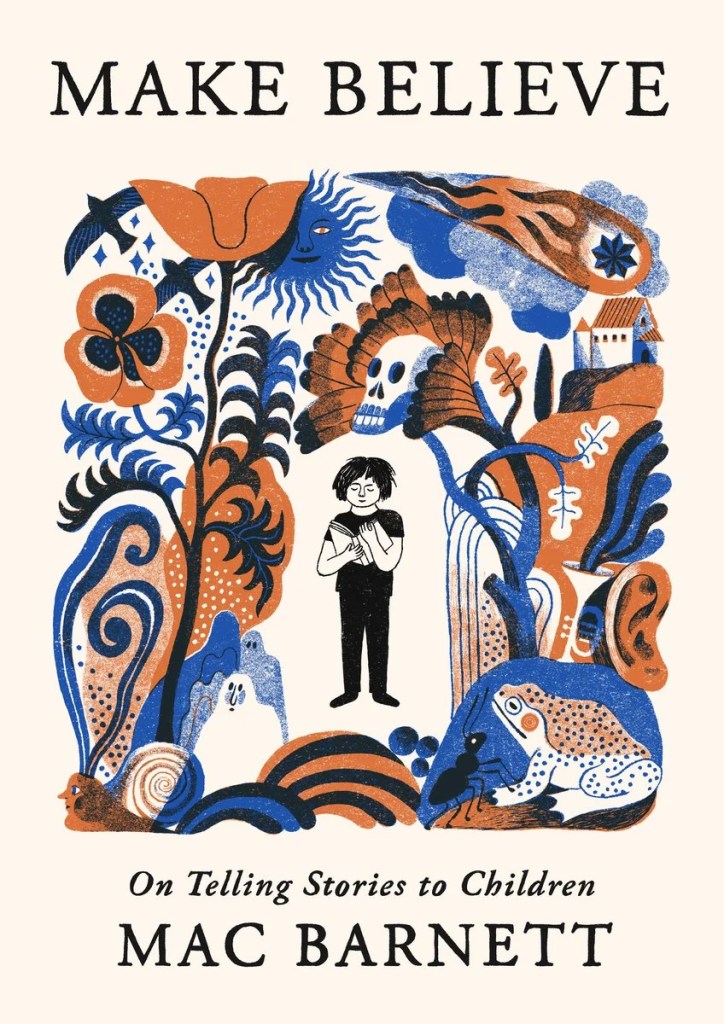
Last night I travelled for about 3.5 hours to spend about 25 minutes in An Unlikely Story in Plainville, and a further 15 chatting with my dear librarian friend in the car outside. No, it doesn’t normally take that long to travel from Brookline to Plainville, nor was I supposed to spend so brief a time at Mac Barnett’s book release event for Make Believe. (I knew I needed to go because I’d read an ARC, thank you to the lovely publisher!, and it enthralled me.)
Some days, you understand that maybe Odysseus really wasn’t exaggerating all that much.
As I began to think of leaving home, the skies opened and it rained. Traffic was worse than I’d anticipated, and Ruggles Station was going through so much construction I got lost until helped by a kind missionary for I’m afraid I forget which faith. I missed the first train. I took the second and it was going through an electrical failure so it was fully half an hour late and then it was 7 minutes’ wait to get a cab to the event– and I got there at 7:20 for a 6:30 event.
It was still worth it.
I admit to being terribly biased in Mac Barnett’s favour for a number of reasons. First, he’s been exceptionally kind to both my children, and without knowing us at all. Here is just one personal example: during the lockdown, when he read books on Instagram daily and then weekly with a consistency that lent rhythmic security to a painful time, my daughter wrote to him that her favourite of his books was Count the Monkeys but she couldn’t find a copy in stock anywhere. He sent her a signed copy along with a handwritten letter addressing every single point in her original letter. Second, I have read a lot of his reviews (in addition to his books for children) and I think it’s lovely how often he agrees with me without ever having discussed his material with me before writing it down.
Now, this book has an interesting publication history. When Mac (I can call him by his first name because in my 10 minutes in Plainville, I did get to say, “Hi, I’m Deborah Furchtgott–” and he said, “DEBORAH!” so I figure we’re on a first name basis. I subsequently got tongue-tied and handed him a book and letter and that was it.)– I forgot my opening. Ah, yes: when Mac was speaking with the Italian publisher Terre di Mezzo, Davide proposed that he write a book for adults about writing for children, and publish it first in Italian, with him.
And this is important. This is important because one of my great, enduring frustrations is how deeply the America world of children’s literature forgets about the rest of the literary world. I do not know– and I’m not sure we can know– if we would have this manifesto if it hadn’t been for an Italian publisher, and I think it shows in the ideas. Although deeply imbued in American children’s literature history, Mac is looking at the field with a wide lens on literature, and a very incisive and specific appreciation for the child as an individual.
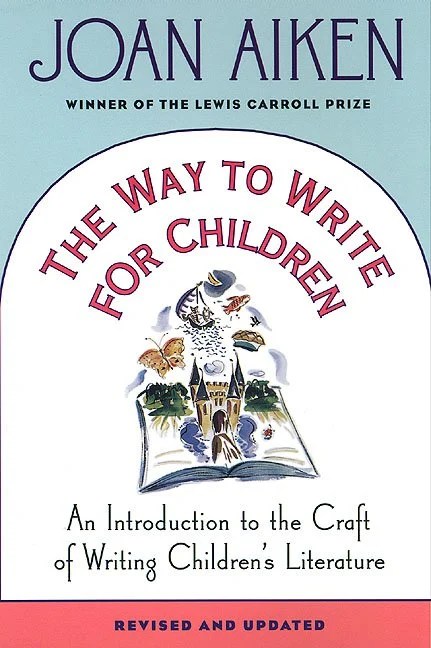
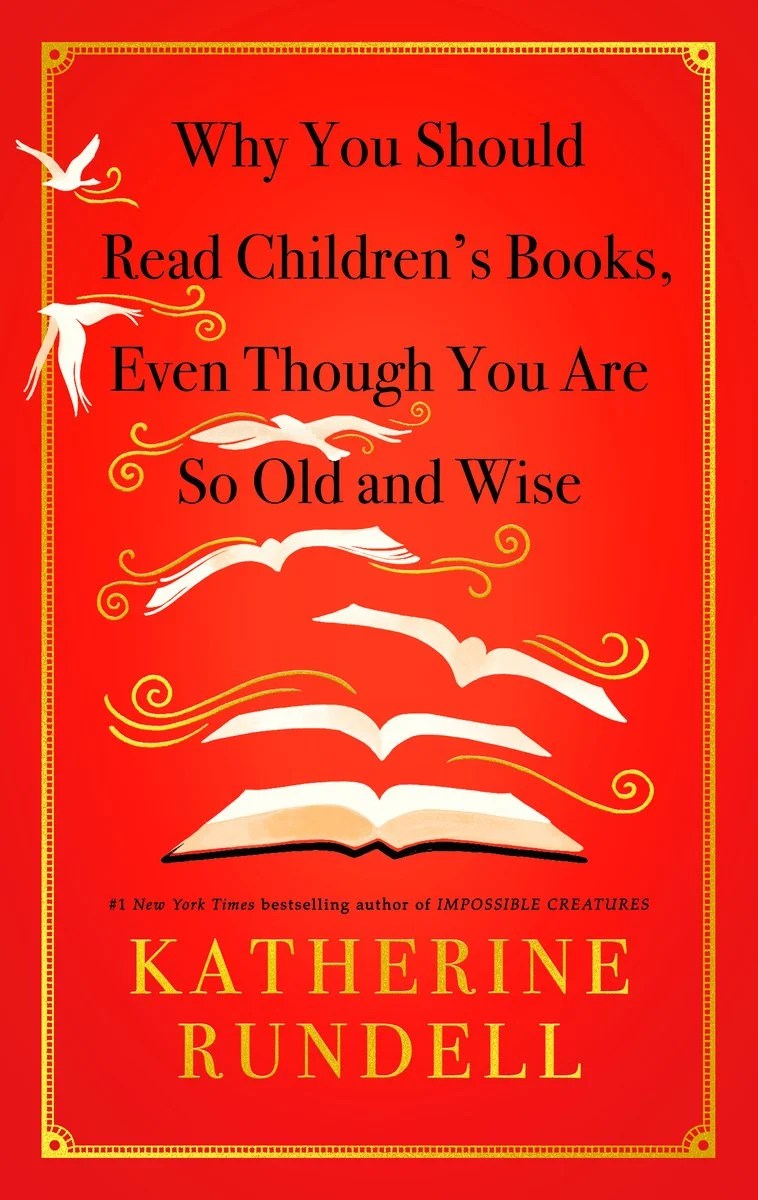
You see, this is not the first book by a published adult on writing for children or reading children’s books. Two particular titles come to mind: Joan Aiken’s The Way to Write for Children and Katherine Rundell’s Why You Should Read Children’s Books, Even Though You Are So Old and Wise. Both are from the UK, and Rundell’s was originally published there in 2019 but will only be made available in the US in September.
Why has it taken so long for the US to want to talk about children’s literature as a field? Well, one of the areas where Mac Barnett and I agree is this: the field of children’s literature is not taken very seriously here, in part because children as children aren’t taken so seriously. I think that’s a fairly universal truth, mind you, not distinctly American, but I wonder whether the anxiety about molding and educating the child– such an incomplete creature, a child is, and we must finish it properly– has a deeper root here. But something Mac Barnett is too nice to say is: I don’t think the average American adult wants to be told they:
- May not be a good job candidate. (Joan Aiken engages in deeply satisfying visions of having inadequate candidates for “author of children’s literature” imprisoned and executed.)
- Aren’t well-read. (Katherine Rundell is so brimful of literary delights you’ve got a choice between being buoyed up on the delicious feast awaiting you or feeling inadequate.)
- Should put themself second, and centre the child. (This is, I would say, the keynote of Mac Barnett’s book.)
Like good children’s books, these are slim books, but not easy ones. They challenge you to spend time with them, puzzle things through, rhetorically and logically, and argue with them.
What makes this book distinctive from other books about children’s literature? I would say that Katherine Rundell is focused on a defense of good children’s literature as literature which is to say: when children’s literature is written well, it has a uniquely brilliant place in the field of literature. Joan Aiken’s book is keenly focused on one job: if you are the audience, which is to say, the kind of lunatic who was already going to write a book for kids, she has advice for you on how to do it well. (In my view, the ferocious laser precision of this job and this task means that Joan Aiken’s book is the best of the three.) Mac Barnett’s focus is, I think, on the child as a child and he is advocating for that child’s need for literature as great as any in the world.
When Mac makes this case, I am his greatest supporter, but the greatest failure of Make Believe is that I don’t always know who he’s speaking to in making this case. Parents? Authors? Librarians? Teachers? Book industry professionals? There’s a lot of us, sometimes wearing multiple hats, and the plea for the child hits differently with each job description.
It’s astonishing, and I find it delightfully validating, to feel this uncertainty of audience from Mac because I’ve never felt his audience-focus falter in another book. When he’s writing for children, a field where the easiest failure mode, I’m convinced, is being uncertain of your audience as you write, I never feel that he’s not got a child squarely in his mind, listening raptly to the story unfold. Even in his lesser books, I always see the audience. Writing for adults, I feel that sense of audience falter a bit. He’s more confident in talking to children.
It’s nice to know he can falter on the matter of audience, honestly.
What difference would it make, though? How would the plea hit differently? Well, let’s think it through. Mac relates the story of “two titans” [Maurice Sendak and Jon Stone, of Sesame Street fame] trying to “determine what made a good children’s writer,” and they, after hours of debate and discussion, “decided they didn’t have a clue.” Mac, gleefully assuming an arrogant confidence he evidently doesn’t feel, suggests the following elements:
… control of language, a sense of rhythm and pace, appreciation of beauty, a knack for character, a strong point of view– and, on top of all that, the ability to connect with kids. It’s this last skill that’s most mysterious. We know what makes a writer good, but what makes someone good at writing for children? (p. 29)
So, I quickly determine, he’s back where Stone and Sendak left off. We have some criteria, but there’s a frustratingly hard to pin down something that lets a child understand the author is on their side. A fascinating story, and one of many Mac includes from his rich understanding of the history and texture of how children’s literature came to be. There is no question: there is no tiny book (under 100 pages!) more densely packed with reverence for the radical history of children’s literature focused on the child audience.
Actually, I don’t know how many other books of that nature there are. But my point stands.
And yet– for whom? Well, I’d say in this book we see:
- Speaking to parents, the plea is not to rush the child to formative books of their choosing. Allow a child room to explore, form taste, and then share the books with them.
- Speaking to teachers and librarians, he’s advocating to allow children the imaginative autonomy to see their experiences reflected in books, to try on other identities in those stories, to experience a range of feelings and adventures, and to experiment with their reading– and without being pushed to use reading as a constant tonic.
- Speaking to industry professionals, Mac is pressing for a more robust literary debate, aiming towards greater quality. He advocates for considering the roots of our literary forms not to return to a good old day but to find some long-neglected pathways which might lead to fascinating new vistas.
That’s a lot for one small book! I suppose, though I agree with all of these points, that if it were up to me as an editor I’d have suggested sticking with one and pushing it farther. My feeling is that parents are incurably pushy and not to be reasoned with, teachers and librarians are either God’s own angels and don’t need our advocacy, or else in the same camp as parents. I would have said to focus on point three and tease it out more deeply, but my advice is terrible, because that’s the single point where both Mac and I, in our times, have come in for the greatest pushback.
Mac has a bigger audience, so he gets more and louder.
But, Mac, I remember when, back in the day (two years ago), I wrote a piece advocating for better Jewish children’s books. I still agree with what I wrote. Even so, it remains the piece on which I have gotten the most resistance: getting published is hard enough, I’m told (correctly), and there aren’t so many Jewish books out there at all (also correct), so we need to root for what there is. The last one is where I balk. Because– if a book isn’t pleasurable to read with my children, I don’t buy it. Those are library books, I say. You can have whatever you like, all the bad books you want, at the library. I will only buy the pleasurable ones for rereading.
I don’t mean nice and pretty. I read them Shirley Hughes’s Ruby in the Ruins, which deals with dads with PTSD coming back from WWII while their kids play on bombed out sites in London. It’s a great book! You should read it! So, in my home, and in my experience being exceptionally nosy about picture books in everyone’s lives, children and adults both need and desire a greater density of really good books (and, yes, of course there are variations in quality), and since not everyone spends their life honing their home library to perfection, not a week goes by when I don’t get people asking me for a list of books I could recommend so that they can have, “you know– the ones we’ll enjoy reading together? And that are fun to read again and again.”
So it’s a pickle. It’s a hard time out there in the book industry, but why let that quench rigorous debate? Hard times can be the best time for growth. And that’s why I’m really glad that children have an advocate in Mac Barnett. Because children matter, and they deserve the best in books, and who better to say that than Mac Barnett? And did he ever do a great job saying that, and letting us see children play and read through his eyes, in this book.
Thank you for this slim but intense work– and? Now go back to writing good books for bad children, Mac Barnett!

