A Bibliography of Kids’ Lit Crit

With the publication of Make Believe and the rather kerfuffling buzz about it, the worst of it on Instagram, I’ve been finding myself going back to my shelves almost for reassurance that I’m not making it up– there really have been quite a number of other smart thinkers in kids’ lit for a while now who make similar points. Indeed, what struck me in Make Believe was that it wasn’t so revolutionary at all. As I pulled my books out, flipping through them for the rich, cranky, hopeful, and obstinate pieces of wisdom that have kept me company for years now, I realized I’ve collected a fair bit that would make a useful bibliography for others who like to read around the edges of children’s literature. I have omitted histories, biographies (I enjoyed Wild Visionaries by Golan Moskowitz, though), and pedagogical books for teachers (but recommend The Girl with the Brown Crayon by Vivian Paley). This is incomplete in every sense; I’ve already heard from friends who have recommended other books, so this is, quite simply, a sampling of books that have been useful to me. And without further ado, here they are.

Practical Guides on How to Do It

The two best of these I’ve seen are old books which haven’t, in my eyes, aged a single bit. Why haven’t they aged? Because they are rooted in a deep understanding of two essential truths that don’t, themselves, alter that much, however much the rest of the world does: 1) if you’re writing for children you should respect children; 2) if you’re creating literature you should respect literature.

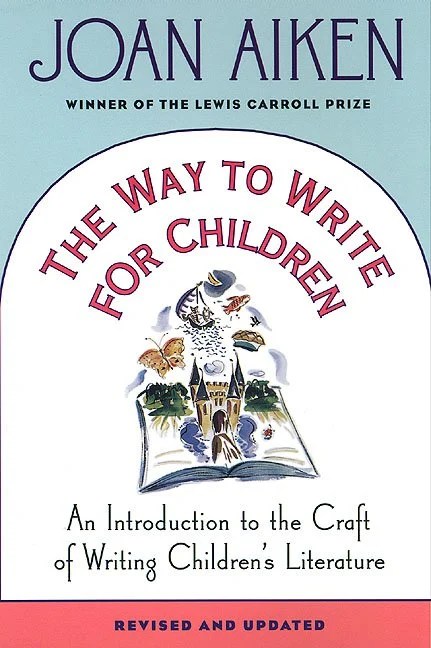
The Way to Write for Children by Joan Aiken.

In terms of plain, practical guidance on writing for children, this is, quite simply, the best book I’ve seen. Joan Aiken is not trying to convince you of the worth of children’s literature, nor of the worth of children, because if you don’t see that worth, and if you don’t see the critical importance of doing a good job, she’s not talking to you. She does, however, lay the importance of curation at the feet of both authors and acquiring editors. I particularly enjoy her fantasy an Application Board in the Children’s Literature Section of the Department of Public Welfare. Those who fail suffer such fates as being strangled with their own typewriter ribbons and dropped down the oubliette. After that? She sticks to giving you her best advice on how to do a good job, and it’s up to you not to fail.

Writing with Pictures by Uri Shulevitz

Joan Aiken, a writer, sticks to words. Uri Shulevitz, an artist and master of the picture book, is similarly firm and practical, but with art. Some points are purely practical but essential: the structure of a physical book. This is endlessly important, and often underrated, and covered briskly but thoroughly. Other points are more nuanced and he spends some time, and goes through some examples, in teasing them out, both in art and writing: the importance of complete action to a child; the essence of change in a story. The pragmatic nature of the book is so complete that it ends on an envoy informing you, very practically, that there’s only so far this book can go. You simply need to complete the journey on your own. And that will be hard.

Not Exactly Books About Children’s Literature

Some of the best books about children’s literature are not, as such, critical literature about children’s literature. One of my greatest moments in reading for children’s literature recently was a book on ballet, in fact. But these books are in or adjacent to the field and the various letters and essays within them all reward attention.

Caldecott & Co by Maurice Sendak

At times cranky, always highly opinionated, unafraid to offer an unvarnished opinion– there is nothing more stimulating than dipping into an essay by or interview with Maurice Sendak. His discussions range from comics to music to toys. He understands children vividly, brilliantly, sometimes incorrectly– and I often argue with him passionately, and usually end up grudgingly agreeing and conceding that he is, after all, correct. Even if he’s not. I love French and French literature; his love is the German Romantics. Despite this, we get along very well, because, ultimately, we both love Babar. His article on Jean de Brunhoff sits deep within me.

Dear Genius, letters of Ursula Nordstrom, ed. by Leonard S. Marcus

Impossible to categorize. This book offers an incisive look into the advent and growth of the picture book in the USA, with the lens of a reader, a peek into the creative process, and a deeper sense of what role an editor may even play. In these pages we can see the rabbit-skin covers of the early copies of Margaret Wise Brown’s Little Fur Family, we can see thoughts about the quality of paper used in books, we can see the lengths an editor goes to get a good book, as well as her tough decision to say no when a book just isn’t good enough. And we see, too, her simple passion for the best literature for children.

Letters of E.B. White ed. Dorothy Lobrano Guth; rev. and ed. Martha White

A lot in this book doesn’t apply, specifically, to children’s literature, but the sheer level of respect that White of Strunk and White’s The Elements of Style held for children makes what passages do apply to the field of children’s literature essential reading. One matter of simple interest, in its own right, is seeing in E.B. White’s letters his work on children’s books and his work for the New Yorker in absolute, equal parallel importance, unapologetically. In a letter regarding the date of publication for Stuart Little one line, in particular, has stuck with me for years: “I would rather wait a year than publish a bad children’s book, as I have too much respect for children.”

The Grammar of Fantasy by Gianni Rodari (trans. Jack Zipes, ill. Matthew Forsythe)

Available in a new edition from Enchanted Lion Books (with, alas, a few typos which make me wish they’d invested a bit more at the proofreading level), this book is an old one for Italy, but quite new to the English-speaking world. It brings Italian educational methods, especially from Reggio Emilia, to the forefront. The emphasis is on storytelling rather than children’s literature, and the child’s understanding of and approach to telling a story. Strictly speaking, I would not say it is a book related to children’s literature. It is, however, useful to provoking thought about a child’s love of story.

Thoughtful Books About Why It Matters at all

The need for a Defense of Children’s Literature in the sense of, for example, Sir Philip Sidney’s “Defence of Poesy,” doesn’t really seem to have been felt until the more recent threats of celebrity picture books, cuts to libraries, book bans, and other such vicious tendencies have arisen. In any case, both books that fall in this category are more recent, and both fall a bit short of the depth I’d like to see. The main limitation with both is that if you agree, you agree; if you don’t, you don’t.

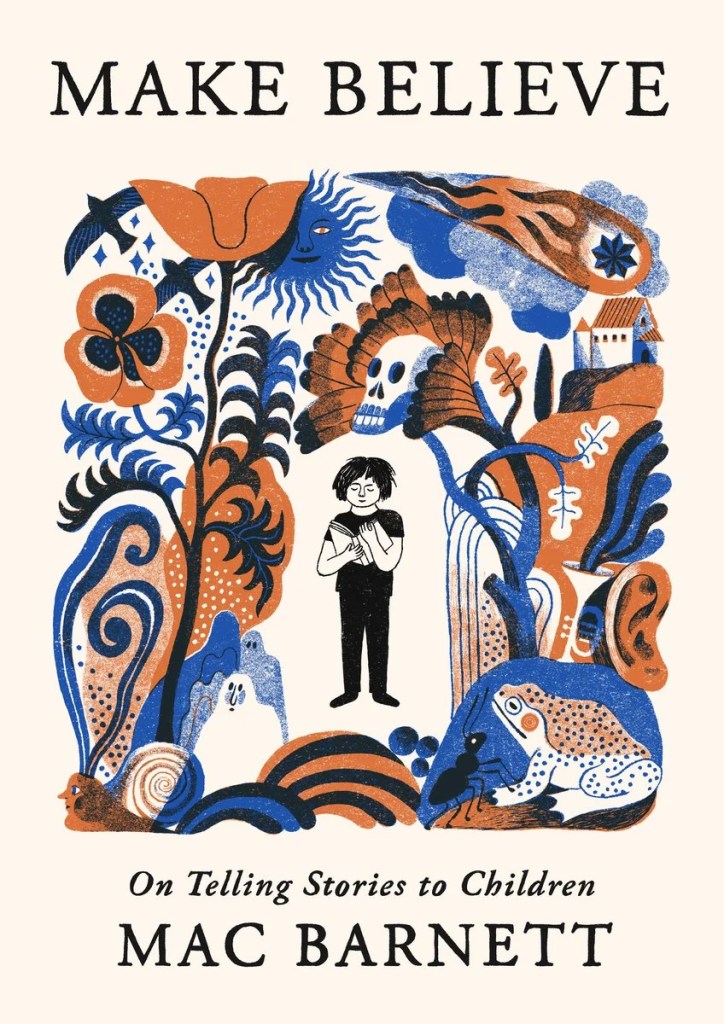
Make Believe, by Mac Barnett

Rooted in a defense of the field of writing for children at all, Mac defends the child as much as children’s literature, noting the imagination, acuity, and deep raw feelings of the child. He focuses mostly on the picture book. It is as much for the reader of the picture book as the writer. In the defense of the child holding a place of imaginative autonomy, Mac’s book appeals for anyone having to do with a child audience to give them latitude– to provide the best books, certainly, but never to limit the scope of the child’s appetite by imposing reading rules.

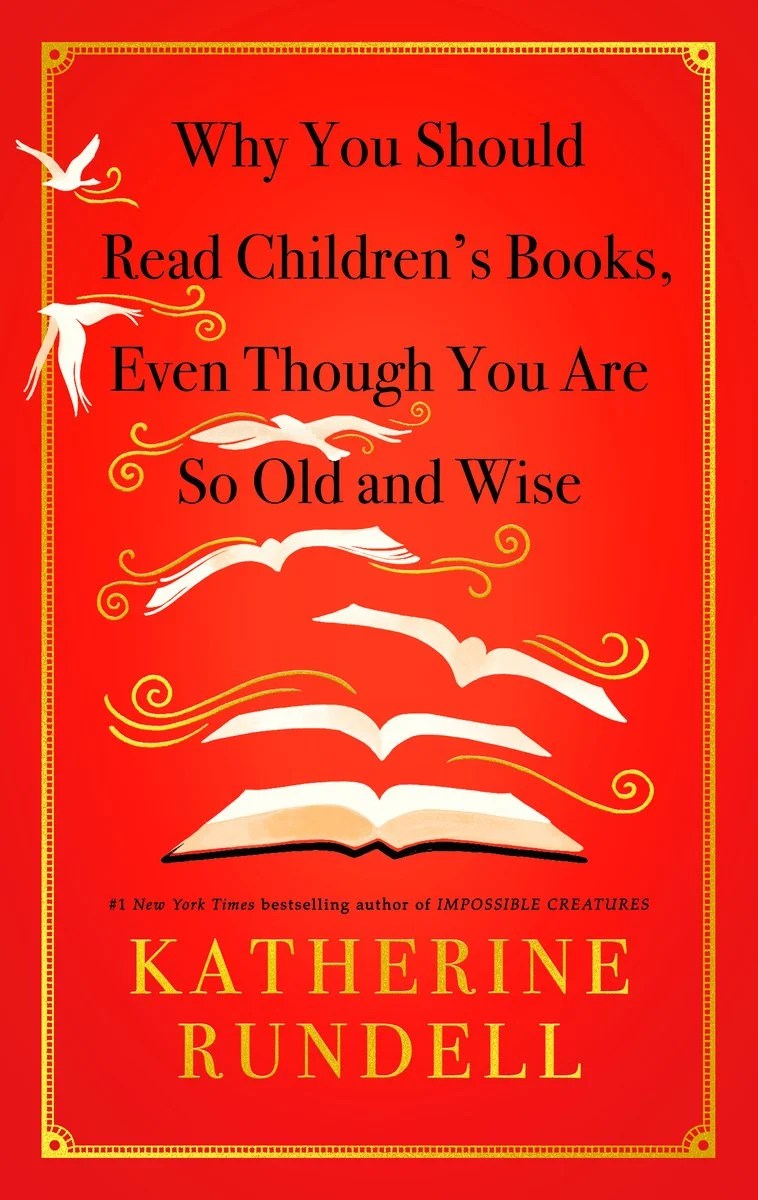
Why You Should Read Children’s Books Even Though You Are So Old and Wise by Katherine Rundell

This is a tight, slim book, and its focus for defense is the very children’s book itself. Katherine Rundell is appealing to the reader, really to readers of books for adults, not to dismiss the field of literature written for children. She acknowledges that not every book will repay an adult reader’s attention, but is adamant that the field as a whole is worthy of as serious and focused attention as the best books written for adults are. She recalls the hunger with which children read, and contrasts it with the different pace and style of adult reading. These readers, she suggests, are worthy of attention, both in writing for them, and in picking up what they’re reading so voraciously.

Make Believe

Last night I travelled for about 3.5 hours to spend about 25 minutes in An Unlikely Story in Plainville, and a further 15 chatting with my dear librarian friend in the car outside. No, it doesn’t normally take that long to travel from Brookline to Plainville, nor was I supposed to spend so brief a time at Mac Barnett’s book release event for Make Believe. (I knew I needed to go because I’d read an ARC, thank you to the lovely publisher!, and it enthralled me.)

Some days, you understand that maybe Odysseus really wasn’t exaggerating all that much.

As I began to think of leaving home, the skies opened and it rained. Traffic was worse than I’d anticipated, and Ruggles Station was going through so much construction I got lost until helped by a kind missionary for I’m afraid I forget which faith. I missed the first train. I took the second and it was going through an electrical failure so it was fully half an hour late and then it was 7 minutes’ wait to get a cab to the event– and I got there at 7:20 for a 6:30 event.

It was still worth it.

I admit to being terribly biased in Mac Barnett’s favour for a number of reasons. First, he’s been exceptionally kind to both my children, and without knowing us at all. Here is just one personal example: during the lockdown, when he read books on Instagram daily and then weekly with a consistency that lent rhythmic security to a painful time, my daughter wrote to him that her favourite of his books was Count the Monkeys but she couldn’t find a copy in stock anywhere. He sent her a signed copy along with a handwritten letter addressing every single point in her original letter. Second, I have read a lot of his reviews (in addition to his books for children) and I think it’s lovely how often he agrees with me without ever having discussed his material with me before writing it down.

Now, this book has an interesting publication history. When Mac (I can call him by his first name because in my 10 minutes in Plainville, I did get to say, “Hi, I’m Deborah Furchtgott–” and he said, “DEBORAH!” so I figure we’re on a first name basis. I subsequently got tongue-tied and handed him a book and letter and that was it.)– I forgot my opening. Ah, yes: when Mac was speaking with the Italian publisher Terre di Mezzo, Davide proposed that he write a book for adults about writing for children, and publish it first in Italian, with him.

And this is important. This is important because one of my great, enduring frustrations is how deeply the America world of children’s literature forgets about the rest of the literary world. I do not know– and I’m not sure we can know– if we would have this manifesto if it hadn’t been for an Italian publisher, and I think it shows in the ideas. Although deeply imbued in American children’s literature history, Mac is looking at the field with a wide lens on literature, and a very incisive and specific appreciation for the child as an individual.

You see, this is not the first book by a published adult on writing for children or reading children’s books. Two particular titles come to mind: Joan Aiken’s The Way to Write for Children and Katherine Rundell’s Why You Should Read Children’s Books, Even Though You Are So Old and Wise. Both are from the UK, and Rundell’s was originally published there in 2019 but will only be made available in the US in September.

Why has it taken so long for the US to want to talk about children’s literature as a field? Well, one of the areas where Mac Barnett and I agree is this: the field of children’s literature is not taken very seriously here, in part because children as children aren’t taken so seriously. I think that’s a fairly universal truth, mind you, not distinctly American, but I wonder whether the anxiety about molding and educating the child– such an incomplete creature, a child is, and we must finish it properly– has a deeper root here. But something Mac Barnett is too nice to say is: I don’t think the average American adult wants to be told they:

  1. May not be a good job candidate. (Joan Aiken engages in deeply satisfying visions of having inadequate candidates for “author of children’s literature” imprisoned and executed.)
  2. Aren’t well-read. (Katherine Rundell is so brimful of literary delights you’ve got a choice between being buoyed up on the delicious feast awaiting you or feeling inadequate.)
  3. Should put themself second, and centre the child. (This is, I would say, the keynote of Mac Barnett’s book.)

Like good children’s books, these are slim books, but not easy ones. They challenge you to spend time with them, puzzle things through, rhetorically and logically, and argue with them.

What makes this book distinctive from other books about children’s literature? I would say that Katherine Rundell is focused on a defense of good children’s literature as literature which is to say: when children’s literature is written well, it has a uniquely brilliant place in the field of literature. Joan Aiken’s book is keenly focused on one job: if you are the audience, which is to say, the kind of lunatic who was already going to write a book for kids, she has advice for you on how to do it well. (In my view, the ferocious laser precision of this job and this task means that Joan Aiken’s book is the best of the three.) Mac Barnett’s focus is, I think, on the child as a child and he is advocating for that child’s need for literature as great as any in the world.

When Mac makes this case, I am his greatest supporter, but the greatest failure of Make Believe is that I don’t always know who he’s speaking to in making this case. Parents? Authors? Librarians? Teachers? Book industry professionals? There’s a lot of us, sometimes wearing multiple hats, and the plea for the child hits differently with each job description.

It’s astonishing, and I find it delightfully validating, to feel this uncertainty of audience from Mac because I’ve never felt his audience-focus falter in another book. When he’s writing for children, a field where the easiest failure mode, I’m convinced, is being uncertain of your audience as you write, I never feel that he’s not got a child squarely in his mind, listening raptly to the story unfold. Even in his lesser books, I always see the audience. Writing for adults, I feel that sense of audience falter a bit. He’s more confident in talking to children.

It’s nice to know he can falter on the matter of audience, honestly.

What difference would it make, though? How would the plea hit differently? Well, let’s think it through. Mac relates the story of “two titans” [Maurice Sendak and Jon Stone, of Sesame Street fame] trying to “determine what made a good children’s writer,” and they, after hours of debate and discussion, “decided they didn’t have a clue.” Mac, gleefully assuming an arrogant confidence he evidently doesn’t feel, suggests the following elements:

… control of language, a sense of rhythm and pace, appreciation of beauty, a knack for character, a strong point of view– and, on top of all that, the ability to connect with kids. It’s this last skill that’s most mysterious. We know what makes a writer good, but what makes someone good at writing for children? (p. 29)

So, I quickly determine, he’s back where Stone and Sendak left off. We have some criteria, but there’s a frustratingly hard to pin down something that lets a child understand the author is on their side. A fascinating story, and one of many Mac includes from his rich understanding of the history and texture of how children’s literature came to be. There is no question: there is no tiny book (under 100 pages!) more densely packed with reverence for the radical history of children’s literature focused on the child audience.

Actually, I don’t know how many other books of that nature there are. But my point stands.

And yet– for whom? Well, I’d say in this book we see:

  1. Speaking to parents, the plea is not to rush the child to formative books of their choosing. Allow a child room to explore, form taste, and then share the books with them.
  2. Speaking to teachers and librarians, he’s advocating to allow children the imaginative autonomy to see their experiences reflected in books, to try on other identities in those stories, to experience a range of feelings and adventures, and to experiment with their reading– and without being pushed to use reading as a constant tonic.
  3. Speaking to industry professionals, Mac is pressing for a more robust literary debate, aiming towards greater quality. He advocates for considering the roots of our literary forms not to return to a good old day but to find some long-neglected pathways which might lead to fascinating new vistas.

That’s a lot for one small book! I suppose, though I agree with all of these points, that if it were up to me as an editor I’d have suggested sticking with one and pushing it farther. My feeling is that parents are incurably pushy and not to be reasoned with, teachers and librarians are either God’s own angels and don’t need our advocacy, or else in the same camp as parents. I would have said to focus on point three and tease it out more deeply, but my advice is terrible, because that’s the single point where both Mac and I, in our times, have come in for the greatest pushback.

Mac has a bigger audience, so he gets more and louder.

But, Mac, I remember when, back in the day (two years ago), I wrote a piece advocating for better Jewish children’s books. I still agree with what I wrote. Even so, it remains the piece on which I have gotten the most resistance: getting published is hard enough, I’m told (correctly), and there aren’t so many Jewish books out there at all (also correct), so we need to root for what there is. The last one is where I balk. Because– if a book isn’t pleasurable to read with my children, I don’t buy it. Those are library books, I say. You can have whatever you like, all the bad books you want, at the library. I will only buy the pleasurable ones for rereading.

I don’t mean nice and pretty. I read them Shirley Hughes’s Ruby in the Ruins, which deals with dads with PTSD coming back from WWII while their kids play on bombed out sites in London. It’s a great book! You should read it! So, in my home, and in my experience being exceptionally nosy about picture books in everyone’s lives, children and adults both need and desire a greater density of really good books (and, yes, of course there are variations in quality), and since not everyone spends their life honing their home library to perfection, not a week goes by when I don’t get people asking me for a list of books I could recommend so that they can have, “you know– the ones we’ll enjoy reading together? And that are fun to read again and again.”

So it’s a pickle. It’s a hard time out there in the book industry, but why let that quench rigorous debate? Hard times can be the best time for growth. And that’s why I’m really glad that children have an advocate in Mac Barnett. Because children matter, and they deserve the best in books, and who better to say that than Mac Barnett? And did he ever do a great job saying that, and letting us see children play and read through his eyes, in this book.

Thank you for this slim but intense work– and? Now go back to writing good books for bad children, Mac Barnett!

Robin and the Stick: A Picture Book

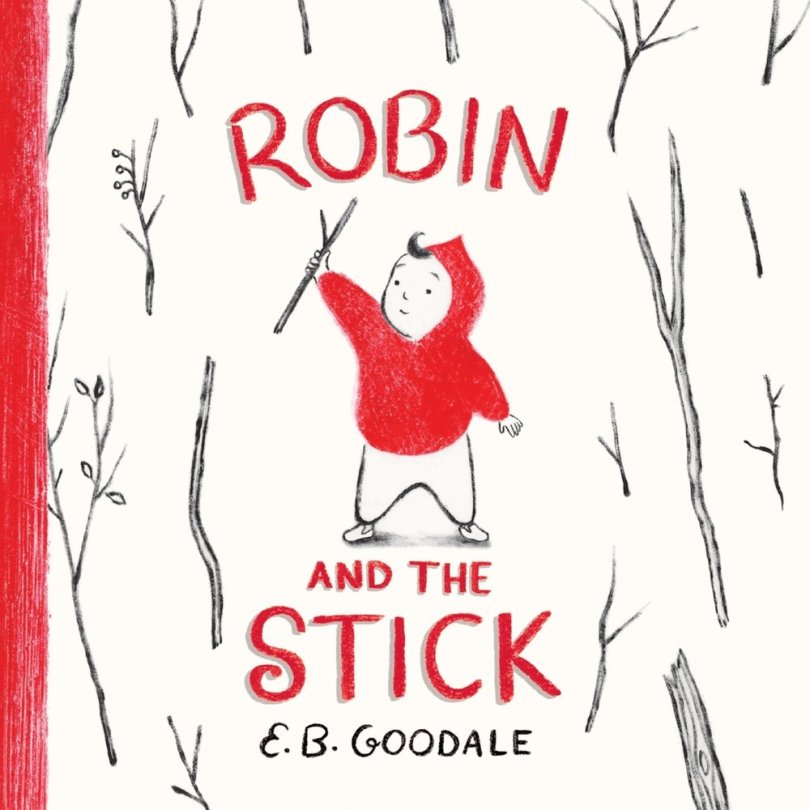
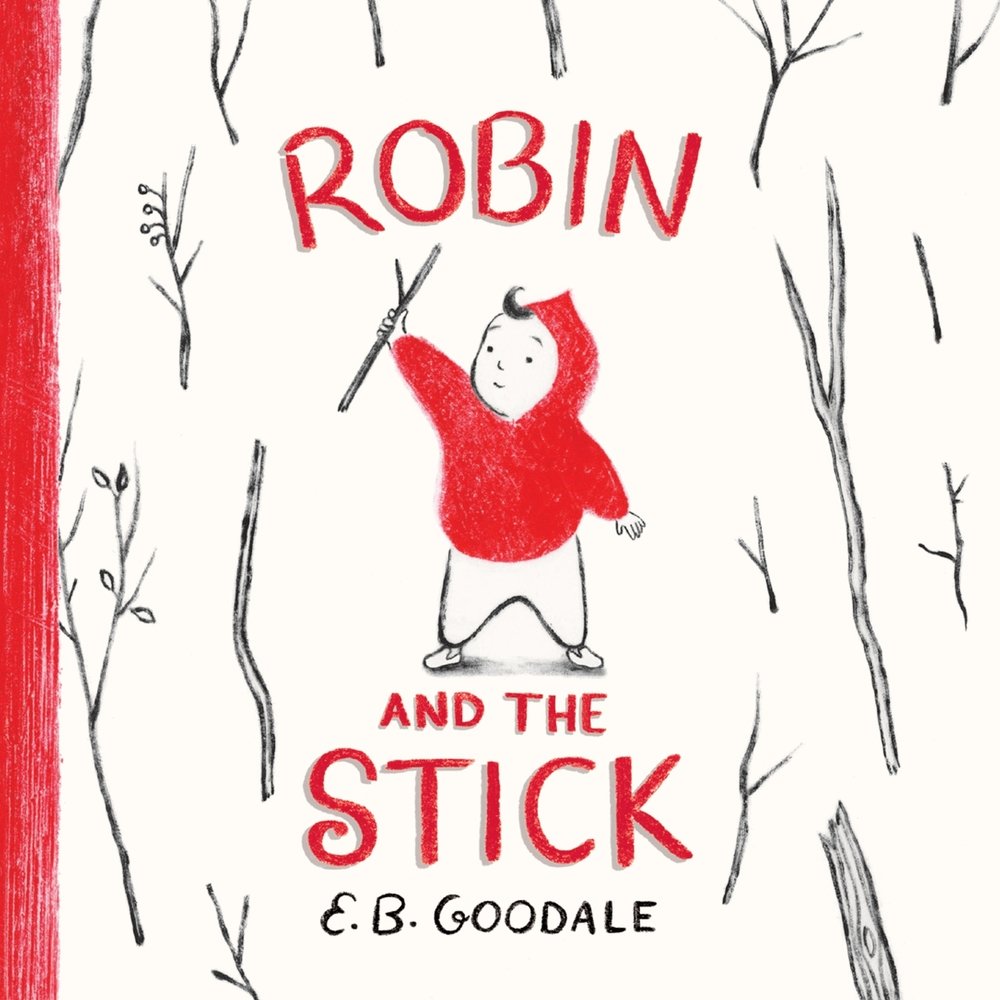
Robin and the Stick: A Picture Book by E.B. Goodale. Even the title is perfect: simple and quite serious. The pattern could be that of a Nobel Prize winning novel: Gustave and the Samovar: A Novel. And this picture book tackles a range quite as serious and quite as intense and evocative, with an artistry of quite as high level, as any in picture books. I say in picture books, because while I’d say this one has a literary mastery which matches much of literature, it adds the extra level of illustration, and I’m taking both into account.

I got the unusual pleasure of seeing an old librarian friend last week, so we performed the usual ritual of “Hello, it’s been forever! What books have you particularly liked lately?” I think it’s lovely we say “hello” before getting down to the real business. And the title we both started with was Robin and the Stick. This has been the single most frequently referenced book in my circles lately, but mostly by my own little boy. It is a simple and pure masterpiece, easy to read, and easy to reread, and in the tradition of every great picture book the final page turn leaves you simultaneously satisfied with the richness of the experience and lingering with further thoughts and a maelstrom of feelings.

The book has an extremely simple plot. Robin likes sticks, and finds one that’s too big to pick up. Eventually, Robin is able to pick it up and carry it home.

I have a particular passion for books not overburdened with plots and characters. Plot and character create unnecessary clutter. Robin and the Stick has absolutely no clutter. The art is created with monoprint and oil paints on Masa paper, all in textured black and white with red for Robin’s outfit, suiting the brightness of the character without overwhelming the scene. The elements are simple; the effect is deep and rich. Note: this is very hard. When a picture book creator limits the elements to such an extent, what they gain is room to develop and experiment, but there’s nothing to distract the reader, so, bluntly, they have no room to hide. There is no room for failure or it shows.

Here we have two characters, but Robin is the primary figure. The book is, in essence, a bildungsroman as Robin grows and matures and comes to terms with understanding and identifying what is a stick vs a branch, and how to relate to it, overcome it, and master it on its own terms. The secondary figure of the mother is going through her own developmental process, observing her child develop autonomous thought and abilities, and reconciling herself to the new state.

NB: We, as readers, are not told anything about Robin beyond Robin being a small human child, apparently toddler on the cusp of that indeterminate age every parent knows: bigger than toddler but we can’t really say big kid yet because we can’t. This gives the reader room. Robin is very real on the page, mind you, and a very true and complete child, but the limited elements allow us to fill in detail. In my head, Robin is about a 3-year-old boy because Robin is so clearly as my boy was. Every parent and teacher will fill in the inessential details with equal realism from their own experience, however.

The remarkable thing is that all of this comes so simply, so naturally. Robin’s mother has few lines: “Today you are the biggest you’ve ever been!” Robin is clearly pleased. Robin feels loved. But Robin doesn’t quite know what that means, but contentedly goes along playing and walking with Mama and collecting sticks from the big old tree that drops them on the ground. Until one day Robin finds the biggest, the best stick, on the ground. “Oh, honey,” said Mama, “that’s not a stick, that’s a branch!”

This is the big deal. Yet another opaque parental idea. What makes this not a stick? It’s on the ground like all the other sticks, and has come from a tree, and, ultimately, what makes a stick a stick? What makes a toddler a toddler or a child a child? What are these categories adults are obsessed with, so often dealing with size and growth, and why do they matter?

“It’s only a stick if you can pick it up off the ground. That is a BRANCH!”

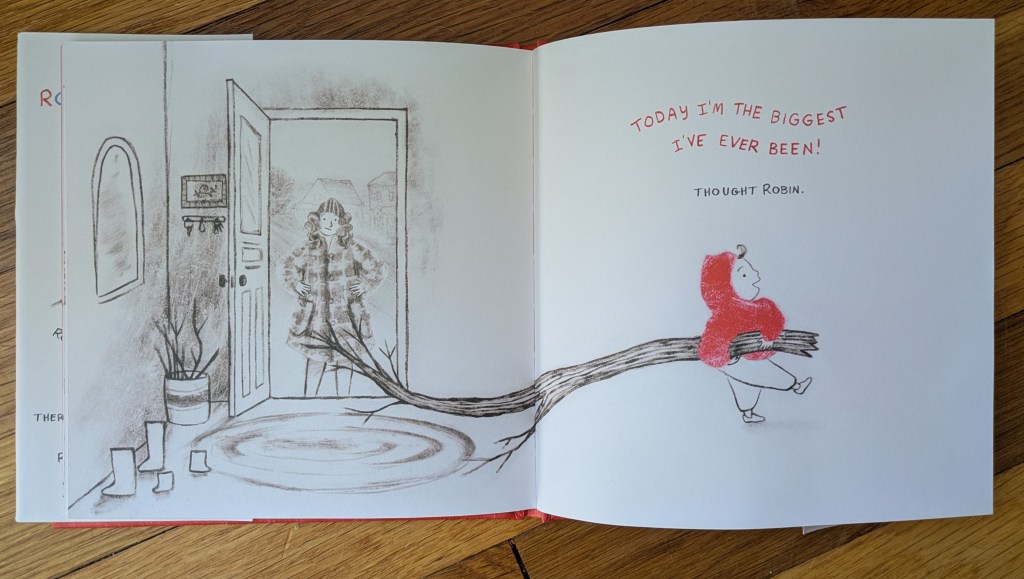
Ah. That clears things up. And, as any parent knows… Do Not Set Boundaries You Do Not Want A Clever Child To Overcome. Thus we come to the final page turn– and I can only explain what I mean about the art doing so much of the work by sharing the moment:

Range, depth: here it all is. Robin’s pride in mastery and understanding. And what, exactly, is Robin’s mother thinking and feeling? Though I’ve experienced the moment myself, I still have no way of putting it fully into words. E.B. Goodale, however, captured it in pure, simple truth.

What a masterpiece.

The Rare Bird

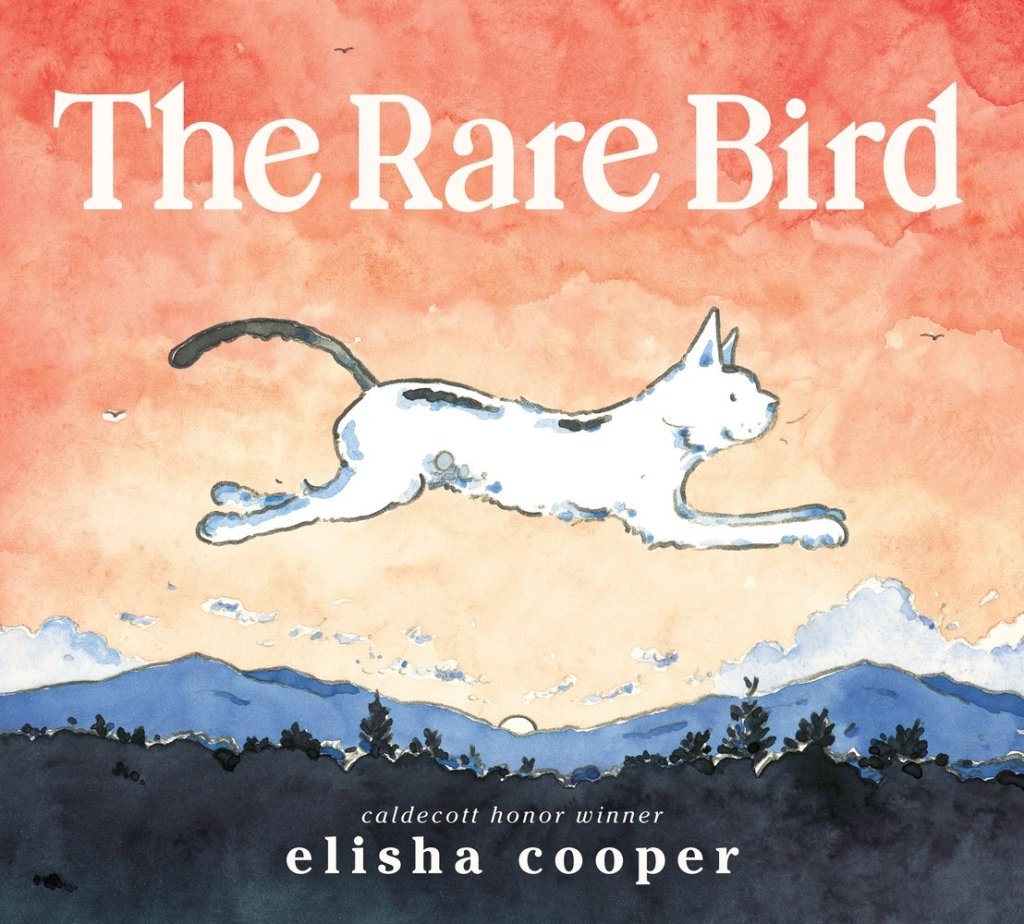
I want to say that I found next year’s Caldecott except that I think that when I say that it’s the kiss of death. Even so, I will say that Elisha Cooper’s The Rare Bird has all the elements that, in my estimation, show the creativity, sensitivity, and skill in art and narrative that take a picture book from “good” to “true art.”

I’m hoping that’s sufficiently periphrastic to avert the curse.

The absolutely first point is that no one, and I mean absolutely no one, draws a cat like Elisha Cooper. I could have stopped at “draws,” end of sentence, and that’s also true. His style is distinctive and has a deftness and vivid elegance I admire enormously.

I would say that in today’s picture book world there are three artists I think of as a style set: Elisha Cooper, Barbara McClintock, and Sergio Ruzzier. They all work with deft, loose lines. They all have great humour. They all communicate more and say less. All of this is as true of their text as their art. But each is highly distinctive: if you put down an illustration by each of them in a row, no one could confuse them. Sergio’s art is hilarious, Barbara’s is elegant, and Elisha’s is spare, economical. (This is extremely broad strokes, of course.) I have never, ever seen an artist do more with less than Elisha Cooper.

I have also never seen a single author since Maurice Sendak capture my youngest child’s attention and love so fully.

Mac Barnett and Jon Klassen have been harping on forever (and I’m here for it, I love it) about the need for art and text in a picture book to leave room for each other, for each to do things the other is not.

The Rare Bird does this in an utterly fresh way, and watching my little one pick up on that at the first reading, the way his smile grew and his eyes sparked with interest, was mesmerizing. He even noticed what the endpapers were doing as part of the narrative. The oddest sense came over me that there was a book above the book, a story above the story, that was doing something in parallel– hovering independently.

The book is absolute nonsense of the wisest kind. It’s not a bird, it’s a cat! Not a fish, not an elephant, not a forest, not a sea– a cat in an apartment!

My kid didn’t say any of that. He knew the story the cat (bird) (panda) was telling. He recognized it because he’s a kid who lives through story narratives of his own. A dancer, a book-lover, a storyteller in his own right. That’s what books do for us. That’s what art does for us.

Art will live forever, he knows, whether literary art, performing arts, visual arts– the art of the imagination above all– because through art we can be the rarest bird: a Bluebird, a Firebird, a cat climbing the curtains in a NYC apartment bird.

He could see that in the pages of this book without me pointing out a thing. He laughed with delight at the sheer playfulness of the Rare Bird’s double story, but he also shone with recognition, because that’s his story, too. It’s mine, it’s his, and it’s probably yours.

Don’t you think that a book that can evoke all that for a five-year-old, and with the finest lines and warmest watercolours in the coolest shades of blue deserves a Caldecott?

This is a book that’s easy to read the first time, but beautiful to read the second. After that, it might become something of a cult.

Never bored, really

How is it, we wonder, as we put down a plate to go pick up our phone, turn to get the coffee but see a plate, and say, “What is it NOW?” when our kid says, “Mama?” and feel a bit bad for snapping, that our kids can keep saying “I’m booored”? Why can’t they just do something?

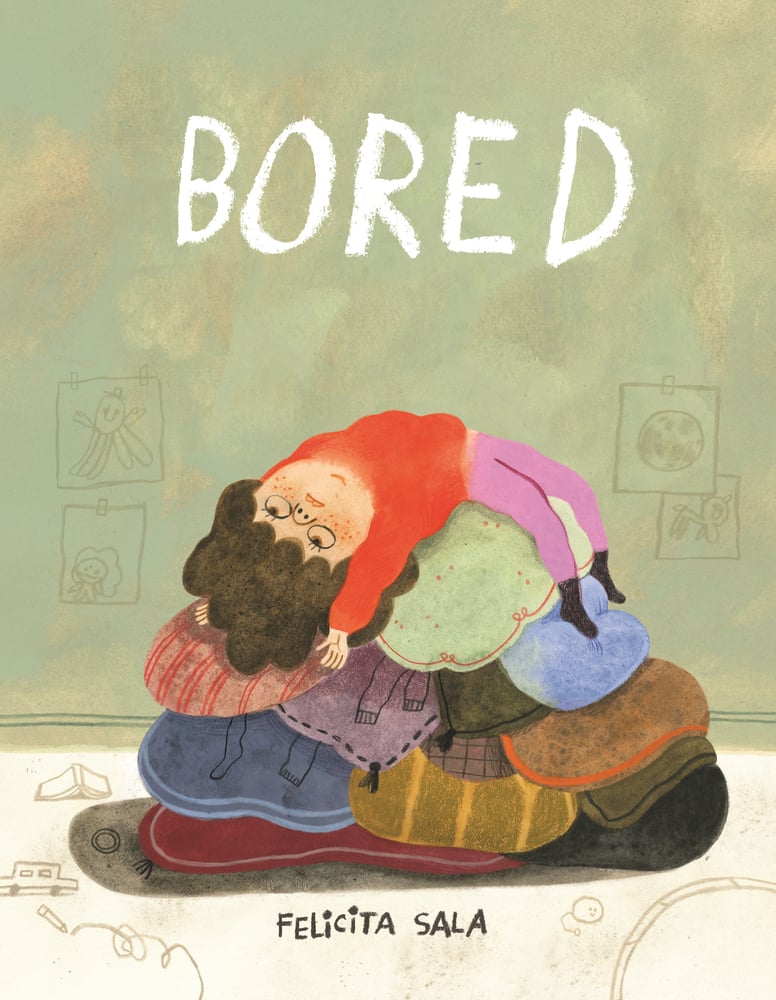
Well, I’m bored of books about being bored, for one, and approached Felicita Sala’s new book, Bored, with something approaching morbidly cautious curiosity. Felicita Sala is in my pantheon of authors who manage a freshness in putting the child’s view into a book without prettifying, and often without attempting to resolve it.

Yonatan, the utterly brilliant owner and bookseller at Adraba Books in Jerusalem, and I were discussing Is It Asleep? by Olivier Tallec, and he pointed out that the book didn’t try to answer everything. It simply put down the emotional reality. Isn’t grief an interesting thing that happens? We feel all that and we do these things when we’re angry and sad and grieving.

Boredom is another interesting thing that happens. Am I genuinely interested when I’m juggling phone, plate, coffee cup, and exhaustedly snapping at my kids? Of course not. And my kids are bored because I’m not paying attention and they want to do something interesting. If I thought enough about it, I’d be bored at that time, only I’m too busy being worn out to be properly bored. Being bored can be great, because just think of all the interesting things that come out of boredom. For example, if you’re really bored by books about being bored, you may, and I’m going to take a stab in the dark and guess this may have happened to Felicita Sala… Make a book like this.

Books about being bored go like this:

Child is bored, child realizes that even in the greyest and most dull days there is a subtle charm of things to do, child recognizes the true glory of a fragile skeleton leaf with a passion that would bring the wisest philosopher to shame, and is no longer bored.

To be fair, I own some of these and they can be good. Many are serviceable in a classroom for your social-emotional learning curriculum, so go ahead and get them. Some have quite nice art. They are rarely fine literature, or a perfect example of the picture book. And I actually don’t even think this is the pinnacle of Felicita Sala, who set herself a fantastically high bar with If You Run Out of Words.

But she brought a freshness to a really dull, worn out topic in picture books, painting an honest picture of boredom in both language and art. It turns out that, represented accurately, Rita’s boredom is an absorbing topic. Being bored takes Rita on a journey, being bored positively explodes reality into infinity, creating new people from the very fabric of her mind, and squaring the circle of imagination.

In form, I’m not sure that Felicita Sala’s Bored is all that different from the standard “books about being bored,” but in quality, the sheer tangibility of Rita’s boredom on the page feels more textured, more accurate.

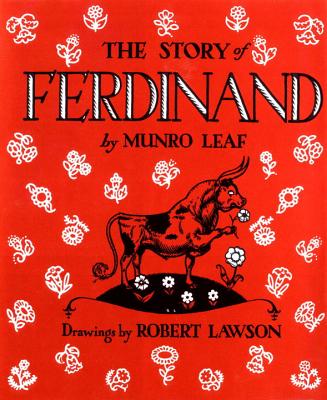
I continue to wonder what’s so fascinating about boredom to picture book creators, mind you. Let’s think of The Story of Ferdinand by Munro Leaf and Robert Lawson, for example. I hadn’t read this in ages– I think I thought the Changeling would be scared of Ferdinand’s danger, but my little one pretty much is Ferdinand, so I had to read it to him, and it was brilliantly rewarding.

He understood instinctively how Ferdinand didn’t want to fight or be rough, because he’s a sweet boy who hates fighting and roughness. He loves flowers, and Ferdinand loves flowers. But I noticed the mother, at the beginning, who initially worried her little baby bull wasn’t like the others and would be lonely until accepting he’s just like that.

And the book simply left it as such: he wasn’t like the others, he preferred quietness, and, having been utterly, good-naturedly gentle and unexcitable, he was dropped off at home and that’s it. It should be a boring ending. Deflating, anticlimactic. And, somehow, it’s not. It simply puts it down, and leaves it at that:

We, rooting for Ferdinand being who he is, a gentle, beautiful, flower-loving bull, are glad to see he goes home to his cork tree.

What is there to be afraid of in boredom? Felicita Sala was, I imagine, wondering. And after running off with Rita, I feel quite pleased to say I found her boredom a little too exciting for my taste, all things considered, but it was a gorgeous read-aloud.

Best of 2025?

I wasn’t going to do one of these. I’ve tried and tried to get behind “Best of” lists– they may, I’m told repeatedly, be entirely subjective, but they’re useful to booksellers and librarians! Don’t you like booksellers and librarians, Deborah?

Yes. I adore them. I love librarians so much that when my very favourite librarian asked me if I was going to write up books I’d loved this year, instead of saying, “No! I shall not! I fly in the face of convention! Best of lists are terrible things, because the only correct taste is mine, and I refuse to enter muddied waters. And, anyway, 2025 wasn’t a great year for books, in my view– what do you think, Amy?” I hesitated. And then she mentioned it again. And then we were emailing and she sent me her best books, which were interesting to read about and made me think– and then I went to the Boston Athenaeum and talked to the children’s librarian there and casually asked her what books she’d liked– and suddenly I had a list. Except then the unthinkable happened: I got locked out of this account and was forced to fold laundry instead.

So, finally, here goes. Buy local, or from a children’s book shop (how about Turtle Books or Woozles or Mabel’s Fables?), or go to your library and chat with the children’s librarian. Children’s librarians are, quite simply, the best.

I’m not being deliberately antagonistic or sassy when I say I think it wasn’t a great year. I genuinely think that award committees should be feeling a pinch this year in the good books department. That said, the books that did impress me this year were ones that I think would stand out in almost any year. So here goes, starting with a polar bear…

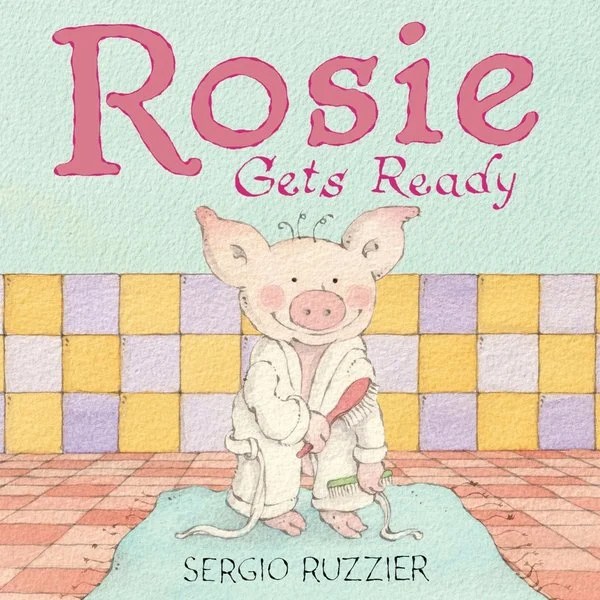
It’s hard to think back this far, but Bianca and the Butterfly by Sergio Ruzzier was January 2025. It’s been a repeat read, and it’s the kind of book that challenges me to improve my reading of it. It’s easy to read well, but by repeat experience I’ve found that it has a lot more to say when read beautifully. It’s been requested by name not just by my own little one but by my nieces visiting from Israel. “I want Bianca again, please, Auntie Deb!” The art is so stupendously good that I have two pieces framed and I catch visitors stopping and looking at them. This is what I mean when I say that the books that were good this year had a lot going for them: text that grabs the reader, art that arrests the eye.

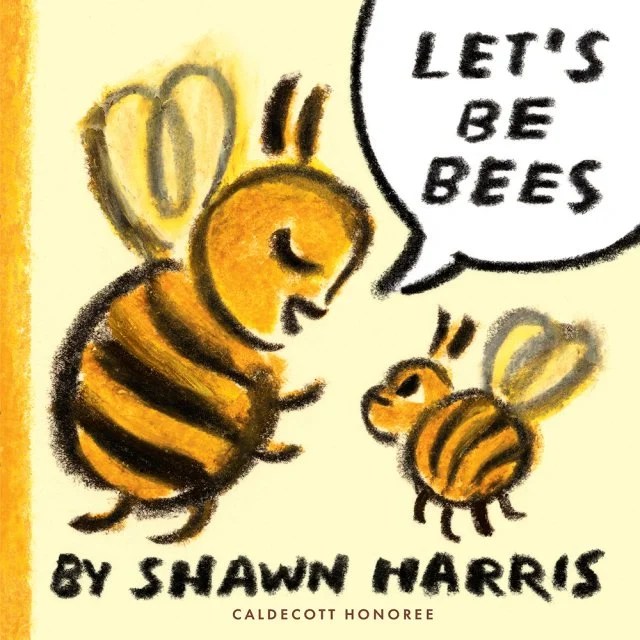
Let’s Be Bees by Shawn Harris was my early Caldecott pick because, frankly: a) it’s that good, b) so many others I thought were worthy aren’t eligible. And it’s still my top pick. The art is brilliantly soft, careful, and deliberate. It is refined to the highest degree of alignment with the text, while never overlapping too much. The tone matches; the art amplifies. Thank God the publisher was on board with allowing good paper for this exceptional book. That cheap glossy paper would have utterly undercut the art, but the matte finish, in addition to being more durable and pleasant for the reader, gives the art the medium it deserves.

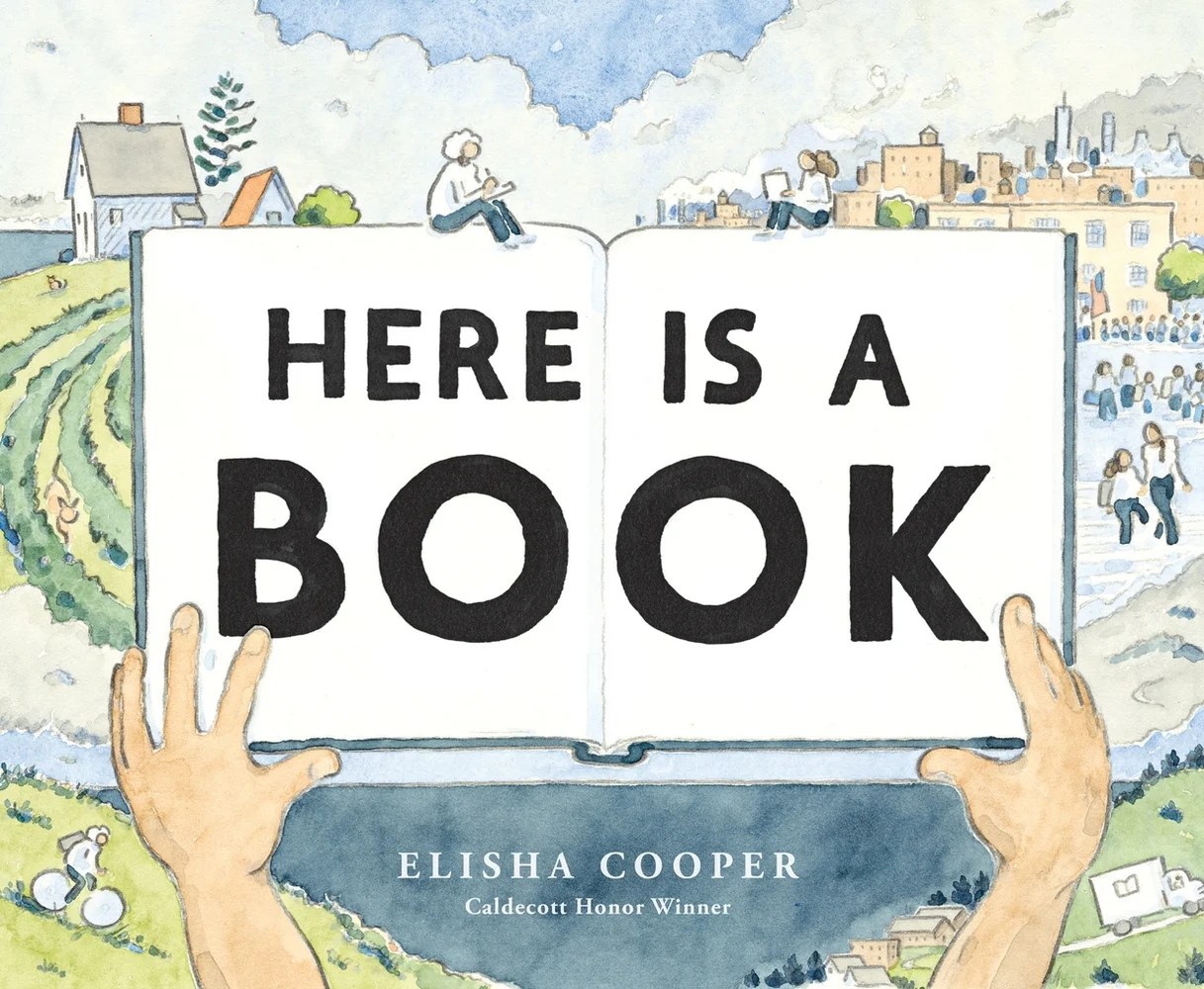
Elisha Cooper’s Here Is a Book was a masterly achievement of sentiment without sentimentality. It conveyed the work and love of book making and book enjoyment with down to earth tenderness. I always love Elisha’s art, and this is no exception (the blues, oh the blues), but the poetry of the text was top of mind for me in this book. I think the word count was likely higher for this book than many of his others, but without ever feeling one word too many. They have a firm ring to them, a textured loveliness, that is satisfying in the mouth and opens the heart.

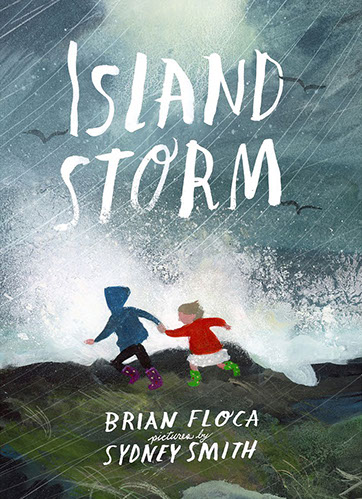
Brian Floca and Sydney Smith’s Island Storm was the book naturally closest to me of the whole year. It was from my mind, memory, and soul, and felt illustrated from my own hometown. It did not have the advantage of good paper, and I think that was next step to criminal. Sydney Smith’s art was luminously reflective, both figuratively and literally; the gleam of light on window and water was a huge achievement in his art. To put that on glossy paper where electric lights inevitably conflict with the light in the art was a decision I can’t get behind. That said, the brilliance of interplay between text and art, each embracing the other and adding more and more, gave it a crackling electricity of its own: human love in the grip of nature’s massive and impersonal power.

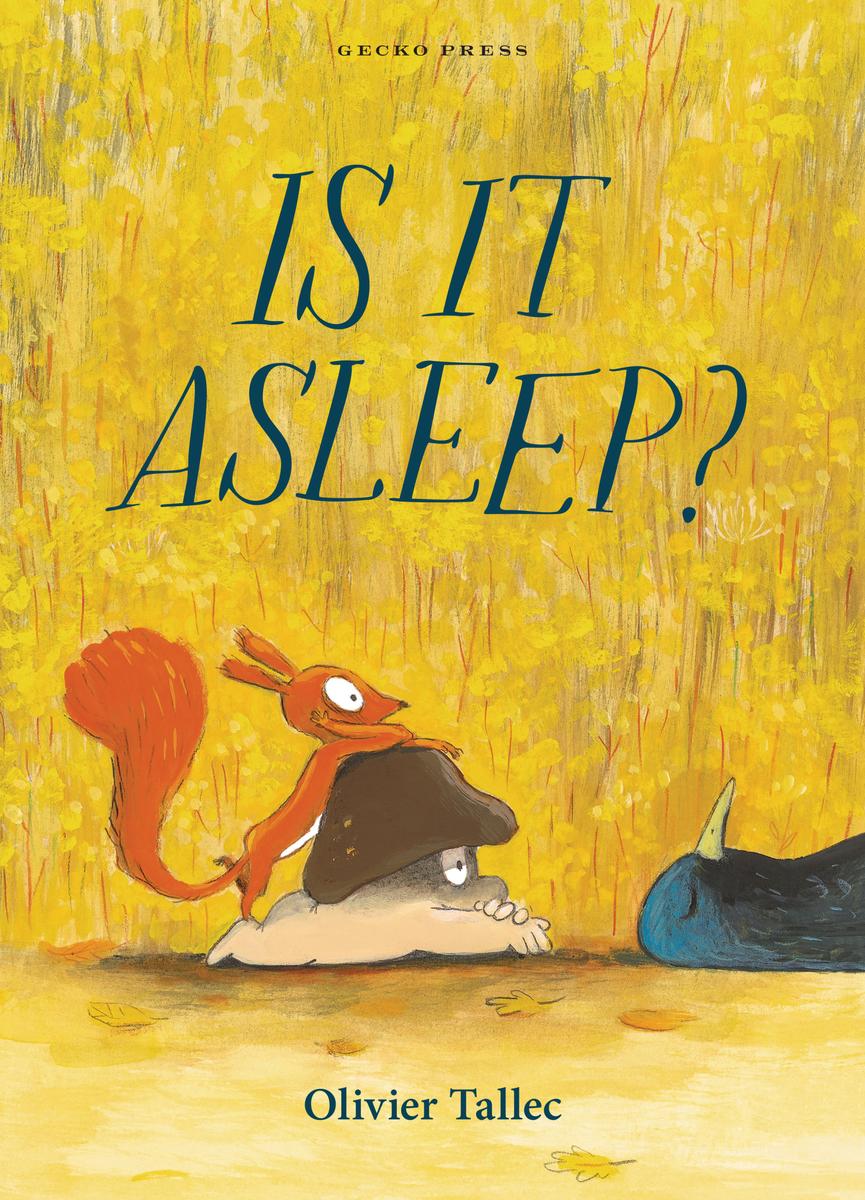
But the surprise books for me this year weren’t ones from people I knew or sources I see regularly. Is It Asleep? by Olivier Tallec would have been unknown to me if it hadn’t been for Yonatan at Adraba Books in Jerusalem, whom I was delighted to see for the first time in six years. He has the best taste of almost anyone I know, and sees the European books that don’t often make it into the American circles. I would have been sad to miss this one. Olivier Tallec is a huge favourite of mine; he has the energy of line of Sergio Ruzzier, with a similarly mischievous logic. Tallec doesn’t bother explaining death or telling you what to do or how to grieve. He simply shows it. And then it is. No platitudes, no moralizing. Let it be.

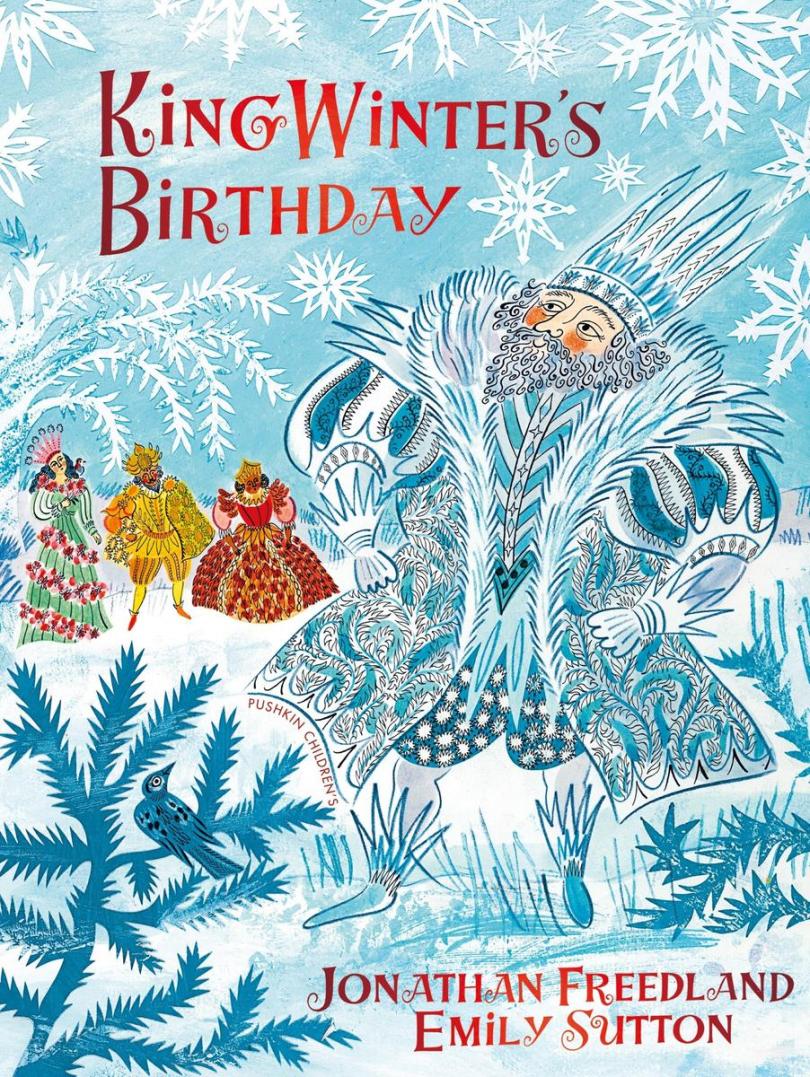
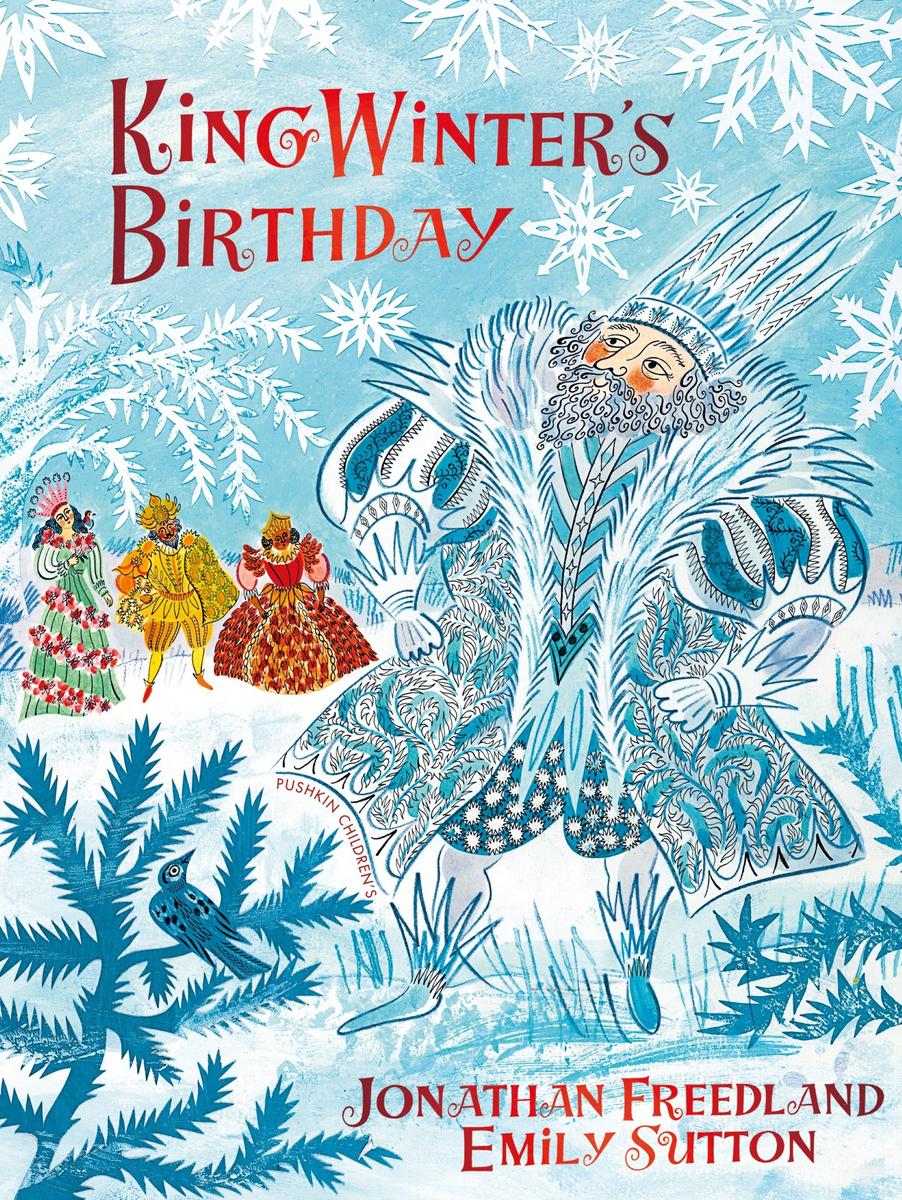
The other book that was a revelation was King Winter’s Birthday, from Pushkin Press, which I found at the Boston Athenaeum. Based on a manuscript from Ulrich Alexander Boschwitz, whose name should certainly have been on the cover, incidentally, it’s a fable, a myth, a fairy tale. It’s melancholy and beautiful and unresolvable. The story was found and then retold in its current form by Jonathan Freedland, and the art by Emily Sutton honours the roots and the entire atmosphere of the story. The pathos of the story’s story could overwhelm the story itself; I’ll let you search and find that story yourself. But for the lover of fable and myth, of fairy tale and folklore, the book stands on its own and says more about author than the author says about the book.

Each of these books would be enough for a good year in books, and I’m delighted to be able to tell you about a whole six that are of such high quality, so rooted in technique and skill, and so fresh in some form or other.

But I’m not doing another Best of list. At least not until the next person talks me into it.

A Welcome to Turtle Books!

We didn’t just buy the home where I’ve lived these past several years, which the kids call The Big Red Barn (it’s neither big nor a barn, but it is red), because it was walking distance from the Children’s Book Shop, but I can’t say it wasn’t a motivating factor. And when it closed, about three years ago, I was devastated. What went with Terri’s shop wasn’t just the space, and wasn’t just the access to a curated selection of children’s books; it was a space to reach her long memory, her expertise, her exceptional skills as a bookseller. That was irreplaceable.

Even so, I was thrilled, albeit cautiously, to see the news that a new children’s book shop, to be called Turtle Books, was going to be opening right across the street from the old Children’s Book Shop. Clearly, I wasn’t the only one who felt the loss, and Bruce and Cathy Jacobs, the owners of the new shop, had decided to put their energy and efforts into this venture rather than simply lamenting what was gone.

This shop is absolutely brand new, but if it’s a baby book shop, it’s an adorable one.

Please observe, and note the little doorway.

Is the selection good? Yes, and it’s a broad selection– old and new books, generally good to very good ones. There are more novelty books, more gift editions, than Terri had.

Is it a nice space? See photos above! The small craft table with turtle colouring sheets and crafts behind that arch is a lovely touch. My small Spriggan got The True and Lucky Life of a Turtle by Sy Montgomery and Matt Patterson from the shop and made a Fire Chief snapping turtle at the table.

What do you think, Deborah? It’s a lovely new shop, and you’d better bet I’m going to be giving them every purchase I can. No, they do not (yet) have a long, deep knowledge of children’s literature, and the store hasn’t yet found the kind of character and identity of an established book shop. You know how you can tell when you’ve walked into a store with a story? That comes with time.

What Terri knew came with experience: she could size up a kid and a family in less than a second, and tell them the book they needed to get. She also told me what not to buy. “I’m not letting you get that,” she would say flatly, “it’s a terrible edition. Go find the old, out of print edition. It’s better.” Sometimes I’d find myself in there just because I felt– blah. I would walk out with a book (it’s rude to leave a shop without buying something) and the feeling of elevation that came with a story about Ashley Bryan and the history of all his bright colours on the page.

This isn’t the Old Children’s Book Shop, and it never will be. That was its own story. But Turtle Books has chosen an excellent mascot: Slow, with an old memory, and a long future, if properly cared for. That in itself shows knowledge of children’s books, and if they continue with that vision, they will create something beautiful here. I wish them all success, and I definitely think that if you’re local, and have any holiday shopping to do– go to Turtle Books, and browse and buy!

Magic in the Mist

It’s been a tiring late summer and beginning of autumn on many fronts and for many people, to put it periphrastically and platitudinously. Or to adopt my friend’s blunter framing: “September is supposed to be for new beginnings but everyone is burnt out.” As a Jew, facing Rosh Hashanah, that resonates, and as an autumn-and-Halloween-loving soul longing for October, expecting September to be the build up to that best of months, I still agree. Something should be new and fresh about the year as we go back to school and back to cooler temperatures and back to routines…

Back. It’s funny, isn’t it, how going back and expecting something new come together in September? And every near year, especially at Rosh Hashanah but I think also in the Gregorian calendar (let’s think of the Janus in January), we look back and forward at the same time. Think of these sayings: “Everything old is new again,” “Plus ça change, plus c’est la même chose.” Which is all a long way around what I want to say which is:

Let’s read an old book. One of the things I love about Mac Barnett and Jon Klassen over at Looking at Picture Books is that they look at the old books and analyze just what’s at work in them. (Though I often have a few extra notes, because– I’m me. You can have two of the best creators in contemporary kids’ lit diving deeply into a picture book and I’m still going to think they haven’t gone far enough.)

The platitudinous, tame idea of a retrospective, of looking back as well as forward at a new year, is that it’s good to understand our past, our foundations, for where we will go in future. In short: what can we learn so we can do something with it? This may, possibly, be a decent approach if the goal is to understand something about, say, why we stopped exercising one week into January. It’s not useful in trying to understand book creation, the allure of art, or the creative heart of humanity– and maybe part of why we’re all so burned out. (Spoiler alert: we’ve lost track of the beauty of humanity in the world, as well as humanity’s craving for beauty.)

Which brings us to Magic in the Mist by Margaret Mary Kimmel and Trina Schart Hyman.

The first thing to understand about this book is that it tells you pretty much nothing. The book has barely more plot than Freight Train, one of the most perfect stories out there. I’m not sure of how to define the time frame, plot, or characters. The setting is pretty clear– it’s a leaky hut beside a bog in Wales, usually in the mist. Generally speaking, when someone says, “[Book X] would never be published today!” I think, “How on earth do you know that?” I never agree with them. But with this one, I’m fairly confident it wouldn’t find a publisher; it’s very quiet, very grey, and relies entirely on atmosphere, evoked by Trina Schart Hyman entirely through dark lines without colour. Picture books today by and large are lean in text, rich in colour, personality, and activity. Most want a plot and characters. This, by contrast, is rich in lines of text and art, and lean in pretty much everything else.

It is also utterly and completely perfect. (Also: out of print. Published in 1975 by Margaret K. McElderry. You’re on your own for this one– I recommend biblio.com or alibris.com, or your local library.)

Thomas, who lives in this leaky house beside the bog, is studying to be a wizard. Why? And does he have a teacher? Family? What is his motivation and where did he come from? Idle questions, all! Also, he doesn’t seem to be very good at it. His magic is weak and he can’t even light a fire. But a toad does hang out with Thomas, and Thomas calls him Jeremy. Jeremy is good company, and hums, and once his humming seems to do something a bit magic, and Thomas goes out and finds a tiny dragon and brings the dragon home with him and feeds him. The dragon helps him light a fire in the grate, then leaves quietly in the night. And Jeremy and Thomas hum together sometimes after that. Sometimes his spells work. That’s about it.

I refuse to make my summary prettier or tidier; it would be to prettify and tidy up a book which has very, very little to do with that line of story. Instead, every single element of the power of this book comes from evocation: the text evokes images which are echoed and amplified but not fully realized by Trina Schart Hyman’s lovely lines; the two echo together in the mind’s eye until something forms there; the something in the mind stirs up thoughts of “didn’t I once hear or read–” and maybe a small melody, like a toad humming, unfolds in some of the lesser used bends in your memory.

Why look back? Because a book like this has value in itself. If you try to learn a lesson from it to build on it in your own book– you’re going to fail. It’s the sort of thing you read and re-read and it will, absolutely, do you good, but it’s not a magic pill and it’s not a lesson-book. It simply enhances you to read it and think about it. And it’s beautiful, pleasant in its deeply unsettling oddity.

What you can learn is that we’ve always made beautiful things, and sometimes the current drive to make things fit into a diagram of some kind doesn’t result in beautiful things. But we, we poor humans, need beauty to survive with any kind of humanity. Beauty isn’t in resolution or usefulness or happy endings; it’s in itself, and in a book well-made of its own unsettlingly odd kind.

So, this September, this new year– as you look back and plan forward– think about being a bit useless sometimes, and go to a museum, read a beautiful book, throw your smartphone in the trash and, after a moment’s reflection, follow up with your other smart devices, and utterly neglect your email. Go to the ballet to see fellow humans give their bodies to beautiful lines onstage, and go to the opera to hear humans give their voices to the most soaring heights. At the symphony, you’ll hear the clear lines of melody coming together in harmony. (Make sure you’ve already trashed your phone, because that way no phones will go off during the performances.)

And remember that once upon a time, two women made a small book that was simply unfolding a glimpse of a boy striving to be a wizard, though he wasn’t very good at it, but one day when his toad hummed, they met a baby dragon for a little bit. And that glimpse– was it. In lines of text and art, none perfectly clear, but inscrutably perfect.

Aggie and the Ghost: Interview with Matthew Forsythe

I have to emphasize here that Matthew Forsythe (whose latest picture book Aggie and the Ghost, will be coming out August 19 so pre-order it at that link) must be a real, flesh and blood person, because he produces books that are published by real publishers and are wonderful and I read them with my children, and that’s a thing real people do. But I have a bit of a suspicion, not unlike my views on the Ahlbergs, that there’s something a bit special here. Look, it’s obvious that Sergio Ruzzier walks the borders of art and reality and records what he sees in between. Elisha Cooper disappears periodically into the woods, and then his editors get a manuscript in the mail, and when they open the parcel an unexpected ash leaf falls out. People across history and geography have noticed a woman who looks astonishingly like Barbara McClintock sitting and sketching.

Well, Matthew Forsythe can understand animals. Rather as Princess Imani in the story of “Kupti and Imani” understood the monkeys disclosing the healing properties of the leaves in the crown of the tree above her, and just as the snake cleaned the ears of Melampus so he could understand all creatures, Matthew Forsythe sits and draws and listens to the chatter of birds around him. I don’t know if a snake cleaned his ears, though; I didn’t ask that in the interview, down below my absurd chatter.

Rather obviously the face of someone who can understand animals.

Does it matter that all of this is patently made up and these are real people who do real, and very hard, and often frustrating, work? Of course it matters. But this is the way readers have always coped with understanding genius. Barthes declared the death of the author in very obvious self-defense; let the weirdo stories critics invent be about someone else, I’m dead over here. Ignore me. The real story (rather than The Real Story), as in the interview below, is that authors and illustrators of exceptional skill learn by doing. And they do a lot. Interesting as it is to talk to authors and illustrators (something I love to do), there’s rarely an inside scoop beyond just needing to do the work, and needing to keep at it. It’s all in the practice of developing understanding over time and a strong, focused attention to detail and gut instinct.

But it’s just possible a few secrets from the birds get in there, too. I think. What do I know?

In Aggie and the Ghost, Matthew Forsythe takes us into a haunted solitude. Aggie, about whom we know nothing except that she exists and has a fantastic coat with a pointy hood, is excited to live alone. Like the witch in Kazuno Kohara’s Ghosts in the House!, she founds out that the house is haunted. Unlike the little witch, Aggie is not thrilled. She wants to be alone. With the ghost, she is never alone. The ghost is rather like an extremely annoying cat: stealing socks (my Pollux is a vicious thief), disturbing the nights (every cat ever), and eating all the cheese (Castor, you great furry basketball, cheese isn’t good for cats). Here is the pattern: Aggie sets rules; the ghost breaks rules. In folkloric tradition, the stalemate is set to be solved by a challenge: if Aggie wins, the ghost moves out of the house. The game? Tic-tac-toe. (I screamed laughing; I don’t know why I expected chess. Chess is obviously only when you challenge Death.) I won’t spoil the ending, because you really will enjoy following the journey to the end as you read this with any child, ages about 3 to 5, depending on the kid. The conclusion is deeply satisfying, and no one but Matthew Forsythe could have gotten there by a ruthlessly logical yet utterly original story pathway, all sparsely told through beautiful art as much as language.

The deepest delight to me in reading this book, in fact, was the unexpected and original pathway. Those touches that could only have come from this one author, this one illustrator. The challenge to tic-tac-toe is a prime example but note the following twists in the conversation: There’s a potentially saccharine setup for a confessional heart-to-heart by the ghost, we get a beat with a page turn, and then Aggie asks, “Are you wearing my scarf?” “Yes,” replies the ghost.

Aggie may be irritated, but she is also unflappable. The ghost is immovable. Consistently, Matthew Forsythe shows he’s listening to the world around him (probably all those birds), and defying the conventional patterns of rote stories. Juxtapositions of the odd, the unexpected, and the relentlessly logical (no one, not even a Man Faced Owl, can disrupt the game) highlight for the adult the conventions we’ve come to expect while, for the kid, the adherence to their eclectic and delightful tastes over and above the prating lessons they hear so often is both enriching and exciting. And, of course, done with such skill, such artistry, such attention to detail–

Thunder crashed, and then– without warning–

I got to interview him.

(Thank you to S&S for the review copy and the chance to send interview questions to one of the author-illustrators I admire most; thank you Matthew Forsythe for taking the time to read my densely wordy questions, which I am, below, cutting to essentials. Matthew’s answers are left complete, of course, since his words are the more important here.)

DRF: You do not write in verse. But metrics matter within your prose, providing stress cues to the reader and supporting the voice through the narrative. To what degree does the pattern of metrics (moving from iambs to a trochee, for example) consciously occur to you when you’re writing? Do you have a method? Is this something you notice as you write and edit? Do you seek le mot juste, as it were, for sound and sense?

MF: Yes, actually, Paula (my editor) and I have some wonderful conversations about les mots justes. I am not thinking in any formal way about poetry (I had to look up “trochee”), but yes the rhythm and cadence of the words and page-turns is very important to me. I do read the books aloud to myself many, many times. It really does reveal everything when you do that.

DRF: I find your ability to represent farce seriously to be the pinnacle of what’s done in picture book humour. The dead seriousness of the tic-tac-toe match in the face of every chance at disruption is hilarious. Did you have a model for this form of humour? Does it derive from any influences, do you think, consciously or not?

MF: Thank you. The deadpan game of tic tac toe is from The Seventh Seal and the knight’s game of chess with death. I think also the absurdism of Monty Python and everything by Rohald Dahl were big for me when I was a kid.

DRF: The best compliment I ever get as a gift-giver is when someone says, “I actually like reading the books you gave us out loud, so can you recommend others? I want more of the kind I don’t mind reading over and over again.” I’ve never seen a book from you yet that’s a dud in this regard, so I want to ask the expert. Is there a sign to yourself that you need to throw something out, because it won’t work? How do you produce work that so consistently respects the child as an audience, and pulls the adult with the kid?

MF: There was a long sequence in Aggie and the Ghost that involved the game of tic tac toe and the Man Faced Owl. I gave the book to my friend Katie to read to her daughter, Mary. Mary got up and wandered off in the middle of that sequence. Mary was clearly giving us a note that it was boring. So, I cut eight pages. Having said that, I am ultimately writing for myself. Writing towards what I think is funny and what I think it interesting. Because it’s an endless game trying to write for anyone else and it’s difficult just enough to write for yourself.

DRF: Oh, extra question because I’m so amazed: How do you get birds to eat from your hand? I am absolutely stunned. I’m not surprised, because you’re clearly magical, but I’m stunned.

MF: I also am amazed whenever a bird will eat from your hand. I think this is usually in areas where wild birds have gotten used to being fed. 

A huge thank you, again, to Matthew and to the nice people at S&S! Pre-order Aggie and the Ghost either at that link or from your local indie book shop!

Two Girls: Peachaloo and Peggy

I haven’t written about novels very often recently for the very simple reason that, for the most part, I’ve been ambivalent about, simply forgotten about, or given up on most MG or YA novels I’ve read or started since Ferris, which, of course, I adored. This isn’t universal, of course. I’m deeply invested in Jessica Townsend’s Nevermoor series, but it’s so hard to write about a chunky fantasy series without getting into Fantasy Series Discourse, which I’m not keen to do. (Simply put: Jessica Townsend’s books are brilliantly funny, intelligent, tightly plotted with characters who remain true to themselves from book to book while simultaneously unfolding greater depth throughout. They are, simply put, more like Dickens than like Rowling.)

But, for the most part, I’ve been looking for something that I wasn’t finding, until I found two novels (both, interestingly, acquired and edited by superstar Taylor Norman at Neal Porter Books). These two books could not be more different, in many respects.

Behold Peachaloo in Bloom by Chris Raschka and Scattergood by H.M. Bouwman. One is bubbly, the other often bleak. One is set probably now, and the other in the past. One is optimistic, and the other enmeshed in the confusion of no right answers. The protagonist of one is named Peachaloo, and the other Peggy.

That said, both books are wise, both have their feet rooted in the ground where they sprouted, and both feature protagonists who are true to themselves as they can be. Alan Garner insists that it is integral to find your place and write from it; for him, it was his family land, going back for as long as could be. These books may not have had such an ancient lineage, but both have an extraordinary sense of rootedness, and that gives them a “potency of life” (thanks, John Milton) which allows them to move actively in the mind, spry and lively.

Let me start with Scattergood, largely because it’s such an unlikely book for me to recommend. Set during WWII, on the eve of the American entry into the war, it follows Peggy in quite a pedestrian timeline through her summer and into the beginning of the next year of school. She’s simply a farmer’s daughter in West Bank, Iowa, doing her chores and dealing with the folks she’s always been around and grown up with, and who grew up with her parents, and so on back. Until Scattergood, the Quaker school nearby, is reopened as a hostel for refugees from Hitler, Jews who managed to get away on a boat here or there, leaving family behind, sometimes hearing, as time goes by, of a death, or being stuck in a limbo of not-knowing. Against the background of all of this, 12-year-old Peggy, rational-minded and a burgeoning mathematician, is watching her dearest cousin, Delia, die of leukemia, which is a problem she can’t solve, and beginning to take notice of her parents’ marriage.

Novels I usually don’t enjoy include: anything gritty or bleak, anything involving the Holocaust, and anything that could be described by the words “coming of age.” I came of age once already, and didn’t much enjoy the process. And I’ve read too many novels for teens with Holocaust refugees, crushes, and internal agony, so this should be a novel I would pretend didn’t exist.

And yet– I won’t say that I loved it, I’m not even sure it’s a book I could imagine holding with the same cuddly affection I have for Rabbit Hill or Martin Pippin in the Apple Orchard. The rawness of tragedy is too real for that. But the scope of the book is not the war, not refugees, and not coming of age: it’s Peggy’s interiority, and watching a teenaged mind and soul unfold to accept the limits of what is knowable and of action.

I will admit that I still don’t love so much attention to crushes in YA, including Scattergood. The romance was certainly done with sensitivity and fit in with the larger scope of the story; it didn’t feel tacked on. Even so, the tactile truth of the book was rural Iowa during the looming shadow of WWII over the USA, the fear of the draft, the poverty, the hard work, and the Quaker school, Scattergood, reopened as a hostel for the traumatized refugees, every single one of whom has lost everything and everyone (or, at least as bad, is living in the uncertainty of wondering if anyone is left). This is the context Peggy is living in, but its her mind, puzzling out what that means, that we functions as our window onto the area of West Bank, Iowa. In that world, leukemia is incurable; loss of control for a few minutes means a farming accident that costs money and limbs; and there’s no such thing as denial of responsibility.

Frankly, the very truth of it, the unwillingness to take the easy road in storytelling, the integrity of reality in Peggy’s story makes Scattergood a hard read, but Peggy is dearly worth getting to know, and so are various others in her life. Above all, I want to credit H.M. Bouwman for her staggeringly detailed research (I looked up Dr. E.C. MacDowell: he existed and studied leukemia in the 1940s, yes, and that link is for my husband), and her combination of sensitivity and down-to-earth directness as she shows us real people through Peggy’s eyes, but without passing judgment. You can judge them, as the reader, but I don’t think she wants you to. I encourage you simply to get acquainted. Once you do, you’ll find it hard to get them out of your head.

Peachaloo in Bloom by Chris Raschka should seem frivolous after this. Lightweight, funny, and cheerful, it’s the polar opposite– isn’t it?

Not on your Nelly. (I looked that up: variant forms are “not on your nelly” and “not on your Nellie,” and it’s UK slang, apparently, with earliest clear usage in 1959. Fascinating additional tidbit: the OED lists “Nelly” as Australian slang from the 1940s for cheap wine. This seems to be totally unrelated, but I have questions about what Nelly was up to. Or Nellie.)

There’s a frankly stupid tendency in criticism to privilege the grim or simply less-funny books as wiser, deeper, or better than funny ones. I’m going to go ahead and assume you’re better than that, so we’ll skate past that topic to focus instead on something altogether more interesting.

The true distinction between Peachaloo and Peggy and their respective books isn’t in heartbreak or confusion. It’s in circumstance. When Peggy’s life is upended and she finds herself trying desperately to understand her cousin’s needs and her friends’ and her own feelings, she doesn’t have an open chat with anyone until, at the very end, she unloads everything to the person she thought least likely. Peachaloo tells her beloved grandmother everything. She directly and openly tells her that she gained a superpower to understand the meaning behind others’ speech after she was stung by a wasp.

A summer in Fourwords, PA spent swimming with her grandmother and skipping with her friends is sheer glory to Peachaloo Piccolozampa: the rhythm of her walk, with one leg an inch shorter than the other, fits the rhythm of the town and its dance-skip approach to life and ritual. Peachaloo sees no reason to alter either or to pay either more than the most matter-of-fact attention. When new owners come to Ajax Mansion and plan to take what was once common ground and close it for profit, Peachaloo and her grandmother (as powerful and delightful a grandmother figure as any in literature) get to work. Their work? Delving into archives, interviewing, writing, auditioning, performing, and skipping. Much of this work has to do with history: the local history behind Ajax Mansion and the Skippers there; investigating the town’s myths and history relating to the bank robbers Ronnie and Donnie Day; honouring and understanding history while allowing time to evolve, and much more.

If you want to understand Helena and Peachaloo, I’d say the thing to do is add a few extra books to your reading list: read Joan Aiken, read Eleanor Farjeon. They’re worth it anyway, but the Piccolozampa willingness to see the world at a 45 degree angle from everyone else feels straight out of the oddball worlds those two authors recorded with such love.

Most interesting to me, though, as an academic type of adult, is the world and literary history I see enmeshed with the fictional local history in the book. What is Major Gasbag, the new owner of Ajax Mansion, doing, after all, but what the English landowners did for centuries: enclosing the commons? Peachaloo understands the wrongness intuitively, but our sense is that her academic-minded grandmother, Helena, a historian, has a library in her mind that tracks this farther back and across so much more time and space. We are with Peachaloo in this book, admiring her grandmother’s spunk and skill in speaking up for the Society of the Brothers and Sisters of the House of Ajax, that group of misfits who cared for one another and left the grounds open to the communal enjoyment and use of the entire town. We see her learning the skipping rhymes her grandmother collected and studied, and we see her deepening understanding of why this work is important.

But I, for one, also sense that there are depths to Helena Piccolozampa’s research unrevealed. Did Helena know of Elsie Piddock (from the mind of Eleanor Farjeon, in fact) and the skipping grounds of Caburn? Did she know of the Lord there who sought to enclose the top of Caburn and close it to the people, and of Elsie Piddock’s ploy to preserve it against his greed? I’m sure she did.

In the end, Peachaloo is surrounded by the closeness of her family, bigger and broader and more confident for her enrichment in standing up for truth, reality, and firmness in the face of gaudy cheapness. Peggy grew, too, through her understanding of human complexity and her acceptance of the truth, of the limits of the human ability to change outcomes, and of just how damned hard life is. But if you want to know these books– take a look at these covers.

Scattergood is marked by a painterly beauty, merging a firm foundation with an interior landscape (cover art by Angie Kang); and Chris Raschka’s classic looseness, with precision evoked rather than set down firmly, and ever faithful to the soul of the book.

If you’re looking for just a few more books to read before summer runs out, these are here for you. Scattergood if you need to chew on this unsolvable world, and Peachaloo in Bloom if you need laughter and hope, but Peggy and Peachaloo are two girls worth getting to know. I think they’d be friends.