We didn’t just buy the home where I’ve lived these past several years, which the kids call The Big Red Barn (it’s neither big nor a barn, but it is red), because it was walking distance from the Children’s Book Shop, but I can’t say it wasn’t a motivating factor. And when it closed, about three years ago, I was devastated. What went with Terri’s shop wasn’t just the space, and wasn’t just the access to a curated selection of children’s books; it was a space to reach her long memory, her expertise, her exceptional skills as a bookseller. That was irreplaceable.
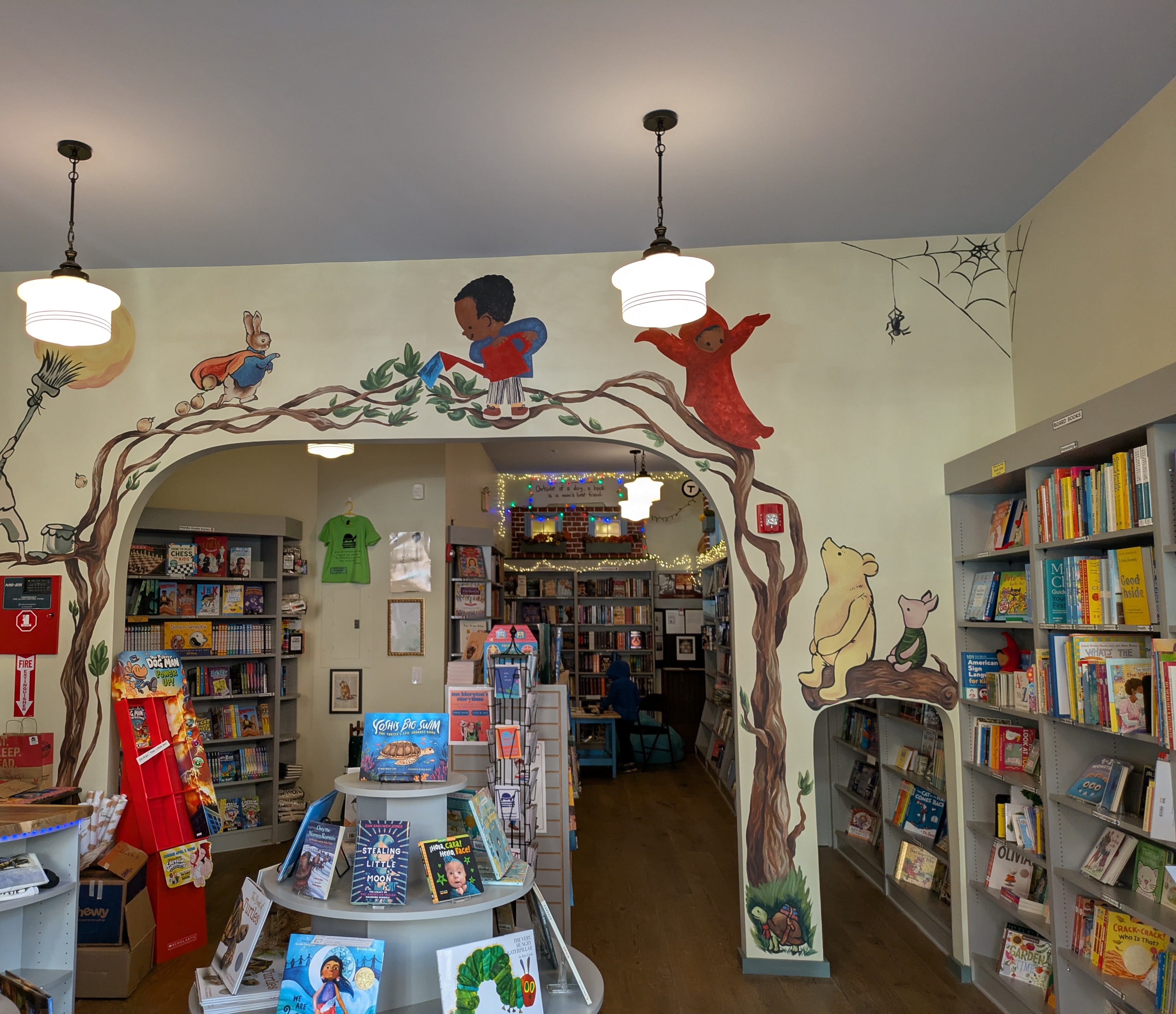
Even so, I was thrilled, albeit cautiously, to see the news that a new children’s book shop, to be called Turtle Books, was going to be opening right across the street from the old Children’s Book Shop. Clearly, I wasn’t the only one who felt the loss, and Bruce and Cathy Jacobs, the owners of the new shop, had decided to put their energy and efforts into this venture rather than simply lamenting what was gone.
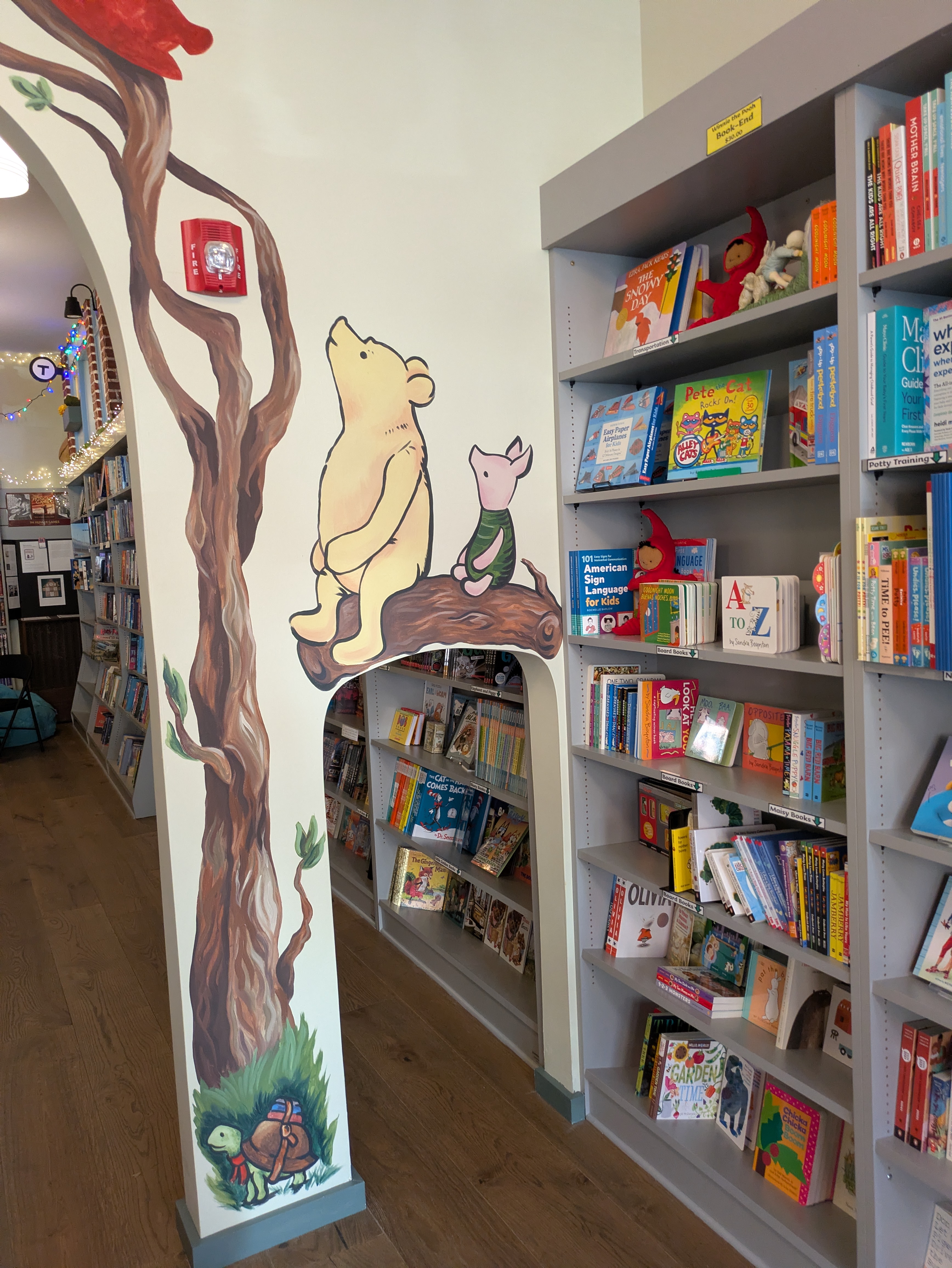
This shop is absolutely brand new, but if it’s a baby book shop, it’s an adorable one.
Please observe, and note the little doorway.
Is the selection good? Yes, and it’s a broad selection– old and new books, generally good to very good ones. There are more novelty books, more gift editions, than Terri had.
Is it a nice space? See photos above! The small craft table with turtle colouring sheets and crafts behind that arch is a lovely touch. My small Spriggan got The True and Lucky Life of a Turtle by Sy Montgomery and Matt Patterson from the shop and made a Fire Chief snapping turtle at the table.
What do you think, Deborah? It’s a lovely new shop, and you’d better bet I’m going to be giving them every purchase I can. No, they do not (yet) have a long, deep knowledge of children’s literature, and the store hasn’t yet found the kind of character and identity of an established book shop. You know how you can tell when you’ve walked into a store with a story? That comes with time.
What Terri knew came with experience: she could size up a kid and a family in less than a second, and tell them the book they needed to get. She also told me what not to buy. “I’m not letting you get that,” she would say flatly, “it’s a terrible edition. Go find the old, out of print edition. It’s better.” Sometimes I’d find myself in there just because I felt– blah. I would walk out with a book (it’s rude to leave a shop without buying something) and the feeling of elevation that came with a story about Ashley Bryan and the history of all his bright colours on the page.
This isn’t the Old Children’s Book Shop, and it never will be. That was its own story. But Turtle Books has chosen an excellent mascot: Slow, with an old memory, and a long future, if properly cared for. That in itself shows knowledge of children’s books, and if they continue with that vision, they will create something beautiful here. I wish them all success, and I definitely think that if you’re local, and have any holiday shopping to do– go to Turtle Books, and browse and buy!
It’s been a tiring late summer and beginning of autumn on many fronts and for many people, to put it periphrastically and platitudinously. Or to adopt my friend’s blunter framing: “September is supposed to be for new beginnings but everyone is burnt out.” As a Jew, facing Rosh Hashanah, that resonates, and as an autumn-and-Halloween-loving soul longing for October, expecting September to be the build up to that best of months, I still agree. Something should be new and fresh about the year as we go back to school and back to cooler temperatures and back to routines…
Back. It’s funny, isn’t it, how going back and expecting something new come together in September? And every near year, especially at Rosh Hashanah but I think also in the Gregorian calendar (let’s think of the Janus in January), we look back and forward at the same time. Think of these sayings: “Everything old is new again,” “Plus ça change, plus c’est la même chose.” Which is all a long way around what I want to say which is:
Let’s read an old book. One of the things I love about Mac Barnett and Jon Klassen over at Looking at Picture Books is that they look at the old books and analyze just what’s at work in them. (Though I often have a few extra notes, because– I’m me. You can have two of the best creators in contemporary kids’ lit diving deeply into a picture book and I’m still going to think they haven’t gone far enough.)
The platitudinous, tame idea of a retrospective, of looking back as well as forward at a new year, is that it’s good to understand our past, our foundations, for where we will go in future. In short: what can we learn so we can do something with it? This may, possibly, be a decent approach if the goal is to understand something about, say, why we stopped exercising one week into January. It’s not useful in trying to understand book creation, the allure of art, or the creative heart of humanity– and maybe part of why we’re all so burned out. (Spoiler alert: we’ve lost track of the beauty of humanity in the world, as well as humanity’s craving for beauty.)
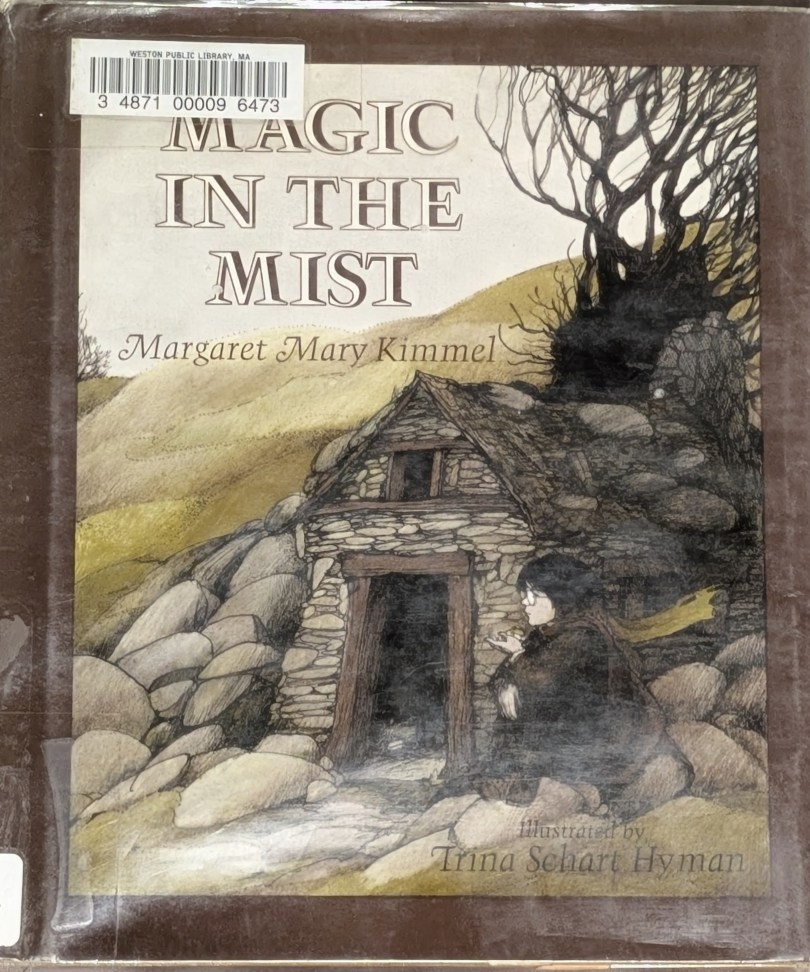
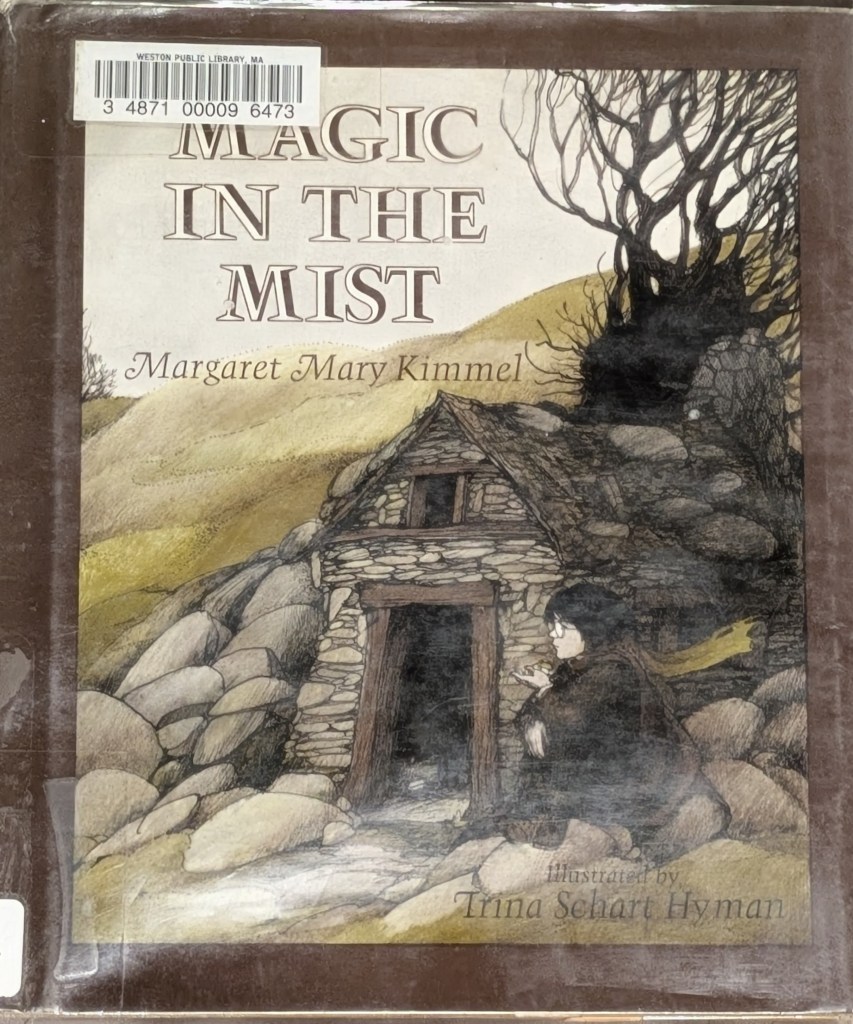
Which brings us to Magic in the Mist by Margaret Mary Kimmel and Trina Schart Hyman.
The first thing to understand about this book is that it tells you pretty much nothing. The book has barely more plot than Freight Train, one of the most perfect stories out there. I’m not sure of how to define the time frame, plot, or characters. The setting is pretty clear– it’s a leaky hut beside a bog in Wales, usually in the mist. Generally speaking, when someone says, “[Book X] would never be published today!” I think, “How on earth do you know that?” I never agree with them. But with this one, I’m fairly confident it wouldn’t find a publisher; it’s very quiet, very grey, and relies entirely on atmosphere, evoked by Trina Schart Hyman entirely through dark lines without colour. Picture books today by and large are lean in text, rich in colour, personality, and activity. Most want a plot and characters. This, by contrast, is rich in lines of text and art, and lean in pretty much everything else.
It is also utterly and completely perfect. (Also: out of print. Published in 1975 by Margaret K. McElderry. You’re on your own for this one– I recommend biblio.com or alibris.com, or your local library.)
Thomas, who lives in this leaky house beside the bog, is studying to be a wizard. Why? And does he have a teacher? Family? What is his motivation and where did he come from? Idle questions, all! Also, he doesn’t seem to be very good at it. His magic is weak and he can’t even light a fire. But a toad does hang out with Thomas, and Thomas calls him Jeremy. Jeremy is good company, and hums, and once his humming seems to do something a bit magic, and Thomas goes out and finds a tiny dragon and brings the dragon home with him and feeds him. The dragon helps him light a fire in the grate, then leaves quietly in the night. And Jeremy and Thomas hum together sometimes after that. Sometimes his spells work. That’s about it.
I refuse to make my summary prettier or tidier; it would be to prettify and tidy up a book which has very, very little to do with that line of story. Instead, every single element of the power of this book comes from evocation: the text evokes images which are echoed and amplified but not fully realized by Trina Schart Hyman’s lovely lines; the two echo together in the mind’s eye until something forms there; the something in the mind stirs up thoughts of “didn’t I once hear or read–” and maybe a small melody, like a toad humming, unfolds in some of the lesser used bends in your memory.
Why look back? Because a book like this has value in itself. If you try to learn a lesson from it to build on it in your own book– you’re going to fail. It’s the sort of thing you read and re-read and it will, absolutely, do you good, but it’s not a magic pill and it’s not a lesson-book. It simply enhances you to read it and think about it. And it’s beautiful, pleasant in its deeply unsettling oddity.
What you can learn is that we’ve always made beautiful things, and sometimes the current drive to make things fit into a diagram of some kind doesn’t result in beautiful things. But we, we poor humans, need beauty to survive with any kind of humanity. Beauty isn’t in resolution or usefulness or happy endings; it’s in itself, and in a book well-made of its own unsettlingly odd kind.
So, this September, this new year– as you look back and plan forward– think about being a bit useless sometimes, and go to a museum, read a beautiful book, throw your smartphone in the trash and, after a moment’s reflection, follow up with your other smart devices, and utterly neglect your email. Go to the ballet to see fellow humans give their bodies to beautiful lines onstage, and go to the opera to hear humans give their voices to the most soaring heights. At the symphony, you’ll hear the clear lines of melody coming together in harmony. (Make sure you’ve already trashed your phone, because that way no phones will go off during the performances.)
And remember that once upon a time, two women made a small book that was simply unfolding a glimpse of a boy striving to be a wizard, though he wasn’t very good at it, but one day when his toad hummed, they met a baby dragon for a little bit. And that glimpse– was it. In lines of text and art, none perfectly clear, but inscrutably perfect.
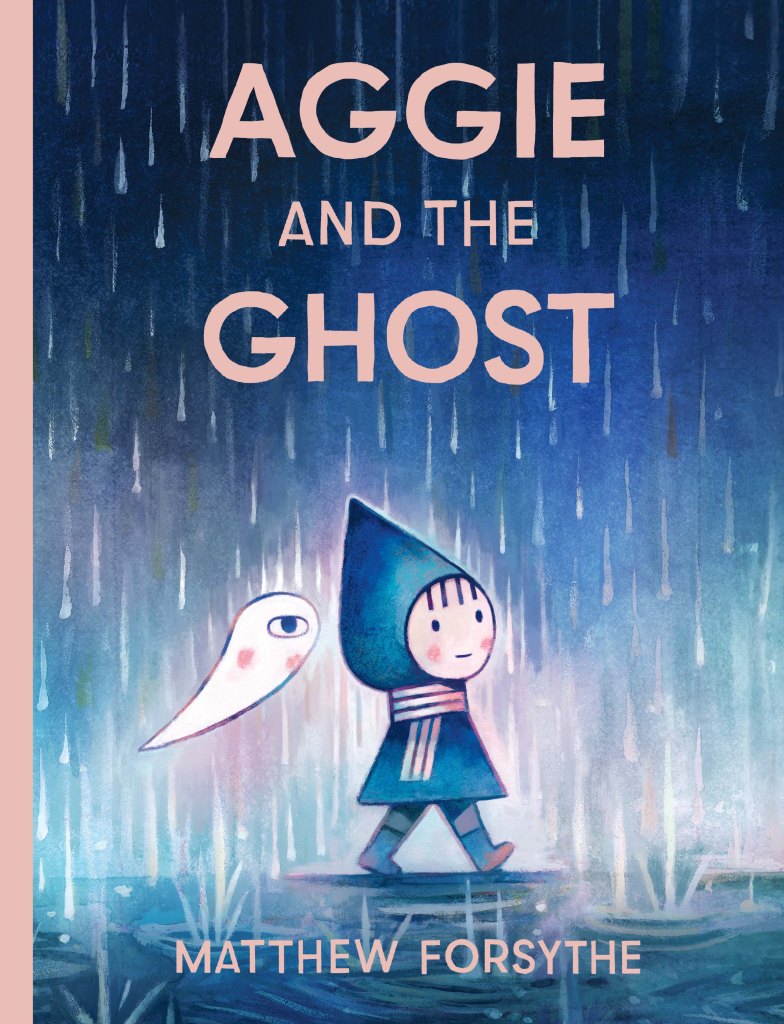
I have to emphasize here that Matthew Forsythe (whose latest picture book Aggie and the Ghost, will be coming out August 19 so pre-order it at that link) must be a real, flesh and blood person, because he produces books that are published by real publishers and are wonderful and I read them with my children, and that’s a thing real people do. But I have a bit of a suspicion, not unlike my views on the Ahlbergs, that there’s something a bit special here. Look, it’s obvious that Sergio Ruzzier walks the borders of art and reality and records what he sees in between. Elisha Cooper disappears periodically into the woods, and then his editors get a manuscript in the mail, and when they open the parcel an unexpected ash leaf falls out. People across history and geography have noticed a woman who looks astonishingly like Barbara McClintock sitting and sketching.
Well, Matthew Forsythe can understand animals. Rather as Princess Imani in the story of “Kupti and Imani” understood the monkeys disclosing the healing properties of the leaves in the crown of the tree above her, and just as the snake cleaned the ears of Melampus so he could understand all creatures, Matthew Forsythe sits and draws and listens to the chatter of birds around him. I don’t know if a snake cleaned his ears, though; I didn’t ask that in the interview, down below my absurd chatter.
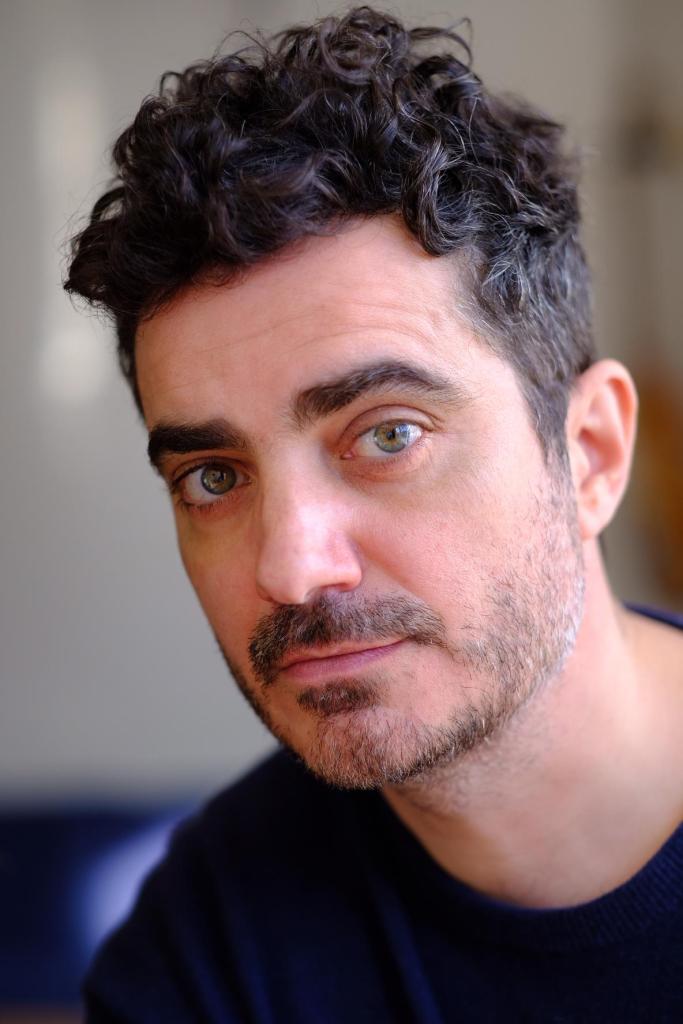
Rather obviously the face of someone who can understand animals.
Does it matter that all of this is patently made up and these are real people who do real, and very hard, and often frustrating, work? Of course it matters. But this is the way readers have always coped with understanding genius. Barthes declared the death of the author in very obvious self-defense; let the weirdo stories critics invent be about someone else, I’m dead over here. Ignore me. The real story (rather than The Real Story), as in the interview below, is that authors and illustrators of exceptional skill learn by doing. And they do a lot. Interesting as it is to talk to authors and illustrators (something I love to do), there’s rarely an inside scoop beyond just needing to do the work, and needing to keep at it. It’s all in the practice of developing understanding over time and a strong, focused attention to detail and gut instinct.
But it’s just possible a few secrets from the birds get in there, too. I think. What do I know?
In Aggie and the Ghost, Matthew Forsythe takes us into a haunted solitude. Aggie, about whom we know nothing except that she exists and has a fantastic coat with a pointy hood, is excited to live alone. Like the witch in Kazuno Kohara’s Ghosts in the House!, she founds out that the house is haunted. Unlike the little witch, Aggie is not thrilled. She wants to be alone. With the ghost, she is never alone. The ghost is rather like an extremely annoying cat: stealing socks (my Pollux is a vicious thief), disturbing the nights (every cat ever), and eating all the cheese (Castor, you great furry basketball, cheese isn’t good for cats). Here is the pattern: Aggie sets rules; the ghost breaks rules. In folkloric tradition, the stalemate is set to be solved by a challenge: if Aggie wins, the ghost moves out of the house. The game? Tic-tac-toe. (I screamed laughing; I don’t know why I expected chess. Chess is obviously only when you challenge Death.) I won’t spoil the ending, because you really will enjoy following the journey to the end as you read this with any child, ages about 3 to 5, depending on the kid. The conclusion is deeply satisfying, and no one but Matthew Forsythe could have gotten there by a ruthlessly logical yet utterly original story pathway, all sparsely told through beautiful art as much as language.
The deepest delight to me in reading this book, in fact, was the unexpected and original pathway. Those touches that could only have come from this one author, this one illustrator. The challenge to tic-tac-toe is a prime example but note the following twists in the conversation: There’s a potentially saccharine setup for a confessional heart-to-heart by the ghost, we get a beat with a page turn, and then Aggie asks, “Are you wearing my scarf?” “Yes,” replies the ghost.
Aggie may be irritated, but she is also unflappable. The ghost is immovable. Consistently, Matthew Forsythe shows he’s listening to the world around him (probably all those birds), and defying the conventional patterns of rote stories. Juxtapositions of the odd, the unexpected, and the relentlessly logical (no one, not even a Man Faced Owl, can disrupt the game) highlight for the adult the conventions we’ve come to expect while, for the kid, the adherence to their eclectic and delightful tastes over and above the prating lessons they hear so often is both enriching and exciting. And, of course, done with such skill, such artistry, such attention to detail–
Thunder crashed, and then– without warning–
I got to interview him.
(Thank you to S&S for the review copy and the chance to send interview questions to one of the author-illustrators I admire most; thank you Matthew Forsythe for taking the time to read my densely wordy questions, which I am, below, cutting to essentials. Matthew’s answers are left complete, of course, since his words are the more important here.)
DRF: You do not write in verse. But metrics matter within your prose, providing stress cues to the reader and supporting the voice through the narrative. To what degree does the pattern of metrics (moving from iambs to a trochee, for example) consciously occur to you when you’re writing? Do you have a method? Is this something you notice as you write and edit? Do you seek le mot juste, as it were, for sound and sense?
MF: Yes, actually, Paula (my editor) and I have some wonderful conversations about les mots justes. I am not thinking in any formal way about poetry (I had to look up “trochee”), but yes the rhythm and cadence of the words and page-turns is very important to me. I do read the books aloud to myself many, many times. It really does reveal everything when you do that.
DRF: I find your ability to represent farce seriously to be the pinnacle of what’s done in picture book humour. The dead seriousness of the tic-tac-toe match in the face of every chance at disruption is hilarious. Did you have a model for this form of humour? Does it derive from any influences, do you think, consciously or not?
MF: Thank you. The deadpan game of tic tac toe is from The Seventh Seal and the knight’s game of chess with death. I think also the absurdism of Monty Python and everything by Rohald Dahl were big for me when I was a kid.
DRF: The best compliment I ever get as a gift-giver is when someone says, “I actually like reading the books you gave us out loud, so can you recommend others? I want more of the kind I don’t mind reading over and over again.” I’ve never seen a book from you yet that’s a dud in this regard, so I want to ask the expert. Is there a sign to yourself that you need to throw something out, because it won’t work? How do you produce work that so consistently respects the child as an audience, and pulls the adult with the kid?
MF: There was a long sequence in Aggie and the Ghost that involved the game of tic tac toe and the Man Faced Owl. I gave the book to my friend Katie to read to her daughter, Mary. Mary got up and wandered off in the middle of that sequence. Mary was clearly giving us a note that it was boring. So, I cut eight pages. Having said that, I am ultimately writing for myself. Writing towards what I think is funny and what I think it interesting. Because it’s an endless game trying to write for anyone else and it’s difficult just enough to write for yourself.
DRF: Oh, extra question because I’m so amazed: How do you get birds to eat from your hand? I am absolutely stunned. I’m not surprised, because you’re clearly magical, but I’m stunned.
MF: I also am amazed whenever a bird will eat from your hand. I think this is usually in areas where wild birds have gotten used to being fed.
A huge thank you, again, to Matthew and to the nice people at S&S! Pre-order Aggie and the Ghost either at that link or from your local indie book shop!
I haven’t written about novels very often recently for the very simple reason that, for the most part, I’ve been ambivalent about, simply forgotten about, or given up on most MG or YA novels I’ve read or started since Ferris, which, of course, I adored. This isn’t universal, of course. I’m deeply invested in Jessica Townsend’s Nevermoor series, but it’s so hard to write about a chunky fantasy series without getting into Fantasy Series Discourse, which I’m not keen to do. (Simply put: Jessica Townsend’s books are brilliantly funny, intelligent, tightly plotted with characters who remain true to themselves from book to book while simultaneously unfolding greater depth throughout. They are, simply put, more like Dickens than like Rowling.)
But, for the most part, I’ve been looking for something that I wasn’t finding, until I found two novels (both, interestingly, acquired and edited by superstar Taylor Norman at Neal Porter Books). These two books could not be more different, in many respects.
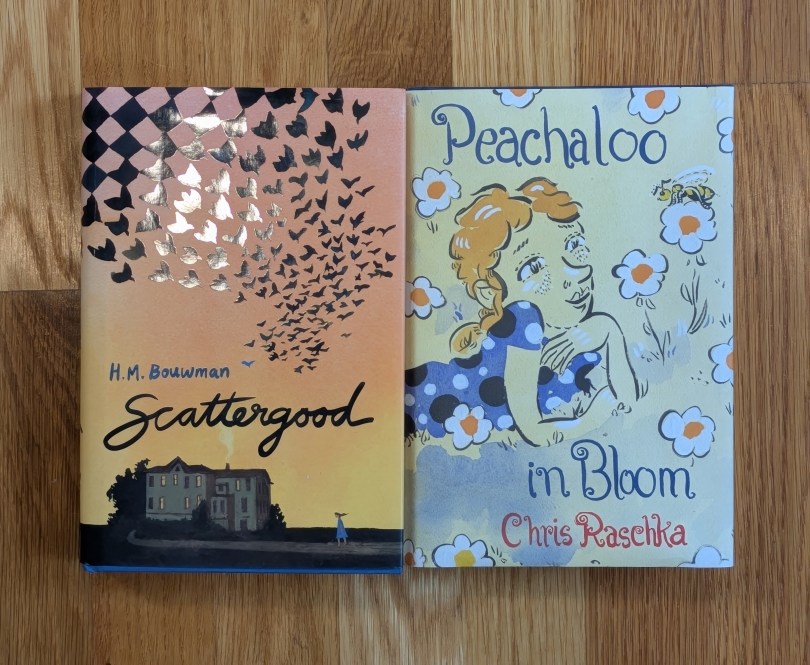
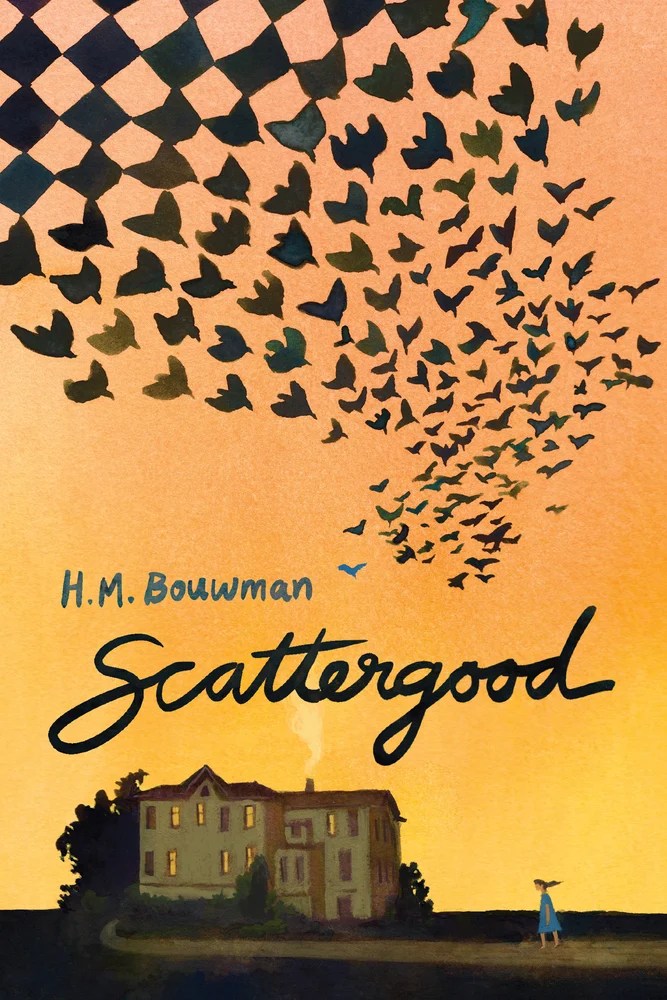
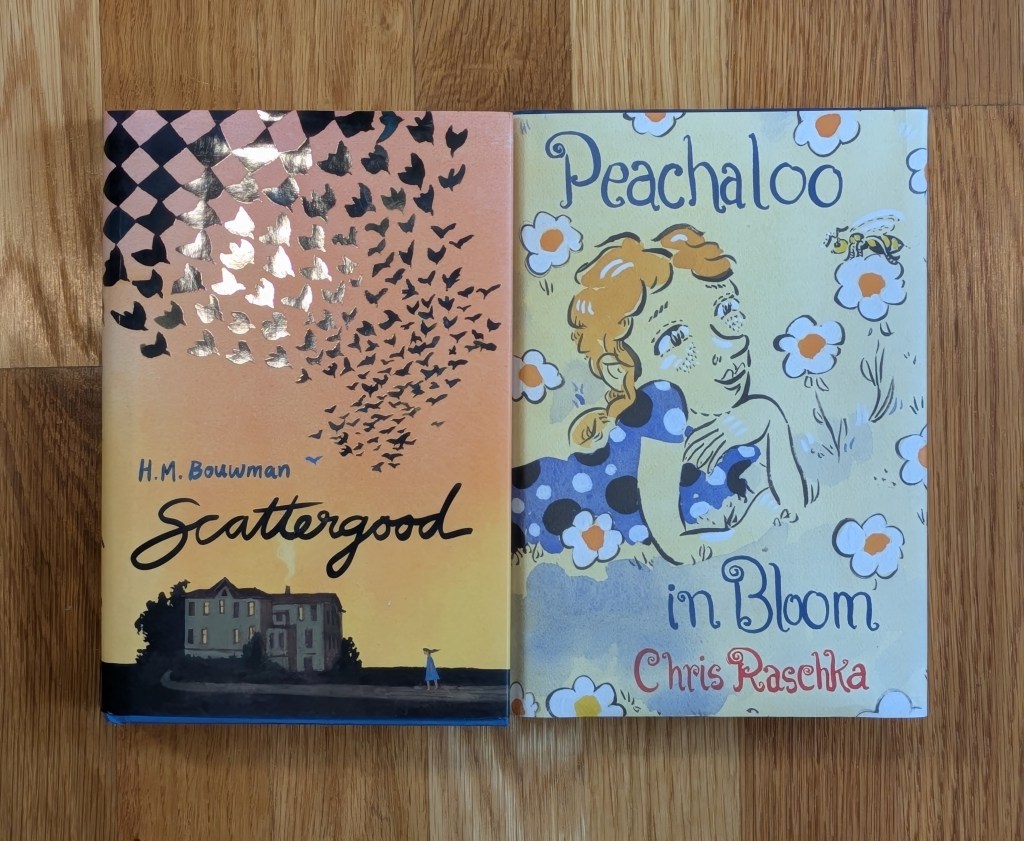
Behold Peachaloo in Bloom by Chris Raschka and Scattergood by H.M. Bouwman. One is bubbly, the other often bleak. One is set probably now, and the other in the past. One is optimistic, and the other enmeshed in the confusion of no right answers. The protagonist of one is named Peachaloo, and the other Peggy.
That said, both books are wise, both have their feet rooted in the ground where they sprouted, and both feature protagonists who are true to themselves as they can be. Alan Garner insists that it is integral to find your place and write from it; for him, it was his family land, going back for as long as could be. These books may not have had such an ancient lineage, but both have an extraordinary sense of rootedness, and that gives them a “potency of life” (thanks, John Milton) which allows them to move actively in the mind, spry and lively.
Let me start with Scattergood, largely because it’s such an unlikely book for me to recommend. Set during WWII, on the eve of the American entry into the war, it follows Peggy in quite a pedestrian timeline through her summer and into the beginning of the next year of school. She’s simply a farmer’s daughter in West Bank, Iowa, doing her chores and dealing with the folks she’s always been around and grown up with, and who grew up with her parents, and so on back. Until Scattergood, the Quaker school nearby, is reopened as a hostel for refugees from Hitler, Jews who managed to get away on a boat here or there, leaving family behind, sometimes hearing, as time goes by, of a death, or being stuck in a limbo of not-knowing. Against the background of all of this, 12-year-old Peggy, rational-minded and a burgeoning mathematician, is watching her dearest cousin, Delia, die of leukemia, which is a problem she can’t solve, and beginning to take notice of her parents’ marriage.
Novels I usually don’t enjoy include: anything gritty or bleak, anything involving the Holocaust, and anything that could be described by the words “coming of age.” I came of age once already, and didn’t much enjoy the process. And I’ve read too many novels for teens with Holocaust refugees, crushes, and internal agony, so this should be a novel I would pretend didn’t exist.
And yet– I won’t say that I loved it, I’m not even sure it’s a book I could imagine holding with the same cuddly affection I have for Rabbit Hill or Martin Pippin in the Apple Orchard. The rawness of tragedy is too real for that. But the scope of the book is not the war, not refugees, and not coming of age: it’s Peggy’s interiority, and watching a teenaged mind and soul unfold to accept the limits of what is knowable and of action.
I will admit that I still don’t love so much attention to crushes in YA, including Scattergood. The romance was certainly done with sensitivity and fit in with the larger scope of the story; it didn’t feel tacked on. Even so, the tactile truth of the book was rural Iowa during the looming shadow of WWII over the USA, the fear of the draft, the poverty, the hard work, and the Quaker school, Scattergood, reopened as a hostel for the traumatized refugees, every single one of whom has lost everything and everyone (or, at least as bad, is living in the uncertainty of wondering if anyone is left). This is the context Peggy is living in, but its her mind, puzzling out what that means, that we functions as our window onto the area of West Bank, Iowa. In that world, leukemia is incurable; loss of control for a few minutes means a farming accident that costs money and limbs; and there’s no such thing as denial of responsibility.
Frankly, the very truth of it, the unwillingness to take the easy road in storytelling, the integrity of reality in Peggy’s story makes Scattergood a hard read, but Peggy is dearly worth getting to know, and so are various others in her life. Above all, I want to credit H.M. Bouwman for her staggeringly detailed research (I looked up Dr. E.C. MacDowell: he existed and studied leukemia in the 1940s, yes, and that link is for my husband), and her combination of sensitivity and down-to-earth directness as she shows us real people through Peggy’s eyes, but without passing judgment. You can judge them, as the reader, but I don’t think she wants you to. I encourage you simply to get acquainted. Once you do, you’ll find it hard to get them out of your head.
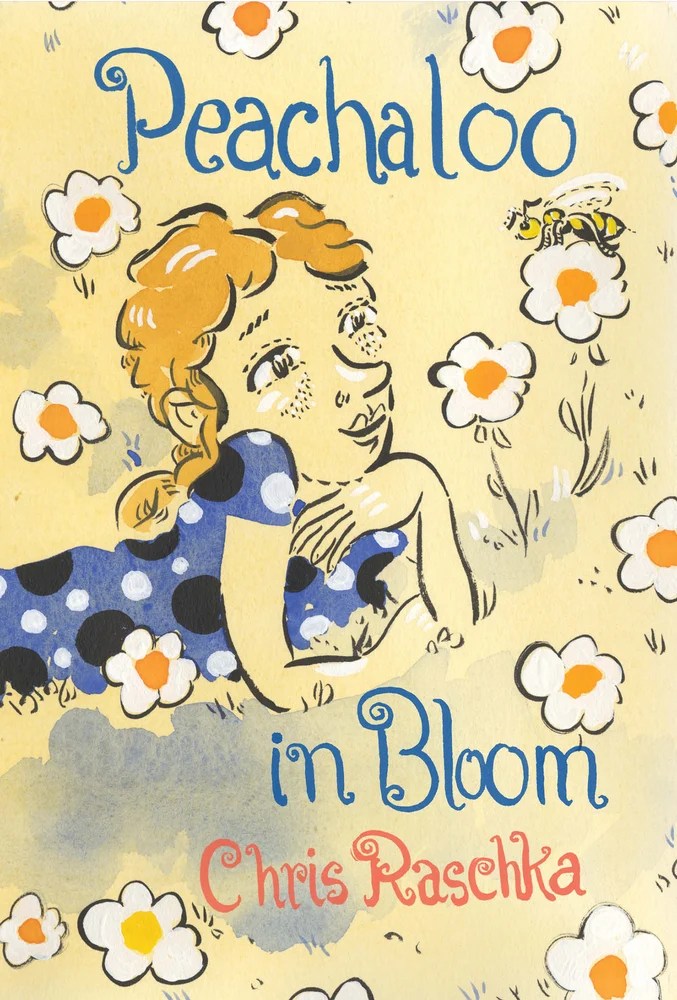
Peachaloo in Bloom by Chris Raschka should seem frivolous after this. Lightweight, funny, and cheerful, it’s the polar opposite– isn’t it?
Not on your Nelly. (I looked that up: variant forms are “not on your nelly” and “not on your Nellie,” and it’s UK slang, apparently, with earliest clear usage in 1959. Fascinating additional tidbit: the OED lists “Nelly” as Australian slang from the 1940s for cheap wine. This seems to be totally unrelated, but I have questions about what Nelly was up to. Or Nellie.)
There’s a frankly stupid tendency in criticism to privilege the grim or simply less-funny books as wiser, deeper, or better than funny ones. I’m going to go ahead and assume you’re better than that, so we’ll skate past that topic to focus instead on something altogether more interesting.
The true distinction between Peachaloo and Peggy and their respective books isn’t in heartbreak or confusion. It’s in circumstance. When Peggy’s life is upended and she finds herself trying desperately to understand her cousin’s needs and her friends’ and her own feelings, she doesn’t have an open chat with anyone until, at the very end, she unloads everything to the person she thought least likely. Peachaloo tells her beloved grandmother everything. She directly and openly tells her that she gained a superpower to understand the meaning behind others’ speech after she was stung by a wasp.
A summer in Fourwords, PA spent swimming with her grandmother and skipping with her friends is sheer glory to Peachaloo Piccolozampa: the rhythm of her walk, with one leg an inch shorter than the other, fits the rhythm of the town and its dance-skip approach to life and ritual. Peachaloo sees no reason to alter either or to pay either more than the most matter-of-fact attention. When new owners come to Ajax Mansion and plan to take what was once common ground and close it for profit, Peachaloo and her grandmother (as powerful and delightful a grandmother figure as any in literature) get to work. Their work? Delving into archives, interviewing, writing, auditioning, performing, and skipping. Much of this work has to do with history: the local history behind Ajax Mansion and the Skippers there; investigating the town’s myths and history relating to the bank robbers Ronnie and Donnie Day; honouring and understanding history while allowing time to evolve, and much more.
If you want to understand Helena and Peachaloo, I’d say the thing to do is add a few extra books to your reading list: read Joan Aiken, read Eleanor Farjeon. They’re worth it anyway, but the Piccolozampa willingness to see the world at a 45 degree angle from everyone else feels straight out of the oddball worlds those two authors recorded with such love.
Most interesting to me, though, as an academic type of adult, is the world and literary history I see enmeshed with the fictional local history in the book. What is Major Gasbag, the new owner of Ajax Mansion, doing, after all, but what the English landowners did for centuries: enclosing the commons? Peachaloo understands the wrongness intuitively, but our sense is that her academic-minded grandmother, Helena, a historian, has a library in her mind that tracks this farther back and across so much more time and space. We are with Peachaloo in this book, admiring her grandmother’s spunk and skill in speaking up for the Society of the Brothers and Sisters of the House of Ajax, that group of misfits who cared for one another and left the grounds open to the communal enjoyment and use of the entire town. We see her learning the skipping rhymes her grandmother collected and studied, and we see her deepening understanding of why this work is important.
But I, for one, also sense that there are depths to Helena Piccolozampa’s research unrevealed. Did Helena know of Elsie Piddock (from the mind of Eleanor Farjeon, in fact) and the skipping grounds of Caburn? Did she know of the Lord there who sought to enclose the top of Caburn and close it to the people, and of Elsie Piddock’s ploy to preserve it against his greed? I’m sure she did.
In the end, Peachaloo is surrounded by the closeness of her family, bigger and broader and more confident for her enrichment in standing up for truth, reality, and firmness in the face of gaudy cheapness. Peggy grew, too, through her understanding of human complexity and her acceptance of the truth, of the limits of the human ability to change outcomes, and of just how damned hard life is. But if you want to know these books– take a look at these covers.
Scattergood is marked by a painterly beauty, merging a firm foundation with an interior landscape (cover art by Angie Kang); and Chris Raschka’s classic looseness, with precision evoked rather than set down firmly, and ever faithful to the soul of the book.
If you’re looking for just a few more books to read before summer runs out, these are here for you. Scattergood if you need to chew on this unsolvable world, and Peachaloo in Bloom if you need laughter and hope, but Peggy and Peachaloo are two girls worth getting to know. I think they’d be friends.
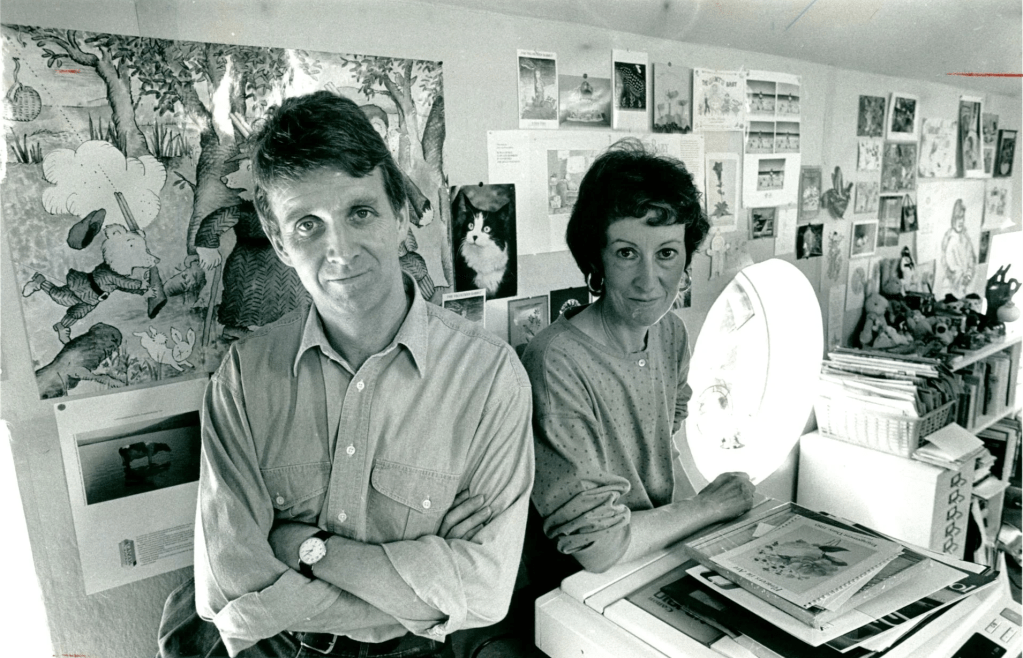
I was walking through a gentle rain to pick up my Spriggan from daycare when I got a message from my husband with the news of Allan Ahlberg’s death at age 87.
Well, that hit very hard. They all have, in their own ways: Tomie dePaola, Eric Carle, Lois Ehlert, Ashley Bryan, Shirley Hughes, Jerry Pinkney, Ed Young, and many others, recently. Genius creators, they lived well, made so much beauty– utterly distinctive to each of them– and left us books that live on daily while also reminding us of their lives and what they did. Of course each loss hit hard.
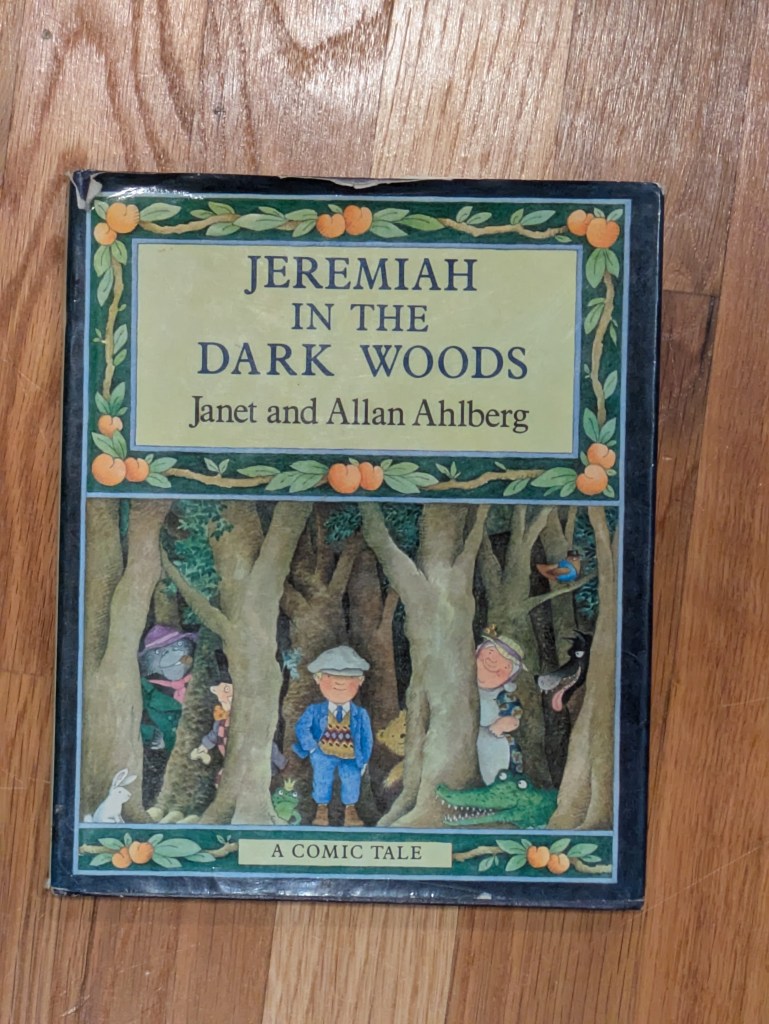
In Allan Ahlberg’s case, I quite simply didn’t think it was possible for him to die. Like Elsie Piddock in Eleanor Farjeon’s marvellous fable, I thought he would simply skip on, rhyme on, atop Caburn, becoming fairy tale and nursery rhyme and something of a myth– forever.
The very best of Allan Ahlberg was a lightness with rich substance to every word. He knew, somehow, that the iamb is rarely the best foot for a children’s book. We can probably thank Mother Goose for passing that along, and when I say that, my soul is absolutely certain the two had a chat on a picnic blanket in the orchard while the goose wandered nearby. “GOO-sey, GOO-sey, GAN-der…” “I spy Tom Thumb…” “Here’s a little baby…” “Ho Ho for the robbers!”
It’s impossible, of course, to write about Allan Ahlberg without reference to his greatest collaborator: first wife, Janet, who died in 1994. I’m not entirely sure Janet wasn’t, somehow, also Mother Goose, discussing those beats and measures and showing how they would look on the page, alive with tiny yet weighty details– before flying lightly off on her goose.
Of course this all just goes to show why one should never speculate too much about an author based on their books. Janet and Allan Ahlberg were real people with lives and loves and troubles and professions I’m only just learning about by reading obituaries (“He once worked as a gravedigger?” I think incredulously. “That might explain Funnybones, but then was he also a captain in the Napoleonic wars? Oh, doesn’t seem to have been. Maybe The Baby in the Hat was fiction, then.”), but these reactions also show what the greatness of someone’s work in life can leave behind them. In this case, a sense of the myth and motion of story as rhythm and rhyme, even through the pragmatic drudgery of our efficient days. Like the Jolly Postman, we take our time through his books: we pause, we laugh, we bounce, we have a cup of tea, we dream from page to page so that a page with ten words on it may take you a cuddle time to read, and who cares how long that is by the clock?
To Janet and Allan Ahlberg, small details mattered intensely: a mirror with a rainbow rim, such a captivating moment. And it’s those moments that catch a tiny finger pointing, with a bigger one beside it, on the page.
And so– Ho Ho for the Ahlbergs! Thank you for the storytimes. You’ve been, and will continue to be, great company. Tonight, I’ll be reading this.
This book pulls on me. I have no idea how to write about it, but it pulls on me so I can’t not.
I don’t think there’s really much that anyone needs from me for this book other than to let you know that it exists and you should get it and read it, either yourself or with any child you can find.
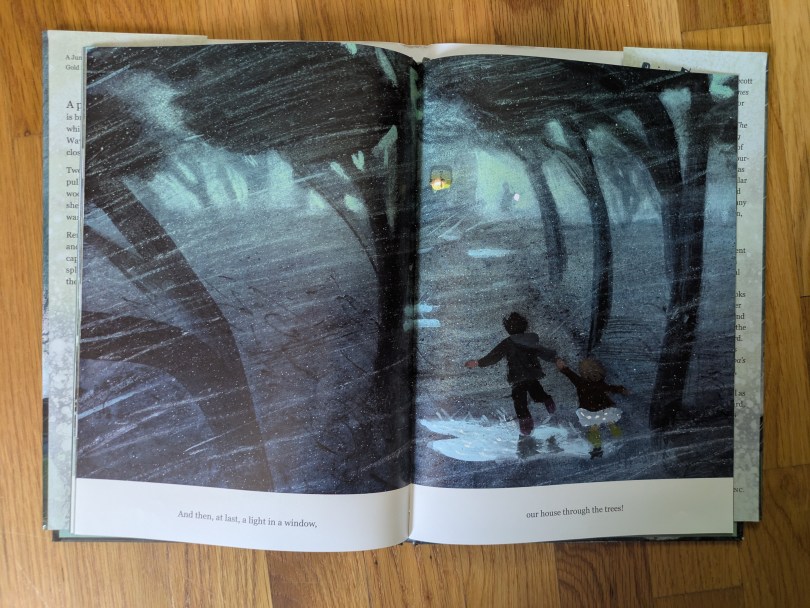
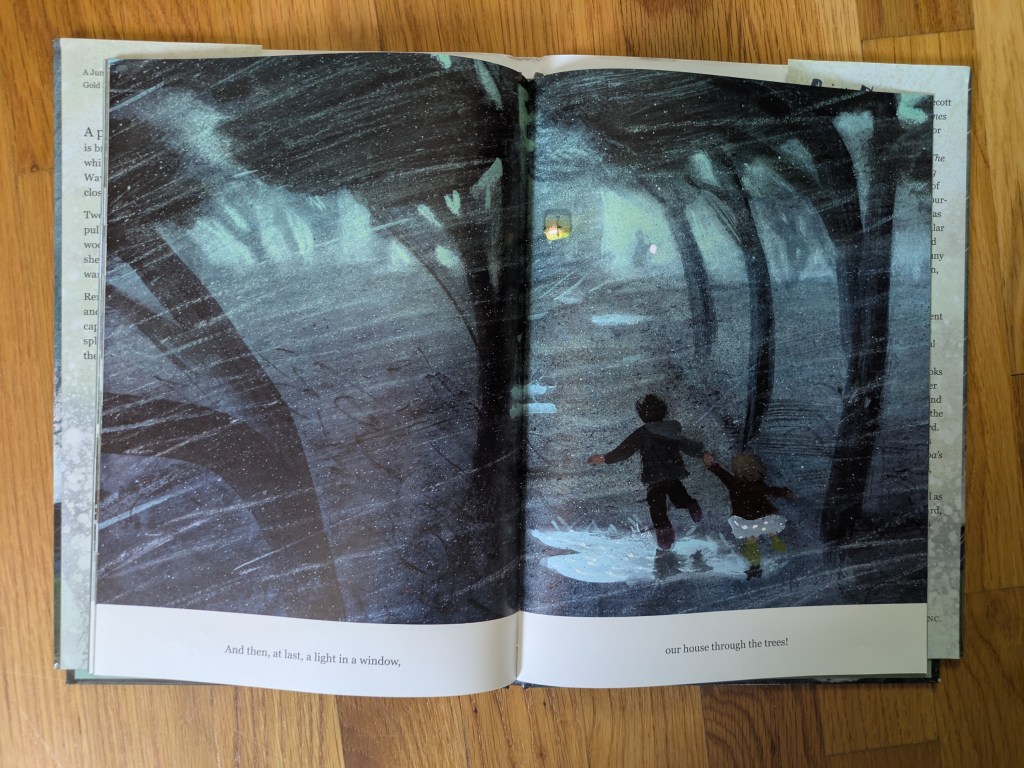
But it won’t let me go, so I can’t help but try to say more. I’m going to do an awful job, I am not Brian Floca and I am not Sydney Smith, but here goes. Island Storm by Brian Floca and Sydney Smith reads in my mind like a scene from my very own childhood, only more so.
I can’t imagine a more beautiful book, and if there is anything I’m angry about in this world, it’s that this book isn’t eligible for the Caldecott. This book is, in every respect, a clear example of the kind of quality we need more of, and, not to put too fine a point on it, I want THIS on my wall. (Dear Sydney, please send me the original, and I’ll get it framed. Thank you. Or– really any page.)
I’ve quite often talked, recently, about how really good picture books have a core element of truth and that this fundamental honesty (whether it be the goblins Ida pursues Outside Over There to get her baby sister back or the blueberries in Sal’s bucket) come across most clearly when the picture book creator is coming from a place of specificity. I’ve seen an increasing amount of talk, recently, about universal appeal in art, and I passionately advocate for seeing the universal appeal in art. But it is almost always found* through the faithful rendering of something deeply specific.
In this case, we experience a storm on what I’m absolutely certain is an island in the Atlantic, definitely somewhere around Canada’s Maritime provinces, and I know this because it feels viscerally familiar. I’ve been there, I have walked that storm, I’ve gotten totally drenched in it and been a bit scared in that high wind. I’ve also had parents deeply pissed off at me for going out in it, actually.
Interestingly, all of that feels like it comes to me through Sydney Smith’s art, and that is one of the thrillingly interesting things about a picture book: each book is collaborative, even if it doesn’t feel like it. Even when conceived and executed by an author-illustrator, they are collaborations between the art and text. (To say nothing of the role of the editor and all the others in a good publishing house.) The ideal picture book appears, in the hand, to be a single and unified object, which it is, but it must be synthesized from various sources working together.
I think, and I’m sure that you think, of Brian Floca as an illustrator. In this case, he is the author and the book’s art is entrusted to Sydney Smith. I find that simple fact, in itself, fascinating, particularly because Brian Floca isn’t from my childhood region and Sydney Smith is from right next door to where I grew up in the Canadian Maritimes, so to my mind this collaboration was done precisely so I’d have a book just for me. Logically speaking, this may not actually be the case. Intuitively, it totally is.
The text is simple and pared but calmly confident in its evolution: “Now take my hand,” it opens, “and we’ll go see the sea before the storm.” Quietly, we enter the children’s eyes and walk with them, feeling their feet on the gravel road and their anticipation of the storm as the wind rises and the ocean booms, and the urge to try for just a bit longer, just a bit more, as the wildness of the weather nears and grows. “You pull on me, I pull on you.” The weather, too, might be addressed here, and the scenery, and the wildness and the sea and the driving wind and rain. I know this, because I’ve been in a storm– so, too, has Brian Floca, and so, too, has Sydney Smith. I know this from the text and from the art, but, as I said, the art is so visually arresting a force for me– I’ve seen this place, I lived there– that in reading it to a child I find myself expecting to turn the page and come out on the street.
And yet, look at that art. It is not in the least photorealistic. It feels hasty and hazy. We see through the children’s eyes but don’t see their eyes. The rain on the window: “How does he do that?” my beloved librarian friend asked when I showed her the book, pointing at this page. “Is this book eligible for a Caldecott?” she added. I know exactly how she felt, and I felt the same, but also I was remembering rain on windows like that. The lowering skies, the crashing storm, the driving rain– we don’t get rain like that here. You don’t know the meaning of “driving rain” until you’ve been out in it.
But, surely, this is almost too specific, too area-specific, too situational to be universal? Well, the funny thing is that when this book showed up, I really, really needed to read it aloud to a kid and my Spriggan was in daycare and my daughter was out with her friend, but, fortunately, the friend’s little brother was quietly playing in my living room. (NB: I love being the safe house for kids to show up in. I don’t always know who will be here, mind you, but I love these kids and it’s nice to see them happy here.) So I apologetically asked if I could please pull him from his game to read a story to him. He kindly agreed and curled up on the couch beside me and I read it to him. He was quietly absorbed until we came to the crash of thunder and pouring rain, when he got visibly excited: “That was like last night! We had thunder!” And I realized– this child has English as his second language and moved here only a couple of years ago from far inland in China. He had never seen a storm like this, and this scene was as strange to him as the plains of Mongolia would be to me.
Consider Stravinsky’s The Rite of Spring. As originally conceived, musically and visually, it was a decidedly specific story, scene, and idea. The collaboration between Stravinsky, Nijinsky, and Roerich created a unified piece on stage– a picture book in dance, in a way. It is a difficult, demanding, and beautiful piece, utterly alien to every single observer, which continues to be terrifyingly accessible, catapulting the viewer into the scene onstage only to emerge wondering what just happened. And when I once watched a totally rechoreographed version which was introduced as being “more universal,” in minimalist black and white, it left me completely cold; the music was still good, the dancing was good. But by trying to be open to everyone, it spoke to no one.
This scene, a storm on an island in the Atlantic, was as familiar to me as my own pulse. To the child I first read it with, it was new and exciting. But it pulled on us both, differently, but oh so beautifully.
And so I tell you: this book is out now, and you should get it and read it, either yourself or with any child you can find.
And see if you can find every shade of blue on its pages. They are, I think, as numberless as the waves.
* I say “almost always found” because I resist absolutes. But I can’t think of an example of the vaguely universal in a picture book which has appealed to me as a universal more than something specific. In fact, one of the most compelling single images in my mind is Joan Aiken’s description of a slice of bread being toasted. That’s it.
“Eh bien, je ressens de la joie, je ressens plein de trucs bénéfiques ou maléfiques…”
My husband sent me an interview from a dance event in France put together by the French dancer, Hugo Marchand, for children and families to have a chance to see some of the étoiles of the Opéra de Paris. The interviewer asked an 8-year-old boy attending the event about his love of ballet, and when he asked the child what he feels when he dances, those were his words, stated with a conviction and such scintillating placement of le mot juste that I don’t even want to try to translate them in any literal fashion. “I am moved by a fierce joy from the heights to the abyss of human emotion,” would be my hash at what, I repeat, and 8-year-old said about what he feels when he dances ballet.
(Side note: translation is an evil task; you can’t do it without some form of betrayal. In French, the language is balanced by gorgeous dualism borrowed from the Latin, lyrical and so adroit that it spins fluidly. English has nothing as perfect as bénéfique and maléfique, for example, but is rich in atmospheric words. Bluntly, generally, and imperfectly: French makes more beautiful lyric verse; English is perfect for picture books. Also: I adore English lyric verse and revere French picture books. Go figure.)
Why am I on about this?
On October 13, 2023, after the attacks of October 7, I wrote a post in response to a sudden call for resources. At that time, the situation in the Middle East was still considered complex, and, in a nutshell, no one wanted to talk to their kids; they wanted to outsource to picture books. I was, and remain, adamant that the best response is, actually, to speak directly and forthrightly. Children, like that 8-year-old above, like my 4-year-old, like my almost-12-year-old, have an immense emotional capacity and a fierce ability to hold a full picture without lopping off the bits they don’t like in order to simplify it.
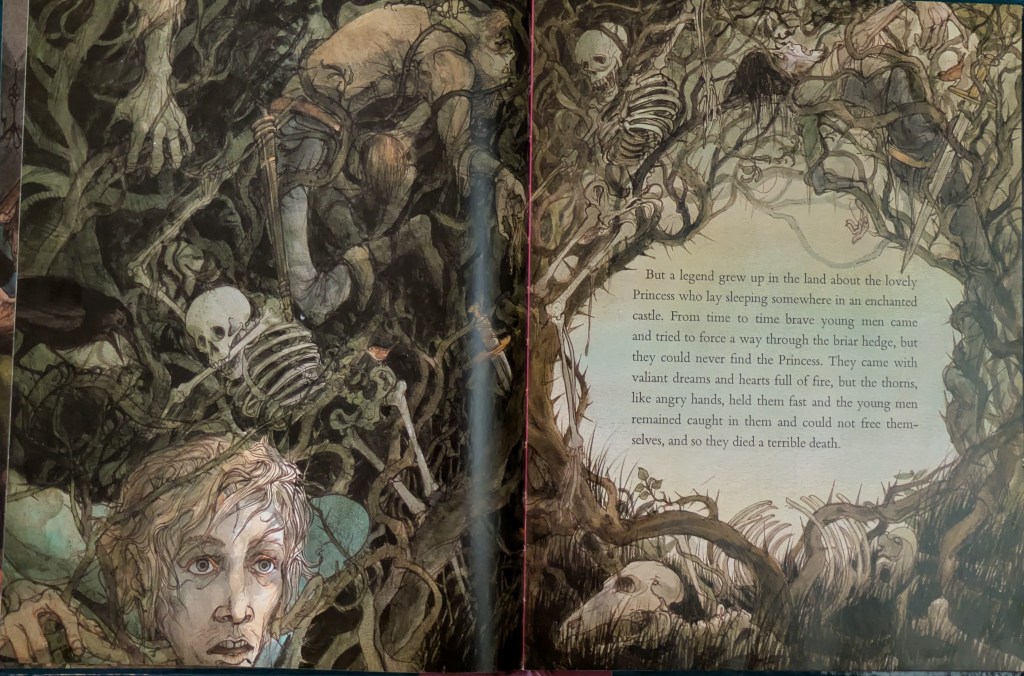
We, as adults, have gotten wounded enough times in our lives that we can’t always bear to hold onto the parts that hurt us. It’s understandable, maybe, but the flaw is in us, not the child reader. Consider the fairy tale: once upon a time, fairy tale books had actual skeletons embedded in briars on the page, and just a couple of years ago, there were rather nervously defensive articles about how Jon Klassen’s book The Skull was honestly ok to publish. (Though it didn’t get so much as the tiniest nod at the ALA YMA, but I’m not bitter about it.) (Yes, of course I’m still fucking mad as hell.)
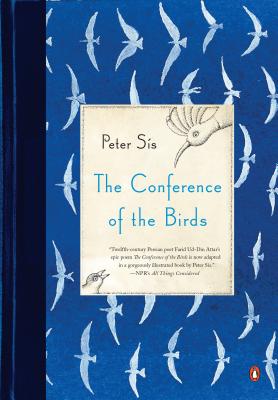
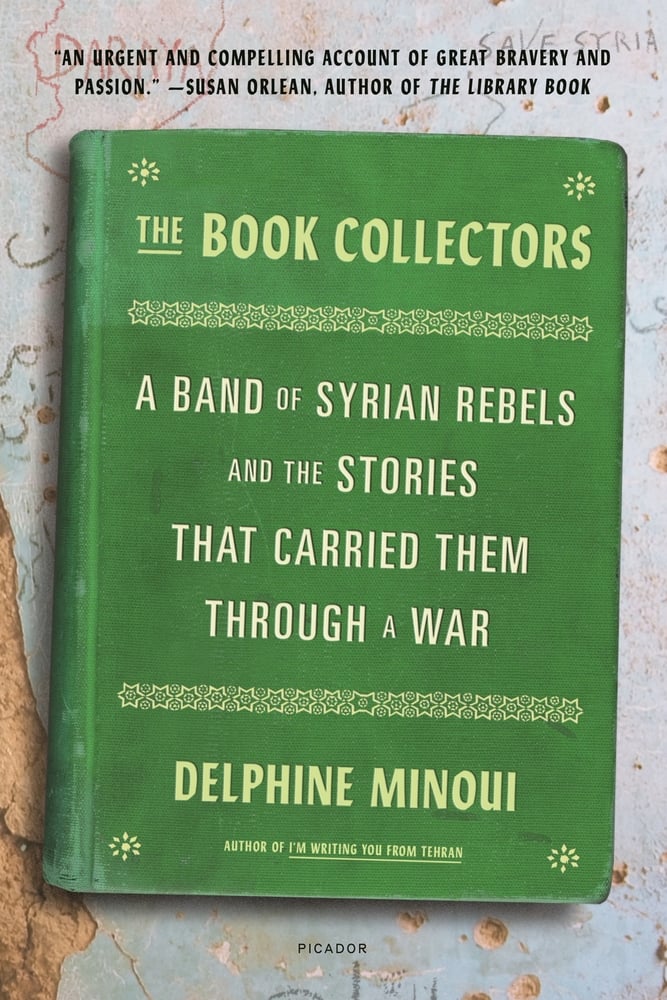
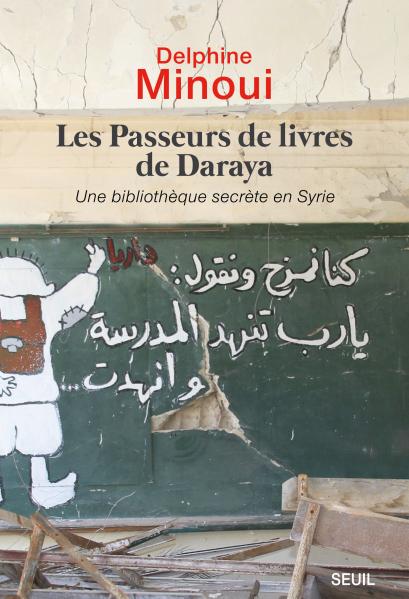
When I first heard that Israel had attacked a nuclear facility in Iran, beginning another front in these exhausting and painful wars (Ukraine, Russia, Palestine, Israel, now Iran– too many humans hurt, too many stories lost), I dug out two books for myself from my shelves, ones I really treasure. The first was The Conference of the Birds by Peter Sís, and the next, in English and French editions, were by Delphine Minoui, The Book Collectors or Les Passeurs de livres de Daraya. (I have both; see my passionate relationship with the facets of translation above. I get intense about it.)
I don’t read these as resources for children. I read them for myself. Because to be human is to find that place where we “ressens plein de trucs bénéfiques ou maléfiques,” and not to run away.
Peter Sís, child of the USSR, explored and delved into a Sufi poem, and he created a newly transcendent work of art out of it. The link above is to a paperback edition; it’s shamefully unavailable as a hardcover book now. Get it secondhand if you can find one. The birds, on their journey, take us through the fullness of what it means to be a feeling and thinking being, through everything beautiful and painful and dry and rich, through the highs and lows. We go with them, and we are them. It is reading and art as experience, and you will, after an attentive and absorbed reading, come out broader than you went in. Art and text are integrated, and you and the book will be integrated, too. I can’t explain it better than that; it is one of those books which simply has to be experienced, and must be revisited periodically.
Delphine Minoui is a keen-eyed, keen-eared, and sensitively attuned journalist and author from France, her background balanced evenly between France and Iran. She has written extensively about Iran, including Badjens about the uprisings of women and young people in Iran. Coming from such a different background from mine, and so intelligent and astute, she challenges me, and what gives me an especial jolt every time is that she accepts no easy answer.
In Daraya, a group refused to submit to al-Bassad’s forces. They would have no part either of Daesh’s religious extremism or of Ashar al-Bassad’s ruthless regime. And so in Daraya, they remained, starved and under siege, steadfastly repelling both forces, and a group of these mostly young people gathered books, creating a subterranean library. The scrupulous honesty of these people in collecting books (numbering, dating, recording exactly where each volume came from so it could– the hope was beautifully absurd– be returned to the original owners) was a kick in the gut in a world of corruption; the young librarians held themselves to a higher standard than anyone was asking of those besieging them. And they read, and read, and talked over Skype to Delphine Minoui who asked them questions and drew, in her book, an astonishing portrait, including her tough questions. You have to be made of stern stuff to be able to write such a book, because the interview process can be neither short nor simple. The depth and complexity is in the very marrow of it. It is the kind of book that, after buying it from curiosity when I saw it on a table at my local shop, forced me to further research, and I bought it in the French original, because that kind of thing matters.
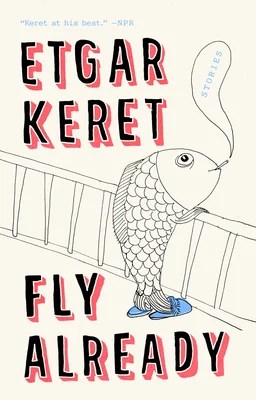
Very well, there we have crisscrossing axes of humanity, geography, the USSR to 12th century Sufi poetry to France and Syria and Iran. But this is all very serious. I challenge you to go further. I have not yet read Autocorrect, the new collection from Israeli author Etgar Keret, though I have seen excerpts through his newsletter. I have read an earlier collection, Fly Already. If you think you understand Israel, Jews, humour, or grief, Keret will stagger you with what you do know, certainly– but more. There is always more. It feels a bit like thinking you were getting on a Möbius strip roller coaster but finding out after you got on that it was actually the double helix ride instead.
You do know more than you think, but Etgar Keret will leave you wondering if you’ve accepted that. When you struggle to accept a skull on the cover of a book about a child finding a home, do you have the inner resources to handle that a fairy tale has thorns and bones? You feel a pang of sorrow for children in pain, you tell your friends that one person’s pain doesn’t negate another; but do you believe that yourself when confronted by the pain of someone you consider your enemy? Do you, reading this, think I am asking that of everyone, or are you, reflexively, choosing where I’m coming from and to whom I am speaking– or do you see I am speaking, also, to myself?
Can you, adult reader, read to your child not about working through anger, but simply read anger? Can you read funny? Can you read beauty? Now, can you read those– to yourself?
Here is the conundrum for adults who love good books for children: There is no child reading this article here. There are only adults. The children will read what you let them, or be read what you will read them. They should have access to everything beautiful, but first you have to accept that responsibility. The responsibility to make the world more beautiful, to propagate the excellent, to take a seed or clipping from a beloved plant and make a new one, and to share the best of books with others.
Your job is, in a nutshell, to “ressens de la joie,” feel joy, but also to “ressens plein de trucs bénéfiques ou maléfiques,” to feel a bunch of stuff both good and bad. (I did what I said I wouldn’t, but there we are. I always do.)
We, in the children’s literature world, and we, as readers of children’s literature, have lost something, and that something is the willingness to accept uncertainty. I might simply call it a loss of humility.
You could argue that to level that accusation takes a bit of arrogance, some chutzpah. I’m willing to accept that charge, given that it’s an accusation I level against myself daily.
But I wonder at our loss of memory, even short-term memory.
I remember after the attacks Hamas made on Israel on October 7— attacks involving unprovoked murder and hostage-taking—that many in the children’s book community expressed horror at the unprovoked violence and, in the days that followed, would write on social media admitting to a lack of knowledge and expertise. The frequent phrase was: “I really don’t know enough to comment.” It stuck with me because I felt three things: 1) admiration for the willingness to say “I don’t know,” 2) a hopeless wish that they’d stick with that statement, and 3) a bit of amusement that it stood out as such a stand-alone occasion. Everyone, these days, is an expert on everything, and comments freely.
Well, no, it didn’t continue. Everyone was soon an expert, commenting freely.
Of course, the situation itself was no less complex; the rapid access of expertise was therefore breathtakingly stunning.
The conflict between Israel and Palestine is famously complex, so much so that everyone has an unequivocally firm opinion and their opinion is that which is true and correct. The received wisdom in liberal communities when I was growing up was that the ultimate goal was to move slowly towards a two-state solution and peaceful coexistence; the received liberal opinion now seems to have shifted towards the view that Israel is a colonial power which is occupying Palestinian land and Palestine must be freed by it, with a vague hand-wave towards what will happen to the Israelis who are there. The former Jewish two-state solution advocates of North America have split: the more liberal ones hewing more often to the view that Israel is an occupying power, and the more conservative ones generally speaking furious at the abandonment, muttering to themselves that “a two-state solution seems less and less likely,” and thinking Netanyahu (against all evidence and against the views of about 70% of Israelis themselves) is at least good for security. It’s honestly a horrifying picture for the peacenik liberal in me from my childhood.
And, yes, of course the above is a caricature, and not at all comprehensive. Nor am I claiming to be an expert; I’ll leave that to the rest of the internet.
I don’t talk about this and haven’t talked about this because, to me, it is entirely irrelevant to picture books, which are my topic here. Unfortunately, the community of picture book makers don’t seem to feel the same way.
At the recent Carnegie Awards, Olivia Lomenech Gill was awarded the Carnegie Medal for Illustration for Clever Crow, written by Chris Butterworth. It’s a very lovely book. I was sent a copy for review and admired it, though I didn’t think it truly merited a review. I did pass it along to my daughter to read, who agreed that it’s an interesting and beautiful book, though certainly not as thought-provoking as, say, A Walk Through the Rainforest by Martin Jenkins and Vicky White (you can search the blog for my past review of that one). The awe-inspiring journey in that book towards a more vivid understanding and closer relationship with the complexities and intricacies of the natural world is lacking in Clever Crow. One book a slow walk through a whole world of intricacies; the other is clever. None of the Carnegies really grabbed me this year; same for recent Caldecott and Newbery wins, though. That happens some years.
Different readers look for different things. I seek the depth of slowness and intricacy, and right now, speed and cleverness take precedence.
Intricacy was lacking in Olivia Lomenech Gill’s acceptance speech. So, really, were books as books: what goes to make a good book wasn’t there. Sweeping political statements were not lacking, however.
I know, because I’ve been a reader and a writer on the internet for long enough, exactly what kinds of responses to expect before I get this far:
“All books are political.” “Everyone has a story, and you can’t fault someone for telling their own story.” “This is about human rights, not politics.” “We need more representation.” And, of course, “You’re a Zionist!”
Let’s review some of what Olivia Lomenech Gill had to say. She described the prior flourishing state of literacy and of education in the Gaza Strip “even under the blockade and the Occupation.” Israel was, by the way, hardly mentioned. After 2023, though, suddenly libraries and schools were destroyed; this was scholasticide, in the passive voice. She described the awful destruction of the past two years, and, ultimately, described a deep desire and plan to go through the West Bank and Gaza bringing books back to help rebuild libraries in a free Palestine.
By God, I swear, I wish her success in that ultimate wish, and I would, happily and from my own shelves and money, contribute any books I could afford to give.
So long as it were in the context of peaceful coexistence with the freedom and security of my own family in their own country, because I don’t know what happens to my sister, brother, or their kids, in the context of any of these plans to end the occupation otherwise.
That, you see, is the crux of the problem with the trite statements above: All books are political, everyone has a story, everything is about human rights and representation—
Everything is an absolute, everything has to be certain, nothing can contain an iota of complexity or uncertainty, and what happens to the real individual otherwise?
Readers, I do not know what a Zionist is these days and I don’t know if I am one; I’ve been ditched for being a Zionist and I’ve been yelled at by an Israeli in front of my own house for being, quote, “a betrayer of my community.” Draw your own conclusions; I do not particularly care what you decide my political views are so long as you recognize that I consider all of that secondary to my ultimate love of beautiful, excellent books for scrappy kids who drive us crazy. It seems utterly bizarre to me that this is of secondary importance in the context of children’s literature right now.
Once upon a time, there were authors and illustrators and publishers with an ideal. To make a book so beautiful that readers would gather, looking, yearning, reading, begging to be read the book, to learn to read the book. The book would be so loved and lovely and loveable that it would live a life, not absolutely dead, but containing in it a spark of the creator whose progeny it was, and no matter who the reader was, the book would love it back. One day, two children would be reading the book, and look up and see each other. They would know who the other was; their parents hated each other. But the children would know that if the other loved this book– that other child had to be ok. And, darkly by dead of night, they would be friends, in the light of a flashlight, reading the book…
Who, now, wants to make that book?
I have no idea what half the words people throw around so freely today are or mean: I don’t even know what Zionist means, and that’s the bothersome thing. If we don’t have a common language of vocabulary and syntax, then we are not going to communicate well together. If to one person, Zionist means “genocidal maniac,” and to another it means that they’re “dedicated to a free Jewish state on ancestral Jewish land,” there can be no communication.
This is, of course, the point. You two, there, in the paragraph above? You do not want to talk to each other, and may do better individually if you would be self-aware enough to acknowledge that internally, and move on. You are the parents of the children who read that beautiful book and want to be friends; you are the problem here.
Sure, books are political. Some of them. I don’t care whether they are or are not, so long as they’re good. I want good books for bad children, as Ursula Nordstrom once said. Maurice Sendak was plenty political, and did not tend to write Jewish books as such or queer ones, for example, and I don’t think it was simply out of fear of being recognizably Jewish or gay. He was, quite simply, making the best book he could at that given time, at the same time as being gay as gay could be and Jewish as a Jew could be.
When you make books a platform for your politics and ideology and representation—Jewish, Israeli, Palestinian, 1950s hellscape family values, LGBT inclusion, whatever it may be—you’re making that the top priority, over and above the quality of the book. I may agree with some of those values and disagree with others. It doesn’t mean the book itself is any better. And when you turn the Carnegie Medal into a platform for a free Palestine, the value of illustration is made secondary to the political message.
My radical plea is other: Privilege the artistry of the book itself, for the sake of children everywhere. I want every child in Gaza to have access to the very best books—and every child in Israel, too.
For the record, I still have ultimate goal, personally, of seeing a free Palestinian state alongside a free state of Israel. I just don’t see that you need to know that.
And, Olivia? This is true representation for you, from you. You said: “Since childhood, I’ve carried an inexplicable sense of loss and of unbelonging.” So have I. If you make that the core sentiment, children everywhere will hear you, see you, recognize you, and love you. Even in Israel.
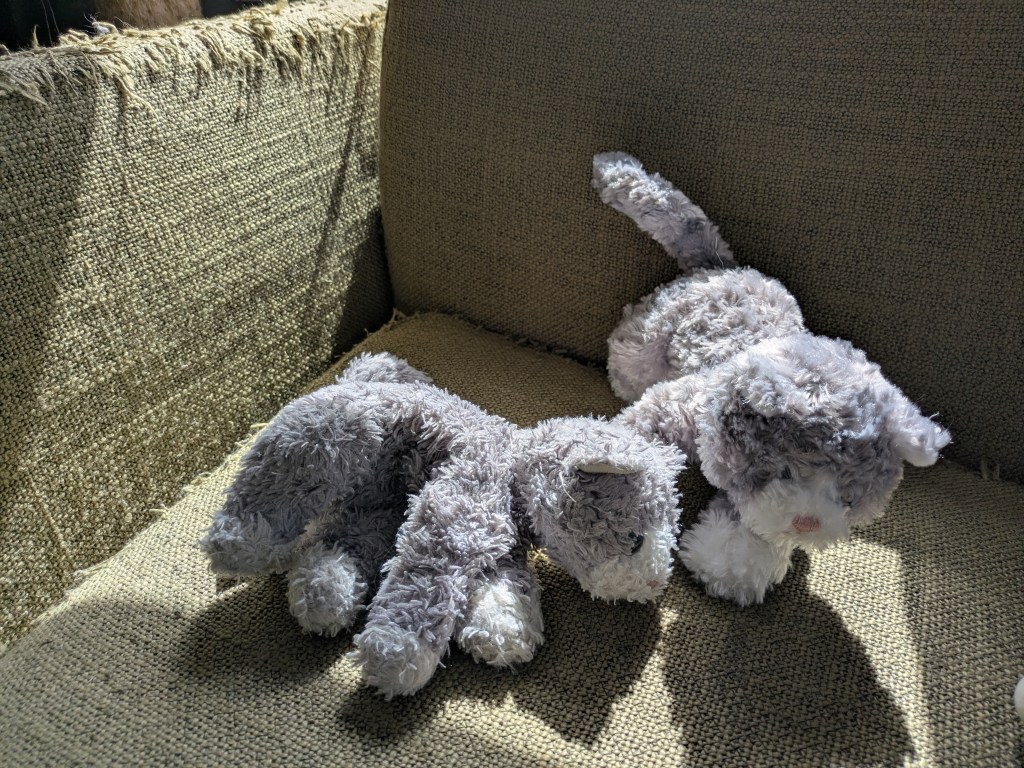
Both of my children found cats in a toy store. They looked to me like stuffed animals on a shelf, but my children, each of them as they were emerging from babyhood to toddlerhood, set eyes on a cat (think of Lisa finding Corduroy the bear) and recognized that cat as theirs. My daughter’s became Remy, I’m not sure how that name happened but happen it did, and Remy is no longer toted about everywhere but retains a position of respect and prestige in the toy box of my 11-year-old girl. The little one’s cat is Mrrow and has always been Mrrow and Mrrow is Mrrow and has not gotten another name. Mrrow has been to the hospital a few times and is a figure of real importance and comfort, to the point that I got another one just the same and kept the package, doubtful that it would be sufficient replacement but feeling it was imperative nevertheless– if only for me.
And then it happened. I couldn’t find Mrrow. I didn’t say anything but looked everywhere. And then the worst happened. My little 4-year-old boy with a passion for ballet, deep affection for Mrrow, and not so great lungs at the moment, had an asthmatic episode necessitating a trip to ER and Mrrow, who had been there for every other occasion, wasn’t there. I gulped, pulled out the backup cat, and off we went. My Spriggan was very respectful and nice about the new cat, and I was honest that I couldn’t find his original Mrrow but “this is what Mrrow was like when she was new,” and “I didn’t want you to have to go to the hospital without any Mrrow.” She was not Mrrow and we both knew it. But he’s a sweetie who reserves his tantrums for critical things like there being no molasses in the house when he wants to make gingerbread men, and he held the cat and said her name was “Hilda, like Hilda Hippo in Busytown,” and was very patient. I felt awful but there wasn’t anything I could do, so I didn’t have a tantrum, either.
Exactly one week later, my big, beautiful girl was taking my small, beautiful boy to the park. And they came rushing back, my daughter shrieking, “GUESS WHO I FOUND!” She explained all in a tumble that she thought she saw a dead squirrel in the dog park and went to check if maybe it was just injured and could she do anything, and it wasn’t a dead squirrel, it was Mrrow! You should thank your lucky stars that this was on Shabbat so I didn’t take a picture; it would not have been beautiful.
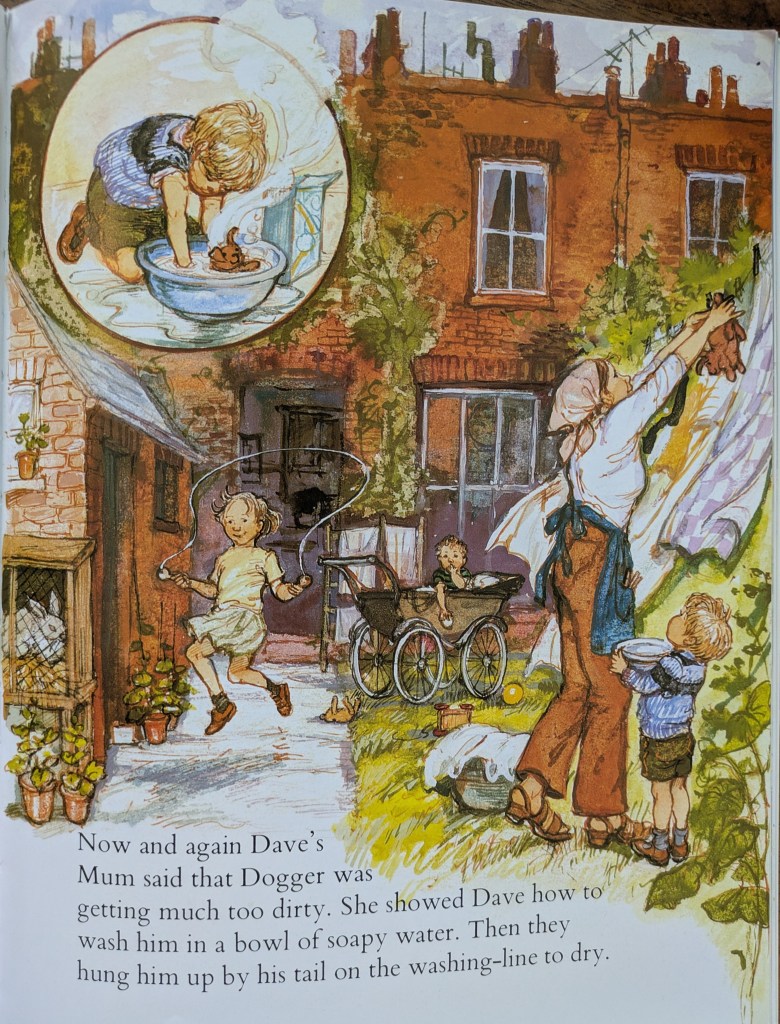
Filthy, saturated with spring rains and mud, probably mouthed by a dog or ten, but they were good doggies and didn’t tear her, I plopped her in the bath and ran in water and soap for a spa treatment. (To any Orthodox Jew reading this: do not take the above as halachic advice. I ran a mental calculation of “checking with the rabbi” vs “I have a small, emotional child here” and put cold water and soap in the tub with Mrrow and did not consult any rabbinic authority beyond, “this will have to do.” Hot water, scrubbing, and more came after Shabbat.)
Direct quote: “When I found Mrrow, he burst into tears. He told her he loved her and missed her and he was very, very sorry.” And he checked on her throughout Shabbat, talking to her and making sure she was getting on ok. The after-Shabbat scrub with hot water and soap was arduous but transformative. I wrapped her in towels and pressed out the water, telling him I’d put her to dry on a laundry rack overnight. He nodded politely, took a clean, dry towel, wrapped her up, and took her to bed with him. I didn’t stop him.
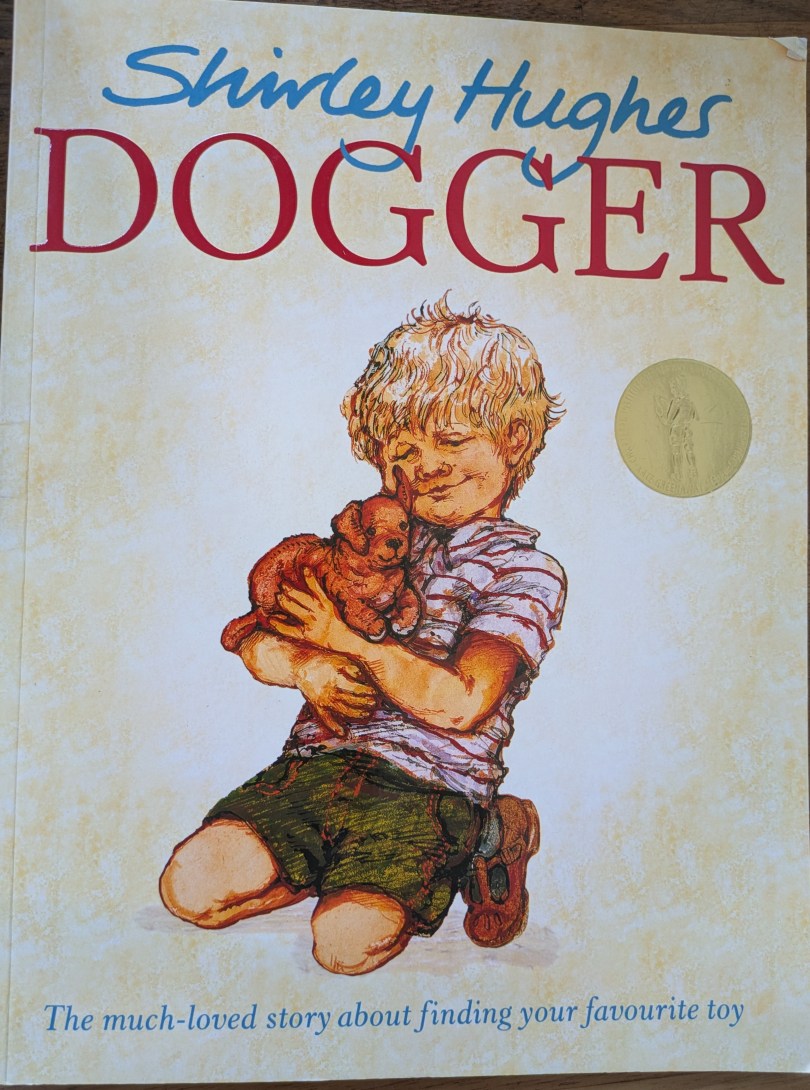
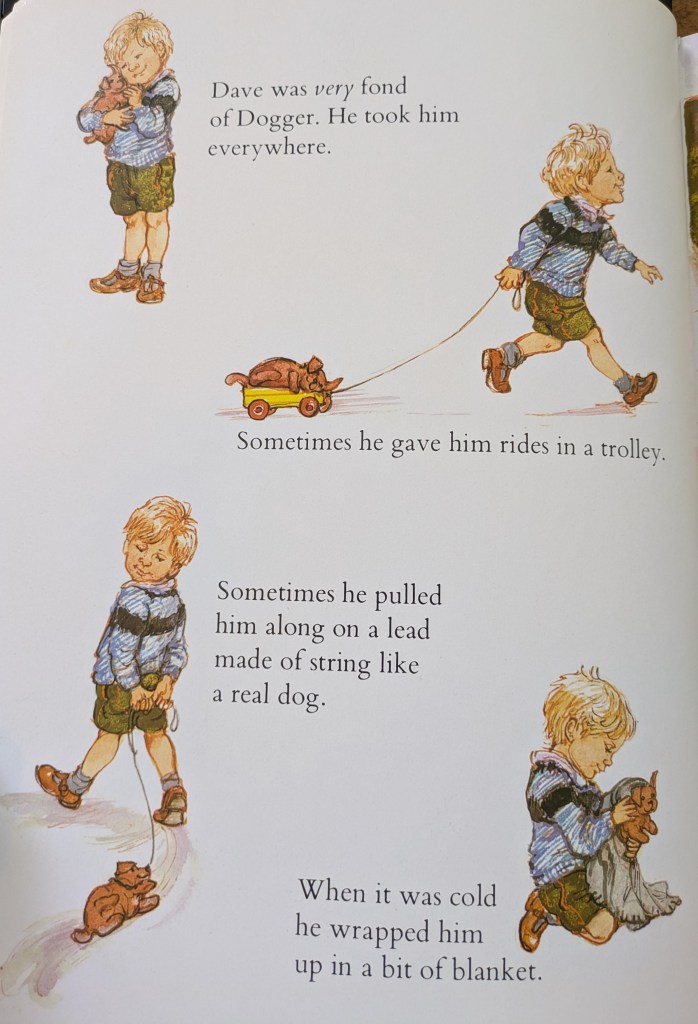
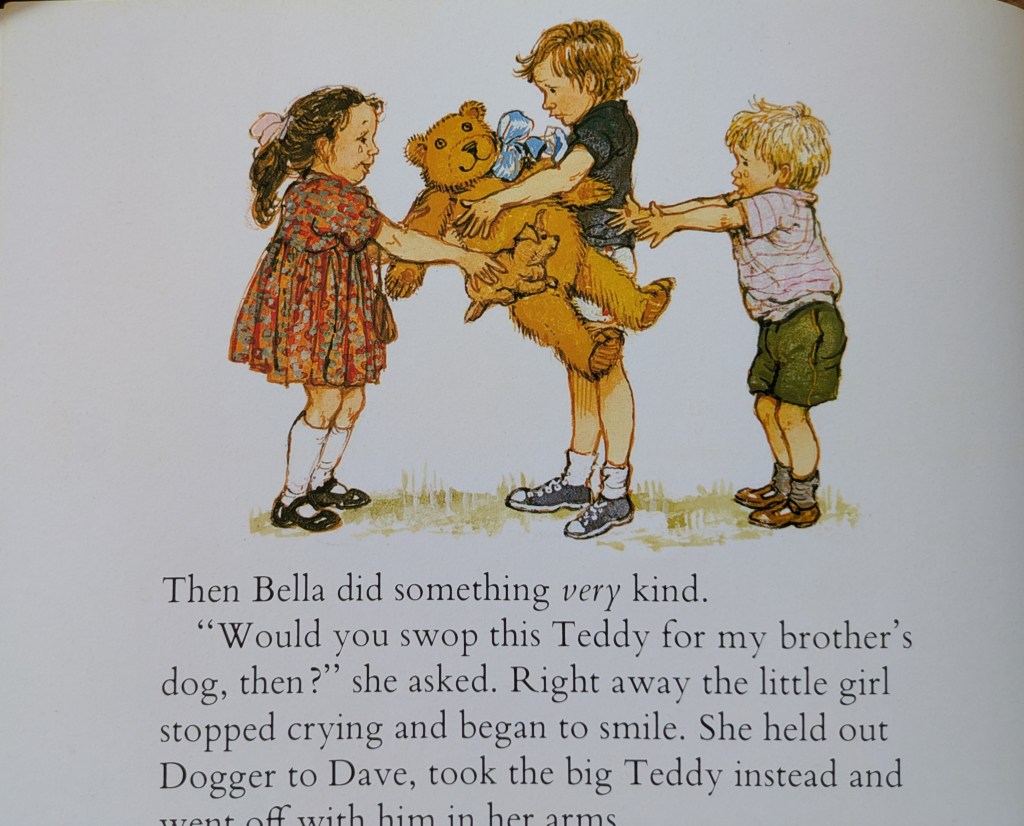
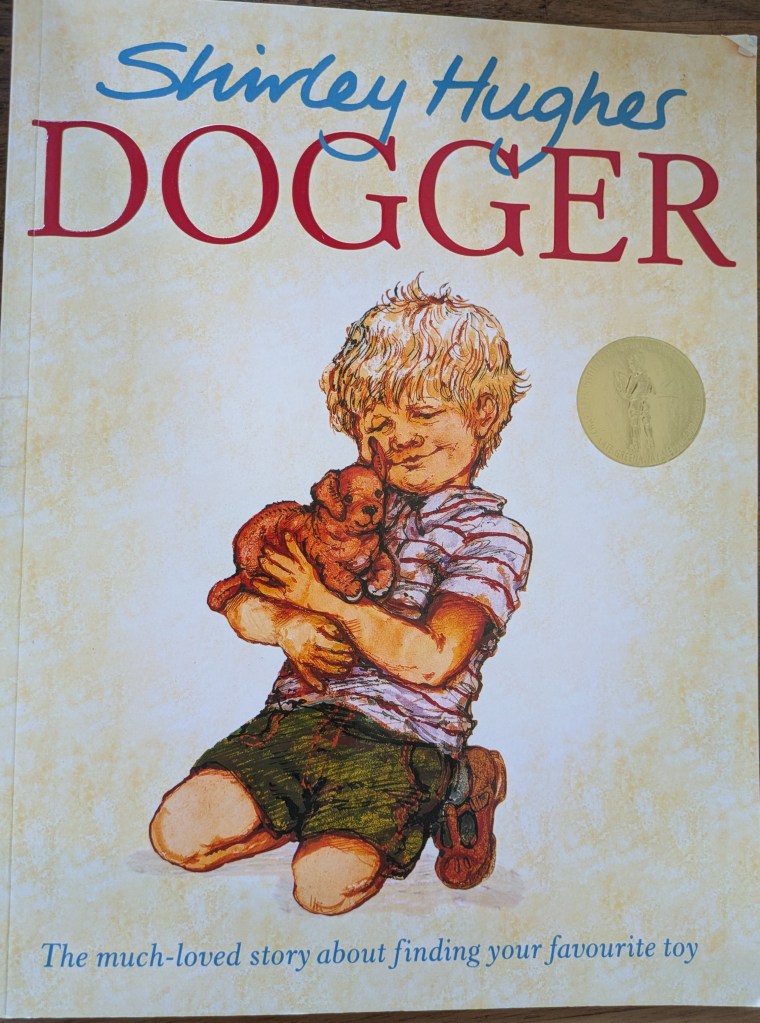
I think you can tell which one is Mrrow and which is Hilda. (Hint: Hilda is clean, fluffy, and sweet. Mrrow is, at least, clean.) But I’ve taken you through this not because of my kids or Mrrow. I walked through this story because I have a new respect for a few points about literature. All the above pictures (except the photo of the stuffed cats, of course) are from Dogger by Shirley Hughes. (I can’t find a purchase link to it in the USA, so if you’re in the US, you may have to get it either secondhand or from the UK. I bet it’s easier to find in Canada, though. No matter how you get it, it’s more than worth the price.)
I’ve noticed a trend, articulated also by Mac Barnett and Jon Klassen in a few places, of adult readers of picture books expressing anxiety that children will see what they read as prescriptive: “You, child reader, ought to behave like this.” Or they fear that children will imitate what they read: “If children read this book, they may drink juice instead of milk and water!” I think, too, that creators respond, consciously or not, by writing books that provide curative scenarios: “When you lose a beloved toy, you will feel sad, and that’s ok! You can feel sad! And also things will turn out just fine…”
Living through a real-life Dogger and Dave scenario, I didn’t even think of Dogger until after my daughter came running in with Mrrow. I was so immersed in the moment that I didn’t register it as being so perfectly in parallel, right down to the tiny blond boy and darker-haired big sister. But then I emerged with a jolt and realized that Shirley Hughes wrote this story down a while ago, didn’t she? And the astonishing thing is that it’s exactly a reassuring story, not because it’s curative, not because it tells you how to handle things, what you should do, what will happen, not even because it validates your feelings, but because it’s so damned real.
I absolutely hate realist fiction, by the way, especially for adults. It’s inevitably depressing and boring at the same time. You always know what will happen because the ending is never happy because happy endings aren’t real, you see? Realist fiction for kids is simply boring and half the time I hope it ends unhappily just for a change of pace. Realist fiction for adults ends unhappily because adults know that unhappy endings are the only real ones. Realist fiction for children ends happily because adults are writing it and are squeamish.
Children are sensible and knowledgeable based on experience, so when real kids’ books tell a real story, fairy tale or not, it simply feels true in your bones. Strega Nona blows three kisses to the pasta pot. The bear eats the rabbit and gets his hat back. Dave finds Dogger and Bella helps even the balance of toy distribution– and reunites the true friends. These are simply real events because they feel concrete and true rather than cutesy (in banal picture books) or dank and gritty (in banal adult literature).
We have a lot to learn from real books, and we have a lot to learn from kids.
Dave and my little Spriggan didn’t cry about the loss of Dogger or Mrrow. They were quiet and even quieter. But when Dogger and Mrrow were found, then they cried. This is simply human; Odysseus does the same on returning to Ithaca. (He also cries earlier in The Odyssey, but usually when his companions are killed. He cries a lot; he’s human.) The outpouring of emotion is on resolution. The prelude is sadness or anxiety. But the accuracy is the point, and the click of recognition is pure.
Prince Siegfried in Swan Lake can be fooled, in his immaturity, into accepting the decked out Odile for Odette. When he recognizes the inner being, the truth of Odette, it’s too late to save her. They die together, though, ultimately saving her friends and vanquishing von Rothbart. Dave and my little one are so sensitively attuned that only Dogger and Mrrow are recognizable as real to them. And that’s how they had their happy endings.
When Tomie dePaola’s dog, Brontë, died, Brontë left behind a grieving Tomie.
And, so, when Tomie died, he also left behind a manuscript, spare and simple, about loss–but also about memories.
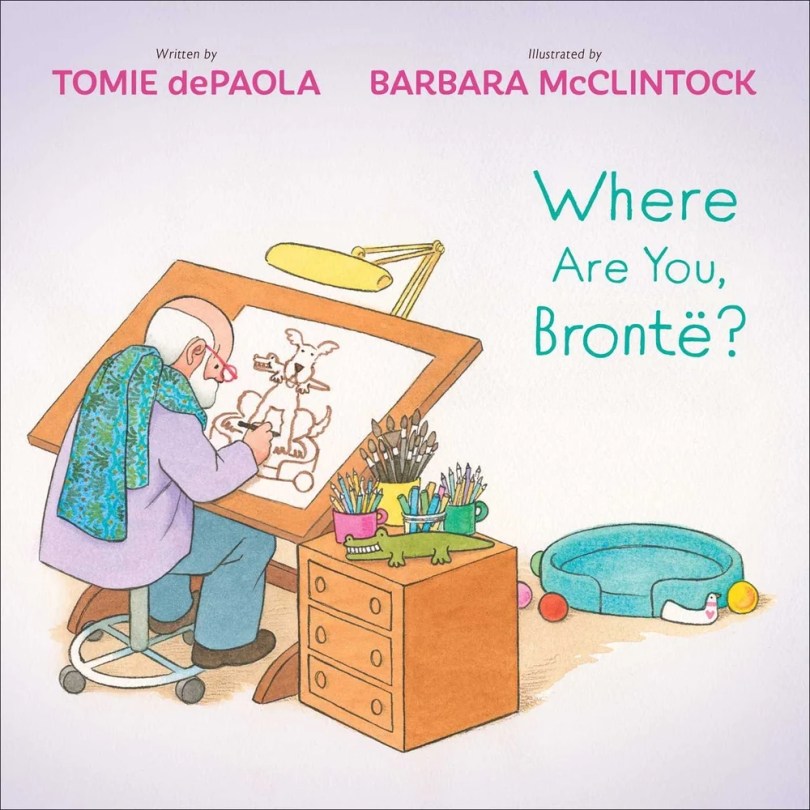
That manuscript was sent to Barbara McClintock, one of the finest artists of our days, to be illustrated and released posthumously: Where Are You, Brontë? by Tomie dePaola and Barbara McClintock (pre-order at that link and you can get a copy signed by Barbara). Given that it deals with Tomie’s death and bereavement, losing his beloved dog, the manuscript naturally carries a lot of extra feeling in our own bereavement– the loss of a beloved author, illustrator, and human being. (Frankly, I’m struck with a panoply of feelings that have nothing to do with the beautiful outcome: I’m relieved here. The book had the potential to be turned into a soppy, tear-jerky mess of fluff that would probably have made Tomie dePaola gag. In Barbara’s hands, we are safe: we have every nuance of honest sentiment and no false sentimentality.)
Loss is a funny beast. It feels physical, like a real yank of something integral away from you. No matter how intact your body may be, it feels less. A family friend recently died, and with it came a wash of memories: some about other friends lost, others about visits with my friend and his family, others about times that may have been technically unrelated but felt emotionally linked. I found myself making crème caramel for a reason that was not exactly related, as such, but kind of was. Anyway, it resulted in crème caramel, so it’s not like I’m going to complain about that. Memories go with loss. Jews sit shiva after a death, a seven day period of gathering around the bereaved and listening and sharing stories. Many cultures and faiths have memorials, funerals, and other customs involving sharing memories and stories– consider vigils and wakes, for example.
These memories feel tangible. They are an evocation of a person’s presence. It’s almost like the gap of physical loss is filled, something like a phantom limb in our spirits, until our minds are reconciled to the absence.
On every page of Where Are You, Brontë?, Tomie dePaola is present, and usually Brontë is, too. The book is incredibly simple. The repeated question, “Where are you, Brontë?” is asked, section by section, with a few lines of text building up to an overall answer. The early spreads show Brontë’s arrival, and how he settles in, sleeping with Tomie, playing with toys but never destroying them, and working his way into Tomie’s books. As time goes on, Brontë becomes an adult, and then an old, blind dog, but maintains his joyful spirit until the end, when he has lived every day of his life and is now gone; and, of course, Tomie is sad. We see him looking at the dog bed with only a toy and no Brontë. The food and water bowls, empty, with no Brontë. Having breakfast at the kitchen table, and no Brontë around, only an empty collar. Those two spreads are the only ones with no Brontë, but they sting, keenly. There’s a page turn, then, and we see Tomie on a solo walk, his face lighting up as he sees a rainbow and his eyes catch Brontë in the clouds, and all those memories from all the way through the book flood back to the reader’s mind (or at least they did to my mind) in that moment: “But then I knew you were right here.” Another page turn: Tomie draws beautiful Brontë, whose memory endures. As, of course, each adult and aware reader knows, Tomie’s memory endures in his own books, from the earliest to this one.
And that’s when the children’s librarian I showed my review copy to rushed out of her office with puffy eyes and said, “Oh my goodness this book needs to come with a YOU WILL CRY warning!” (Sorry!!! I really thought you knew the backstory of this book, or I would have warned you!)
Now, here’s the hard part: Barbara’s job wasn’t to reflect that rich layering of death, memory, and endurance, of both the dog and Tomie himself. It was to illustrate a very, very simply written book for children left by an author whose style was well known to be deceptively simple. The effect of how she did this was layered, rich, and covered a gamut from the beautifully simple picture book all the way to provoking tears in children’s book lovers in their library offices. But the actual, real task was to do a good job of illustrating a simple manuscript, and that must have been absolutely agonizingly difficult. And Barbara aced it.
I can tell you how I know she aced it. I read the book to my very convenient 4-year-old on hand, my Spriggan, and he loved the book (and kindly comforted his sniffly mother at the end). He wasn’t in the least distraught because it was such a nice book! We enjoyed it together very much, as every book to be read aloud should be enjoyed, of course. That is the goal, for the adult and child reader to enjoy the book together, but each in their own ways. In this case, that job was a really tall order because of the demands presented: a) illustrate a simple book with simple art, b) for a child, and the child will only have the context of the book itself, c) for the adult reader, who will have a lot more context about the author, and expectations to go with it.
You see, Tomie dePaola’s illustration style was described as folksy and simple. What that means, from everything I’ve read, and I recall a particularly colourful anecdote from Trina Schart Hyman describing an attempt she once made and certain colourful language she deployed along with crumpled pieces of paper being tossed around, is that it’s torturously difficult to replicate. When I close my eyes and call to mind Barbara McClintock’s art, I always see delicate flowing lines (think of another “where” book she illustrated, Adèle & Simon) that are more closely akin to Trina Schart Hyman’s than to the simple, broad lines of Tomie’s Strega Nona.
Simon’s drawing of a cat is very good. I think Brontë would like it, and Tomie would, too.
So, choosing Barbara with her lovely lines and keen eye for children for this job was absolutely genius. She would take the job seriously, reverently, even. Her respect for Tomie dePaola is total, and that means that her respect for the picture book (also demonstrated over a long career of brilliant books) is also total. She would have her own expectations, but ignore the expectations of adult readers when they competed with the all-important child; by doing so, she would take that manuscript and make a beautiful book. And so her art brings the words to the book to life not as Tomie dePaola would have done it, but as Tomie as a character in his own book of life, illustrated by Barbara McClintock. Barbara as illustrator and artist, who loves picture books by people like Tomie, knows when art is active and when art is illustrative. She imbibes elements of his style in grateful and graceful homage, but does it in her own way, with the breath of life only an artist doing her own work can do. There’s a little mouse I’ll let you find who appears in her wispy fine lines, simple but perfect, popping up in the broad folksy grasses, evoking a curious Barbara exploring a world of Tomie’s making. I can tell, on every page, that she worked with love, awe, and enjoyment.
And I read it, snuggled in bed with my own tiny boy, and we read it with love, awe, and enormous enjoyment– and, in my case, with damp eyes and a sniffly nose. I got patted on the head and given a hug and a kiss. It was fine– better than fine. I hope you’ll enjoy it, too.
It’s a bit like falling into a picture book world, thinking about all we’ve gained from all of these creators over all of these decades.