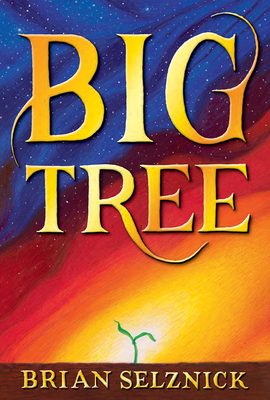
Big Tree (+ giveaway)

In my last post, I wrote about the need to fight book banning on all fronts right now, simply so kids have access to books, end of story. I said that we aren’t fighting for kids to get certain good banned books, but so they can get at books at all. But, always, my goal is to push for excellence in children’s literature. And, among the best– we have, with gratitude for art and words, Brian Selznick. (If you search here, you can see me rave about The Marvels, Hugo Cabret, and Kaleidoscope.)

I had the great good look, the genuine fortune, to get to attend Brian Selznick’s book event for his new book, Big Tree, at the Brookline Booksmith (I linked to their page for the book, and when I was there yesterday they still had signed copies– one of which I bought to give away to one of you, read to the end for details).

I’m warning you I’ll take a bit to get to Big Tree, just as he did in his talk, because the background is important– but I’ll get there, and I want you to get there, too.

The thing about Brian Selznick is that he’s unabashedly an artist and storyteller. He has a visual mind, and the interleaving of text and image in his stories is something that’s hard to put in plain words, because you have to experience it to understand how it works. But it wasn’t until I heard him talk that I realized in something of a foolish epiphany, why it was so hard for me to pin down, even though he himself makes it quite clear from inside the books: his style is cinematic.

In his talk, Brian Selznick validated for the first time in my life something I’ve explained excitedly to multiple people who all looked at me like I was nuts until I burbled into silence: the opening page turns of Where the Wild Things Are draw the reader into the landscape with every page turn. The first inset image is rather small in a sea of white, and then with each page turn the images grow– and grow– and grow until you’re pulled into the boat alongside Max, sailing off through night and day and in and out of weeks and if you’re not seeing it in your mind’s eye right now, you’re really missing out. I was almost bouncing on my seat with excitement when Brian Selznick flashed the slides showing the page turns.

But what was so interesting to me (apart from feeling validation, honestly I was starting to think I was just a lunatic) was that we read the page turns differently. For me, reading those page turns aloud with a kid on my lap, both of us mentally closing our eyes to the room and letting the forest grow around us as we moved into the wider world of the opening mind– like when you fall into the art in a museum, or the music is moving around you and your mind floats free.

Brian Selznick flipped through the slides and we watched the art grow and grow on the big screen of his presentation and we really felt the cinematic effect of the page turns as he read. I’d never, ever thought of it this way, and so many things fell into place in my head. First, no wonder Maurice Sendak saw Brian Selznick’s potential, a visual reader like that, with the drawing skills to go with the eye and the mind! Second, no wonder Selznick’s art always has music playing in my mind! But, unlike Outside Over There, which has (oddly) either Mendelssohn or Schubert in the background (you’d think it would be Mozart, since he’s actually in the book, but I very rarely hear Mozart), Selznick has active music, dramatic music– film music.

Action, cinema, music, art– this is all story, and story is people, but this book is about trees. No people. None of the wonderful people we’re used to from Hugo Cabret and The Marvels and Wonderstruck. (Well, kind of: there are characters, they just aren’t human beings.) So, how does someone with that theatrical, cinematic skillset develop a book that doesn’t have people to do things?

Brian Selznick zooms out. He has a panoramic vision in this book encompassing the world at large, all of history and prehistory and all of the earth. And the truly incredible thing (my 9-year-old daughter, the Changeling you’ve heard of so often before, confirms this) is that the resulting book is readable and accessible to a younger age than some of his other books. I asked her why she thought that was, and she was flummoxed as to how to put it. (Kid, I relate.) “He always has funny bits in his books in a way, but this one has more because the seeds have to be different by talking, I think, and also it has more of a wrapped up ending? And kids like science.”

Three good points.

The story of the book is of two Sycamore seeds, Merwin and Louise, who are flung free before they’re ready and look for a safe place to grow. It’s about as far off a story as one can get: it’s set in the Cretaceous period, so no human beings, and most animal life is different, too. There’s a lot we don’t even know for sure (though Brian Selznick shares a lot of his exciting and meticulous research in an Afterword). And yet we’re drawn in through wondering what the next page turn will bring, how the story is going to unfold, who we’re hearing talk, who Louise is hearing, and will Merwin ever hear who Louise is hearing? And we do. It’s beautiful, it’s exhilarating, it’s heartbreaking– and it’s so unpretentious and uncondescending. (The impact, for me, is to feel, very vividly the aliveness of the world around you, leading to a fiercely protective love of the world– but it’s not about that, it’s not preachy.)

The book is, of course, conceived cinematically. In fact, literally so. Before the pandemic, Steven Spielberg asked Brian Selznick if he’d like to write a movie about plants communicating before there were ever even any humans. The movie didn’t work out for a variety of reasons (doubtless involving the pandemic to some extent), but I’m kind of glad of that because I’m more of a book than a movie person, and this is the book we get for it.

But what’s really, really interesting to me? For this book, this is the first one by Brian Selznick where I hear similar music to my Sendak music. The opening has, you can’t convince me otherwise, Felix Mendelssohn’s Hebrides Overture playing. Why? Look, I don’t know, I’m just telling you what I hear. I don’t think that this book is “more Sendak” than Hugo Cabret, but, for some reason, the music is.

GIVEAWAY:

First, I’m really sorry about this, but I’m calling this one North America only. I recently tried mailing to Ireland and was told my friend would have to pay, even though it was a gift package, a customs fee on receiving due to regulation changes. I’m so mad about it, but I don’t want anyone to be stuck with customs fees to receive a book from me.

Second, what’s on offer: I have two beautiful Brian Selznick books, a signed copy of Big Tree and a not-signed-but-lovely copy of Wonderstruck.

Third, how to enter: Comment on this post, or email me, with a picture book you hear music for, and what it is. Note also if you have a preference between the books. That’s it!

You have until Thursday, April 27 to enter, and then I will choose the winners by random number generator and email you for your mailing address if you win! Good luck, friends.

A Defense of Mediocre Books

I have a t-shirt I love because it has a beautifully defiant quote from LeVar Burton, one of my heroes, on it: “Read the books they don’t want you to read. That’s where the good stuff is.” It’s the best kind of rebellion! The kind that opens instead of narrowing the mind, like John Lewis’s “make good trouble.”

And, because I’m that kind of person, I just can’t leave it there. I agree with the quote and I argue with it. Look, I have a friend who’s an atheist who was asking me about faith and I think she almost fell over when I cheerfully said, “Oh no, I argue with my God and my religion all the time. It doesn’t give me any kind of peace; it gives me trouble.” I can’t not argue. Look, if I argue with God and even with Maurice Sendak, which I do, them obviously I’m going to argue with LeVar Burton, too.

Now, the basic truth is simple: in the USA right now, kids’ books are under attack. A few samples of things happening include: Elementary school teachers having to pack up all reading books from their classrooms, public libraries receiving vicious hate for having certain books on the shelves, teachers being punished for using certain books in classes, and much more. Authors and illustrators have also been more directly attacked for their work, and schools and teachers have been hounded for inviting authors to speak to classes. The list of authors and illustrators targeted is long and characteristics are intersectional: being too anything will get you scrutinized, whether for race, gender presentation, religion, sexual orientation, or having an opinion once in a time. I don’t know, the book banners are looking for any excuse, really. In a nutshell: book banning in the USA has skyrocketed, and it’s my impression that a large number of people don’t even realize how bad it’s gotten.

At a recent dinner, someone asked me if I’d experienced anything like this firsthand, and the really sad thing is that, yes, I have. I have, at a job I was doing, been asked more than once if I could, you know, not do so much of that diversity thing, in a nutshell. I wasn’t asked in writing, it was very quiet, it was one-on-one. That’s the other side of this: everything I listed above is only what you see in the news. How I can promise you it’s really bad is the rest of it, the stuff you don’t see. I promise you, and I wish I were wrong but I know I’m not, that the quiet censorship and self-censorship is much, much more prevalent and much, much worse than anyone thinks.

Which is why when my interlocutor at dinner went on to state indignantly that there were even LGBT books for kindergarteners these days, my goodness, really!, I saw red, and quietly but firmly said I thought we disagreed about this topic. In a later conversation with a friend, I was mulling over the conversation and noted that I probably dislike many of the books in kindergarten classrooms on any topic, and I was doubtless more critical of them than my conversation partner at dinner, but I was adamant they shouldn’t be banned… And it made me think, again, about that LeVar Burton quote. Well, LeVar, what if it’s not good?

Here’s the thing: I’m snobby and old-fashioned and part of what I do here is slow, meticulous reading and analysis of books I consider somewhere on the scale from very good to excellent because I stubbornly insist on quality books for children. Since I staunchly believe in positive reinforcement, I insist on slow analysis rather than punchy taglines– I want to show I take the books seriously, and I prefer to spend my time and words here elevating the good and excellent. What no one here sees is that when I’m not being nice about books on here, I spend a lot of time muttering and throwing aside books I don’t think are good enough. I rant. I show books to my friends and say things like, “Why a board book, board books are so hard to get right, this should never have been done as a board book, for crying out loud! Don’t people realize that most board books out there should never have been published as they were?”

So when I see the staggering, awful lists of banned books, and believe me they break my heart with sadness and outrage, on another level my eye is scanning the lists and my brain is sorting the books out, coldly assessing which ones I would put on my own shelves. And you know what? Some are truly phenomenal. Others are bad. A large number is simply meh– mediocre at best. And I have yet to see more than a tiny handful of books which, truly, should be removed from classes, and those only because they’re really out-of-date and there are better books, for crying out loud, not because they should be banned on moral grounds.

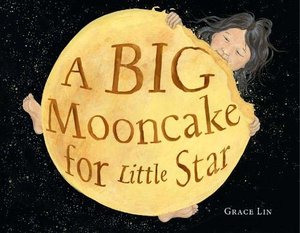
Let me give an example of an excellent book which has been removed from multiple classes by now and I really think should be the poster book for any defense against the book banners. Removing this from any class or library is truly outrageous: A Big Mooncake for Little Star by Grace Lin.

Honestly, the book is a masterpiece of gentle subtlety: it blends tangible reality (mother and child baking together, the temptation of a sweet treat, the sensory pleasure of a nibble of pastry and scattering crumbs) with the dreamy mythical feel of a story to explain the phases of the moon. The rootedness in Chinese customs gives heft and substance, while the nighttime art makes it a universal bedtime story, allowing any child to feel lulled to sleep in the sweet moonlight. It’s basically perfect, and the only possible rationale for kicking it off the shelves is sheer racism.

But, today, I’m here to defend not only the excellent. I can’t pretend that anything banned is good, because I’m stubborn. I really, truly want to spend my time pushing for excellence in children’s literature: I want more books of the caliber of A Big Mooncake for Little Star. I want really good books for all children, and I want all children to get to read books featuring stories from any culture, and I want publishers to have editors and readers pushing those books to true excellence.

And that’s why I’m royally pissed off that I’m having to spend so much time these days thinking about defending books I don’t even like, because, unlike some people who may or may not currently be in political office in Florida and who have really crap taste in books, I know that you have to give everyone broad access to books. In fact, kids need access to the crappy books, too. (Some of the books the Changeling reads make me cringe. Some of the books I read make me cringe, too.)

What do I not talk about? Well, I’ve been choking for days watching wonderful authors and industry professionals laud a book I really, truly believed needed to be set aside as a manuscript to marinate and then be pulled out for a fresh look and several rounds of new edits in order to be an excellent book. Right now, I do not think the book is excellent, and I find it more frustrating to see it in what feels to me like an unfinished state than to read merely banal picture books. I see how it could have been great. But to my eye it is not. (I can say this freely because it happens so often that I know no one will guess who I’m talking about– and don’t ask me, I will not tell you, I do not criticize authors even when I do not personally like them!) I have successfully not been a brat about it, not stormed over to a single library, and not tried to lead a parade of people on the internet or in person to destroy the author’s career. Remarkably, I have managed never to do that sort of thing in my life.

I am, in fact, prepared to be happy for any child who benefits from this book– and I’m sure some will! That’s wonderful, because even if I think the book could have been better and could have had better reach and more of a future had the editor and author given it another few months or even another year of work, if any kids love it now, as is, that’s better than it not happening at all. I can’t make those behind the scenes decisions, but I can take charge of my behaviour now. I quietly do not do negative reviews, and I loudly praise excellent books. But, these days? I’m also doing what I can to defend access to all books, for all children.

So, perhaps, this is me mostly talking to myself, but maybe you, too, need the reminder: this isn’t about defending books for being good. Right now, all books for children are under attack. And, unfortunately, we can’t limit ourselves to defending excellence in children’s literature. That’s the ultimate goal– I want to get back to pushing for excellence. Right now? I just want kids to be allowed to read at all.

And, yes, it’s that serious.

The Possible Lives of WH, Sailor

There’s a lie the status quo likes to tell, and it’s that other possibilities don’t exist, and have never existed: this is the only possible.

This was the truth that struck me so forcibly this time last year when I did not do Martin Luther King Jr. in the library, but used other people, other stories, instead. The most powerful story was Schomburg: The Man Who Built a Library, by Carole Boston Weatherford with art by Eric Velasquez. I told these Jewish students to imagine that they were told by a teacher that Jewish history had no culture, no contributions to the world: there were no artists, no scientists, no writers, nothing good came from us. They were angry. I told them that was what happened to young Schomburg: the lie the status quo told him was that he was in an all-white world, it had always been this way, and must be this way. It was all too easy for the kids to relate to his story, and it energized the room with a feeling of kinship, anger, and a thirst for knowledge. What stories were not being told? Schomburg found all of these wonderful stories in mysterious places called “archives”? What else might be there?

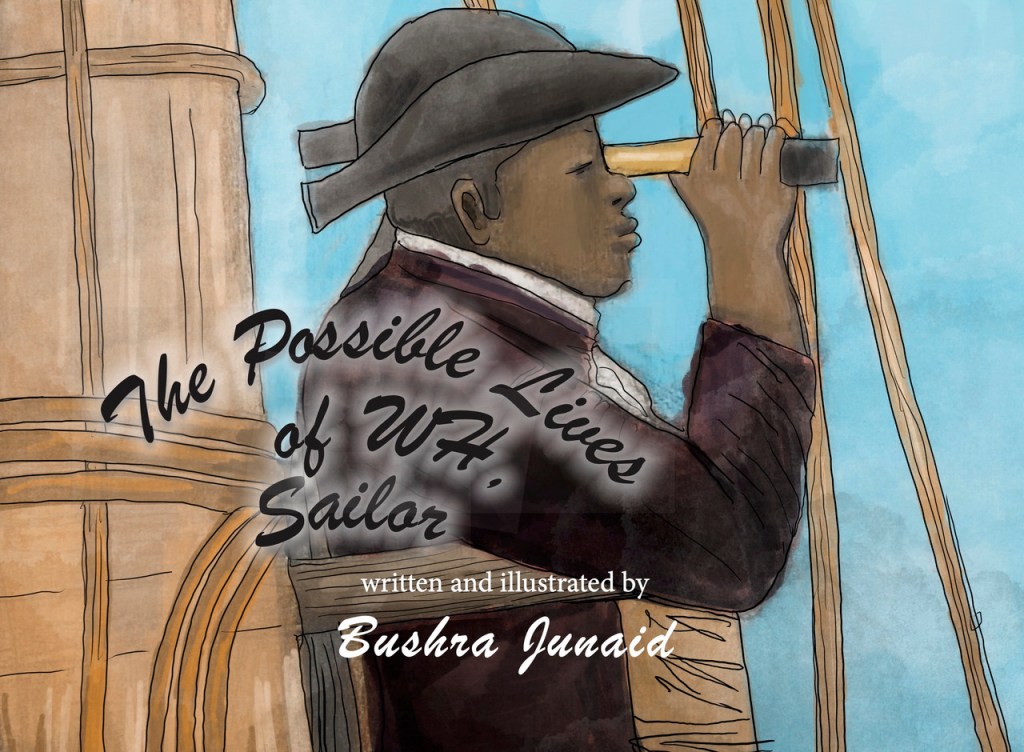
If I had those same kids again, this is the book I’d read them, because The Possible Lives of WH, Sailor, by Bushra Junaid comes into this view of history with the resonant richness of a range of possibilities, with all the ways we can look at what we know and all the questions we can ask.

Bushra Junaid sits down in front of the teachers of the world and says, “We do not know all of the answers, so let’s not say we do.” Bushra Junaid turns to the students and says, “I have a story. Here we have a figure of mystery. What do we know? What can we say? We can say so much– and yet we know, for certain, so little. Let’s talk.”

The story in this beautiful poem of a picture book is of the discovery of the remains of WH, all we know of his name. In 1987, the year of my birth, a coffin was uncovered on the Labrador coast, and, when an osteologist and a conservator from Memorial University investigated, they deduced that he was a young man of African heritage, in good health, but missing a forearm– could that have been the cause of his death? Experts thought he was probably a sailor, maybe a midshipman, and buried in the early 1800s. Even this much, as Bushra Junaid explores in her poem, is tentative, and even this much provides a wealth of possibilities.

Most remarkable, however, this poem is not “about WH,” and is in no way peering into him, nor is it voyeuristic. It is one of the most delicately respectful yet robust yet intimate texts I’ve read in recent years; Junaid address WH directly, claiming his kinship, musing about all there could have been in his life. She gives everything a turn: tragedy and success and achievement are all given a chance in her thoughts, and she brings herself into the process honestly, “Some may say I’ve got no skin in the game, | Yet if it’s really all the same, | This child of the diaspora would like to claim | You as kin.” But through it all is a sense of warmth and grief: we will never know WH directly, but, she repeats in her firm refrain, “It’s time that you were laid to rest again.” Let him rest, she asks us.

There is a quiet paradox here. On the one hand, we are so glad to have met WH, to have Junaid able to tell us about him. And yet, on the other hand, we look at it all laid out on these pages and agree with her: yes, let him rest now. We feel no detachment, as with ancient stones in the desert; we would like to see him respectfully laid to rest with a marker, with words on a tombstone, perhaps with some verses from this poem inscribed nearby.

Junaid unfolds so many possibilities: Was WH born free and enslaved, or was he born a slave on a plantation? Was he born closer, maybe in Nova Scotia, to parents given a plot of poor land after fighting for the English in the American Revolutionary War? We see, running through her words, which rock like a boat on gently rolling waves, so many ways that Black lives have always been part of the world we live in, whether in the USA, Canada, or anywhere in the world. And I do not see how any reader can go through this book without seeing the world in a richer, more nuanced, and more colourful way.

You will have noticed, in this, that Junaid reduces nothing, neither history nor language nor story. She is certainly concise: not a word is wasted. Her focus on WH means that the book is precise and exact; it is not sprawling. But she uses a wonderful blend of colloquial and elevated grammar and vocabulary, a rich and textured palate of words that will have students sounding out the text and exploring words that, if young enough, they may not know: diaspora, traverse, grit, and so on. The sentence structure working with her gently rocking, yet robust, poetic form carries all the dignity she wishes to confer on WH, and may likewise challenge young readers. My expectation, born of experience, is that it’s the kind of challenge children will love– it tells them she trusts them and is in no way patronizing or condescending. This is, in a word, a tour de force.

I want to leave you with her words, and I want you to please think of sharing this book with any child you know, in a classroom or library or your own home– or, perhaps, you want it yourself. It’s a beautiful poem. And so, here is the link again.

All these things we can’t possibly know–
They have only made my curiosity grow
About all the possible lives you may have lived.

I don’t know from whence you came,
And I don’t know your rightful name, but you
Remain.

Respect is due. It’s time that you
Were laid to rest anew.

Neither holiday recommendations, nor “best of” list, nor Caldecott predictions…

I try to do a holiday post every year, but you may have noticed I didn’t in December. I just didn’t. Nor did I do an end-of-year “Best of…” list. I didn’t do ALA Youth Media Awards predictions, either. Part of that was being busy: homeschooling, teaching another course for kids to make their own picture books, and much more has been occupying my time. A lot of it, though, was dissatisfaction with those formats. Which holidays? Best of what, exactly? And the ALA Youth Media Awards continue to fail to call me for my opinion (how dare they?) and also apparently I keep selecting books that aren’t eligible for consideration.

So I’ve been tinkering with this since December, collecting titles and thinking about them. I’ve decided to tell you about books I think are beyond beautiful and would be great gifts for anyone else or would simply be lovely books for you. If you have a gift giving occasion, I think you should consider these. If not, I think you should consider them anyway, because they’re beautiful books, and there’s always a reason to buy books. If you need a reason to buy books but can’t come up with one, please consider asking me to help with that; I’m truly skilled at finding reasons to buy more books. It’s one of my most masterful skills.

I’m going to be incredibly ornery, too, and mention a few books I bought from the UK. They may make it to North America at some point, and, regardless, people who aren’t based in North America read this, and I like to share books no matter where they’re published. I wish every book was available everywhere, but, strangely, I’m not supreme monarch of the globe and no one has yet adopted my platform for Universal Book Access. I don’t know why. I think they ought to reconsider my suggestion.

The key criterion I used was “did I come away with the feeling that the creative team firmly believes that children deserve quality as much as adults do?”

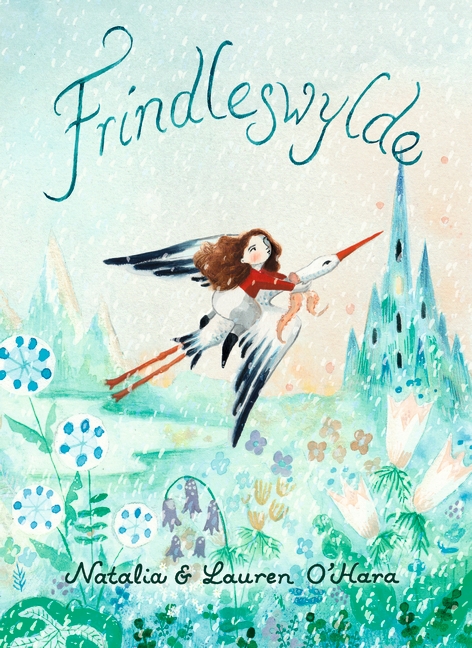
First, I want to remind you of Frindleswylde, which I reviewed more fully at that link. I feel like I’m collecting beautiful wintry stories and this fairy tale by the O’Hara sisters is, truly, among the best of the best. Given I’ve reviewed it already I’m holding back from going into it all over again, but I love the space that’s not filled with explicit detail, I love the element of genuinely startling surprise, and I love that the ending leaves space for the reader’s imagination to keep on growing.

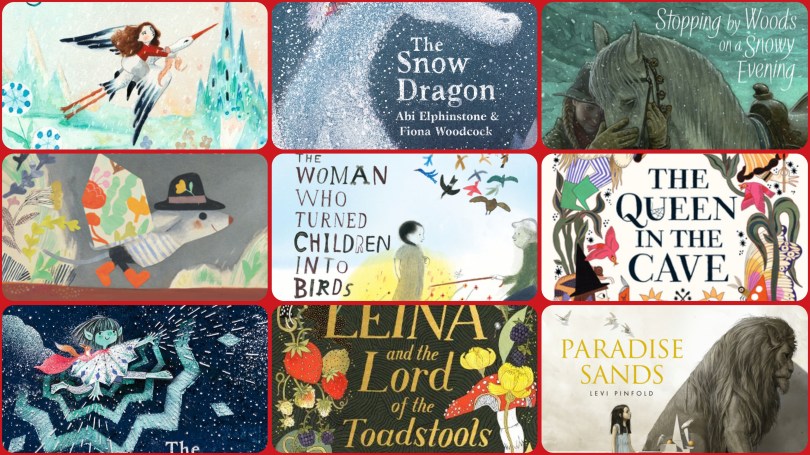
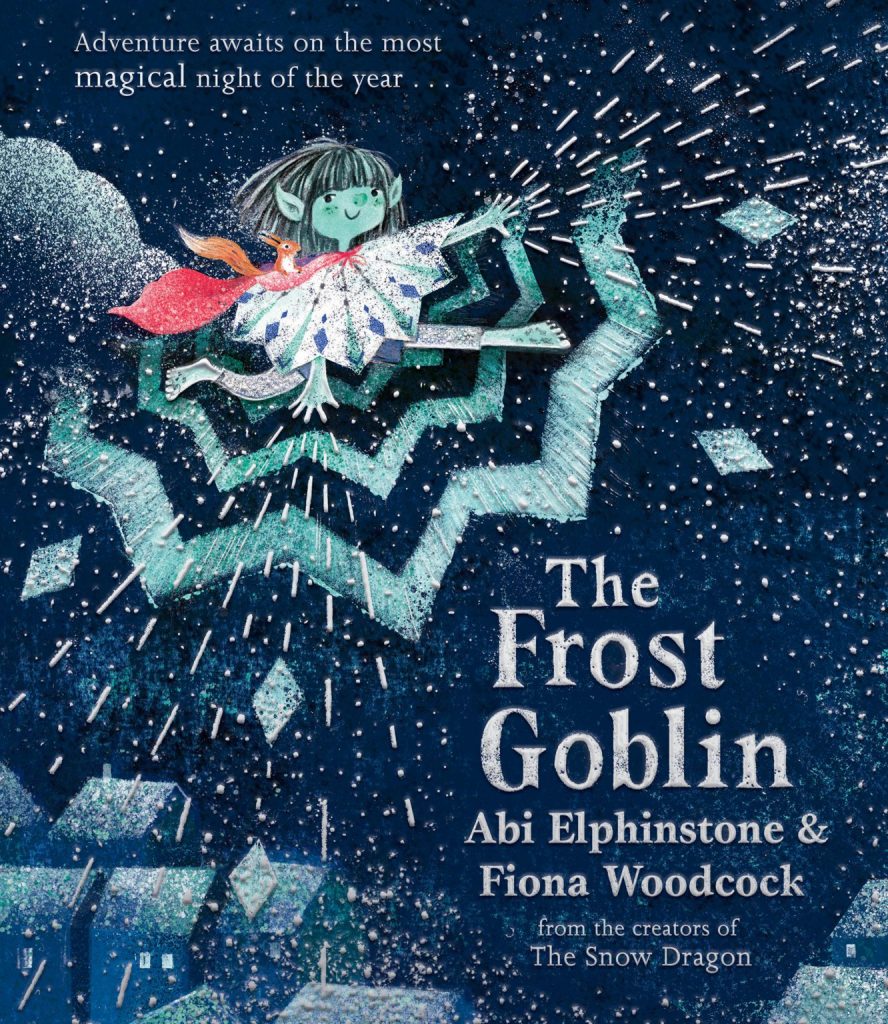
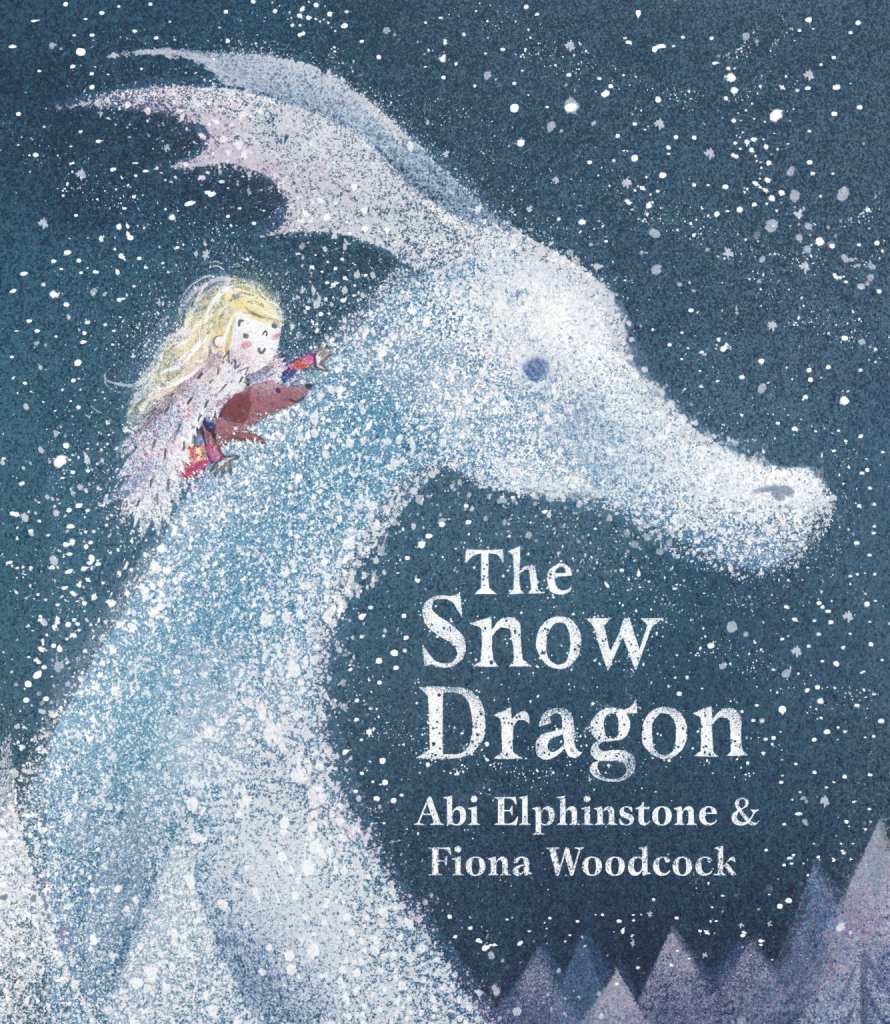
Two other wintry tales, and these are not (yet?) available in North America, are from Abi Elphinstone and Fiona Woodcock, The Snow Dragon and The Frost Goblin. Both of these have the loveliest blue-and-silver art with all the colours of snow and frost swirling quietly around. Phoebe in The Snow Dragon and Bertie in The Frost Goblin are deeply sympathetic characters, and Bertie in particular pulled me in with his budding friendship with the goblin child, Ada. Do you know a child with a wobbly heart– are you a child with a wobbly heart? Then you should probably read this book and find out just where the frost comes from.

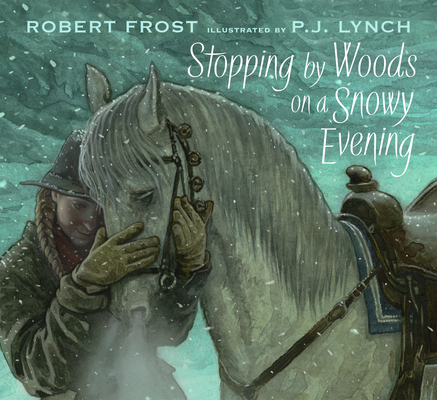
This, now, is the last of my wintry ones. Stopping by Woods on a Snowy Evening by Robert Frost is a natural poem to present in a full illustrated edition, and so it’s been done before. But this one, by P.J. Lynch, is a particular marvel because of one particularly important point: it doesn’t try to warm it up, fill out the narrative, or explain a single thing. Here we have a woman on horseback riding out of the endpapers, past the half-title page, into the poem, away from people, through the snow, into the trees, and stopping, gazing off into the falling snow, three-quarter profile facing away from us, contemplative. The horse who thinks it’s so queer to stop gets an embrace, and the illustrations move from the woman to allow our gaze to go over the frozen lake, and when we return to her she’s looking a bit more relaxed as she watches the horse shake his harness bells, and lets the wind sweep the snow on by… And then with a look backwards– is she regretful, will she miss the quiet and beauty?– we ride off forward, with miles to go before we sleep… and so we leave her, letting her go those miles before she sleeps. The yearning, the quiet, the darkness, the whisper– it’s all there. I have seen no other edition of this book which has so fully reached the unspoken heart of the poem; this is it. Robert Frost would be proud.

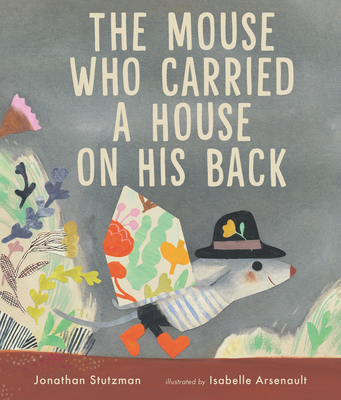
A book I’ve recently given as a gift on multiple occasions recently is The Mouse Who Carried a House on His Back by Jonathan Stutzman with art by the glorious Isabelle Arsenault. This is a book which could, so easily, have been sappy, saccharine, and “about being generous” in the wrong hands. Instead, it’s strangely gripping, prompting me to read it again and again both for the comfort of being encompassed in the lovely house and to try to figure out how this team managed to make the book so beautiful. It is not simple. It is, in many ways, a parable in the manner of a few thousand years ago.

If we look at the parables in biblical literature– midrash, the parables of the New Testament, and so on– and if we remember that this was a common and necessary way of communicating complex ideas (“All these things spake Jesus unto the multitude in parables; and without a parable spake he not unto them” [Matthew 13:34]), then we might find ourselves wondering what happened to parables. I worked with a professor in my graduate degree who suggested that our modern parables are picture books– Peter Rabbit, perhaps. I think The Mouse Who Carried a House on His Back certainly qualifies. Like a parable, depending on how you read it, it tells you more and more. One way to read it is as a commentary on generosity: Is the mouse an Abraham, wandering with his home and welcoming in those who need food and shelter? Or is it a commentary on assumptions and judgments: The other animals fear the bear, but the bear needn’t be feared? But it was the cat who first made a threat, honestly, and, in fact, was the first example of being trustworthy by being trusted. There’s just so much to unpack, and all of it is rendered more delicate, more layered, more nuanced, and more beautiful by Isabelle Arsenault’s art, which is as rich and textured as the text.

On the completely other side of the equation comes the uncanny. These can be quite as vivid, sympathetic, and representative of any gentle virtue you like as the sweetest or kindest book in the world– but they come from a different, more mysterious place.

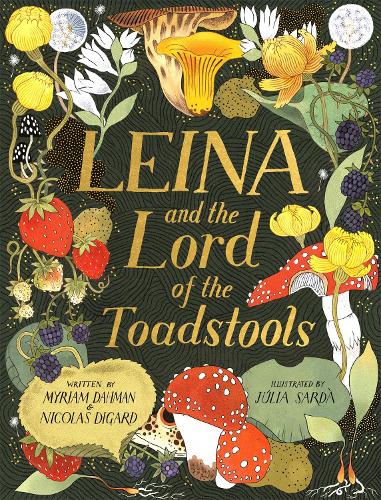
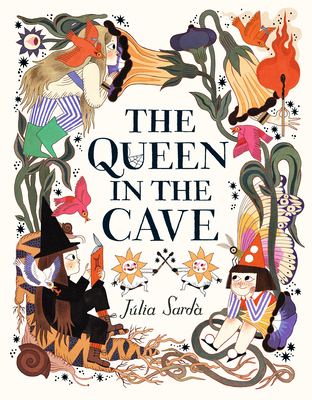
One of the finest of these, again, is not (yet???) available in North America. (I really hope something is done about these egregious oversights, but for now, I’m happy to tell anyone on this side of the Atlantic about the lovely shops I get books from on that side of the Atlantic, link for this is to one good shop.) I confess I got Leina and the Lord of the Toadstools in the first place on pure impulse. I love Júlia Sardà’s art and am easily lured to get anything with her name on the cover– another book I loved this year was The Queen in the Cave, which is her first book as author-illustrator (available in North America, thank you, Candlewick!) and, I fervently hope, not her last. (Both of these books are older level, not a classic picture book: a child who likes graphic novels or full, illustrated folk or fairy tales, might enjoy these.)

I like putting these two together because I feel like they’re talking to each other, which I think makes sense given the art link, but, also, given the role of natural forces in each of these two books.

While both are uncanny, chilling, and, to some degree, quest narratives with uncertain (but satisfying) outcomes, Leina and the Lord of Toadstools is a rescue narrative with the classic storyline of a forbidden room which leaves a telltale mark on the hand of the invading figure, a challenge to a game, and the defeat of a terrifying opponent to rescue a host of people transformed into animals…

And yet we are left with so many unanswered questions, provoking us to think, to reread, to scan the art, and always leaving us intrigued. After Leina rescues Oren and the rest of the villagers, the relationship with the forest changes—but why? Is the toad gone? Who is the good spirit of the forest at the end? For whom do they leave offerings? Why did Mr. Spadefoot, the Lord of the Toadstools, come to town in the first place? Do you have answers? I do, but, also, I certainly do not.

The one thing I know for certain is that in this book Júlia Sardà does one of my favourite things: borders. Why oh why is it less common to see beautiful borders around text or around pages than it used to be? Is it because Trina Schart Hyman was so good at it that the world took one look and said it couldn’t be done better? Well, Júlia Sardà’s in this book—and to some extent in The Queen in the Cave, though in a different fashion—are beyond beautiful.

The Queen in the Cave, as a whole, feels more impish, with a glance of daring through the heart and the eyes, than Leina and the Lord of the Toadstools. Leina is grown, and her story has the full feeling of a story right out of a Joseph Jacobs or Andrew Lang (or what’s that Russian dude) collection. The Queen in the Cave is about three girls who are together—but one somewhat different. Rather than going into the dark with fear in the heart but determination to rescue a friend, Franca is going into a forest, into a cave, for no real reason but a desire to go where no one has ever gone before. She has a funny feeling, a different feeling—and her sisters, Carmela and Tomasina, do not. Franca is alone in her adventure, and Carmela and Tomasina are there in contrast, but since we see things more through these two younger girls, we pretty much feel on the outside of Franca’s experience, and left out. No matter which side you’re on, Franca’s or theirs, you’re still left out: either alone on the adventure, or on the outside. The story is, inherently, lonely.

But oh so rich. It is a story, constantly, of yearning. We want adventure, like Franca. We want safety, like Tomasina. We want it both ways, like Carmela. Strangeness, comfort, mystery, growing, and yet– in the end– cuddling, three sisters, loving each other, together. With something strange just outside the window.

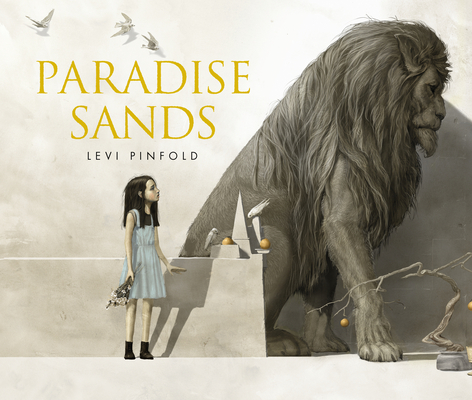
Lord-a-mercy, I’m starting to wonder how many books I can fit in one post. But I must onwards to at least this, and that one… starting with Paradise Sands by Levi Pinfold, a tale so folkloric (another of bargains and animal transformation, like Leina) and so strange and enchanting that it reached deep to the back of my psyche, turned a doorknob to a forbidden room, handed me six pomegranate seeds, and kept me coming back to read it again and again. An old song, a road trip, a visit– and generations. This could be a good story, I think, for Hallowe’en, whether in class or in the library or at home. But I don’t think it’s limited to that. There is the question of age. In this case, I find myself impatient with the question because I think it’s the kind of book many ages can get something out of at many different levels: it’s so entirely true, so honest, that different readers will all come away with a different angle and understanding in mind. But it’s truly a legitimate question, I know, since elementary school teachers reading this just want to know, “Can I read it to my class?” I would be less likely to try it with Kindergarten. Grade 2 and up may be best, but that depends on your Grade 1 class, though that age group changes radically from the beginning to end of the year– oh honestly! You’re a grown-up! Read it yourself and be the judge. You may not be able to get up from the book, though, it tends to hold on to you…

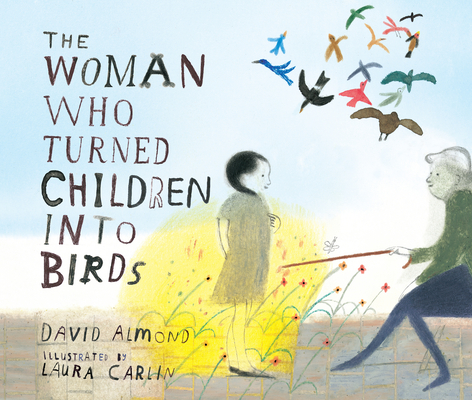
This last book in this post is yet another book that holds on, and another of transformation, but of a different kind– not warping, not losing, but gaining, broadening, flying. This one, without a doubt, is one to read with your younger kids, and more so for you to enjoy through their eyes than the other way around. This book, yes I’m climbing onto a soapbox, this book should have won the Caldecott, except for that pesky eligibility issue. This book is a dream made paper, but the best kind of dream, the dream of flying and soaring on wings of paper and art and ink and text taking flight. You all need this book. The Woman Who Turned Children into Birds by David Almond with art by Laura Carlin is a masterpiece. Somewhere, somewhere, Maurice Sendak is whispering: “YES.” Children will understand it intuitively, adults will find the frozen lake of pragmatism within them warmed and cracking open by Nanty Solo: “Go on. Be happy. Off you fly!” You think I’m nutty, freaky, batty, spooky, you don’t want to meet Nanty Solo? But what on earth are you frightened of? I say no more, I’m done… but I invite you, with David Almond and Laura Carlin as your guides, “Go on. Be happy. Off you fly!”

Writing for children about the Holocaust and antisemitism

Well, this is a big one, and not one I want to write about, in particular, but the Changeling is now 9 years old (how did that happen?) and the fact is that I have been asked a lot about this topic (I even sort of wrote about it before, over here), but also it keeps coming up because, sadly, antisemitism is in the news a lot lately. Because there’s a lot of it, you see, and it keeps surprising people by existing, and then we get the fun part where Jews point out that antisemitism has been around for a very long time, never went away, and, in fact, there are antisemitic underpinnings to a huge amount of our world today, right alongside the racism and misogyny, because antisemitism is racism (and misogyny is in everything, too, surprise!), and because putting down other people has always been a really great idea for those on top.

Personally, I dislike reading and hearing all of this, and some of it I even find objectionable. (I am not telling you to object to it; I’m speaking personally.)

Naturally, there’s the dislike that comes with hating it to be true. That’s the easy part. I can easily tell you that I’m sad and angry to see both the antisemitism and the surprise that it’s still around. I’m sad and angry that books such as Dara Horn’s People Love Dead Jews and David Baddiel’s Jews Don’t Count are necessary and relevant. I’m sad and angry that it’s necessary, even now, to have people point out that romance novels about an affair between a Nazi officer and a concentration camp inmate are horrific and shouldn’t be published, and why do we keep needing to say this? I’m offended that it’s necessary to articulate to real human beings who should absolutely know better that it’s offensive, cruel, and bad writing on every level. I’m furious with every school pushing The Boy in the Striped Pyjamas and banning Maus.

But that’s the easy part. I also find myself critiquing people doing good work: analyzing Dara Horn and scrutinizing David Baddiel. (More so Dara Horn than Baddiel; Jews Don’t Count was tighter. It was a polemic with one goal, one premise, and a clearly defined audience, so the only thing I can scrutinize there is its likelihood of success. Dara Horn had a broader scope, and People Love Dead Jews was collected as a range of essays written for different audiences. I would love to talk to her about, for example, Shakespeare because I’m so astonished she found anyone who didn’t consider Shakespeare an antisemite. We have not dissimilar backgrounds and I was more accustomed to being eagerly questioned about why on earth I, a Jew, was studying so many antisemites. People also seem to love to question live Jews about antisemites, fun game.)

Beyond that, I particularly loathe every helpful meme and Twitter thread about the antisemitic roots of everything, because while they’re (often, and presumably) correct to some degree, I don’t understand the point. Look, let’s admit it: memes are excellent for conveying that highest of all forms of humour, the noble pun, to advantage. Twitter is fabulous for sharing news about books and cats. But they are not great for matters that really reach straight through the surface of the contemporary world to peeling back layers of history and laying bare the raw and beating painful heart of how humans have denied the humanity of other humans.

So, think about it: how can pointing out that the modern imagery around witches has roots in antisemitic imagery (which is can certainly be demonstrated, though counterarguments can also be made) possibly do any good if you don’t simultaneously discuss the nuances of how to deal with what you’ve uncovered, which you really can’t in a meme or a Twitter thread because they’re so complex that Jews variously shrug, shout about, or ignore how to deal with those same implications? I think that while Dara Horn and I disagree on perceptions of Shakespeare’s antisemitism (and, look, I was assistant stage manager for a production of The Merchant of Venice and everyone agreed it was antisemitic and we worked on it anyway), we and most people would easily agree on Richard Wagner. Dude was absolutely an antisemite as well as a nasty human being in every possible way. I mean, one of the best bits of Wagner gossip I’ve seen was his breakup letter to the woman his wife told him to knock it off talking to (either cheating with her or trying to) declaring that he was going to miss talking to her… about himself. One can only hope that she snorted and thought, “Well, thank the Lord I won’t have to hear more from him after this– thanks, Cosima!” Despite the widely held view that he was an antisemitic shithead, there’s no consensus regarding the ethics of listening to and performing his work, which is magnificent and justly famous. So I have severe reservations about dramatically uncovering the antisemitic roots of everything without an incredibly clear understanding that dealing with living in a world in which almost everything does have some relationship to hatred of Jews is going to be complicated, unclear, and uncomfortable.

That, in fact, is the point: we live in a complicated, unclear, and uncomfortable world where humans have denied the humanity of other humans.

Oh! So, every kid in Canada singing the national anthem, “Oh! Canada,” is singing music by Calixa Lavallée, noted antisemite. The only thing going for him is that his music was empirically superior to the dreck composed by John Stafford Smith, which was plopped onto Francis Scott Key’s “The Star Spangled Banner.”

Look, if you want to try for purity from anything untouched by antisemitism, racism, and misogyny in your life, you may try, but I hope you won’t give the experiment a very long try because I want you to be able to survive. It’s not happening. You can only be your best self, and if you’re here and reading this because you want my point of view– I’m here to tell you that that’s what you need to teach your kids. You need to teach them that, yes, we live in a complicated, unclear, and uncomfortable world where people have done terrible things and others have done wonderful things, and in this world, you can only aspire to be your best self.

You know who describes it best? James Baldwin.

“…I brought to Shakespeare, Bach, Rembrandt, to the stones of Paris, to the cathedral at Chartres, and to the Empire State Building, a special attitude. These were not really my creations, they did not contain my history; I might search in them in vain forever for any reflection of myself. I was an interloper; this was not my heritage.” (“Autobiographical Notes,” Notes of a Native Son.) But he continues: “At the same time I had not other heritage which I could possibly hope to use– I had certainly been unfitted for the jungle or the tribe.” (p. 6-7)

Well, whew. The shock of recognition I felt, reading that first passage out of doors in Paris, my first trip to Europe after the pandemic, was profound. And yet, days later, I saw the name of Fromental Halévy on the Palais Garnier and I felt another jolt: we Jews have had a true impact, not in the way we’re accused of– not controlling the banks and media and lasers from space– but in resilience and contributions to writing and the arts, in ways we often ignore in our own right.

Where are the stories for children about Halévy and his family? Why nothing on the great Jewish violinists (well, with one exception I’d rather not discuss) of the 20th century? I did recently see a picture book biography of a scientist I greatly admire, Vera Rubin, but then it didn’t mention anywhere that she was Jewish. It wasn’t by a Jewish author or illustrator. I can only imagine everyone involved thought it was irrelevant. I disagreed. I knew that if I shared it with a Jewish child and they saw that she was Jewish, they’d be thrilled. I also knew that if I shared it with a non-Jewish children, and they saw she was Jewish, they’d learn something cool about her, and they’d see a contribution to the world we share by a Jewish woman.

Storytime! Let me tell you about Leopold Auer, often referred to with respect as Professor Auer, the great pedagogue who was a high-level teacher of many violinists– including the young Jascha Heifetz. He stated with enormous pride that you could never tell his students by listening to them, since he did not teach them to sound like him, but rather elicited from them their own best sound. What a wonderful message for every parent and child to hear! But he, himself, though born a Jew, converted later in life to Russian Orthodoxy, presumably in order to navigate his life and career more easily. However, he wanted to teach everyone who was a good student, including, for example, the young Jascha Heifetz, who was a Jew. There was a problem: in order for Jews to get permission to live outside the Pale of Settlement, one had to be enrolled in a program, for example, studying with the great Professor Auer at the conservatory in St. Petersburg. Jascha Heifetz was too young to live alone in St. Petersburg, but he couldn’t exactly commute to the conservatory and his family wasn’t allowed to live in St. Petersburg since they wouldn’t be the ones studying with Professor Auer. So Leopold Auer quietly signed up Jascha’s father as his student, put all the bureaucratic stuff in order, handled the politics, and taught whom he wanted to teach. As for Heifetz’s family and stories, the consequences of this bit of work– well, there’s so much there! Listen to any recording of Heifetz and judge for yourself. But even this small anecdote, there you have it: yes, antisemitism, but also resilience, defiance, sadness, beauty, grief, and triumph. A perfect story.

Meanwhile, Holocaust stories and literature for children, Anne Frank everything, pile up. Teachers continue to use The Boy with the Striped Pyjamas in class.

I can think of one work of historical fiction for young people I consider genuinely top notch, and it is incredibly devastating and should by no means be given to any children under the age of 12 to read. Any parent or teacher should read it first, and then be on hand to talk it through with a child or student as needed. And it is not set in the actual Holocaust, and doesn’t have a satisfying ending. This is important. You cannot write a novel about the Holocaust, set in the midst of the crimes, for children of any age which has a satisfying ending and is true, because it must end with escape, survival, or something of that kind, and it was so incredibly unlikely. The book I will name as a good book is Alan & Naomi by Myron Levoy. My heart was entirely broken by the end. I think it was harder to read than Tess of the D’Urbervilles, which left me sobbing. I can’t call to mind another novel involving the Holocaust I would recommend.

What is interesting, of course, is that Alan & Naomi felt true and yet untraumatizing. It was hard, but I could handle it. The historical fiction left me listening for the Gestapo by night, frozen with terror at a light passing my window or a distant dog’s bark. (I love dogs.) Children need the truth. Literature should be true.

And so when my daughter recently read about “the death camps in Poland” in a history book, she asked me what they were. I didn’t answer immediately, because first I needed to swear to high heaven internally that these questions always go to me, not her father. (Well, I guess I signed up for it when I became the primary homeschool teacher…) But then I answered her honestly. And I also asked her not to go reading for more details because I do not want her to see the pictures, read first-hand accounts, and I absolutely don’t want her to get fictionalized information. I told her very directly that two things are important: a) one must absolutely know the real truth of what happened and what crimes were committed against the Jewish people, and b) one should not be pushed to learn more than one’s capable of handling yet, because that would result in hurting the learner without doing any good either to the memories of those who were killed or to promote a better world in future.

I felt intensely fortunate (after I’d finished swearing) because as a homeschooling parent I am able to navigate my child’s learning level here. It’s nothing to do with what’s age-appropriate and everything to do with what’s appropriate for the kid in question. My kid is one who needs honest facts, no dramatization, and without too much imagery. Maybe you know your kid and are able to handle it accordingly, which is fantastic, if so. There are also plenty of cases where schools do a better job than an individual parent would of navigating this, but I tend to be leery of big class things particularly at an elementary school age.

Note: if you are looking for something for an elementary school class, see this post, which details why I like these two picture books in particular, as a way to approach antisemitism and the Holocaust with elementary school children. Neither is actual fiction, one is directly historical.

And yet, I want to come back to James Baldwin, and for a bigger reason.

James Baldwin lived in and wrote about Harlem. One of his essays in Notes of a Native Son, which I already mentioned above, deals in depth with the relationships between the Jewish and Black residents of Harlem, “The Harlem Ghetto.” Baldwin draws pictures with his words which are so vivid and ring so true that you wonder how he does it in so few words. And what he says in that essay, and says with so few paragraphs, feels almost as true today (though the context is so different– and yet so painfully similar) as it must have when it was first written.

At the time, he says, the Jews of Harlem were small tradesmen, rent collectors, pawnbrokers, and so on, and the population they were taking this money from was Black. Thus, relations were strained. This did not, he added, extend to individual friendships, and he himself, of course, had many friendships with Jews, including the very Sol Stein who got him to put together Notes of a Native Son, the collection of essays in which “The Harlem Ghetto” is published. But, overall, the murmurs of the more privileged class against each the Black population and the Jews were embedded in the mutual consciousness– and, of course, each accepted the inferiority assigned to the self, too– thus: “… the American white Gentile has two legends serving him at once: he has divided these minorities and he rules.” (p. 71)

A bitter truth.

I’ve heard too much, recently, in bite-sized stories, snatches of pain plastered as gaudy outrage. I want thoughtful nuance, now, because it’s what we need. Baldwin had no qualms about demonstrating his own people’s imperfections all while in the same breath looking the equally imperfect reader in the eye and seriously demanding that we recall that everyone, no matter how imperfect, deserves respect and dignity. Why? Because the world is complicated, unclear, and uncomfortable, and that’s where he live.

So, no, I don’t really have any book recommendations (beyond those linked), but I do have a recommendation for a mental adjustment. Just recall, for yourself, that we live in a world of imperfect humans, and, always, certain humans have treated others as less than human, and this is embedded in our world, all around us, and we can’t change or scrub that away, no matter how many spots we rub out. Recall that we call this “inhumanity,” which means that the ones who are treating other people as things are the ones who are losing their humanity in the process.

It is the study of the humanities, as a professor once reminded me, that teaches us to behave with humanity. Thus, even in teaching your children to read (maybe they can read Langston Hughes?), to listen to music (“did you know this violinist was a Jew from Russia who…?”), or to admire art (my daughter loves Chinese porcelain after reading Grace Lin), they can learn all about the richness every human being has to offer– and that will fit them to reject the ideologies of those who would have them see certain humans as less-than.

Make Way for Eight Candles!

Dear Book Lovers,

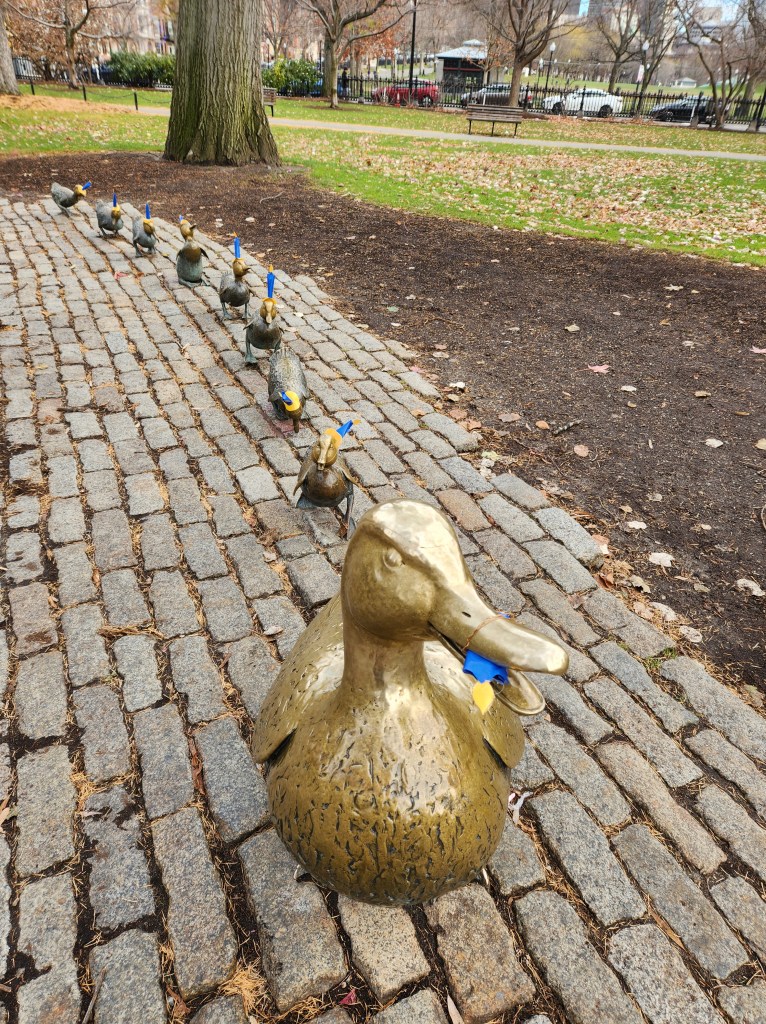
Today is the first day of Chanukah! As I’m homeschooling my Changeling this year, we get to do stuff our way. To us, this means the bookish way. Have you ever noticed that there are 8 ducklings and 1 Mama Duck in the Make Way for Ducklings statue at the Boston Public Garden, created by the excellent sculptor, Nancy Schön, who, incidentally, is Jewish? And who just loves it when people interact with and (respectfully) enjoy and dress up those ducks!

So we did.

Happy Chanukah, one and all!

(Mama Duck carries the shamash in her beak to light all those duckling candles.)

(Yep, that’s the Changeling! Can’t see her face, so I feel ok posting this. She has loved this statue, well. All 9 years of her life, basically!)

If you like seeing ducks dressed up, may I recommend Nancy Schön’s book, Ducks on Parade? If you buy it at that link, you’ll get a signed copy!

On Kids Reading Terrible Books

This isn’t really a review at all, or even so much about kids or any specific book. It’s about how people read, and how to deal with people (kids included) when they like awful books. As usual, if you want titles or gossip about books I’m convinced are terrible, you’ll have to take me out for coffee. I don’t do that here. (And, if you comment, you don’t, either.)

But this is a topic I’m asked about and seems worth discussing: what do I do if my kids are reading godawful books which should never have been printed, so help me?

Well, the simple answer is: unless it’s empirically objectionable, let them, and leave better books lying around. {Yes, empirically objectionable is hard to define: I trust you to navigate that on your own. I’m not going into that here.}

There tend to be two strongly opposed ways of thinking about book quality: a) books are not inherently good or bad: every book has its audience, and if you don’t like a book, then you simply aren’t the right audience; b) books are good or bad quality according to certain principles of writing, and if you don’t like a good quality book then you should be deeply ashamed and learn better.

Both of these positions are utterly incorrect.

There are, certainly, good and bad books, but they are based entirely on taste, which is to say, and here’s the rule, If I like a book, it is a good book, and if I dislike a book, it is a bad book.

The difficult part is that, secretly, almost everyone agrees with that rule but doesn’t agree that the pronoun is in reference to me; they persist in thinking it applies to their taste. Of course, you are all wrong. That series of books falls apart completely in the final half of the final book, and yet, bafflingly, you think it’s great. I’m right, you’re wrong, but I can hear you sanctimoniously mouthing the first position specified (“oh, how sad, I guess you aren’t the right audience, indeed, too bad…”) while harbouring, deep in your heart, the firm belief that If you like a book, it is a good book, which means that you (incorrectly) think I’m wrong. Meanwhile, don’t be smug, you over there are pulling out your pen to start a Letter to the Editor of Whatever Publication regarding why I’m wrong and you can prove it based on the following rules of whichever stylist or author you admire.

And, despite both of you, my conviction is unshakable– except, maybe, by the passage of time and development of my views as time goes on, but at any point in time I’m correct.

Right. So here’s the point.

Children aren’t exempt from this. They have taste, too, and, all too frequently, they don’t understand any of the debates above, haven’t learned to mouth any rules nor do they pen outraged, huffy op eds about Declining Quality in Literature (well, thank God someone isn’t writing one) but they do jump straight to liking what they like and firmly believing that what they like is good, and, no, you will not be able to reason them into liking my taste. Or even yours, though mine is better, so you should probably stick to mine.

But actually, you shouldn’t, so don’t try.

This does, to an extent, depend on age and exposure, however. Here are examples, and, yes, this whole post is very light on titles for the reasons stated above, but I’ll slip in some good ones as I go:

The Changeling is now age 9. She really likes, well, a lot of books: nonfiction, folk tales, slice of life novels, and, among everything, novels that retell fairy tales in topsy turvy ways. I flipped through one volume in a series in that style, from a battered volume read half to death, dropped in the bath but dried again, and by then lying on the bathroom floor. A book which was certainly loved, and yet I found the writing so banal and forced that I wondered the printing hadn’t gotten tired of holding itself to the page and tumbled into the bathtub while she read it.

It took force of will not to poke my head, incredulous, into her room: “you really like these?” But I knew it was a useless question. So I took a deep breath, told my husband what I thought, and texted friends. Meanwhile, the Changeling and I talk about books we do like: Catherynne M. Valente’s Fairyland series and Osmo. She’s also a massive fan of Grace Lin’s Where the Mountain Meets the Moon trilogy, so we sometimes do fun activities based on those. We can discuss plenty of books we do both love forever and if she’s telling a bookseller what she likes, the ones I’ve named here are some of the titles she lists. I hope, fervently, she’ll forget the others with time, but I have to admit, sorrowfully, that my ability to get her to acknowledge the rules of good literature is as limited as my ability to get my husband to see the truth. (I had to walk him page by page through a picture book once– it was devastating. Why is the world at large so slow to accept my taste as law?)

Toddlers are, to some extent, easier. With very small babies, before they can move too much, you can read them anything you like. I’ve had great success with Eleanor Farjeon, John Milton, Oscar Wilde, and so on. Toddlers are tougher critics and will grab books from your hand and throw them aside saying “no no no BUGS BUGS” and you have to figure out of they’re saying “no, stop it with the bugs” or “no, not that, I want bugs,” not to mention ascertaining what “bugs” is in reference to. It can take a while, and they can be really determined for you to get it exactly right.

Of course, the flip side is that toddlers are great because they’ll let you read In the Night Kitchen as often as you like. (As I’ve stated with firmness elsewhere on this blog, and in any other venue which still tolerates my presence, if you don’t like that book, you are wrong.) In my case, the Spriggan and I have yet to hit an upper limit on our mutual tolerance for repeat readings of that masterpiece. (Has it occurred to you that the bakers are, in an odd way, presented as house spirits, like brownies or domovoi or lares or penates…? They are threatening yet important to the home comfort, but in a bafflingly unreal way.)

But what if your toddler starts going to daycare and is surrounded by other kids who like trucks and you, sensible reader, notice that: a) it’s a bit absurd to have so many books for toddlers and small kids glorifying the internal combustion engine while the world is burning, and, more importantly, b) every book about trucks and so on is written in an abuse of the iamb so severe that you can’t read it without stumbling over the unscansion and then flopping into to rhymes that make you feel like you should thank the ceiling for not caving in from sheer misery at having to listen to that.

I’ve been lucky with the Spriggan. They probably have those at daycare, but I just don’t buy them. He certainly plays with the cars and trucks there, though the kitchen is always a favourite and let’s not forget the enchantment of the broom the daycare keeps to clean up after them. Oh, the broom! Glorious broom.

But so far it hasn’t transitioned to our house beyond identifying vehicles in books we have, so we’re simply sticking to the ever-wonderful Freight Train by Donald Crews. He has many other interests at home: animals, of course, and kitchens and brooms and, now, The Snowy Day is relevant as December is here, and so I bring out old favourites anew. He’s learning lots of things: shapes, colours, animal noises, and that he’ll absolutely get me to laugh if he answers “moooo” to every question about what various animals say. Then I say “I know what you’re doing! You KNOW what a horse says!” And he cackles.

And I’m treasuring this time when, although he can toss a book aside if he’s done with it (and then pick it back up with equal eagerness 37 seconds later), I don’t yet have to remind myself that a ranting lecture on why If I like a book, it is a good book, and if I don’t like a book, it is a bad book will be incredibly counterproductive, so I absolutely must not try…

Even though, deep down, I know I’m right.

So, I know this early reader…

I’ve noticed something, basically ever since the Changeling turned about 4 years old. Every adult hits this point with a kid who knows how to read but isn’t reading full on novels and basically– the adult in that position flips out. We aren’t prepared. It happens to all of us, it happened to me. I was lucky when it happened to me– honestly, I think every adult in that situation needs someone to hold their hand through this difficult stage, and they should make us board books. You know: “using the potty,” “giving up your pacifier,” “transitioning to a big kid bed,” and “helping a new reader find books they enjoy reading.”

The Changeling’s favourite author at that stage was Cynthia Rylant, and then Hilary McKay (oh blessed Hilary, how I love everything you write!) and her Lulu books. I still highly recommend all of those (although I’m extremely upset that Albert Whitman is putting the Lulu books out of print, so you may need to get those secondhand). I found both of those by walking up to the (sorely lamented) Children’s Book Shop and asking Terri what I should get. She recommended those: “you’ll enjoy them, too.” After I had flipped through them, “and,” she added, “she’ll still enjoy picture books, you know.” Which cheered me up enormously because I, too, enjoy picture books.

That’s something I think every adult needs to hear. When I did my brief stint in the library, all of the kids were fighting over the same Judy Moody books and I’d say, “why don’t you look at the picture books?” Most of them ignored me. Sometimes I’d just start reading one aloud and they’d gravitate to it and fight over that, instead. A lot of them basically said outright that they were expected to read early chapter books, and they found a series that hit the spot, so they’d stay with that until separated by a crowbar. That’s not a bad thing, by the way. It’s really not. They find a groove, a sweet spot, and practice reading until they’re comfortable. What I don’t like is the expectation they feel to read those chapter books when they may, very well, really enjoy a tough, beautiful, extraordinary picture book biography like The Important Thing About Margaret Wise Brown by Mac Barnett and Sarah Jacoby, which I read to a Kindergarten class and they told me was “a hard book but somehow they liked it from start to end.” And, indeed, it was really something to see a whole group of kids that young (I was nervous, they were a big group of normally excitable littles) staying engaged with a book of that caliber for so long while I read it.

So, since I’ve had a number of people bringing this up to me recently, this post is designed to be that hand you hold while facing that quandary: “This kid can read pretty well, but maybe they need confidence, or maybe they’re just not used to it, or maybe they don’t know what to look for, or maybe I don’t know what to look for– can you help?” I will tell you one thing: you can absolutely always ask me for specific recommendations (though my first instinct will be to help you find a good local-to-you indie book shop), and I’ll always be happy to help if I can. But the books I’m going to write about here are all ones that have gotten kids absolutely thrilled and gripped– and, at least as importantly, they are ones that adults enjoy reading maybe even more than they enjoy reading dreary and austere Sophisticated Adult Literature. Why is that important? Because it’s important that kids and adults can enjoy the same books, particularly at this critical, tender point of early reading. If you and the kids in your life can talk about the books, you’ll be able to help find the next book. And, incidentally, my Changeling has more than once helped me find my next book…

One of the great things about early reading is that kids and adults can enjoy nonfiction together on any topic they find interesting. That’s when, for me, I started learning an almost incredible amount about marsupials. My daughter has been keen on wombats for about six years now, and I can’t even tell you how much fun it was to share that joy of discovery with her as she lugged big picture books home from the library and wept over returning them and I’d end up at the book shop asking them to get us in a copy of a particularly beloved one. So I’m going to start with a few large, gorgeous, beautifully written nonfiction books, biographies or natural history, you may want to share, and let’s start with a link back to this beauty: A Walk Through the Rain Forest. If you read that review, you’ll understand what I mean about not needing a specifically designed chapter book. Look through my archives and you’ll find a ton of exciting, interesting picture books that are wonderful to share with a new reader.

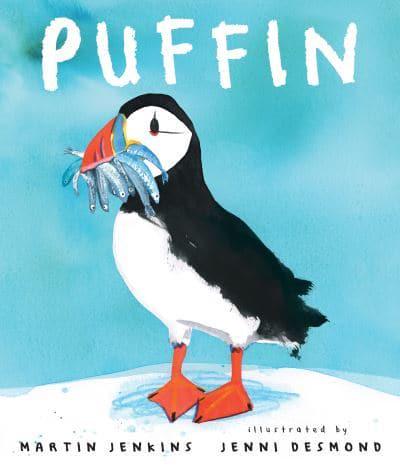
Another wonderful book by that same author, Martin Jenkins, with art by Jenni Desmond, is Puffin. An engaging, informative, almost confiding book about puffins, I had a wonderful time reading it and quickly made a list of young people in my life I knew would love it. They ranged from a young friend age 4 years to a sneaking suspicion this book would end up in my 9-year-old Changeling’s room. I was right. I’m captivated by Martin Jenkins’s method of writing nonfiction for young children. I keep wanting to say “his storytelling,” or “how he tells the story,” and only stop myself because if I do so I know it will confuse readers into thinking the books are somehow fictionalized. They aren’t, but the narrative feel is personal and conversational. If you’ve ever had a coffee with a friend who, for example, is obsessed with, ooh I don’t know– picture books, maybe? And they get on the topic and blurt out the full history of the picture book in America, maybe, then I want you to imagine that passion and excitement distilled and edited into a really clear, succinct picture book. In other words, it talks the same way a really enthusiastic little kid who just loves a given animal talks about that animal, but is very clear, gorgeously illustrated, and laid out to perfection. I’m a new fan of Martin Jenkins, with immense thanks to Candlewick for the review copies. I requested them specifically because I knew that for my homeschooling adventure I would need more nonfiction resources, and I can’t recommend these highly enough for both new and more established readers: they’re simply good.

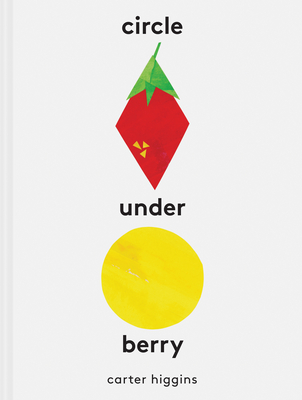
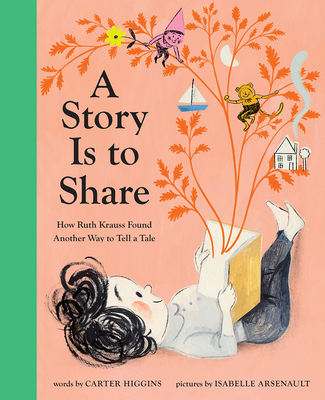
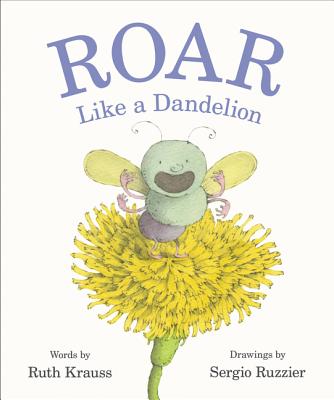
One splendid new picture book biography is by the dream team Carter Higgins with art by Isabelle Arsenault, A Story Is to Share. Like The Important Thing about Margaret Wise Brown, A Story Is to Share is a straightforward, pleasant to read, not too complex, and honestly gripping account of a really important figure to children, though they may not yet know it. (Oh hey, remember that friend who’s passionate about picture books? Here we go…) Ruth Krauss is theirs. Ruth Krauss is one of the most important picture book authors many people don’t realize is likely part of their storytelling vocabulary. One of Ursula Nordstrom’s authors, she and her husband Crockett Johnson (yes, the creator of Harold with his purple crayon) was also as much mentor as friend and collaborator to a young Maurice Sendak. She, like Margaret Wise Brown, would just talk with and listen to children and absorb who they were and how they talked and understood the world in order to write for them; the result was that she never wrote at them, was never preachy or cutesy or patronizing or– oh, that cardinal sin– earnest. (Why does no one realize that The Importance of Being Earnest was a comedy, a joke, not a genuine hashtag life goal?) I’m sure you have read some of her books: The Carrot Seed or Roar Like a Dandelion if not A Hole Is to Dig, but even if you haven’t, you’ve felt her influence, and reading this with a child, or handing it to a new reader, with its deliciously fun art and its entertaining and informative writing, at the crossroads of prose and lyricism, will leave them feeling understood by a friend across the years, and will surely ignite their own ideas. There’s a strong possibility I’m doing my picture book creation after school class with another group this year, and this is a book that’s definitely getting shown to those kids. A younger reader will enjoy going through slowly, absorbing the art and words together, and will probably find much that a faster reader won’t as they go, bit by bit, through the brief phrases, each adding up to another angle on stories about them. (Carter Higgins is an author you’ve seen here before, a true favourite, and as much illustrator as author, though in this case the scintillating Isabelle Arsenault, be still my beating heart, took the text and breathed into it with her art.)

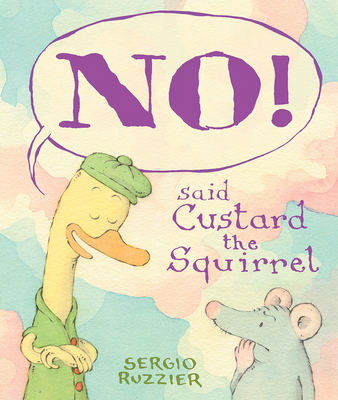
Mentioning Roar Like a Dandelion, which was published posthumously with art by the incomparable Sergio Ruzzier, reminds me that he is a perfect author for young readers. Many of his books are pitched ever so slightly younger than Hilary McKay’s Lulu books, and whether you’re reading his picture books or his young reader graphic novels, you always get his breathtakingly beautiful ink and watercolour drawings. He is my standard example of why sticking with a particular method does not necessarily mean an artist or author is stagnating: everything out of Sergio Ruzzier is fresh, new, and original; his imagination is exploring every use of his visual and narrative wit. I could weep for the beauty of his art in the unutterably silly and deeply wise No! Said Custard the Squirrel. The book is ridiculous and I will not try to define it: an unnamed rodent persists in insisting that Custard the Squirrel is a duck, and asking Custard the Squirrel to quack (instead of playing the organ, which Custard the Squirrel prefers) and swim in the lake (rather than going for a sail in a boat) and it’s the most amusing new read-aloud I’ve had in the past year, and one that many young readers have turned around to read to me instead, or taken over to read to themselves for a little giggle. Meanwhile, I just gaze in awe at the beautiful organ or Custard the Squirrel’s decadently revolting 1950’s style feast. Who is the rodent? We don’t know; they’re far too busy being an asshole to Custard the Squirrel to introduce themself. I feel sympathy for the asshole rodent I cheerfully named Tiramisu the Sturgeon. How many people do you know who just can’t get over the barrier of their perceptions not lining up to what they’re told? Sergio Ruzzier’s art and storytelling are direct: we’re on team Custard the Squirrel, and the rodent is irritating and should accept Custard the Squirrel unconditionally. And yet we feel sympathy. Certainly any adult who hears “No, no, no” twenty times a day feels sympathy! The book reminds me more of Sendak than any I’ve read recently: it is not a treatise, it’s cathartic. It gives me patience, and, like Sendak, I can read it 20 times over without getting tired of it. And I’m happy to have it read back to me by any youngsters getting ready to read.

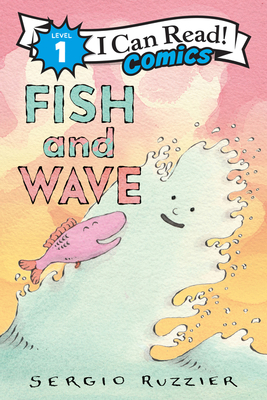
But if you want a more authorized early reader, you can’t do better than Ruzzier’s Level 1 “I Can Read!” comics, Fish and Wave and Fish and Sun (with more to come: I believe he’s working on Fish and Worm at this time). The text is simple and heavily illustrated, of course, but it’s never banal. The humour is honest and direct: the talking fish wants friends and makes friends with the sun, but then the sun sets. There is angst, but, of course, the sun also rises (wait, wrong author). But Ruzzier, who understands this the way a kid does, is not turning this into a dull lesson or a cutesy joke: the whole point is that while sympathizing with the sad fish, the kid reader knows the joke and, sheesh, we all know the sun knows it (“oh wait, the sun can’t talk, either”), and, eventually the fish learns, too. Sendak (yes, I know, “Deb, shut up about Sendak,” and “No!” says Custard the Squirrel) writes in an essay reflecting on Caldecott that his illustration of the cow jumping over the moon was perfect because he caught the cow at an angle and perspective so that we realize the cow only appears to be jumping over the moon and we think “oh, how logical!”– and then realize that the dish is running away with the spoon in the most absurd way, but it feels logical. Ruzzier has that same knack and it catches us perfectly every time.

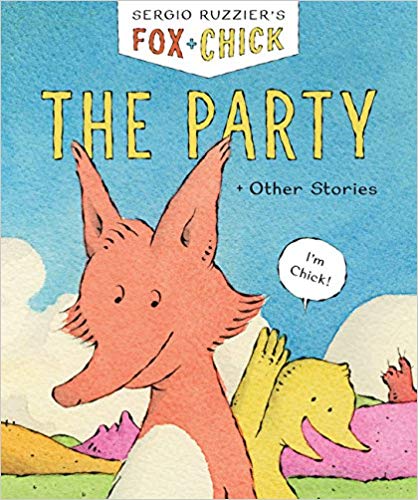
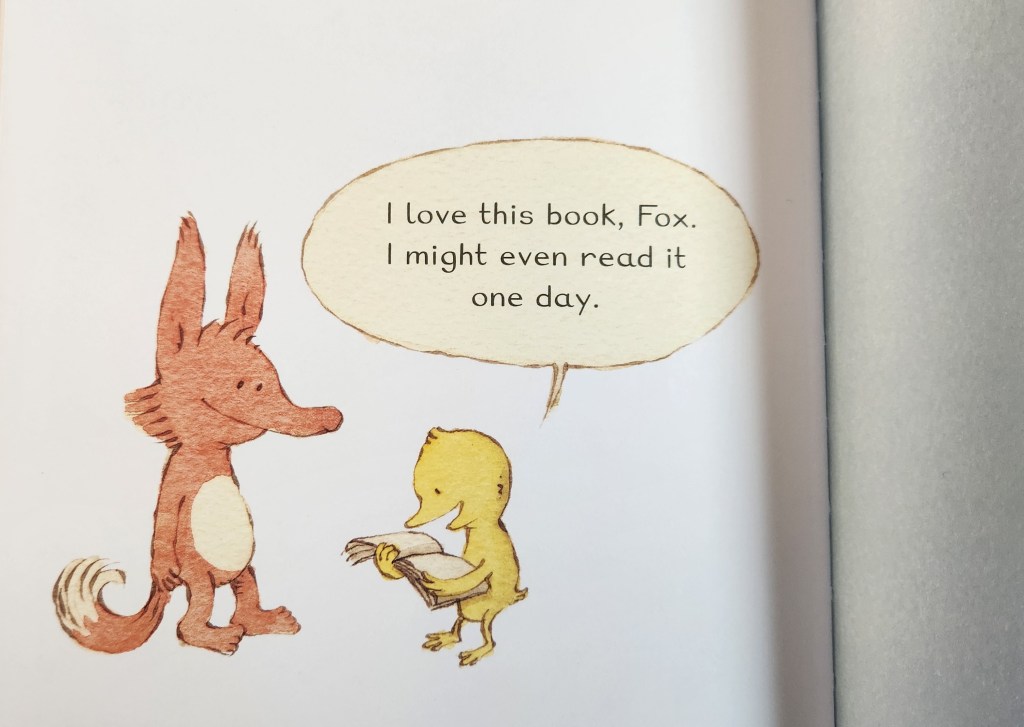
This is why (and no this post isn’t only about Sergio Ruzzier but honestly he’s just so good for this age group) his series of Fox + Chick comics are so pitch perfect at all points. I don’t think I’ve seen a series with a pair of characters riffing off of each other carried on so successfully since Frog and Toad, with every volume working so well and never fading in originality, freshness, or just plain funny storytelling. No one else is doing it this well, and I really think it’s because Ruzzier, I’m convinced, has them talking in his mind. He knows them. He probably sees them. I know I do, when I think about a birthday party (“hah, remember when Chick…” or I’m looking for a hammer (“well, maybe Fox can tell me what to do about that!”) and, as with Frog and Toad, the stories are slim and fast and live with you for a long, long time (“I love this book, Fox,” says Chick, “I might even read it one day.”). There is no old or young: there is truth and laugh-out-loud giggles and extraordinary art.

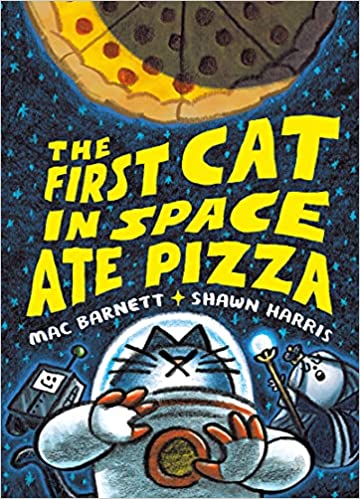
Moving on (reluctantly) from Sergio Ruzzier… to realizing with absolute delight that I’m going to be talking about Mac Barnett and Shawn Harris! (My job is fun.) The most joyful graphic novel read of the year for me, bar none, was The First Cat in Space Ate Pizza. Originally created as a live cartoon on YouTube between the two friends, Mac Barnett and Shawn Harris, during the early days of the pandemic, it got published as a book– and I hear there’s more to come. Reading level? I know quite young kids who enjoy it. Especially if you watch it online, you can read it easily on your own. And you, the adult, will love it and you may very well end up planning a family Halloween costume by next October.

Despite the ease of the language, this is a slightly higher reading level than Fox + Chick in that it’s a longer single story: a full graphic novel, adding up to one package of gloriously baffling absurdity which is nevertheless cohesive. It’s nonsense of the highest order: you feel like you’re reading this ludicrous story about a cat sent to the moon to save it from being eaten by rats, and the cat is accompanied by a toenail-clipping robot who’s stowed away on the spaceship– because, in fact, that’s what you’re reading. I’m finding it hard to define what precisely makes it so good in itself: it’s a quest narrative, a rescue story, with funny characters with vivid voices and personalities. Listed, that would make you think “well, I can find that elsewhere.” But the result is a Bill Watterson-level humour in a full, rich story.

I loved it so much I sent a copy to the South Pole.

I think I’m cutting myself off here. I have more to tell you about, always, but I think this covers quite a lot and you’ll let me know if there’s something you specifically need, won’t you? And I’m hoping, soon, to give you some good recommendations for the holidays so you get as nice a thank you as Chick gave Fox.

Same, Chick, you and me both.

Shoshi’s Shabbat

I’ve been struggling with how to approach this book, and decided to do it rabbi style… Let’s start with a joke.

It’s a classic joke, along the lines of the entirely inaccurate joke, “two Jews, three opinions,” which quite underestimates the level at which Jews are capable of arguing about everything from Jewish laws to Jewish stories, from what Jews think to where Jewish customs originate, and so on– although I have to confess that many Jews would disagree with me. This is necessary background because if you aren’t deeply imbued in Jewish argumentativeness, the background and exploration I’m putting in this review may feel negative to you. It is not. I really, really enjoyed this book and I recommend it as a way to explain Shabbat as a positive thing for any young reader and any family. I also had questions about the art, the setting, and the fact-checking that went into it because I am a super persnickety reader of stories with Jewish roots. So let’s get to it, and, yes, I’m gleefully rubbing my hands together because I love reading Jewish stories like this.

A huge thank you to Candlewick Press for sending me Shoshi’s Shabbat by Caryn Yacowitz with art by Kevin Hawkes! The story is drawn from a midrash (a type of exegetical storytelling, often comparable to the roles of parables in Christianity) that was told, I believe, repeatedly in Jewish textual history, but is most commonly traced to the 9th century, is of a man who sells his cow to a non-Jew, and the cow refuses to work on Shabbat. Ultimately, the new owner is so impressed by the strength of Shabbat that he converts. In different versions, the details alter. It is told quite often, meaning it varies a lot. The key figure in the story is Yochanan ben Torta, a 2nd century tanna or rabbinic sage.

Caryn Yacowitz adapts the story beautifully for children, and it’s especially great for a kindergarten read-aloud. I immediately handed a copy (because I was sent two by accident) to my daughter’s former Grade 1 teacher who’s also one of my favourite book readers ever. She’s still teaching Grade 1 and was incredibly excited because it’s been so hard to get recent, well-told stories for Jewish kids which really show Jewish life and Jewish settings and Jewish customs without apology. Do you have any idea how rare this is? And from a mainstream publisher? This is wildly exciting!

As I read, the first thing I thought was, “I’m glad adults are going to be reading this.” I have had, from university until now, more questions about Shabbat and about keeping kosher than about any other aspect of Jewish life. There’s a lot of stuff in Jewish practice that one might find odd to explain that nobody cares about.

For example, as a married woman, I cover my hair. The only people who care that I cover my hair are TSA agents. (“It’s for religious reasons,” I say over and over. “OK pat down your hat and hold out your hands and we’ll swab them,” they answer as they take my baby’s blanket and stuffed animal away “to check them.” Next time I travel, I want to go by train or boat.) Everyone thinks Chanukah is just lovely, aren’t those latkes delicious? Pretty candles! It all seems understandable.

But Shabbat is a tough one. “It’s a day of rest,” you say. “Oh, are you coming to the conference? No? Why not?” “Well,” you try again, “it’s a day of rest.” “Can’t you just meet us at the restaurant?” “Not really….” As for the whole concept of food laws that aren’t about ethics but are just because God says so– well, in truth, I have enormous sympathy for anyone trying to understand or anyone trying to explain these daily, weekly, ever so common laws and rituals! It’s hard because it isn’t intended to be easy. It’s based in faith, purely in faith, and no one can explain faith. But that doesn’t mean there isn’t great beauty in these elements of our lives, and that we don’t want to share these beauties, even if we aren’t a proselytizing religion, with our neighbours. Just as I loved being invited to my friends’ homes to see their wonderful Christmas trees and to dip Easter eggs, I absolutely loved having my friends over for Shabbat dinner. I remember my lovely friend exclaiming over my mother’s challah, and now her mother has that recipe and they enjoy it to this day. It’s a source of great pride to me. And yet we have so many beautiful and funny and sweet children’s books about Chanukah, as well as a plethora of less excellent ones, and this is the first mainstream one I can think of that talks about Shabbat as a positive feature of our Jewish lives. I just can’t say often enough how pleased I am that it’s out there.

A brief survey: it describes a Jewish farmer, Simon, who has a young ox, Shoshi, and they work together for 6 days and then on Shabbat they rest. Simon’s grandchildren play with Shoshi, and the illustrations show them all enjoying a break, playing and enjoying the weather, being outside, playing music on a simple pipe, and picking flowers. When Simon gets too old, he sells Shoshi to his neighbour, who thinks Shoshi is just great– until along comes the seventh day and she stops. She won’t work. Ultimately, he realizes what’s up, and appreciates the break that Shabbat brings.

But here come the quibbles. And I will break off for another parable.

One day I was reading a vampire story and a thought occurred to me. I immediately sent a note to my friend who studied at a pretty intense yeshiva (school of Jewish textual study) years ago, “Hey, if a vampire flew into a yeshiva–” “How would it do that, Deb, getting past all the religious symbols?” “OK, so the students are outside, don’t interrupt. The vampire bites and turns the students. Now they’re all vampires. Can they drink human blood? It’s necessary to them as vampires. Is it kosher, though? It’s human blood, not animal… Is it–” and we were off. We argued. We debated. We shared the question more widely, among both Orthodox and non-Orthodox Jews. “Pekuach nefesh [to save a life],” one person told me, “necessary to their lives.” “But they’re undead! Do they even have a nefesh [soul]?” As expected, we reached no satisfactory conclusion, because reaching a satisfactory conclusion isn’t really the point– the debate is the point.

You get my point? If we don’t have real questions to pull to pieces exegetically, we (and I mean I) will make them up out of vampire stories, for crying out loud.

So, here goes. It’s Shabbat, and a friend and I are reading Shoshi’s Shabbat. “Simon is playing a flute,” I point out, “on Shabbat. But he won’t farm on Shabbat. Both are off limits according to halachah.” “Well,” my friend mused, “the reason many authorities give for not playing musical instruments on Shabbat is the same as not to ride a bicycle [Ed. this is not made up, that’s actually true], which is that if it breaks you may be tempted to fix it, which is forbidden, and the flute in this picture is one piece, unlikely to need repairs… What bugs me more is that he’s called Simon, the anglicization of Shimon, but Yohanan and Shoshi have Hebrew names. And picking flowers on Shabbat is exactly the same as farming.”

This is all true.

But the bigger question, the more fundamental one, is something I’ve been researching just now for my daughter’s homeschooling: What, exactly, is Shabbat? What is it to do, who is it for, and what does it achieve? Over the Jewish holidays, I re-read The Sabbath by Rabbi Abraham Joshua Heschel, a rabbi of enormous intellect and humanity who marched with Dr King and John Lewis in Selma. In The Sabbath, Rabbi Heschel doesn’t give a list of to do and not to do. He outlines a purpose. To me, as an Orthodox Jew, everything I choose not to do according to halacha is a reminder and an opportunity for what I can and must do on Shabbat according to Rabbi Heschel’s outline: “Nothing is as hard to suppress,” writes Rabbi Heschel, “as the will to be a slave to one’s own pettiness. Gallantly, ceaselessly, quietly, man must fight for inner liberty. Inner liberty depends upon being exempt from domination of things as well as from domination of people…” Shabbat, to Rabbi Heschel, is a day that encourages us, that allows us, that welcomes us to set aside pettiness, to be bigger and warmer than the other six days, but without denigrating our six days of labour. Bicycles are important six days a week, but on one day we loosen the holds of bicycles as well as dishwashers. Rather, we walk instead of running, we sit together and think, and we talk, and we learn to be quiet. When we want music, we raise our voices rather than play on instruments.

So, I do not say that Shoshi’s Shabbat is inaccurate in showing breaches of strict Jewish law regarding playing a musical instrument or picking flowers given that there are those who do and those who don’t, and the spirit of liberty is in the warmth and delight of a family enjoying each other. And yet… I wonder, flipping and looking, When is the book set? And that’s when Deborah the Fact-Checker comes out.

There’s another book, you know, that features a simple pipe being played not on Shabbat, but on Shabbat Shabbaton, on Yom Kippur, the holiest day in the Jewish calendar and the single Jewish day most appallingly underrepresented in children’s literature. A day for self-examination of the highest order, we are ordered to pray together, communally, with the greatest introspection. And in Yussel’s Prayer, sadly out of print, by Barbara Cohen, with art by Michael J. Deraney, the little cowherd Yussel is not allowed to go to pray with the others, but, though he’s told to work, he insists on fasting and he takes his simple pipe and offers his tune in lieu of the prayers he doesn’t know. It is very likely he wouldn’t even have known, so uninstructed, that he shouldn’t play the flute on Yom Kippur. He does it in pure innocence of a devoted soul. Like The Juggler of Notre Dame, sincerity and truth take precedence over knowledge and expertise here.

The difference is that Barbara Cohen has very obviously rooted her picture book in the world of Chassidic storytelling where humble workers are striving to achieve religious devotion and observance despite being unable to study as assiduously as the great learners, and that background is integral to the story. I can’t tell, quite, what Yohanan’s background is, and can only hazard a guess at Simon’s.

This is what I love about Shoshi’s Shabbat, and this is what I want editors and publishers to take to heart for more books in future like this one.

I love that it gives a truly positive, cozy, beautiful view of life as a Jew, whoever the Jew is. Shabbat is supposed to be pleasant (we have a concept called “oneg Shabbat,” the pleasantness of Shabbat), and Shoshi and those around her love Shabbat– and that day of active rest lets them take new energy into the work week from Shabbat. We need that today! Not just Jews, even: everyone I know is so tired, let’s all enjoy a true, genuine rest. I remember thinking when I read Oge Mora’s gorgeous book Saturday, a story that shows a girl and her mother enjoying that one day in the week they have just for them, “Wow, everyone needs to read this: it really shows what it’s like to have dedicated time together.” Although Oge Mora came to it from a different angle, one integral to her world, it still spoke to me. I think this kind of book does that same thing: even if you’re not part of the Jewish world, this is the kind of book that can teach something Jews value and that we have to offer.

But it’s also important to remember the vastness of Jewish history, the diversity of our faith and stories, as you go into this world. The little things matter: Why is Simon not Shimon? Is this set in late antiquity, either 2nd century (the time period of Yochanan ben Torta) or 9th century (the date of the most common version of this midrash)? If so, the prayer shawl is not quite accurate to the time period. I can’t speak to the agricultural equipment, I never studied late antique farming equipment of the Middle East, personally. Much is conveyed through the art– which, in style, is greatly enjoyable and much better than art in many Jewish picture books– but I keep tripping over the details and asking questions about the clothing, activities, and setting.

The note at the end by the author does a lovely job of explaining the background, the midrash the story comes from, and the depth of her commitment to both animals and to Shabbat, as well as her view that it is more relevant today than ever. I love that. I want that to be so integrated in both art and text that the note is almost unnecessary.

Altogether, I really laud this book. I want it to be spread widely. I want everyone to have a chance to curl up in an armchair or rocking chair with a passel of children on a carpet listening while they read about Shoshi working for six days and then reminding everyone around her to stop and smell the loveliness of restfulness on the breeze.

And I want more books like this one, and, nitpicker that I am, I want those books to have an even greater attention to detail.

The Halloween Roundup for 2022!

Yes, you will note from the title: I’ve caved, with bitterness of spirit. Basically, I’m tired of fighting autocorrect. Halloween, not Hallowe’en. It really goes against the grain for me; e’en is the appropriate abbreviation for “even” and that’s what’s going on in the name. Yes, yes, we’ve moved past that, accepted usage, I’m not correcting you, red underlines and autocorrects of the world, but you all are sure judging me hard on this one. Which is all to say… NB (nota bene, “note well,” just in case autocorrect and grammar checks are wondering): if you’re searching for book recs (recommendations, that is, or id est, ie for short) for Halloween (or Hallowe’en), please be certain to search for both “Halloween” and “Hallowe’en” since otherwise you’ll miss some. That said, I will first link to most of the earlier posts here so you can find every book either described below or through links. I’m also going to do a little collage of book covers of books you’ll find so you people (you know who you are) who only click or look if you see a book cover will actually take a look at ye older bookes, which may be all of three whole years old.

In these posts you will find all of the below books– plus one, just for a treasure hunt for you: One, Two, Three, Four (I think that’s not available as a board book any longer, though), Five, Six (still one of my favourite Nicola Killen books), Seven, Eight (this one is the best roundup of earlier posts), Nine (some of my very fondest reading experiences from last year in this)… I wonder if you’ll find the one I did NOT put in a Halloween post among the pictures below? Hmmm… if you do, comment below and I’ll send you a Halloween card!

But what about books I haven’t written about? You already know of all these books, how unutterably boring, you need new material, don’t you?

First up, I want to recommend another Charis Cotter story, Footsteps in Bay de Verde, link to my beloved Running the Goat Press because American sources are failing me again! The fine folks at Running the Goat are beyond marvellous and will help you.

This is a story to read aloud. I read it to a group at synagogue one morning. Services were going longer than a given 3-year-old child’s patience, so I asked if he got spooked easily. “No,” he said firmly. “Yes, you do,” said his matter-of-fact older sister. “No, I don’t.” So I told them to sit and started reading. Services ended right before the story ended and their grandmother interrupted the story for the social milling around of kiddush. I rolled my eyes; grandparents can be like that, you know? No respect for stories, honestly. But ten minutes later, there was a tug on my skirt as I passed a table. “Dr. Deb!” (One of the older sisters was a student of mine at the time.) “What happens next? How does it end?” Grandmothers may have no respect for stories, but kids know what’s what. “Pretend,” I told them, “that the room is quiet except for a crackling log in the fireplace…” and I finished reading. The point is: Charis Cotter never fails, and is entirely worth the price of shipping from Canada if you’re in the USA, and if you’re lucky enough to be in Canada, get your friends across the border a copy, ok?

OK, you know when you pull up a link and it says “Out of Stock in Store” and you’re surprised because you were in the store earlier and saw a copy there, so you bought it, and then it clunks into place: it’s out of stock because you bought the last copy. Ah. That’s why. But I’m pretty sure you know how to grab the info from this link and buy Scary Stories by Tony Johnston with wonderful art by oh-how-I-miss-him Tomie dePaola and get it at your own local shop. An imp, a goblin, and a scalawag share scary stories– but who is going to tell the fourth of this set of stories? First published in 1978, I was so grateful to see this on shelves that apparently I bought the last copy. Whoops.

It’s lovely to find a cute Halloween book for slightly older kids to cuddle and read to themselves while in costume! I fondly remember reading all kinds of slightly spooky or mysterious stories from my mother’s shelves while eating Halloween candy or getting into the spooky season spirit. Crimson Twill by Kallie George with art by Birgitta Sif is that kind of book: a story that will feel just off-the-beaten-track enough, with a very cheerful little witch who rescues a puppy and finds new friends, all at the same time! This is particularly good for, say, my Changeling three years ago (age 6), the point at which she loved Halloween above all things but simultaneously couldn’t deal with anything scarier than a ladybird. Crimson Twill would have been just right.

I can never, ever resist a book illustrated by Vera Brosgol. A Spoonful of Frogs with art by Casey Lyall is particularly good to have illustrated by Vera Brosgol: an excellent cook in her own right, she knows how to demonstrate a soup being prepared properly… Or, well. Being prepared. How would you spoon up a live frog, though? I mean to say, if even this celebrity witch finds it challenging, do you think you could do better? Give it a try and send me the footage.

Lovers of Gustavo the Shy Ghost will be thrilled to see another bright, sweet, and every so slightly creepy story from Flavia Z. Drago, Leila the Perfect Witch! This is just right for a storytime with a few kids of different ages: do you have a couple of kids spaced a few years apart? Does the older child like to read to the younger? Or do you want a Halloween read-aloud for a family of children? (There are helpful older siblings in this one, making it cozy as well as creepy.) And those lurid yet delightful colours are back! Everything that made Gustavo shine is here, but with a whole new story.

The last new picture book I want to mention is another that’s not all that new, but one that didn’t hit the shelves quite in time last year– and this, this is the year to get it, then! There’s a Ghost in This House by Oliver Jeffers may be my favourite ghost book since Rebecca Green’s How to Make Friends with a Ghost. This is another wonderful read-aloud, but not a loud read-aloud, you must understand. The house is quiet, the girl is quiet, and the ghosts are very, very quiet: so read quietly lest you disturb them. I love the design, the text, the art– this is Oliver Jeffers at his very, very best. The translucent page turns, the quiet behind the text and art, everything that is not said, is what makes this among the finest of his work.

As for not-exactly-Halloween-books which are good for Halloween? I will recommend two excellent books previously reviewed which are just ideal.

The Three Billy Goats Gruff by Mac Barnett and Jon Klassen is skully and bony and dangerous and otherworldly; it’s got a troll and talking goats; it’s got a VERY BIG GOAT and a whole waterfall that leads to the troll never coming back. It qualifies. I say so.

And, lastly, speaking of otherworldly…

I think a very good novel for getting in the Halloween mood is the novel my children are dressing up from. The Changeling has been planning to dress up as Never from Osmo Unknown and the Eightpenny Woods by Catherynne M. Valente ever since she read it, and she’s begged to have the Spriggan dress up as the Button to be a themed costume with her. Since he’s cute as a button, it seemed ideal! The book deals with a journey to the Underworld, death and darkness, transformation and dressing up and identity… well, I dunno about you, but to me it feels like a good book for Spooky Season!

And now I want to go read a spooky story. Boo!