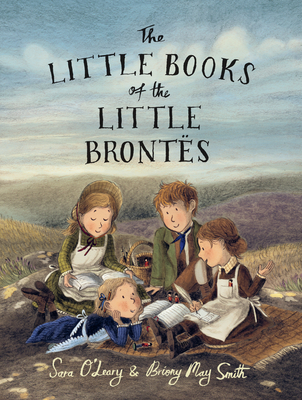
The Little Books of the Little Brontës

This is my third whack at writing this and by God I will post this today. I absolutely refuse to let war take more comfort and beauty from us, and, come hell and/or high water, I will post this review before the book is released, which is tomorrow. First things first, then: the book is The Little Books of the Little Brontës by Sara O’Leary and Briony May Smith, and you can just skip everything else here and take my word for it that you really, really want to go buy this book from your local indie, or from mine, and I ever so kindly supplied the link. Now, two paragraphs about the bitter crap, referenced yesterday, too, in my post here, or you can skip down and read the review.

A few notes about the Situation of All Things. I’ve been coping with a lot– well, I could leave it at that, couldn’t I? I think it’s true of many of us. This is my primary “place I write things” on the internet, but I should let you know that I do, in fact, have other places I appear. Notably, these days, I review Jewish books over at Kolture, which I link to as a whole due to the wide variety of excellent stuff there, but you can search for the Children’s Bookroom and find me. Once upon a time I was on a little site called Twitter which was ultimately acquired in a positively presidential tantrum by a poor fellow who was very annoyed people were saying mean things about him, but after he broke the site, I did a bit of soul-searching and realized something: I only ever joined any social media account because I felt an obligation to the publishers who sent me review copies and, above all, to the authors and illustrators (such as Sara O’Leary and Briony May Smith down below this paragraph– I promise I’m getting to you!) to give them easy ways to share my reviews telling people the books are good. What that means, and I swear I’m not only this dense, is that I feel this is professional. (I honest to God am not always this stupid, but yes this only just dawned on me.) So, I started an Instagram account I’ll tell you about (I’ll add a nice linky button on the main page, too, when I get to it, but here it is in the post): find me @childrensbookroom on Instagram, and here’s a link that’s supposed to take you there if you do use Instagram…

… and it’s actually been fun to just post pictures of review copies, random books I love, so it’s a bit of additional stuff about kids’ books, if that’s your cup of tea. And I guess that takes me from the Musk world to the Gawd-help-us Zuckerberg world. Well, ultimately, as I said: this is my home base, so this is where I’m all dug in, and you will always find me here, with lots of bookish things. This is the home of “Deborah seeking excellence in children’s literature,” and I do not intend to change that.

To the book! I’m going to be blunt about this one: I’ve been excited about this book since it was a scintilla of an idea mentioned by the author on what-was-Twitter-at-the-time, back when that website was still a mostly reliably useful place to get publishing news, not that I’m bitter. I recall Sara O’Leary mentioning that she thought it would be fun to do a book on the little books the Brontë children used to make. I think one of Charlotte Brontë’s little books was up for sale at the time (it ultimately went, as it ought, to the Parsonage), and there was a flurry of excitement. I responded with, I’m certain, my usual level of articulate encouragement (“Dear God, you have got to write that,” or some level of equally embarrassing burbling through the keyboard at an innocent author).

I was, therefore, lucky to notice and receive periodic updates that the book was happening: there was a deal, a title, an illustrator, a release date, and, finally, a review copy (which my daughter tried to steal; not unusual, but I did, I admit, demand first reader’s rights to this one). And this is the book! The Little Books of the Little Brontës by Sara O’Leary and Briony May Smith, a perfect match of author and illustrator.

I’m not sure where to begin with this, except that I want you to trust me that this is a book you and your family and your school and your library and your class and your friends need.

I have written a few times now about books that feel completely honest and say more than the words on the page. Sara O’Leary, in particular, exemplifies this in large part by her trust to her illustrators, and Briony May Smith more than proved herself trustworthy in this book, meaning that the book is charged, in the interplay of text and art, with vigour, beauty, and imagination. (I’m a little gutted this one won’t be eligible for the Caldecott due to residency rules, but I’m interested to watch myriad other awards– this is a winner.)

The basic, underlying truth of this book is that children love small books. (I kind of hope that a tiny companion book comes out, Tundra? Or tiny notebooks for Christmas gifts?) This is known, it’s not a mystery. Think of Beatrix Potter and the small size she advocated for when she wrote Peter Rabbit, and think of The Nutshell Library. The size was the point, for that. But have you never seen children making their own small books? It’s such a common game among the imaginative set.

Interesting personal story: I’ve twice done a “make your own picture book” class for groups of children. I make them each a dummy book for page layout before they create the final book. The students are always, always enchanted by the tiny dummy book. They’re excited to do the final book because it’s their book, of course. But they squeal over the little dummy book.

Sara O’Leary takes us back in time and shows us that children have always been children, and tells the child who loves to make a small book today that they’re not alone and have companions in storytelling. I felt very much that she was talking to me approximately 28 years ago. (Sara, would you very much mind nipping back 28 years to tell me then that I’d be able to talk to a real live author in the future? It would mean an awful lot.)

Now, this is not the first Brontë-world book I’ve written about. I’m shocked to see that The Glass Town Game was published six years ago (it still feels like yesterday to me), but these two books really feel partnered in my mind: They are the books of an author who loves another author and wants to share the secret heart of what makes the books magical with a new generation. “Here, this is the glorious soul of my beloved books; I’m giving you a gift.”

In The Glass Town Game, Catherynne M. Valente wanted to share the worlds the Brontë children lived in: their characters, their games, their gloriously vivid imaginings. The Little Books of the Little Brontës is similar in many ways, but, speaking to a younger audience, it reaches to a more basic level of sharing. Charlotte is making Anne a little book. My Changeling has made the Spriggan many little books, which, of course, we keep as carefully as we can while also letting the Spriggan hug and enjoy and destroy them– it’s a bit of a process. Any child in that zone between my two will be caught by this picture book of story-hungry children hiding and running and playing and then writing their little books between themselves. “The books they write are tiny, but the worlds inside them are huge,” Sara O’Leary writes. If that doesn’t make the kid on your lap light up with recognition, I’m not sure what will.

(I normally balk at backmatter, I really prefer to let a book stand on its own– but who can resist the “How to Make Your Own Little Book” at the back of this one?)

And it’s not just the text. It’s not even just Briony May Smith’s illustrations in the book, though they are active and calm and evocative of the Parsonage and the moors… It’s the book as a book. I do have pictures of under the dust jacket and of the endpapers but I’m not sharing them because I want you to go buy the book and look for yourself, touch the cover yourself! Although the book isn’t tiny, it feels somehow private. The endpapers feel like a scrap of wallpaper the children might have found and used for a cover. The cover under the dustjacket feels like a Victorian cameo, almost.

What is it about the Brontës as a topic? The Glass Town Game also felt like an intimate read, just for me. My daughter, when she read it, felt just the same, and played at being Emile Brontë for a week or so. Now, here we have another Brontë book, and it also feels intimate, lovely, and just perfect for a cozy read followed by, perhaps, accidentally leaving a bunch of nice scrap paper where a child could find it.

Watch this space for a giveaway. Books like these are to be shared, giving children that space to see the hugeness of the worlds inside them recognized on the page, so they’ll set them down on other pages, whether small or large.

“I need resources”

For crying out loud, I have two draft book reviews sitting while the world burns and I will get them out next week, but right now I have a thing to say. Apparently, from the ferocity with which everyone is posting everything right now, so does everyone else. While everyone else is suddenly an expert in geopolitics and religion and ethics– I’m sticking to what, to be quite clear, I arrogantly believe I’m an expert in: books for kids.

For Jews right now, times are scarier than they’ve ever been in my lifetime, and let’s also be candid and acknowledge that for a wide variety of other people times are scary and bewildering, too; but those are not my worlds and while each of you who is scared and bewildered has my sympathy, I’m not speaking to what I don’t know.

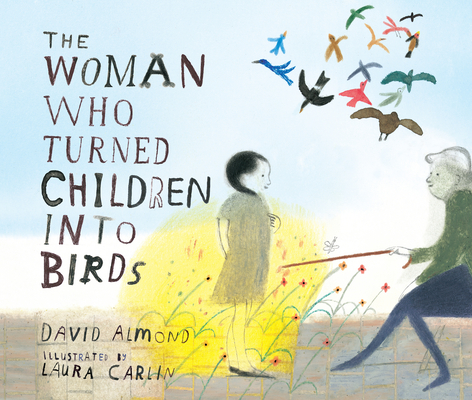
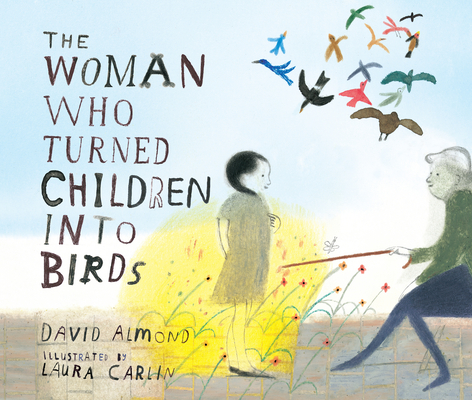
Now, when times are scary, the instinct for many parents is to look for resources. Frequently, those resources are external. Why? We so often need something to “start the conversation” or “help show something I’m not expert about.” Today, doing French storytime at my wonderful library, I asked one of the excellent children’s librarians (and the Brookline Public Library has a stellar team) whether they’d had parents checking in about the situation in Israel and Gaza. “Parents are definitely looking for books on Israel. Do you have thoughts?” Well, honestly, I’m not sure she was asking that last question I jumped in so fast. “There’s only one book they need, and it’s not about Israel,” I told her, “it’s The Woman Who Turned Children into Birds.

And I’m going to tell you what I told her and what I’ve told others:

Books for children on Israel, Palestine, anything supposedly relevant to this situation which is not so much “complicated” as people are delicately saying, but impassioned, ugly, bitter, scary, heroic, and an intensely messy morass of overwhelming feelings, are utterly irrelevant to what’s going on. You will not find the information you need in books for children, because, first of all, the information does not exist, and, second, the conversation you want to open with them is about the messy morass of overwhelming feelings, not about the geopolitics.

Let me unpack that. The information doesn’t exist because what adults want is someone to sort out “the situation” so it can be simple on the page. Ibrahim X. Kendi could write The Antiracist Baby because, honestly, that’s a pretty simple concept: there’s systemic racism in the world and it’s not enough to acknowledge that passively, we must actively combat it. All of that is in that board book. (I do not love it as a board book, too many words, but it doesn’t avoid a single thing and it’s pitched right for a child older than board book age.) Books on Israel and Palestine avoid a huge amount. Please look at my review of Homeland, probably the most recent picture book relating to the region from a mainstream publisher, and you will see that even back then I was saying the same thing: I was looking for more openess, and, I presume, the author felt a good deal more than she wrote down. Now, the situation in Gaza is not simple, and if you think it is, you’re wrong– and with that statement I offended at least one reader who passionately supports the people of Gaza and one reader who passionately supports the Israelis, right now, before I got to the period of the sentence. Bam, I proved my point. You can’t write a picture book while you are trying to avoid that truth. I italicize that because I think it is absolutely possible to write that picture book, but first you have to admit that you have to accept the morass of feelings involved. To be blunt, publishing today will not risk that. (Dear publishers: prove me wrong, I beg you.)

To my second point, the conversation you need to open is about the messy morass of overwhelming feelings, not about the geopolitics. Why? That’s the part we parents don’t want to deal with, and where we need the support! If we were ok with that, we could totally handle sharing the geopolitical scenario with no problem. We’re overwhelmed with feelings, we’ve been crying in the shower so they won’t hear us! Well, with my earnest sympathy because I, too, have cried in the shower so I wouldn’t be heard, stop that. Kids know something scary is going on and will be imbibing your fear and anxiety but not the tools to cope with those feelings; help them get the tools by facing the fear.

I recommended, above, The Woman Who Turned Children Into Birds by David Almond and Laura Carlin for good reason. When Nanty Solo comes to town, the adults are terrified of this strange woman who turns children into birds. The children are warned away and they want her to leave. The children, however, long to fly and, strange to tell, prohibitions don’t work– they go to her anyway. The adults are horrified and Nanty Solo says, “But what on earth are you frightened of?” (Orthodox Jews don’t get tattoos, but if I ever had one, it would be of those words.) Ultimately, the adults do join the children, and oh they all have the glorious freedom of the sky.

Isn’t that it? All of it, all in one glorious experience of reading with a child on your lap and beautiful art to match? And, snuggled together, you can whisper that you’ve been afraid, that you have friends you fear for, family you love, and you wish they could fly.

I promise you, after that, I believe that you know what your kids are ready to hear about the geopolitics, and I trust you to share that. I will, of course, disagree with you on some points. The situation in Gaza, after all, is not simple or it would have been resolved long ago.

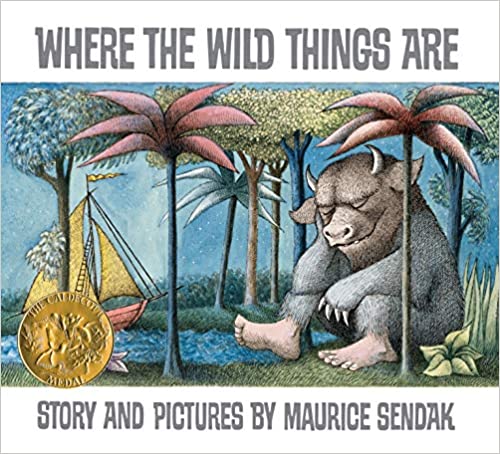
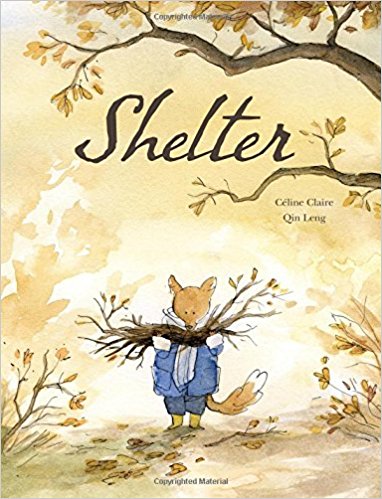
The good thing about this is that any book that is honest, emotionally honest, will help you. Are you angry? Where the Wild Things Are is all anger and heart and the raw passion of gnashing teeth and rolling eyes. Are you feeling either that you wish you could open your home and your heart to everyone in pain (The Mouse Who Carried His House on His Back) or thinking more about the instability of homes in the world at all (The Shelter)? Or maybe you’re finding that you’re feeling really out of place wherever you are, you’re trapped in a wrong place and words are all wrong– you feel… I Talk Like a River. (And, by the way, if you’re thinking, “No! I can’t do that! Or I do feel no I don’t but I can’t–!” then read these to yourself first and maybe think about seeking help for you right now.)

And do you know what else is good? These books will help with everything else, too. The situation in this world, humans with other humans, is not simple, or else we’d have been living in harmony long ago. I trust you to share this with your kids. But don’t look for single-serving books about a thing; look to share the honest, raw beating heart inside, and only extraordinary, pulsing books can help you there.

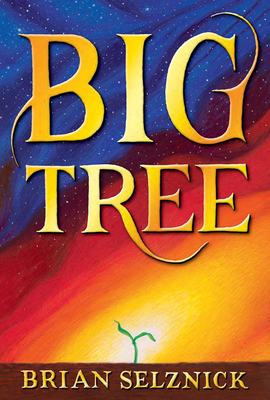
A Big Tree gone, a Big Tree website

I still think, often, of the beautiful event for Big Tree I got to attend at the Brookline Booksmith. Ever since, sycamores have held a particularly special place in my heart. Which is why this bit of news from the UK really hurt: a 300-year-old sycamore tree near Hadrian’s Wall was cut down.

Soon after reading of that, I saw the announcement of this excellent website to go along with Big Tree: Click here for stories and science and so much more.

And I just want to encourage everyone, whether you’ve already read the book or not, to give thought to how long three hundred years really is, how short a time it takes to cut down those years, how the years lost won’t come back, and how we can grow to feel awe through art and literature.

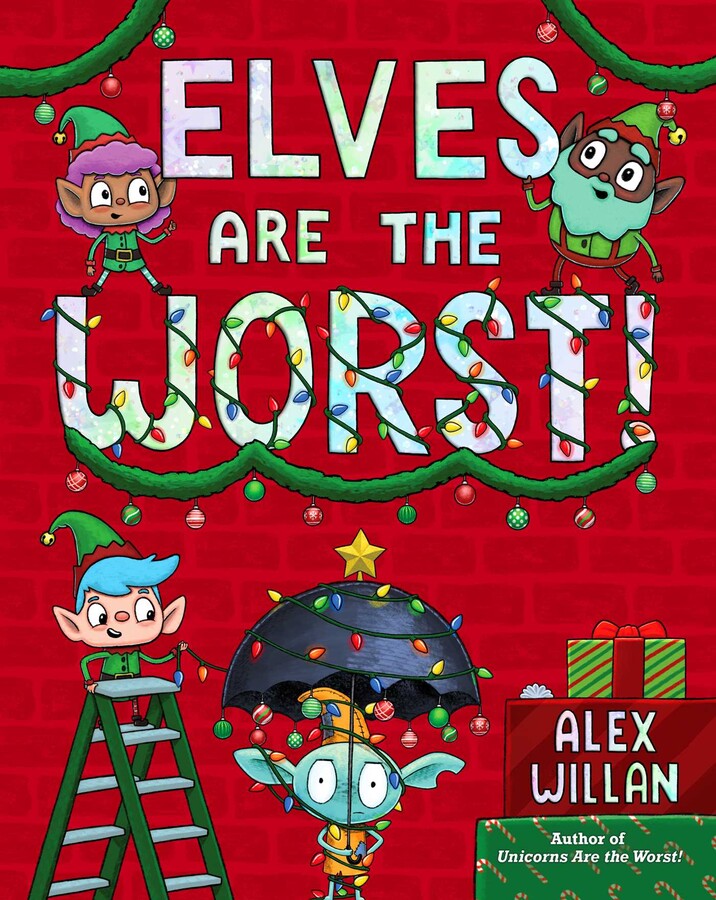
Elves Are the Worst!: Interview with Alex Willan

As we come up on Halloween– here I am posting about Christmas. Well, look, yes, I know. I know Halloween is my traditional obsession, and also I know that I’m not exactly Christian, that here I am a few days before Yom Kippur, an Orthodox Jewish woman, writing about a book for a holiday I don’t precisely, as it were, celebrate– and yet. Given an opportunity to talk to Alex Willan, author of Elves Are the Worst! about early readers, giving characters a distinct voice, and carrying on the interest and personality of a series, as he does both for his Jasper and Ollie and for his The Worst! series… wouldn’t you? I knew you’d get me.

Elves Are the Worst! is a Gilbert the Goblin story, and while there’s an actual plot in the book, with Gilbert getting a chance to learn about working together, teamwork, and so on– just wait until you meet the kitty canes. The driving force, as usual in Alex Willan’s lovable books, is character: Gilbert is the at the heart of the story, and the shenanigans (and kitty canes) occur in relation to him. And without more ado, thank you so much to Alex for answering my questions– and I’ll let his voice take the lead here!

On a sheer writerly level, I love the voices of your characters. And I do mean “voices,” because I hear them in my head! I have noticed that, textually, you are very sparing. When we have text, it’s direct from a particular character, in voice: Jasper, Ollie, our Goblin friend. The elves, in Elves Are the Worst! are not so chatty. Is limiting the speakers a deliberate choice? And how do you go about developing that perfect vocal timbre on the page—do you speak the text yourself, as you write?

Thank you so much! I really like writing characters who speak from a very specific point of view. With Gilbert the Goblin, he is so opinionated that it made sense for him to do most, if not all, of the talking. My intention is for it to be pretty clear from the start of each book that what Gilbert is saying is incorrect (that unicorns, elves, etc. are not the worst) and I really wanted him to always come to that realization on his own, as opposed to being corrected by those around him.

There are times when I’m writing where it does help if I read the text aloud. And I also find it very useful to have someone read the text to me so that I can focus on how it sounds in a voice that isn’t my own (or the one I give Gilbert in my head). Since I also illustrate the text, I’m constantly making changes to both the words and illustrations as I work. That back and forth can be quite beneficial, but it can also mean fighting the urge to endlessly tweak everything.

A funny note on voices: I was surprised to hear from multiple people that when they read The Worst! books out loud, they give Gilbert a British accent!

Since the characters I mentioned are in series, The Worst! and Jasper and Ollie, you aren’t just developing a voice and character for a book; you have to maintain or develop that character across a series of books. As a reader, when I see a new book in a series I always seize up in temporary panic: “Will my beloved friend, whichever character, stop working for me in this book?” (Fortunately, you maintain these voices beautifully!) How on earth do you brilliant authors do that? I always imagine, from my vantage point, that the best of these creations were fully enfleshed in the authors’ minds, talking away: Frog and Toad, of course, and Sergio Ruzzier’s Fox and Chick… do you have little characters in your head all the time? (Am I insane?)

Absolutely! (Wait, not about you being insane!) I constantly have various characters chatting away inside my head. For me, most of my time “writing” doesn’t involve writing down anything at all. By the time I’m able to sit down and type out a manuscript, or even just a few lines of text, those characters have existed in my mind for a good long while. Especially when it’s a character from a series. It’s really kind of bizarre to put into words, but I have spent so much time with Gilbert, in my head, that it’s less about me deciding what Gilbert will say or do, and more about imagining him in any given situation and “seeing” how he reacts. I guess there was some point, when I first thought of these stories, where I created his character, but at this point I feel like he’s steering his own ship.

I unabashedly love Christmas books. But the debate about creating lovely books for Christmas which maintain quality as well as being commercially viable for a lucrative market is an old one. I quote from Ursula Nordstrom writing to Maurice Sendak, who declined to produce a Nutshell Library for Christmas or Chanukkah. He wrote to her: “Wouldn’t people be bored too easily with too many Nutshells—and wouldn’t Harpers come in for its share of cynical criticism?” She asked, “What people, Maurice? Surely children won’t be bored with a Christmas Nutshell in the toe of their stockings. Surely children won’t be offering any ‘cynical criticism.’ […] We wanted to do the first Nutshell because we thought children would love some perfect little books…” and she continues, brilliantly. It was fascinating to see how far back the “commerce vs quality” hemming and hawing went. How do you approach this?

That is fascinating. I think that debate is something everyone in a creative field struggles with. I was fortunate in that every book in the Worst! series focuses on a different group of magical creatures, so having Gilbert turn his attention to elves seemed like a natural fit (Gilbert even mentions elves in the first book, Unicorns Are the Worst!). While it is certainly a holiday book, I wanted to keep the focus on the elves, and make sure that what Gilbert learns from them is universal (the importance of teamwork) as opposed to something more holiday focused.

I believe the industry tendency is to think of early readers and series as kind of a gateway for young readers, not yet confident enough to tackle a novel, into the world of reading independently. But a number of earlier-level-readers I see today, Fox + Chick by Ruzzier and your Jasper and Ollie among them, seem to poke cleverly at that not-so-clean divide between picture books for reading aloud (or, perhaps, together) and early readers. Is that something you think about as you write, or is that entirely a product of my readerly end of things? (Disclaimer: my daughter and I read Jasper and Ollie together as a read aloud. I liked doing the voices. I do hope I didn’t break rules there! She made me read the whole thing: the flap copy, author bio, everything.)

I am so thrilled to hear that you and your daughter read Jasper and Ollie together! I do appreciate that the lines between reading levels are getting increasingly blurred. I have always been a slow reader, myself, so there was definitely an internal shift for me growing up when reading stopped being something I enjoyed and became something I had to get through. I went from getting lost in the story to getting lost in the words. That’s part of why I loved comics and graphic novels growing up (and still do) so I’m also thrilled to see the growing appreciation for that genre as well.

I wish that I could say I was intentionally straddling that line when I write, but I think it’s more a case of having my own favorite books influence my work without me even realizing it! I’ve heard from several people that they see a clear influence of graphic novels in my books, which I am happy to hear, but wasn’t something I was consciously going for. I do love the rare occasions that I get to hear a young reader reading one of my books out loud – you really get to hear them take ownership of the story, pausing at the moments they like and brushing past the parts they don’t connect with. It is always a special moment for me.

Thank you again to Alex Willan for the chance to chat about his book, Elves Are the Worst!

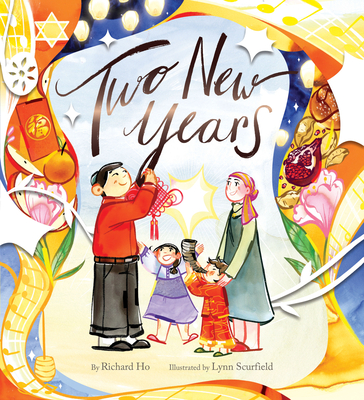
Rosh Hashanah: A Spider Named Itsy and Two New Years

Full disclosure: both books in this post were ones I got as review copies. Mind you, I’d already pre-ordered A Spider Named Itsy by Steve Light, and as for Two New Years by Richard Ho with art by Lynn Scurfield? When it was offered to me I couldn’t reply “yes, please!” fast enough. Some books you just get a feeling about.

If you know anything about Rosh Hashanah, the Jewish celebration of the new year and the anniversary of the creation of the world, you’re probably looking at this pair of books in bafflement: “New Year, that I understand… but spiders? Itsy? Is she meshuggeneh?” Well, I mean, yes I am crazy. But also I’ve got a very good point, so please pay attention.

Steve Light, first of all, is a genius. Let’s just get that said up front. Also, he’s one of the nicest people out there and towards the beginning of the pandemic he sent my daughter a picture of a wombat he drew along with a notebook for her to sketch in. The wombat is framed on her wall and the notebook is full of scribbled pictures, embedded in a mass of other scribbled notebooks.

I remember that now because that period of the pandemic was hard for everyone. We were uncertain, scared, and the book industry was hard hit. The big, robust, fun animals Steve Light was drawing at the time were as different as could be from his swift, lively, delicate yet strong ink drawings of little bugs in A Spider Named Itsy, a style familiar from his vivid and energetic art in Swap! and Road Trip!. At that point in the pandemic, we needed to play, to feel we could be strong and still have fun and climb up the waterspout again.

A Spider Named Itsy asks and answers questions with incredibly compact text and proportionately exuberant art: What prompted Itsy to make that climb? Was Itsy alone? What’s the end of the story?

The words are sparse, sticking as much as possible to brisk, active language: “Need a new home. But where? There! Must get going! Wind is blowing!” What need for articles and pronouns? None! (Added benefit: while the flap copy does provide he/his pronouns, no need to tell the kids that, and they can build characters as suits them. But I have no idea whether that was deliberate– it just feels natural to the sprightly nature of the text to keep it trim, forward moving, bustling onwards.) Itsy climbs up and up– along with other bugs escaping dangerous earthbound conditions. Once up, they’re all washed down. And, working together, held together by Itsy’s strong webbing, they finally make it up to create a new web home, and enjoy a meal together as friends.

The story is so much fun to read aloud. My Spriggan has asked me to read it several times, and every single time, a crowd of other children has drifted around us. The Spriggan is a few months shy of three years old, and the Changeling is ten. The other audience members have covered every age between. And every single time, without exception, someone starts singing the song at the end. I challenge you not to. More than once, also, the older kids started comparing finger motions: “I do it this way, because that way you get all eight legs, you see?” “But my way is more of a fun pattern on the way up!”

Which is the point, of course. Going up again, and maybe having fun on the way. In every life, we all know, we get washed down the waterspout. The pandemic has been a biggie– and though we like to pretend it’s done with, for many people the challenges persist. (I write feelingly: my brain fog is not over and done with though Lord knows I’d like it to be washed down the waterspout, over the hills, and far away!)

Steve Light, the creator of that fun wombat in the depths of a painful time, is just the person to show us, as we face a new year, how to get up, persist, and climb that waterspout again. He doesn’t do it gloomily. He doesn’t preach it. He sticks to the verbs and skips over any flabby text.

But if you want commentary, look at his art. Do you see those little bugs with all their worldly goods strapped to them? The first time I saw them on his Instagram account, before I held a finished book, they evoked a memory. In the runup to publication, he elucidated, and it clicked: the Dust Bowl. I wasn’t imagining things; it was pretty direct. If you’ve ever seen pictures of families during the Dust Bowl with all the goods they could pack strapped onto a Model T, looking for somewhere, some way, to survive, grimly picking themselves up and climbing again, those sturdy, busy bugs will look familiar.

And yet it’s neither patronizing nor depressing; the fact is, Steve Light is telling a truth in this book. It’s not easy to pick up and start again. It’s why, on Rosh Hashanah, we come together, we blow the shofar, and we reflect and think and pray. We celebrate, and we are also looking forward to the very serious work on Yom Kippur, when we repent and think and plan changes. This is not in any sense a religious book, but to me it evoked a spirit of the honest, hard work, the introspection without navel-gazing: you have to think, yes, but you must also pick up and do the work. Kids are really, really good at that. Read this with a kid, and you’ll find yourself laughing, singing, playing, and also ready for a new year and new work.

Two New Years by Richard Ho and Lynn Scurfield is an entirely different, and, to me, entirely new kind of book. The closest I can think of, in narrative style, is the Canadian classic Le Chandail de hockey by Roch Carrier and Sheldon Cohen. The text is much, much shorter and simpler, but, like Roch Carrier, Richard Ho isn’t pretending to be a kid as he describes his dual world, the Jewish and the Chinese: “My family celebrates two New Years,” he tells us, and he’s not talking down to us, adult to kid, and also not using a fake child’s voice. The text is simple, direct, and plainspoken. The art, too, is unpatronizing and evocative of the richness of two traditions. Perhaps my favourite spread is one of the adult Jewish woman (representing the mother of this family) in her headscarf and wearing a magen David necklace on the left page, holding hands with her husband, wearing a kippah, on the right page. Behind her is a papercut in the style of Jewish artistic tradition, while behind her husband (who looks a great deal like Richard Ho!) is a Chinese style papercut. (You and your kids can have fun picking out the symbols in the art– I love the dragon, of course, and the sheep.)

What I particularly love is exactly that interleaving: like Roch Carrier, Richard Ho keeps it slow, simple, not pushing a “beginning, middle, end” narrative. (Please imagine a rant here about the enforced necessity of a story arc in every single book. I don’t feel like writing it right now, but thank any deity you please that Richard Ho ditched that for this book!) In an odd way, while A Spider Named Itsy is brisk and active while Two New Years is slow and gentle, they share a compactness. That compactness is a shedding of anything ancillary. Two New Years allows the reader to look at the illustrations and build the characters of the family members behind this lovely spread of rituals and tradition: Who’s making and enjoying these foods, the challah and the dumplings, all of the varieties of fish? Who are the bubbies and zaydies, the ma mahs and yeh yehs? We imagine, but aren’t told.

One particularly special moment for me was seeing the mother in a headscarf and the family at an Orthodox synagogue, just like mine, in a book shared with Chinese culture. I’m a proud Ashkenazi (that’s of Eastern European tradition) Orthodox Jewish woman, and the mother of a child whose earliest favourite author was Grace Lin. I love to see Judaism sharing a page with other traditions, and this is one of the few examples I’ve seen where it’s done with unpretentious simplicity, honesty, and beauty.

(I’m never one for much backmatter, but I have to admit I really liked it this time– the author’s note was particularly beautiful and the visual glossary is exactly the kind of thing my Changeling loves.)

So as we head into the new Jewish year, that will be the year 5784 in the Jewish calendar (but you have to wait until February 10, 2024 for the Lunar New Year, which will be the Year of the Dragon), think about trying out these two books!

Books for grownups: Kat Howard

This is not a thing I do often, because a) I do not often read books for actual grownups, and b) I’ve read a few too many listicles with condescending titles like “If you liked these books for kids, then here’s a list of corresponding books you may enjoy as an adult,” whereas in my opinion if you love Diana Wynne Jones, Susan Cooper, and Joan Aiken, I think maybe you enjoy reading Diana Wynne Jones, Susan Cooper, and Joan Aiken, no matter the number of years you happen to have lived on this planet.

I’m sorry. I ranted again, didn’t I?

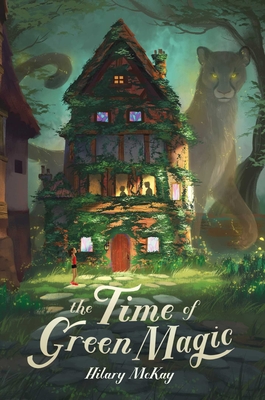
That said. Some people do write gorgeous books that are decidedly not to be handed to a child, and while adults should not read them in lieu of books one could hand to a child, I enthusiastically endorse reading such books in addition to reading, for example, Time of Green Magic by Hilary McKay.

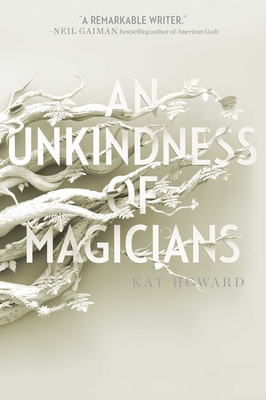
One such author is Kat Howard. Now, I’ve admired Kat Howard for a long, long time as someone who writes beautifully about books (NB: she has a Substack Epigraph to Epilogue where she writes about reading exactly as I think about it, but more regularly and much more concisely), loves Julian of Norwich, and has lovely cats. But, because I rarely consider reading novels for adults, I never read hers, even though I had a strong sense they were ones I’d genuinely enjoy. Then, one day, I replied to one of Kat’s beautiful posts with a book I thought she’d like, and, as we corresponded, I mentioned I had a copy I would be happy to send her. (The book I sent was Alison Uttley’s A Traveller in Time, for the curious.) What I did not expect was her to send me, in return, signed copies of her own Roses and Rot and An Unkindness of Magicians! I was stunned, grateful, and frankly thrilled to have no excuse not to read them.

Now, Roses and Rot is one of those beautiful, interwoven stories of fairy tales, family, magic, and art I love so much. Think of Tamsin by Peter S. Beagle and Fire and Hemlock by Diana Wynne Jones. Think of Alan Garner. Now, give them a twist and a pull. Put them through university, put them in high heeled shoes as they graduate, and make them suffer through 37 rejection letters from editors before they get their first story accepted. They’re a bit older, wiser, and trying to heal from all that life threw at them.

And that, right there, is Roses and Rot. It’s got sadness and hope, pain and unexpected kindness. I genuinely don’t want to tell you too much more for the simple reason that I think it’s better if you go in knowing the experience, but not much about the story. It is a story of sisters, and what they went through to be where they are now, once upon a time…

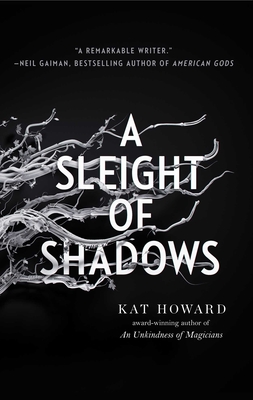
I had an unexpected stroke of luck with An Unkindness of Magicians, which was originally published in 2017 as a stand alone novel, got a sequel in Sleight of Shadows, which came out shortly after I, shaking slightly, put down An Unkindness of Magicians. (Note: if you’ve got a small child– there’s a description of a baby suffering I found hard. The sympathy is strong, but the description is painful, but not gratuitous in the least.) I don’t think I respect anything more in an author than taking the time necessary to do what a story demands. I can understand readers coming to the end of An Unkindness of Magicians with questions, many questions. The book is satisfying and complete, as it stands. Kat Howard could have said, “No, that’s it, that’s all there is.” Or she could have heard the questions of readers and cobbled something together. But Sydney deserved more, the Unseen World deserved more, and Kat Howard’s writerly gift knew it could do better. She took the time necessary, and pulled off an honest, painful, ultimately honest ending.

If there is a constant for me among these books, apart from Kat’s direct, forthright, yet beautiful writing, it’s her nuanced integrity in telling a story. It’s easy to feel sympathy for Kat’s characters, to want to yank them out of the painful scenario. There is also, ultimately, always another character there for them. Frequently, and in a way I found really powerful, it’s women supporting each other, just as I’ve found such support in my own life from my own friends! The realism of hope in the face of painful destruction and cruelty is restorative in a world which tells us to “suck it up, that’s reality.”

Sydney, ultimately, refuses to give up. She does what she has to. So does Imogen in Roses and Rot. So do their friends, standing behind them, standing up for them. This isn’t even the stuff of epic, it’s the stuff of ethics. This is fantasy being more true, more real, than realism. This, in a nutshell, is what you should read if you liked Diana Wynne Jones, Susan Cooper, and Joan Aiken as a kid.

Dammit, there I am. As bad as a listicle. (But, I’m going to go ahead and guess– Kat Howard would enthusiastically agree that reading the kiddie books is good, too. And, also, hers. The more books, the better.)

Thank you, Kat, for sharing your words with me– and your worlds with all of us.

The Skull

Sometimes, when you’re dealing with something terrible in your life, it’s important to tread lightly and cautiously. Other times, you just need to push it off a high wall, watch it crash into pieces, then go gather the scattered pieces, smash each one to shards, gather every shard and burn them in the fire, watch them burn while drinking a cup of tea, sweep the ashes into a bucket, and drop the bucket of ashes into a bottomless pit.

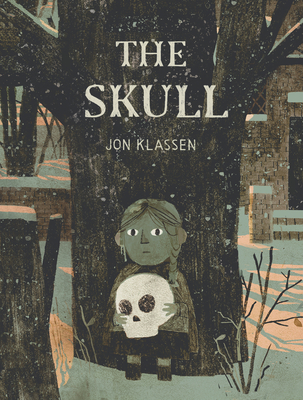
Why does Otilla do this for the skull? How does she know to? The Skull by Jon Klassen leaves you with plenty of questions about “Who? And why? And how? And when?”, but, in the end, the strongest feeling washing over me was sheer catharsis.

I suppose maybe the whole skull thing has people looking for darkness, but I’ll be honest: I’m getting perplexed by the fuss about how, apparently, The Skull is “darker” than Jon Klassen’s usual books for children written about it. You know, the ones he’s known for– lightweight, frivolous books about animals eating other animals because they stole hats. Jon Klassen has always, always left most of a book unstated. The text tells you 25%, the art another 25%. The rest is the unspoken part: everything from font to style to negative space and the air between the pages is textured in a Jon Klassen book. I like the return to a serif font, here, and the placement of the text feels like a cross between Little Bear or Frog and Toad and a Paul O. Zelinsky fairy tale book.

The book, we know up front, is a folktale, and, one feels from the moment of flipping it open, should be told by the fireside on a cold, snowy night, a warm family blocking the howling wind outside. The dark is out there, but the warmth is within as we hear about Otilla and the skull…

On Shabbat, the Spriggan and I were sitting outside in the synagogue flipping through The Skull because it’s a bit too text-heavy to read properly to a toddler but, honestly, no one told him that, so he still wanted to look at it and have me tell him about it and read bits aloud. We were not thinking of the darkness, in fact, but of the warmth Otilla finds. We were talking about Otilla dancing with the skull in the ballroom, pointing at their masks, and I looked up to see someone watching us curiously. “We’re just reading The Skull,” I explained, holding it up. He shuddered and left, quickly.

And I caught myself thinking of another oral legend. I’ve always been utterly terrible at knowing what’s supposed to be “age-appropriate.” I read The Odyssey when I was in Grade 3. My sister was annoyed and said I can’t really have, because maybe I did read the words but it’s impossible I should have gotten it, REALLY. An amiable child, I agreed. I didn’t get it, not fully. I loved the stories in the story, and I was intrigued by the odd way it started halfway and had a big flashback. I liked the rushing, undulating feeling of the words. I felt absorbed in it, stuck on the big boat rushing from danger to danger, and since that was a time when I really wasn’t happy, twenty years on a boat facing nothing worse than sea monsters sounded great to me. I liked living in the book’s head. I didn’t need to “really, fully get it,” because I liked the book, you see, and it held me when I felt alone.

Like Otilla held the skull in the ballroom, you know?

I’m not good at “age appropriate,” but I’m very good at quality. Some people think that In the Night Kitchen is horrifying because a (naked, heaven forbid!) kid gets put to bake in an oven, so surely it can’t be allowed in schools where kids are being put through active shooter drills. The innocent children might get scared, after all.

My Spriggan, by the way, gleefully crawls under the covers because “I’m in the oven, bake me in a cake! I pop out of the oven, I’m not the milk and the milk’s not me!” And he falls over laughing. It’s a terrible bedtime story, honestly– he needs to sleep, not play.

I’m thinking, yet again, of David Almond’s Nanty Solo in The Woman Who Turned Children into Birds, seeing Laura Carlin’s illustration of her in my mind, one leg nonchalantly extended: “But what on earth are you frightened of?” Are adults afraid of the oven, afraid of the dark?

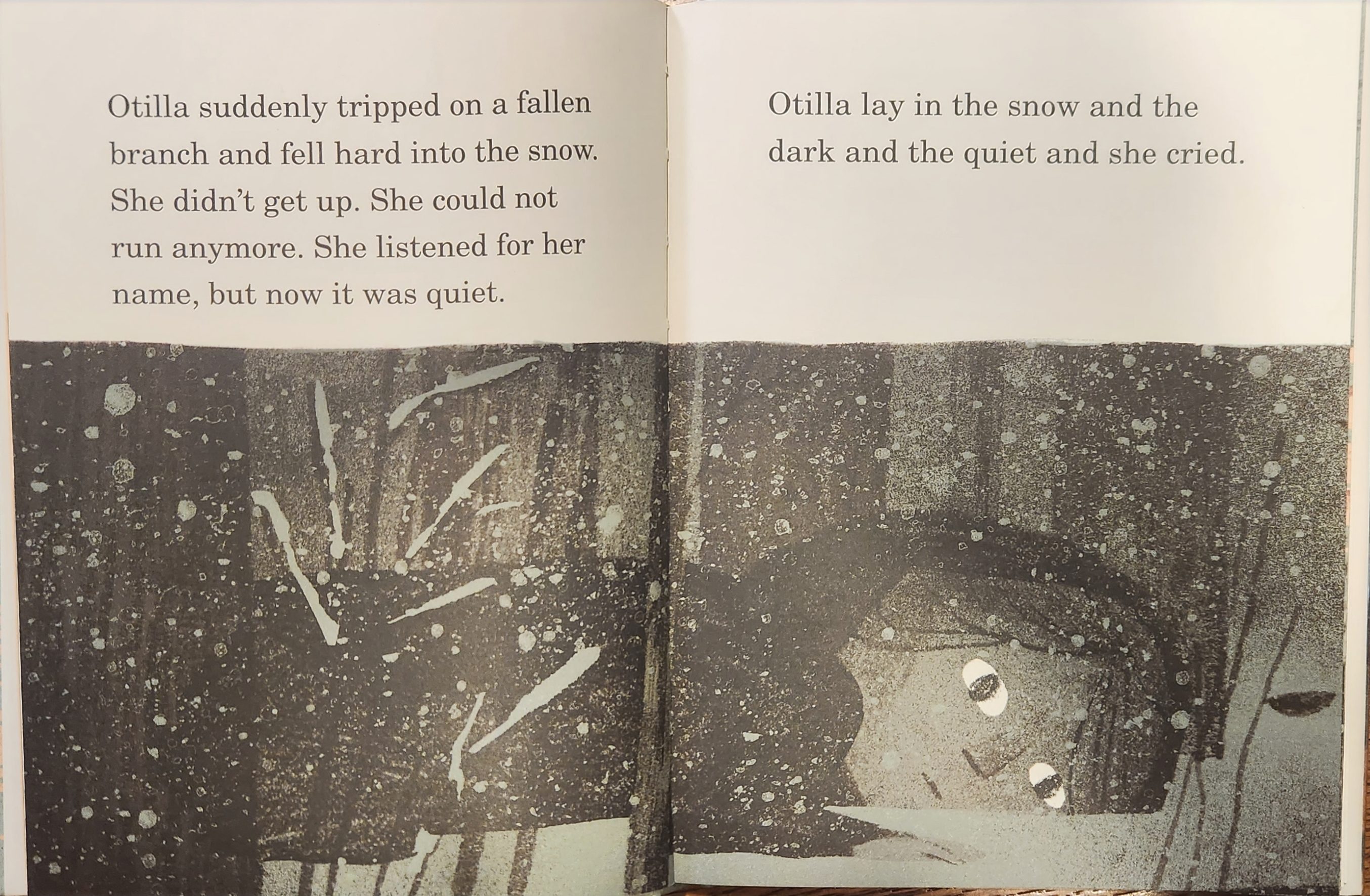
Otilla wasn’t afraid of the dark. We never do find out what she was running away from. I do know one thing, and it’s that there is one, and only one, page of the book that made my heart crack. Otilla falls in the snow, listening for her name being called, and cries, lying on the snowy forest floor, alone. The mother in me wanted to scoop her up in a hug. Otilla, though, cries until she’s finished crying, then gets up and goes on.

Brave, brave girl. Otilla gets up, and here’s where things shift.

Otilla has run from danger, though we don’t know what the danger was, and goes from being the endangered to the rescuer.

We all know, I think, that Otilla would like to have smashed her past danger, what it was she feared, to bits. She would like to burn her trauma and drop it into a bottomless pit. But Otilla can’t. What can she do? She can help someone more vulnerable– her new friend, the one who has offered her what he can: shelter, a pear, a dance, pyjamas. When the headless skeleton comes, Otilla is ready.

I don’t find that dark. I find it cathartic, hopeful, and I am ready to walk out into a lovely day with a skull on a sled, enjoying the knowledge that I have a friend and have lost the fear of a danger past.

I Am a Meadow Mermaid and The Hidden World of Gnomes

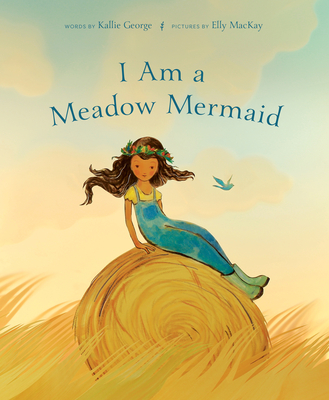
Here was the problem. Tundra sent me both of these lovely books and I wanted to review them both at the same time with the same breath and then I realized I could write them in one post, but then I thought maybe the creators would prefer not, and then I realized they actually all get on really well and so do the books, so I should stop fussing and start writing. “Stop fussing and start writing” honestly sounds like what my father would say, so I would like to dedicate this post to my father, glancing up from his crossword at the kitchen counter and telling me to stop procrastinating, already, and get it over with. The thing is, though, that these aren’t “get it over with” things to write about. What these books, both of them, are is your summer vacation between two sets of covers. These books are absolutely, positively delicious. I’ll start with I Am a Meadow Mermaid by dream duo Kallie George with illustrator Elly MacKay, and then you may or may not ever get me to shut up about The Hidden World of Gnomes by Lauren Soloy, of I’s the B’y fame (among others, but I will never be allowed to stop singing that one, nor do I want to).

What these two books have in common is a completely unpatronizing and unpretentious way of talking about the world of the imagination, without ever saying so, and do I ever appreciate that.

I Am a Meadow Mermaid is the story of a girl daydreaming and playing she’s a mermaid out in the meadow, and the experience of going with her through her play to a surprising but tender conclusion is, in itself, a daydream. I’m saying that straight up because I’m having a very hard time going into this review without immediately plunging to the end, and I don’t want to– because I want you, with a child in your lap or at a storytime for preference, to experience that unfolding conclusion on your own.

The truth is that not everyone could have made this book without it being coy and flirting with the idea that “we all know this isn’t real, is it?” Which would have been a disaster. But the creators of this book, Kallie George and Elly MacKay, and their editor at Tundra, all dreamed of being mermaids as children. And so they approached the whole idea of play with full respect and, I think, more than a little wistfulness. But the opening doesn’t feel that way; the first page is uninhibited joy: a girl, arms raised and hair flowing over the waves of the prairie, declaring “I am a meadow mermaid.” The unimpressed cat behind her sits on a post, as cats do, but she looks up and out, knowing the truth. She tells us what she feels and hears and sees, “I see the sea in the sky, starfish in the stars, a whale’s tail in a slip of the moon.” (Maybe you have? I wasn’t that kid– I was extremely busy searching for fairies and gnomes, thank you– see below.) But our meadow mermaid is hoping to hear another mermaid, we think, when, instead, she hears a stranded sailor: “I am a meadow mermaid,” she introduces herself. “I’m Milla,” says the sailor. She helps Milla, and where there was one, there are now two. I’ll stop there, you can read the rest.

Elly MacKay’s art, as always, is suffused with light to suit the atmosphere. It was the perfect choice for this story, one of dreams and marked by the four elements– the meadow mermaid dreams of air and water as she plays under the fire of the sun over the earth of the prairie. I don’t think any other illustrator could have captured that so well, or could have swept us up in the sentiment without getting sentimental.

On the very other side, down out of the clouds and into the dirt, we have The Hidden World of Gnomes, who, as I said, were absolutely my people when I was a kid. I may have played mermaids in the swimming pool or at the beach, but for me– it was the world of the little folk, the fairies and gnomes, that got me. I had every encyclopedia of fairies and elves I could get with my babysitting money. I was shocked, when I grew up, to find that there was one I did not own– Wil Huygen and Rien Poortvliet’s opus, Gnomes. For any child who is headed in that direction, they will first need Lauren Soloy’s introductory work, The Hidden World of Gnomes, which sent me straight back to being age 8 and determining that the reason I couldn’t see the hidden folk was because they didn’t want to be seen, so maybe, just maybe, if I stopped looking, I’d see one out of the corner of my eye.

Lauren Soloy brings us right to The Pocket to meet them. “Where is The Pocket, you ask? Well, it’s all around you, all the time.” And, she tells us, their hearts are big enough “to hold the entire world and all the plants, animals, and fungi that live there.” And then we’re launched into my favourite, absolutely favourite, kind of book from when I was small. A big, thick picture book that you can explore forever because it’s not just one narrative, it’s encyclopedic in style. We get the calendar of the gnomes, including their celebrations and their milestones. We’re introduced to key people, such as Minoletta the storyteller and Abel Potter with his friend Billy Buttons the woody pig. She tells us about the Mushroom Moon when the gnomes have mushroom gathering parties and about leaf riding in the fall and snail stacking (played until the snails get bored). And, oh my heart as a kid would have burst with joy– we are given Bonnie Plum’s own recipe for Gnome Cookies (which seem a bit like shortbread to me, though sweetened with honey and maple syrup).

As I said at the top, I think these are two of the best books to get right now (well, The Hidden World of Gnomes you can preorder for June 20) so you can enjoy them with your kids over summer vacation. Who will they dream of being this summer? And do you think they might want to look for The Pocket, or will they take an interest in exploring all those little details the gnomes love so much, from planting seeds to writing and receiving letters, to making gnome cookies? I encourage you to get these and find out what joys you can find together!

Homeland: My Father Dreams of Palestine

I have to admit that this wasn’t a book I intended to review. Like many other picture books I read, I felt I wasn’t the intended audience, so let others review, read, and enjoy it. I saw it very soon after it came out, and thought it was quite good but something was incomplete for me. But, I thought, I wasn’t the audience, and the topic is so challenging.

It’s been nagging at me, though, and as I discussed the book with my family, it occurred to me that this may be one of those rare occasions when I feel able to add something to a conversation with a mixed review. And I heard the voice of Nanty Solo (remember that book?) in my head, “But what on earth are you frightened of?” It startled me, because it’s the question I wanted to ask the creative team.

Homeland: My Father Dreams of Palestine, by Hannah Moushabeck with art by Reem Madooh, is a deeply personal narrative drawing on family stories from the complex, toothy, prickly history of the Middle East, of Palestine and of Israel. The author herself is Palestinian-American.

The tenderness of a father sharing his stories and memories with his children is central to the book. He talks of adventures and misadventures, sights and tastes and scents– the stories are alive with sensory detail, and that’s the real strength of the book, evoking the joy one feels listening to a storyteller right before you. The chief character in the picture book is the child the father was, told by the father now, but understood through his stories by his children– and, now, recorded in this book by one daughter years later… It’s a complex interleafing of memory and story, and the received feeling is nostalgic. The Welsh have a word that springs to mind, hiraeth. The word isn’t easy to explain to any clear degree but refers to a sense of homesickness with a deep awareness that what’s been lost can never be retrieved. It’s a nostalgia, but sharper, felt as a pain.

The book doesn’t sit with this pain, however, any more than it sits with either the child character or the father with his children; you never get too close. As a reader, I noticed a delicacy, a carefulness, permeating the book. We know there is sadness, but the book doesn’t look at it. We know there is pain and loss, but the book doesn’t address grief. We come so close, but always skirt the edges of the sharper feelings. We go up to hiraeth, nostalgia, an acknowledgement of the sadness that the children will never experience what the father remembers, but then we back away.

The Jewish reader in me knows more, of course. Jews aren’t specifically addressed in the book; though I do believe the illustrator carefully made sure we were represented in the remembered scenes, the written text is too delicately careful to go there. It’s not exactly being stamped out, but just… carefully off the scene. It’s not telling a Jewish story, so we don’t have to be there, so we aren’t, and it’s so much easier that way– because then we don’t have to actually look at the conflict.

And that’s where the Nanty Solo in my head started in: “But what on earth are you frightened of?

The problem in telling a story of Palestine or of Israel for any audience is that the two groups are both angry at each other and both convinced they are right, and were right about that other thing, too– and I’m fully aware that whoever is reading this is sure to be thinking, “Enough with equating this! [Side X] is right!” I understand, believe me. I’m Jewish, and I’m pretty glad there’s a state of Israel, which does tend to put me on one “side,” though I rather kick and scream about that because I’m a stubborn creature who doesn’t like “sides.” But this gives me a way to acknowledge that, yes, we are all angry– because that’s kind of the point.

The problem in telling stories of Palestine or of Israel to any audience is the anger– and the problem in telling those stories to kids, say, in picture books, is that we don’t like to talk about the anger to the kids. And I’m looking at Homeland and I don’t see the heat of anger, the pain of it, the sharp keenness of it. Do none of them feel anger (I can’t believe that), or is it simply unacknowledged? If, by some miracle, these people feel no anger, what about pain? Grief? Resentment, even for a moment? I have to wonder, because the deliberate distancing from the characters and the interleafing of time and space leaves too much room. What are we not talking about?

But what on earth are you frightened of?

We can’t be afraid of the kids, are we? Kids know anger! Having worked in a school, briefly, and having looked on the internet for more than a few minutes, I’m aware that the cause of concern in children’s literature is less likely to be children than adults. I feel that, by the way; I hate adults, too, and, being honest, parents are the worst. I should know. I am one.

The most likely scenario, I think, is that Homeland is deliberately cautious because the author (and, presumably, editorial team) really didn’t want to get into hot water on a delicate subject. I can see that. It’s a more than fair concern. I’ve also got bad news: it’s simply impossible to avoid getting some kind of huffy or angry or otherwise unkind response to a book dealing with the Israeli-Palestinian conflict in any way. I’ve been astonished by it before, and no matter how careful Homeland is, I think it’s unavoidable. So, why not be honest? Kids can tell when you’re not telling them something, and adults fill in the gaps if you leave them.

But I wonder. What would happen if we didn’t leave those gaps? What would happen if a Palestinian-American sat down with their picture book about broken houses and a key with no door and said, “I was sad. I was angry. I lost something precious, and I feel it still.” What if, then, a Jewish child looked up and said, “I recognize that story– on the same land, we had homes and lost them. We were sad, and scared, and sat by the rivers of Babylon, and wept. We still say those words in our prayers.”

It is just, just possible that the two would be able to look into each others’ eyes and say, “I see myself in you.”

This is not a plea to Hannah Moushabeck, who wrote a really strong debut picture book here. This is more of a plea to publishers: “But what on earth are you frightened of?” Tell me your stories, so I can listen, and hear, and tell you mine in my own turn.

Some of These Are Snails

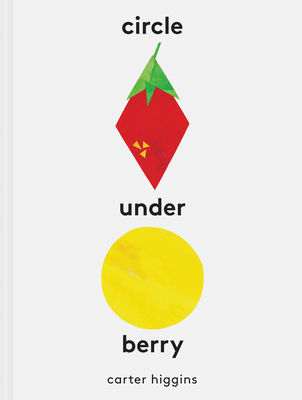
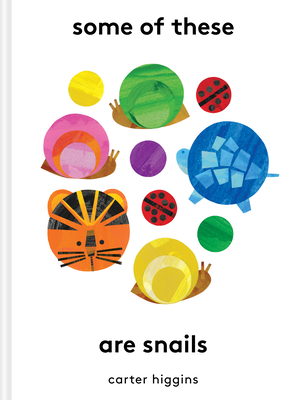
I’m always worried that people won’t believe me when I say, over and over again, that if I don’t review a book, even if I’m sent a review copy, it doesn’t mean I didn’t like it. It could mean any number of things (apart from, well, I didn’t like it, of course): I simply didn’t get a chance, I loved it but was at a loss for how to review it properly because it was so good, I liked it very much but didn’t really think I had anything to say beyond that… And in many, many cases “I really wanted to but just never got to it” is what happened, and that’s definitely what happened with Carter Higgins’s truly wonderful book Circle Under Berry. Which is why I’m so, so, so glad I got a second go with her new book, Some of These Are Snails, which is equally wonderful but in a different kind of way, so I can talk about BOTH. (You can actually tell I loved Circle Under Berry because I snuck it into another post, here, even though I never gave it a full review.)

Both of these are pretty much perfect books, and they’re definitely pretty books. My Spriggan has been a devoted fan of Circle Under Berry for over a year now, and when I recently brought home Some of These Are Snails, the look on his face was astonishing: I could see him processing that this wasn’t exactly Circle Under Berry but it looked similar and the dawning realization that there was more of the thing he loves was truly like seeing light slowly diffusing across his face. The practical impact was this: for the next three days he would hand me one of them, I’d start reading, and after a page he’d say, “no no no,” and run to get the other, and after two pages he’d realize that if I was reading this one he wasn’t hearing that one and… He has now settled down and the only issue is that I have to read them both, one after the other.

What is the ultimate point from the Spriggan’s perspective? These are two excellent works of creative literature and while they can each work as stand alone books, you want them both because they’re simply that good.

But what are they? Aren’t they just simple shape or colour books? I mean, they aren’t narrative, are they? Oh, dear readers, do not be deceived by the appearance of simplicity. Simplicity, you should know, at its most perfect essence, is elegance, and the thing that struck me about Circle Under Berry when I first read it to my Spriggan was its compact and elegant structure.

We start very small and simple with one pattern: the direction of shapes relative to each other, a circle under a berry on one page and the berry over a square on the next. Gradually, we branch out — colours and shapes are related to each other in this book! They swirl and loop as we realize, the adult reader’s mind admiring exactly the same revelations as the child’s, that the base of each more complex image (the berry or the lion) is a simple coloured shape: the scarlet diamond or the yellow circle. And then we get direct questions– is this oval? Is it orange? And the dynamic slowly grows in intensity until the éclat of a full, yet simply laid out, spread of shapes and pictures to explore, and a quiet conclusion looping back to the beginning with a fresh, and so satisfying, perspective.

It is, in other words, more complete a narrative than many novels, and it pulls in readers at least as completely. The page asking the reader whether the picture is orange, is it oval? I will never forget when my enthralled young Spriggan bounced on my lap and declared, “Sun! Sun!” I hadn’t thought that the orange oval might look like the sun,, and the book doesn’t offer it as an explicit option, but he was certainly right that it could have been! Why not? These days, when he sees the green square as a frog, he asks where Toad is? (Already a fan of Frog and Toad before he can even sit through more than the simplest of the stories, such a perfect child!) And he’s deeply concerned that the grasshopper (emerald rectangle) might get lost, so we have to check that it’s back in the book each time.

So, you might wonder, what’s left for Some of These Are Snails? I admit that I was a tiny bit concerned about that– well no. Honestly, I have perfect confidence in Carter Higgins so I wasn’t concerned at all; I thought, “If I didn’t have such confidence in Carter Higgins, I’d wonder if there were truly more to do with this concept.” My confidence remains unshaken, and I remain smug in my confidence, because she totally pulled this off.

What she brought over from Circle Under Berry wasn’t just the brilliant art in shapes and colours. (Did I mention that if you look closely, each berry and guppy and hummingbird is individually made? You can see the small variations of lovingly crafted art for each small image– I found it so exquisite and captivating that I’ve developed a homeschool project based on it with shapes cut from my pretty art papers, just to see what the Changeling will do with the materials. To return…) The true genius is that Carter Higgins maintains the same thrifty structure: a simple opening, gradually unfolding into a broadening perspective, the éclat of thrilling spreads to explore and discuss with those new perspectives, and the warm satisfaction of wrapping up with new eyes on the compact and familiar opening. It’s a quiet, unpretentious genius.

The new perspectives in Some of These Are Snails amount to, in reality, the toddler and preschool equivalent of discussion questions. “Let’s find all the yellow ones on this page! Can you count them? Which are the big circles? Hmm, I wonder if we can find all the small squares… Ooooh can we find all the pictures of animals with eyes? Which ladybug had the most spots?” Now, the real and true and brilliant genius in the text is that Carter Higgins doesn’t give you the questions. She opens the door quietly, and you get small prompts in that direction, a suggestion to sort by colour or size, perhaps, but you aren’t going to do all the exploring to be done on every single reading. That wouldn’t be fun and would be absurd, so she doesn’t tell you to do it because that would kill the book and the fun experience. She simply makes it available.

As for me… The clue to my delight in reading Some of These Are Snails is in the title. This book is deeply grammatical and syntactical. The most clever two page match to my mind is when “all the ladybugs have spots” and “each butterfly has none.” The Spriggan giggles over how funny that is, because the juxtaposition is so delightfully whimsical, while I giggle over the playfulness of the structure that lands that unexpected “none” as the final word. It’s delicious to read out loud with a child on your lap.

If I’m being honest, I want every author of any kind of work to read these for structure and method. Carter Higgins shows how little you have to put on the page to create a reading experience which draws you in over and over and over again, immersing you as you find new elements and new ideas. And I’m not just talking about the child audience; I realized only tonight that my Spriggan and I were discussing the tiny elephants through our laughter and I wondered aloud if they were small pictures of elephants or if elephants in this book were described as small relative to whales? What’s, he agreed, arms spread wide are “very, very BIG.” The cleverness of getting the folks reading together, at either end of a big age gap, to muse over the same kind of question from different angles, frequently with the child surprising the adult with a startlingly new idea, is breathtaking– and so simply elegant, so elegantly simple.

My Spriggan and I wholeheartedly recommend these books– and, we promise, you want them both. After all, if one gets stuck behind a couch cushion and you can’t find it for a day, you REALLY need the other. A day can’t go by without reading at least one of these, and that’s the simple truth.