

I have to emphasize here that Matthew Forsythe (whose latest picture book Aggie and the Ghost, will be coming out August 19 so pre-order it at that link) must be a real, flesh and blood person, because he produces books that are published by real publishers and are wonderful and I read them with my children, and that’s a thing real people do. But I have a bit of a suspicion, not unlike my views on the Ahlbergs, that there’s something a bit special here. Look, it’s obvious that Sergio Ruzzier walks the borders of art and reality and records what he sees in between. Elisha Cooper disappears periodically into the woods, and then his editors get a manuscript in the mail, and when they open the parcel an unexpected ash leaf falls out. People across history and geography have noticed a woman who looks astonishingly like Barbara McClintock sitting and sketching.
Well, Matthew Forsythe can understand animals. Rather as Princess Imani in the story of “Kupti and Imani” understood the monkeys disclosing the healing properties of the leaves in the crown of the tree above her, and just as the snake cleaned the ears of Melampus so he could understand all creatures, Matthew Forsythe sits and draws and listens to the chatter of birds around him. I don’t know if a snake cleaned his ears, though; I didn’t ask that in the interview, down below my absurd chatter.
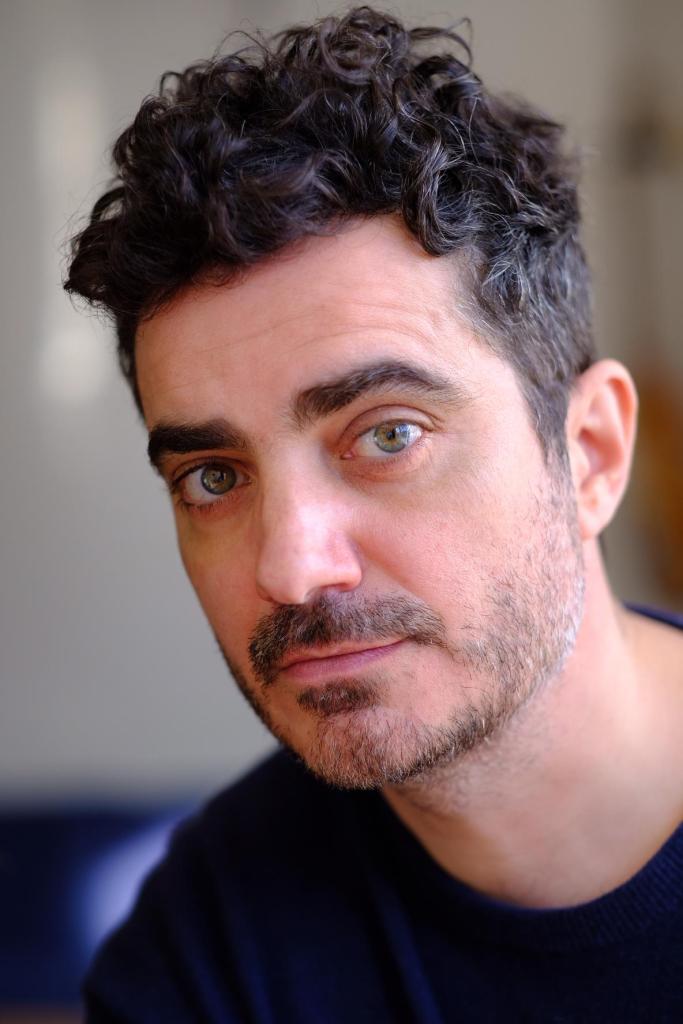
Does it matter that all of this is patently made up and these are real people who do real, and very hard, and often frustrating, work? Of course it matters. But this is the way readers have always coped with understanding genius. Barthes declared the death of the author in very obvious self-defense; let the weirdo stories critics invent be about someone else, I’m dead over here. Ignore me. The real story (rather than The Real Story), as in the interview below, is that authors and illustrators of exceptional skill learn by doing. And they do a lot. Interesting as it is to talk to authors and illustrators (something I love to do), there’s rarely an inside scoop beyond just needing to do the work, and needing to keep at it. It’s all in the practice of developing understanding over time and a strong, focused attention to detail and gut instinct.
But it’s just possible a few secrets from the birds get in there, too. I think. What do I know?
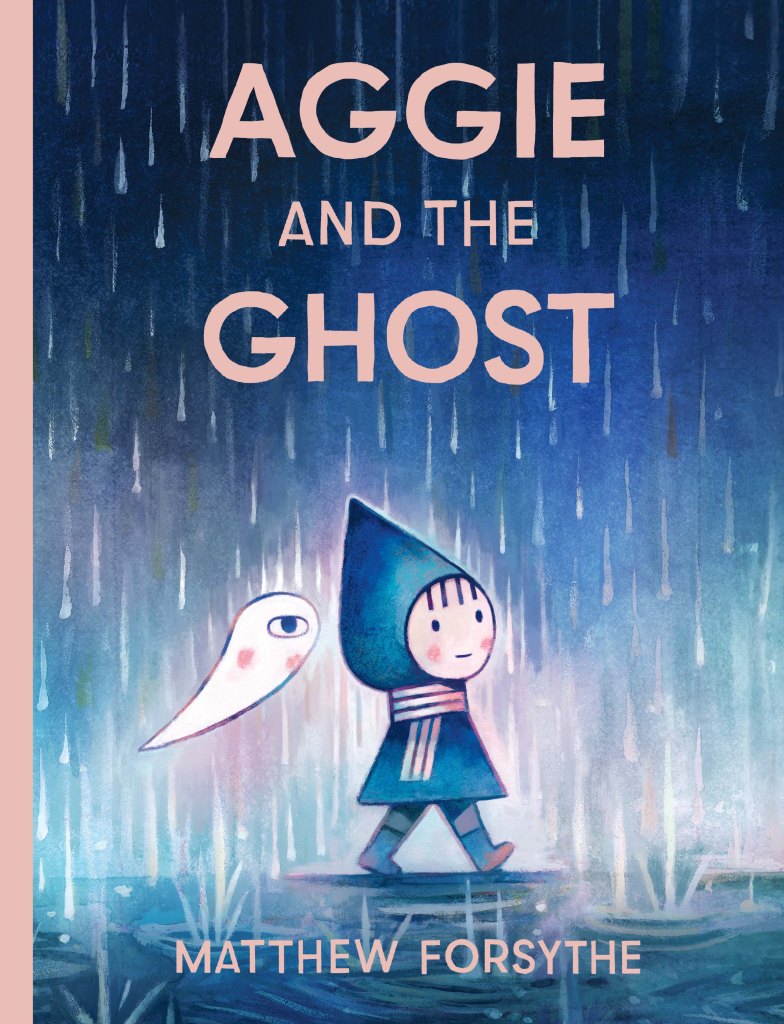
In Aggie and the Ghost, Matthew Forsythe takes us into a haunted solitude. Aggie, about whom we know nothing except that she exists and has a fantastic coat with a pointy hood, is excited to live alone. Like the witch in Kazuno Kohara’s Ghosts in the House!, she founds out that the house is haunted. Unlike the little witch, Aggie is not thrilled. She wants to be alone. With the ghost, she is never alone. The ghost is rather like an extremely annoying cat: stealing socks (my Pollux is a vicious thief), disturbing the nights (every cat ever), and eating all the cheese (Castor, you great furry basketball, cheese isn’t good for cats). Here is the pattern: Aggie sets rules; the ghost breaks rules. In folkloric tradition, the stalemate is set to be solved by a challenge: if Aggie wins, the ghost moves out of the house. The game? Tic-tac-toe. (I screamed laughing; I don’t know why I expected chess. Chess is obviously only when you challenge Death.) I won’t spoil the ending, because you really will enjoy following the journey to the end as you read this with any child, ages about 3 to 5, depending on the kid. The conclusion is deeply satisfying, and no one but Matthew Forsythe could have gotten there by a ruthlessly logical yet utterly original story pathway, all sparsely told through beautiful art as much as language.
The deepest delight to me in reading this book, in fact, was the unexpected and original pathway. Those touches that could only have come from this one author, this one illustrator. The challenge to tic-tac-toe is a prime example but note the following twists in the conversation: There’s a potentially saccharine setup for a confessional heart-to-heart by the ghost, we get a beat with a page turn, and then Aggie asks, “Are you wearing my scarf?” “Yes,” replies the ghost.
Aggie may be irritated, but she is also unflappable. The ghost is immovable. Consistently, Matthew Forsythe shows he’s listening to the world around him (probably all those birds), and defying the conventional patterns of rote stories. Juxtapositions of the odd, the unexpected, and the relentlessly logical (no one, not even a Man Faced Owl, can disrupt the game) highlight for the adult the conventions we’ve come to expect while, for the kid, the adherence to their eclectic and delightful tastes over and above the prating lessons they hear so often is both enriching and exciting. And, of course, done with such skill, such artistry, such attention to detail–
Thunder crashed, and then– without warning–
I got to interview him.
(Thank you to S&S for the review copy and the chance to send interview questions to one of the author-illustrators I admire most; thank you Matthew Forsythe for taking the time to read my densely wordy questions, which I am, below, cutting to essentials. Matthew’s answers are left complete, of course, since his words are the more important here.)
DRF: You do not write in verse. But metrics matter within your prose, providing stress cues to the reader and supporting the voice through the narrative. To what degree does the pattern of metrics (moving from iambs to a trochee, for example) consciously occur to you when you’re writing? Do you have a method? Is this something you notice as you write and edit? Do you seek le mot juste, as it were, for sound and sense?
MF: Yes, actually, Paula (my editor) and I have some wonderful conversations about les mots justes. I am not thinking in any formal way about poetry (I had to look up “trochee”), but yes the rhythm and cadence of the words and page-turns is very important to me. I do read the books aloud to myself many, many times. It really does reveal everything when you do that.
DRF: I find your ability to represent farce seriously to be the pinnacle of what’s done in picture book humour. The dead seriousness of the tic-tac-toe match in the face of every chance at disruption is hilarious. Did you have a model for this form of humour? Does it derive from any influences, do you think, consciously or not?
MF: Thank you. The deadpan game of tic tac toe is from The Seventh Seal and the knight’s game of chess with death. I think also the absurdism of Monty Python and everything by Rohald Dahl were big for me when I was a kid.
DRF: The best compliment I ever get as a gift-giver is when someone says, “I actually like reading the books you gave us out loud, so can you recommend others? I want more of the kind I don’t mind reading over and over again.” I’ve never seen a book from you yet that’s a dud in this regard, so I want to ask the expert. Is there a sign to yourself that you need to throw something out, because it won’t work? How do you produce work that so consistently respects the child as an audience, and pulls the adult with the kid?
MF: There was a long sequence in Aggie and the Ghost that involved the game of tic tac toe and the Man Faced Owl. I gave the book to my friend Katie to read to her daughter, Mary. Mary got up and wandered off in the middle of that sequence. Mary was clearly giving us a note that it was boring. So, I cut eight pages. Having said that, I am ultimately writing for myself. Writing towards what I think is funny and what I think it interesting. Because it’s an endless game trying to write for anyone else and it’s difficult just enough to write for yourself.
DRF: Oh, extra question because I’m so amazed: How do you get birds to eat from your hand? I am absolutely stunned. I’m not surprised, because you’re clearly magical, but I’m stunned.
MF: I also am amazed whenever a bird will eat from your hand. I think this is usually in areas where wild birds have gotten used to being fed.
A huge thank you, again, to Matthew and to the nice people at S&S! Pre-order Aggie and the Ghost either at that link or from your local indie book shop!
 The Children's Bookroom