Why Read?

“Eh bien, je ressens de la joie, je ressens plein de trucs bénéfiques ou maléfiques…”

My husband sent me an interview from a dance event in France put together by the French dancer, Hugo Marchand, for children and families to have a chance to see some of the étoiles of the Opéra de Paris. The interviewer asked an 8-year-old boy attending the event about his love of ballet, and when he asked the child what he feels when he dances, those were his words, stated with a conviction and such scintillating placement of le mot juste that I don’t even want to try to translate them in any literal fashion. “I am moved by a fierce joy from the heights to the abyss of human emotion,” would be my hash at what, I repeat, and 8-year-old said about what he feels when he dances ballet.

(Side note: translation is an evil task; you can’t do it without some form of betrayal. In French, the language is balanced by gorgeous dualism borrowed from the Latin, lyrical and so adroit that it spins fluidly. English has nothing as perfect as bénéfique and maléfique, for example, but is rich in atmospheric words. Bluntly, generally, and imperfectly: French makes more beautiful lyric verse; English is perfect for picture books. Also: I adore English lyric verse and revere French picture books. Go figure.)

Why am I on about this?

On October 13, 2023, after the attacks of October 7, I wrote a post in response to a sudden call for resources. At that time, the situation in the Middle East was still considered complex, and, in a nutshell, no one wanted to talk to their kids; they wanted to outsource to picture books. I was, and remain, adamant that the best response is, actually, to speak directly and forthrightly. Children, like that 8-year-old above, like my 4-year-old, like my almost-12-year-old, have an immense emotional capacity and a fierce ability to hold a full picture without lopping off the bits they don’t like in order to simplify it.

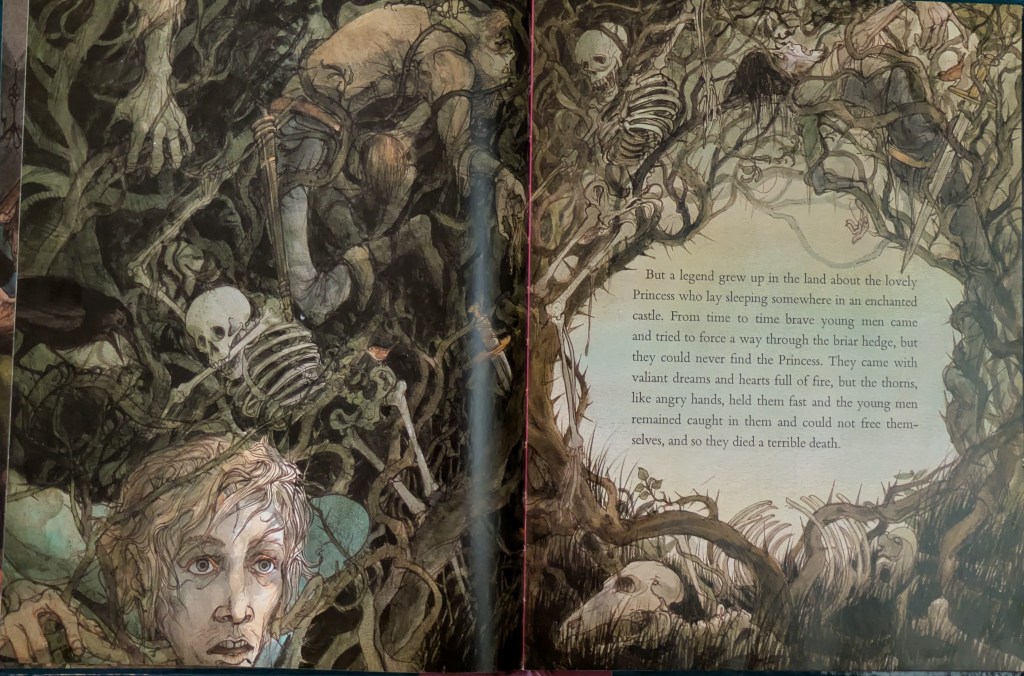
We, as adults, have gotten wounded enough times in our lives that we can’t always bear to hold onto the parts that hurt us. It’s understandable, maybe, but the flaw is in us, not the child reader. Consider the fairy tale: once upon a time, fairy tale books had actual skeletons embedded in briars on the page, and just a couple of years ago, there were rather nervously defensive articles about how Jon Klassen’s book The Skull was honestly ok to publish. (Though it didn’t get so much as the tiniest nod at the ALA YMA, but I’m not bitter about it.) (Yes, of course I’m still fucking mad as hell.)
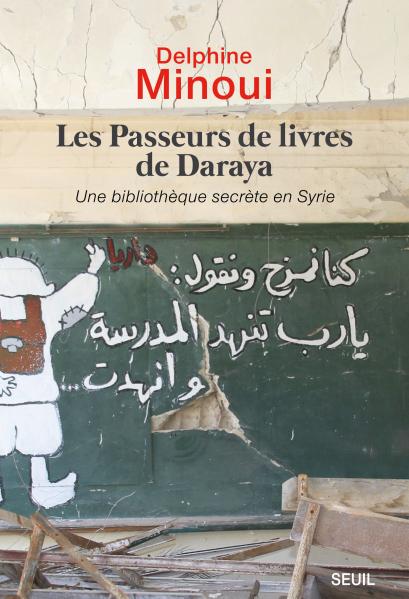
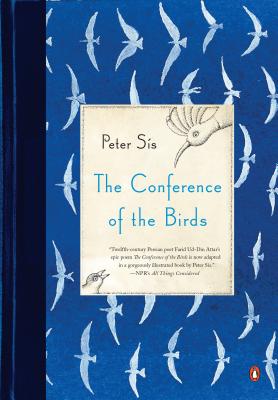
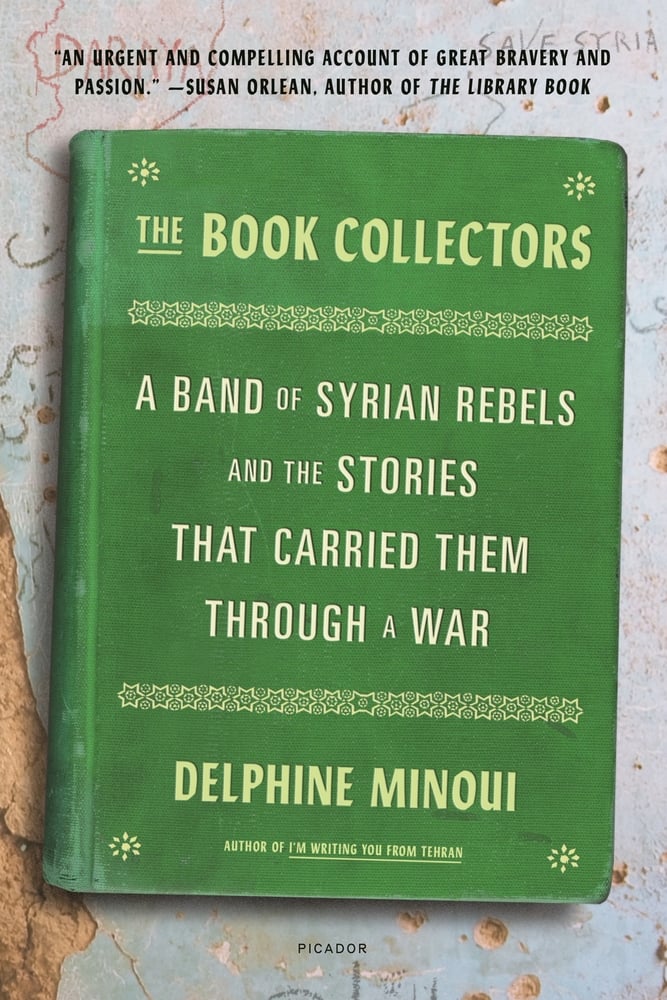
When I first heard that Israel had attacked a nuclear facility in Iran, beginning another front in these exhausting and painful wars (Ukraine, Russia, Palestine, Israel, now Iran– too many humans hurt, too many stories lost), I dug out two books for myself from my shelves, ones I really treasure. The first was The Conference of the Birds by Peter Sís, and the next, in English and French editions, were by Delphine Minoui, The Book Collectors or Les Passeurs de livres de Daraya. (I have both; see my passionate relationship with the facets of translation above. I get intense about it.)
I don’t read these as resources for children. I read them for myself. Because to be human is to find that place where we “ressens plein de trucs bénéfiques ou maléfiques,” and not to run away.

Peter Sís, child of the USSR, explored and delved into a Sufi poem, and he created a newly transcendent work of art out of it. The link above is to a paperback edition; it’s shamefully unavailable as a hardcover book now. Get it secondhand if you can find one. The birds, on their journey, take us through the fullness of what it means to be a feeling and thinking being, through everything beautiful and painful and dry and rich, through the highs and lows. We go with them, and we are them. It is reading and art as experience, and you will, after an attentive and absorbed reading, come out broader than you went in. Art and text are integrated, and you and the book will be integrated, too. I can’t explain it better than that; it is one of those books which simply has to be experienced, and must be revisited periodically.

Delphine Minoui is a keen-eyed, keen-eared, and sensitively attuned journalist and author from France, her background balanced evenly between France and Iran. She has written extensively about Iran, including Badjens about the uprisings of women and young people in Iran. Coming from such a different background from mine, and so intelligent and astute, she challenges me, and what gives me an especial jolt every time is that she accepts no easy answer.

In Daraya, a group refused to submit to al-Bassad’s forces. They would have no part either of Daesh’s religious extremism or of Ashar al-Bassad’s ruthless regime. And so in Daraya, they remained, starved and under siege, steadfastly repelling both forces, and a group of these mostly young people gathered books, creating a subterranean library. The scrupulous honesty of these people in collecting books (numbering, dating, recording exactly where each volume came from so it could– the hope was beautifully absurd– be returned to the original owners) was a kick in the gut in a world of corruption; the young librarians held themselves to a higher standard than anyone was asking of those besieging them. And they read, and read, and talked over Skype to Delphine Minoui who asked them questions and drew, in her book, an astonishing portrait, including her tough questions. You have to be made of stern stuff to be able to write such a book, because the interview process can be neither short nor simple. The depth and complexity is in the very marrow of it. It is the kind of book that, after buying it from curiosity when I saw it on a table at my local shop, forced me to further research, and I bought it in the French original, because that kind of thing matters.
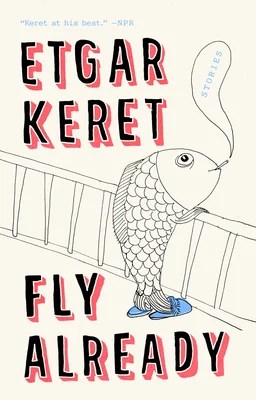
Very well, there we have crisscrossing axes of humanity, geography, the USSR to 12th century Sufi poetry to France and Syria and Iran. But this is all very serious. I challenge you to go further. I have not yet read Autocorrect, the new collection from Israeli author Etgar Keret, though I have seen excerpts through his newsletter. I have read an earlier collection, Fly Already. If you think you understand Israel, Jews, humour, or grief, Keret will stagger you with what you do know, certainly– but more. There is always more. It feels a bit like thinking you were getting on a Möbius strip roller coaster but finding out after you got on that it was actually the double helix ride instead.

You do know more than you think, but Etgar Keret will leave you wondering if you’ve accepted that. When you struggle to accept a skull on the cover of a book about a child finding a home, do you have the inner resources to handle that a fairy tale has thorns and bones? You feel a pang of sorrow for children in pain, you tell your friends that one person’s pain doesn’t negate another; but do you believe that yourself when confronted by the pain of someone you consider your enemy? Do you, reading this, think I am asking that of everyone, or are you, reflexively, choosing where I’m coming from and to whom I am speaking– or do you see I am speaking, also, to myself?

Can you, adult reader, read to your child not about working through anger, but simply read anger? Can you read funny? Can you read beauty? Now, can you read those– to yourself?

Here is the conundrum for adults who love good books for children: There is no child reading this article here. There are only adults. The children will read what you let them, or be read what you will read them. They should have access to everything beautiful, but first you have to accept that responsibility. The responsibility to make the world more beautiful, to propagate the excellent, to take a seed or clipping from a beloved plant and make a new one, and to share the best of books with others.

Your job is, in a nutshell, to “ressens de la joie,” feel joy, but also to “ressens plein de trucs bénéfiques ou maléfiques,” to feel a bunch of stuff both good and bad. (I did what I said I wouldn’t, but there we are. I always do.)

Because otherwise– why read?

Quickly Clever, or Slowly Complex?

We, in the children’s literature world, and we, as readers of children’s literature, have lost something, and that something is the willingness to accept uncertainty. I might simply call it a loss of humility.

You could argue that to level that accusation takes a bit of arrogance, some chutzpah. I’m willing to accept that charge, given that it’s an accusation I level against myself daily.

But I wonder at our loss of memory, even short-term memory.

I remember after the attacks Hamas made on Israel on October 7— attacks involving unprovoked murder and hostage-taking—that many in the children’s book community expressed horror at the unprovoked violence and, in the days that followed, would write on social media admitting to a lack of knowledge and expertise. The frequent phrase was: “I really don’t know enough to comment.” It stuck with me because I felt three things: 1) admiration for the willingness to say “I don’t know,” 2) a hopeless wish that they’d stick with that statement, and 3) a bit of amusement that it stood out as such a stand-alone occasion. Everyone, these days, is an expert on everything, and comments freely.

Well, no, it didn’t continue. Everyone was soon an expert, commenting freely.

Of course, the situation itself was no less complex; the rapid access of expertise was therefore breathtakingly stunning.

The conflict between Israel and Palestine is famously complex, so much so that everyone has an unequivocally firm opinion and their opinion is that which is true and correct. The received wisdom in liberal communities when I was growing up was that the ultimate goal was to move slowly towards a two-state solution and peaceful coexistence; the received liberal opinion now seems to have shifted towards the view that Israel is a colonial power which is occupying Palestinian land and Palestine must be freed by it, with a vague hand-wave towards what will happen to the Israelis who are there. The former Jewish two-state solution advocates of North America have split: the more liberal ones hewing more often to the view that Israel is an occupying power, and the more conservative ones generally speaking furious at the abandonment, muttering to themselves that “a two-state solution seems less and less likely,” and thinking Netanyahu (against all evidence and against the views of about 70% of Israelis themselves) is at least good for security. It’s honestly a horrifying picture for the peacenik liberal in me from my childhood.

And, yes, of course the above is a caricature, and not at all comprehensive. Nor am I claiming to be an expert; I’ll leave that to the rest of the internet.

I don’t talk about this and haven’t talked about this because, to me, it is entirely irrelevant to picture books, which are my topic here. Unfortunately, the community of picture book makers don’t seem to feel the same way.

At the recent Carnegie Awards, Olivia Lomenech Gill was awarded the Carnegie Medal for Illustration for Clever Crow, written by Chris Butterworth. It’s a very lovely book. I was sent a copy for review and admired it, though I didn’t think it truly merited a review. I did pass it along to my daughter to read, who agreed that it’s an interesting and beautiful book, though certainly not as thought-provoking as, say, A Walk Through the Rainforest by Martin Jenkins and Vicky White (you can search the blog for my past review of that one). The awe-inspiring journey in that book towards a more vivid understanding and closer relationship with the complexities and intricacies of the natural world is lacking in Clever Crow. One book a slow walk through a whole world of intricacies; the other is clever. None of the Carnegies really grabbed me this year; same for recent Caldecott and Newbery wins, though. That happens some years.

Different readers look for different things. I seek the depth of slowness and intricacy, and right now, speed and cleverness take precedence.

Intricacy was lacking in Olivia Lomenech Gill’s acceptance speech. So, really, were books as books: what goes to make a good book wasn’t there. Sweeping political statements were not lacking, however.

I know, because I’ve been a reader and a writer on the internet for long enough, exactly what kinds of responses to expect before I get this far:

“All books are political.” “Everyone has a story, and you can’t fault someone for telling their own story.” “This is about human rights, not politics.” “We need more representation.” And, of course, “You’re a Zionist!”

Let’s review some of what Olivia Lomenech Gill had to say. She described the prior flourishing state of literacy and of education in the Gaza Strip “even under the blockade and the Occupation.” Israel was, by the way, hardly mentioned. After 2023, though, suddenly libraries and schools were destroyed; this was scholasticide, in the passive voice. She described the awful destruction of the past two years, and, ultimately, described a deep desire and plan to go through the West Bank and Gaza bringing books back to help rebuild libraries in a free Palestine.  

By God, I swear, I wish her success in that ultimate wish, and I would, happily and from my own shelves and money, contribute any books I could afford to give.

So long as it were in the context of peaceful coexistence with the freedom and security of my own family in their own country, because I don’t know what happens to my sister, brother, or their kids, in the context of any of these plans to end the occupation otherwise.

That, you see, is the crux of the problem with the trite statements above: All books are political, everyone has a story, everything is about human rights and representation—

Everything is an absolute, everything has to be certain, nothing can contain an iota of complexity or uncertainty, and what happens to the real individual otherwise?

Readers, I do not know what a Zionist is these days and I don’t know if I am one; I’ve been ditched for being a Zionist and I’ve been yelled at by an Israeli in front of my own house for being, quote, “a betrayer of my community.” Draw your own conclusions; I do not particularly care what you decide my political views are so long as you recognize that I consider all of that secondary to my ultimate love of beautiful, excellent books for scrappy kids who drive us crazy. It seems utterly bizarre to me that this is of secondary importance in the context of children’s literature right now.

Once upon a time, there were authors and illustrators and publishers with an ideal. To make a book so beautiful that readers would gather, looking, yearning, reading, begging to be read the book, to learn to read the book. The book would be so loved and lovely and loveable that it would live a life, not absolutely dead, but containing in it a spark of the creator whose progeny it was, and no matter who the reader was, the book would love it back. One day, two children would be reading the book, and look up and see each other. They would know who the other was; their parents hated each other. But the children would know that if the other loved this book– that other child had to be ok. And, darkly by dead of night, they would be friends, in the light of a flashlight, reading the book…

Who, now, wants to make that book?

I have no idea what half the words people throw around so freely today are or mean: I don’t even know what Zionist means, and that’s the bothersome thing. If we don’t have a common language of vocabulary and syntax, then we are not going to communicate well together. If to one person, Zionist means “genocidal maniac,” and to another it means that they’re “dedicated to a free Jewish state on ancestral Jewish land,” there can be no communication.

This is, of course, the point. You two, there, in the paragraph above? You do not want to talk to each other, and may do better individually if you would be self-aware enough to acknowledge that internally, and move on. You are the parents of the children who read that beautiful book and want to be friends; you are the problem here.

Sure, books are political. Some of them. I don’t care whether they are or are not, so long as they’re good. I want good books for bad children, as Ursula Nordstrom once said. Maurice Sendak was plenty political, and did not tend to write Jewish books as such or queer ones, for example, and I don’t think it was simply out of fear of being recognizably Jewish or gay. He was, quite simply, making the best book he could at that given time, at the same time as being gay as gay could be and Jewish as a Jew could be.

When you make books a platform for your politics and ideology and representation—Jewish, Israeli, Palestinian, 1950s hellscape family values, LGBT inclusion, whatever it may be—you’re making that the top priority, over and above the quality of the book. I may agree with some of those values and disagree with others. It doesn’t mean the book itself is any better. And when you turn the Carnegie Medal into a platform for a free Palestine, the value of illustration is made secondary to the political message.

My radical plea is other: Privilege the artistry of the book itself, for the sake of children everywhere. I want every child in Gaza to have access to the very best books—and every child in Israel, too.

For the record, I still have ultimate goal, personally, of seeing a free Palestinian state alongside a free state of Israel. I just don’t see that you need to know that.

And, Olivia? This is true representation for you, from you. You said: “Since childhood, I’ve carried an inexplicable sense of loss and of unbelonging.” So have I. If you make that the core sentiment, children everywhere will hear you, see you, recognize you, and love you. Even in Israel.