Uri Shulevitz: In Memoriam

I did not grow up with the usual Uri Shulevitz books: Snow, for example, I only saw when I was older. The book I associate most strongly with Uri Shulevitz is not his beautiful, Caldecott Medal winning, The Fool of the World and the Flying Ship, and it’s not the more recent How I Learned Geography. All of those books are beautiful. They showcase a range of his talents. But the one I know best, the one from my earliest memories, has no glowing colours and now beautifully rounded story arc. It’s deliberately rough and deliberately awkward. It’s drawn with attention to detail, masterful skill, and a loving respect for each figure in the book, each character, each article of clothing. And these figures are often a bit ugly, the clothing ill-fitting, everything feeling somewhat exaggerated, a bit of a caricature, the oddity capturing, underneath, a deeper truth.

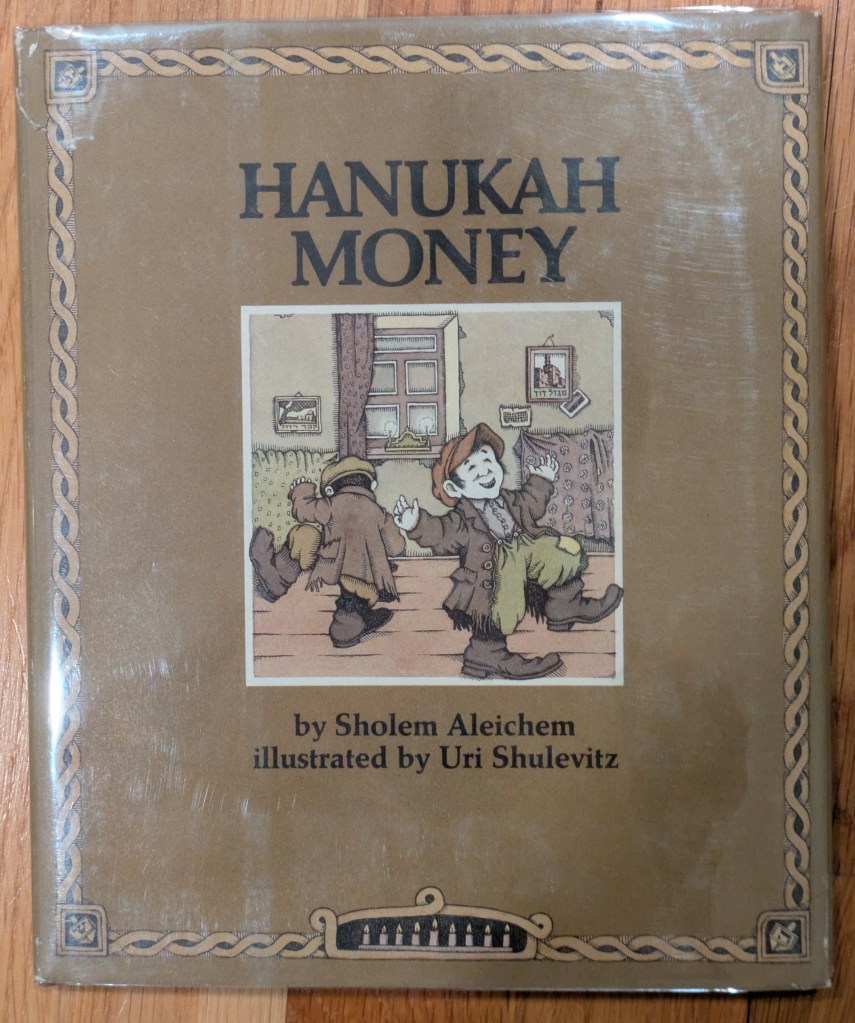
The book is Hanukah Money by Sholem Aleichem, the art by Uri Shulevitz deftly leaping to catch the meaning of each word, draw it forth in sepia tones, and highlight how, in this story, this book, this scene from the Old Country is gone. It was once, perhaps, a reality, though the deliberately folktale like character of the book casts it into fiction. Once, people lived in shtetls; it was a product of injustice but it was a way of life for many Jews. That ended. It was another injustice. And, after the Shoah, through which Uri Shulevitz lived, well. The people were murdered, the way of life they led was gone.
The folktale quality, the fiction, the funniness, all carries a terrific pathos, a massive discomfort which bothered me terribly as a child, because I sensed something was wrong. If you’d asked me, I probably would have said that it wasn’t pretty.

No, it’s not pretty. Because it’s beautiful. It’s full of odd and funny uglinesses, and it’s art of the very highest register.
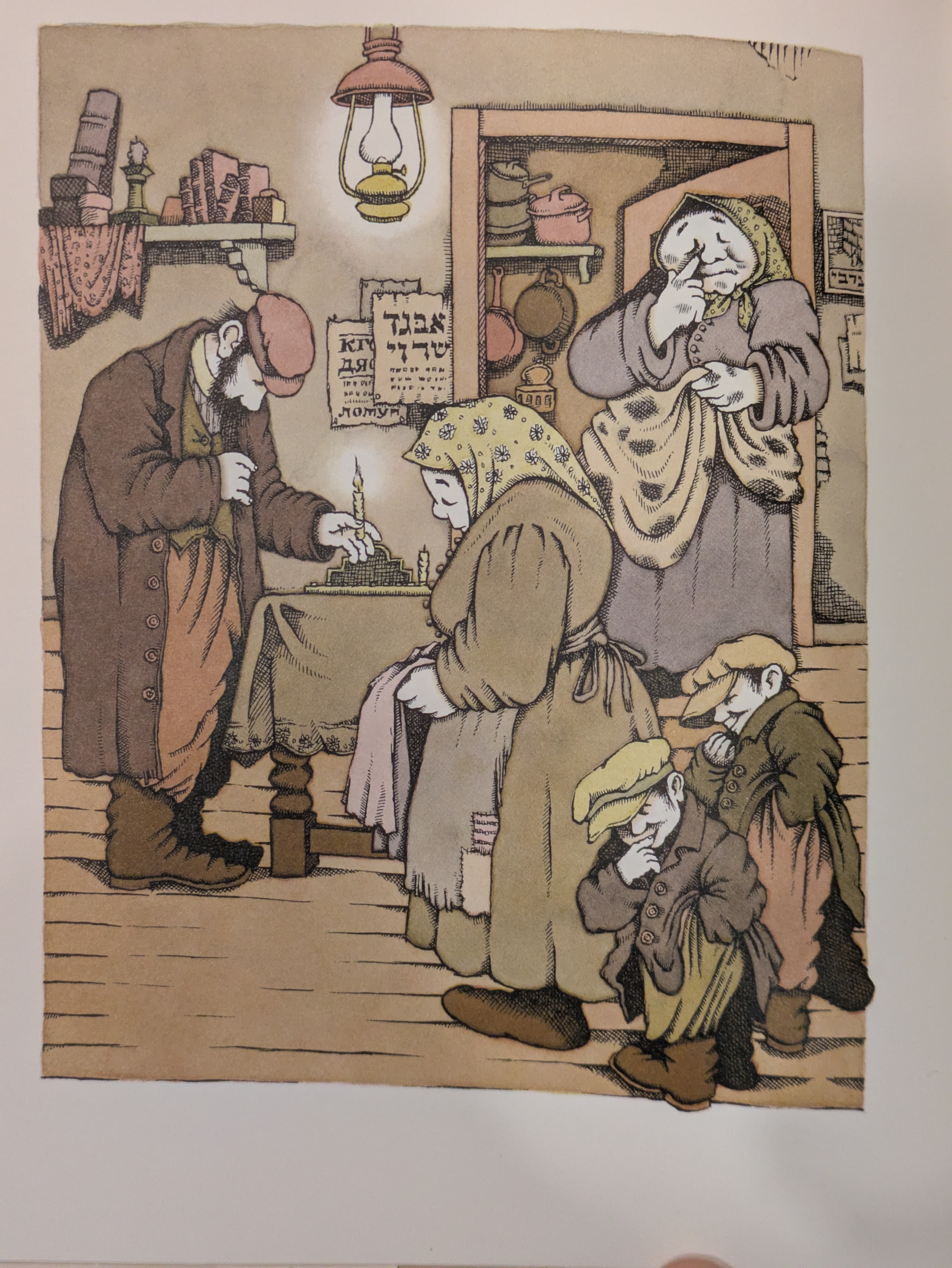
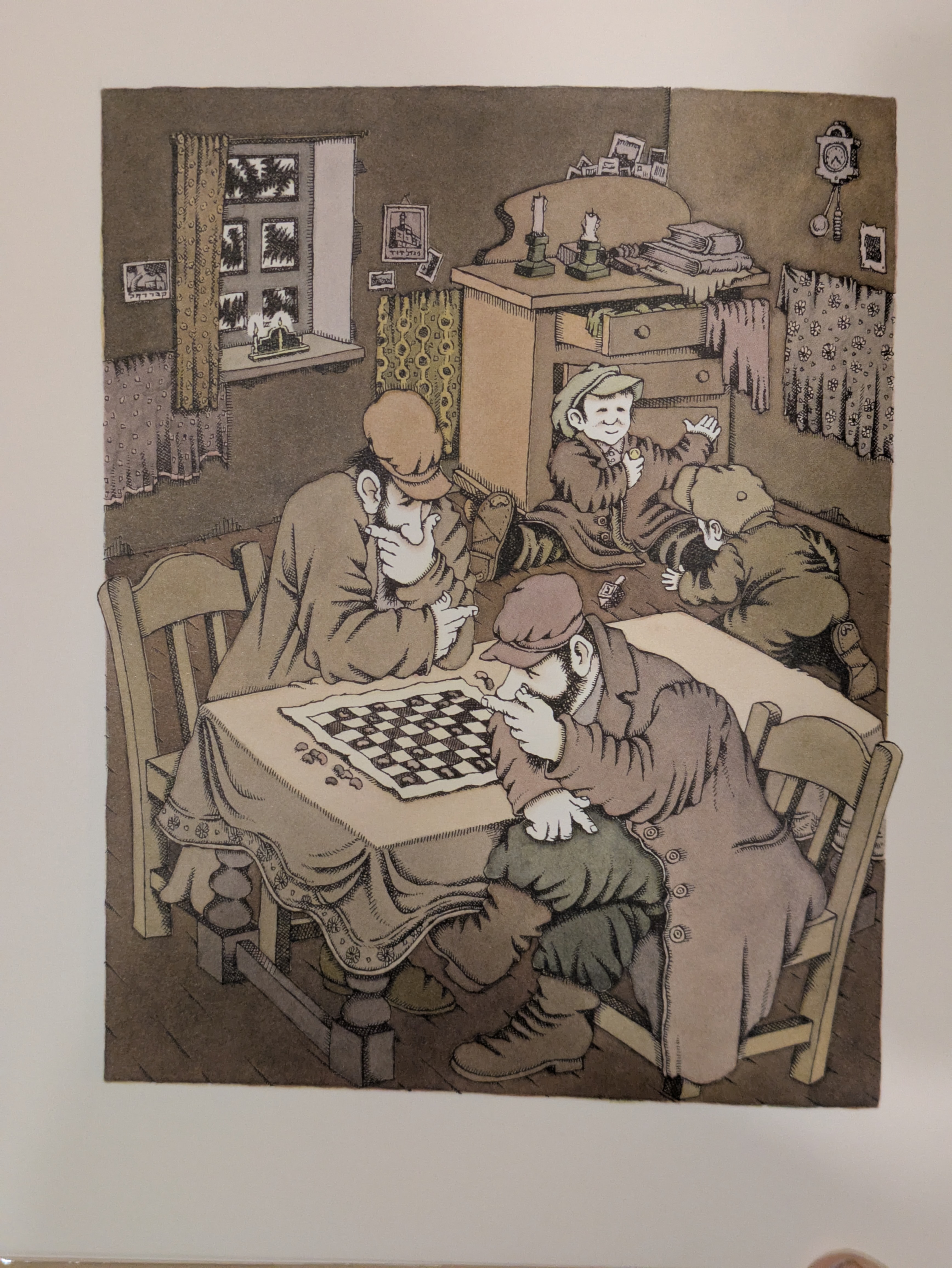
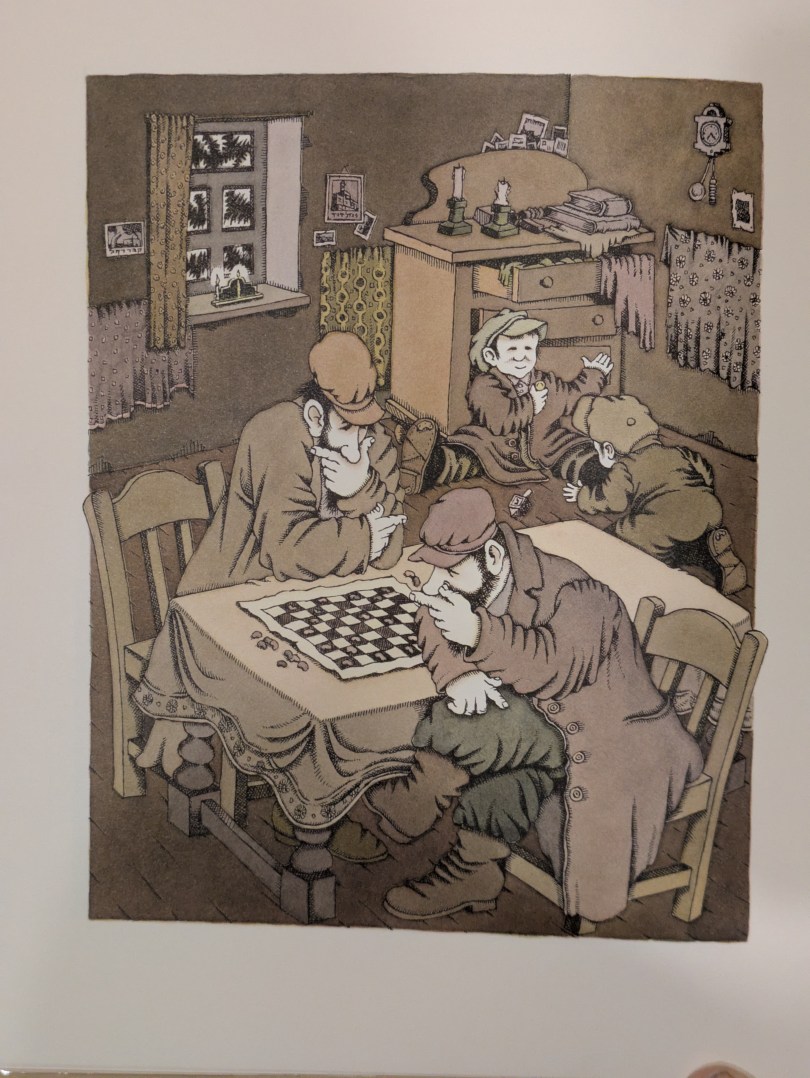
What a bizarre combination. How astonishingly strange, a beautiful book of awkwardly unattractive bits and bobs and people! But what comes through in this pathos, this sadness, is love and celebration. Uri Shulevitz is honouring these beautifully odd people who led such hard lives in such an unjust world which gave them so few chances. He takes that folkloric quality and with tender respect renders each person with careful humour, a delicate fineness of lines and shading. The children are handled with particular fondness, but the funny little scene when Aunt Pessl calls to deaf Uncle Moishe-Aaron captures so much in one page that I feel a little smile creep over me every time I look at it. How often has that wife yelled to that husband, barely a foot away? How often has he grumbled? How often have those kids looked on, thinking nothing of it, really, just waiting for some Hanukah money?

What comes through is a very deep sense of honesty, of artistic truth and integrity, and of dedication to giving life to this bygone world, cruelly robbed of life. When you look at Uncle Moishe-Aaron, he is wearing ripped and torn clothes, carefully patched, in a ripped and torn world, carefully restored in these pages.

The world, now, feels ripped and torn to me. There’s a gigantic, gaping hole where Uri Shulevitz was. His work is monumental, but when you look at it, so much of it feels like these moments in Hanukah Money: small moments, odd people, treated with gentleness and respect. The Fool of the World is a strange boy, and his parents barely notice his going. But Uri Shulevitz dismisses the brilliant older brothers as they walk right out of the fairy tale, and, per fairy tale tradition, we walk with the last and the least. But something struck me, in reading it to my Spriggan: the music. The Fool of the World is always singing. We sing with the Fool of the World, and the art sings, too.

The world is ripped and torn. We Fools of the World can be odd and imperfect, awkward and ill-fitting. But Uri Shulevitz taught us to honour even the uglies, even our last and least with deftness and care, with attention to detail, with loving lines and respect for each patch on a worn out coat. We may be hurt, but we should find our companions and sing together. Put a map on the wall and dream of difference, of possibility, and of each other, with singing colours and harmonized oddities.

I don’t think I’ll ever stop thinking that the loss of Uri Shulevitz is a gap in the world. One more gap in a list that feels far, far too long by now: Lore Segal, Tomie De Paola, Eric Carle, Kazuo Iwamura, Ashley Bryan, Lois Ehlert, Jerry Pinkney… I am struck by how many names come to me so very quickly, each a very keen pain. But I am grateful for what Uri Shulevitz gave us through his life and his years of dedicated work: beautiful art, respect for those who were diminished, and honest love for even the last and the least. Let us not forget that he chose to create his exquisite work for children. Let’s carry on doing just that: giving only the best and the most brilliant art to our children.
Kazuo Iwamura

I think most of those who read my words here are Canadian or American, and I wonder… Have you heard of Kazuo Iwamura? The two countries where I met his books were not on this continent; I met him in France and in Israel. I fell in love with the kind of precipitousness one associates with romantic comedies, but to me evokes the openheartedness of children. He caught me right in the raw heart of my childhood delight in watching squirrels and mice. Beatrix Potter, Jill Barklem, Leo Lionni all understand this, and so did Kazuo Iwamura.

So when I saw an announcement through Librairie nordest, one of my favourite book shops in Paris, that Kazuo Iwamura had died on December 19, 2024, I cried, and then I looked around and was astonished to see that few people on my continent seemed to have noticed. And I thought for a second and realized that I’d gathered his books in French for my French storytime (I read to little kids at my local public library once a month and it is my absolute favourite time I spend do anything for kids who aren’t mine), but getting them in English had always been a little harder. (Many of his books, but not all, have been produced in English by NorthSouth, distributed by Simon and Schuster.)

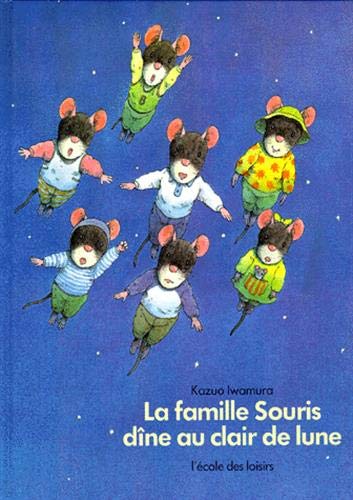
So I feel like it rests with me to share a bit about the wonders of his books and try to encourage you to find a few, in French or English or Japanese or any language at all, really, to read to yourself or with a child. I like the English and French translations, both, though the French voice comes through with a particular pep and vigour, so I think he must have had a particularly excellent translator there. Truly, though, the engagement of the art, which is of such a breathtakingly beautiful quality, is so high, that the words serve as a guide to the art, like one of the rope ladders or pulleys that his little mice use to climb up to the treetops for a lunar picnic one night of the year. You can reach that lovely meal in the moonlight regardless, but it’s very nice to have the words to guide you there.

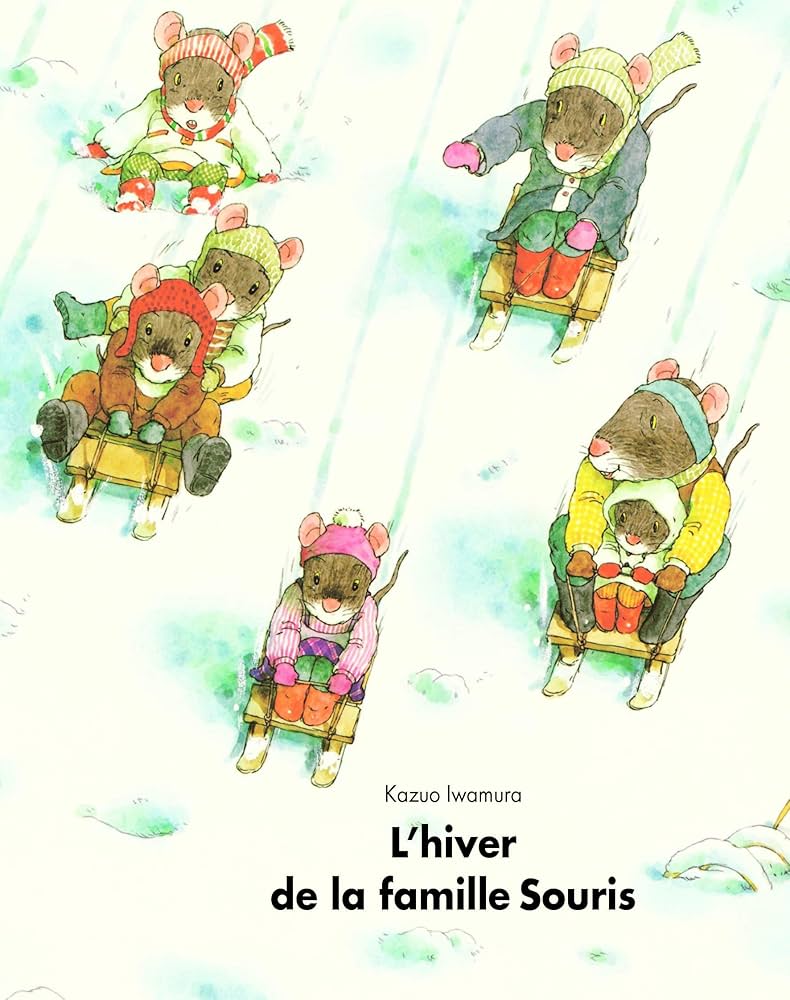
What is a Kazuo Iwamura book like? One of the ones I’ve read most often, both to the children at the library and to my own little Spriggan at home (he doesn’t know French but loves being read to in French), is L’Hiver de la famille souris (The Mouse Family in Winter). Has it been translated into English, too? I actually haven’t checked. I wonder if a British publisher may have done these. But the first view of the mouse family is not outside, and not in the snow. They’re cozy at home, making things. Some are cooking, others are woodworking, the little ones are playing or helping in those ways that small children play or help in the “getting under everyone else’s feet” method. It’s delightfully real. And after everyone enjoys a snack and a game they go outside. They play in the snow, the adults as well as the children. Then they go home.

That is it.

The environment, the atmosphere, the full family involvement and engagement, are all exquisite. There’s a sense of tranquility and a sense of mischief. There’s a bit of bickering. There are mishaps. They’re all in the context of generally good-natured interactions, and they aren’t reported immersively. That is: you certainly get dialogue, but the effect is at a distance, like watching a slowly developing fresco on a long passageway, as the mice go along from moment to moment and you’re walking along the mural, watching their day unfold before your eyes. The immersiveness isn’t in the characters but in the entire scenario, the landscape and the world.

This is how his forest resembles Jill Barklem’s Brambly Hedge or the Lake District in Beatrix Potter’s stories.

I find enormous comfort and huge joy in flipping through his scenes, and thinking that there was a man in this world who threw himself into art this beautiful and of such a high level for the sake of children. He built a museum for children and picture book art, too, the Kazuo Iwamura Picture Book Museum of the Hill in Nasu-Karasuyama. I can only imagine its beauty, because anyone who spent his time putting such tender care into the art he made for children must have created a museum with equivalent dedication and attention. I want to leave you with a quote from a recent interview he had with NorthSouth Books: “I’m convinced that it’s really essential for children not only to have top class picture books but also to become familiar with the real world of nature.” Thank you, Kazuo Iwamura, for giving children the top of the top class in picture books, and ones that are a window onto nature, and surely make them wish to go out and see it and feel it with all their senses. I will visit you in your books.

Board Books: Jon Klassen and more

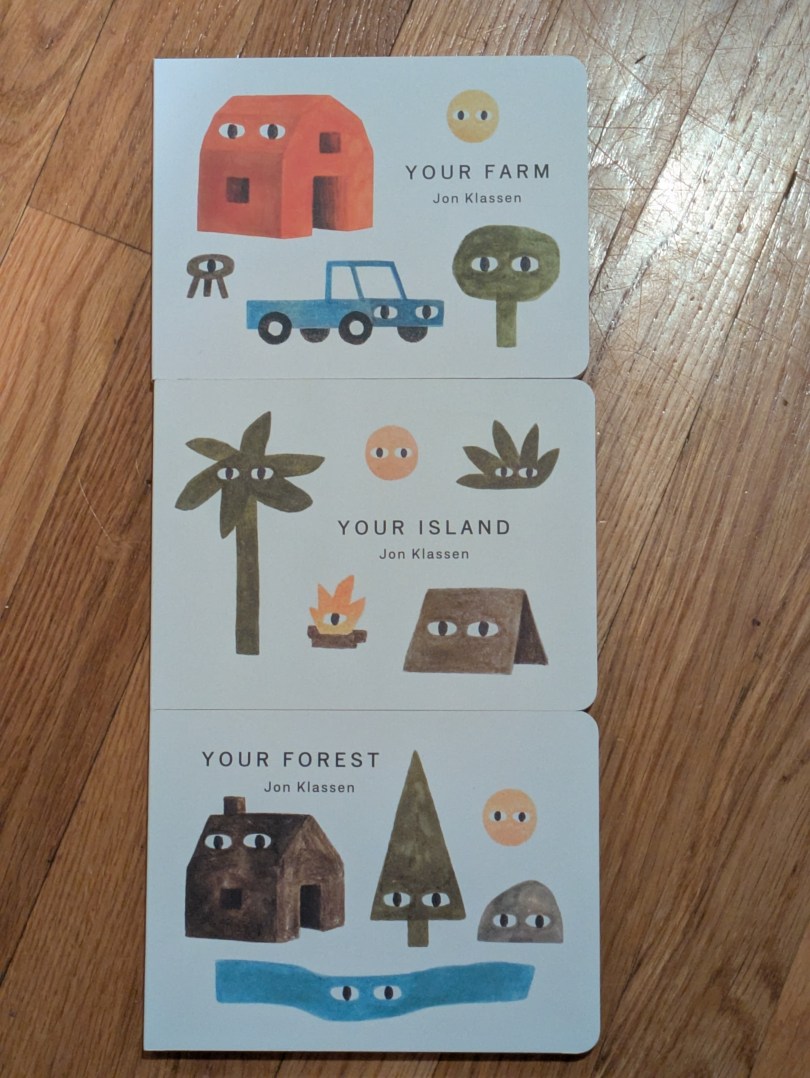
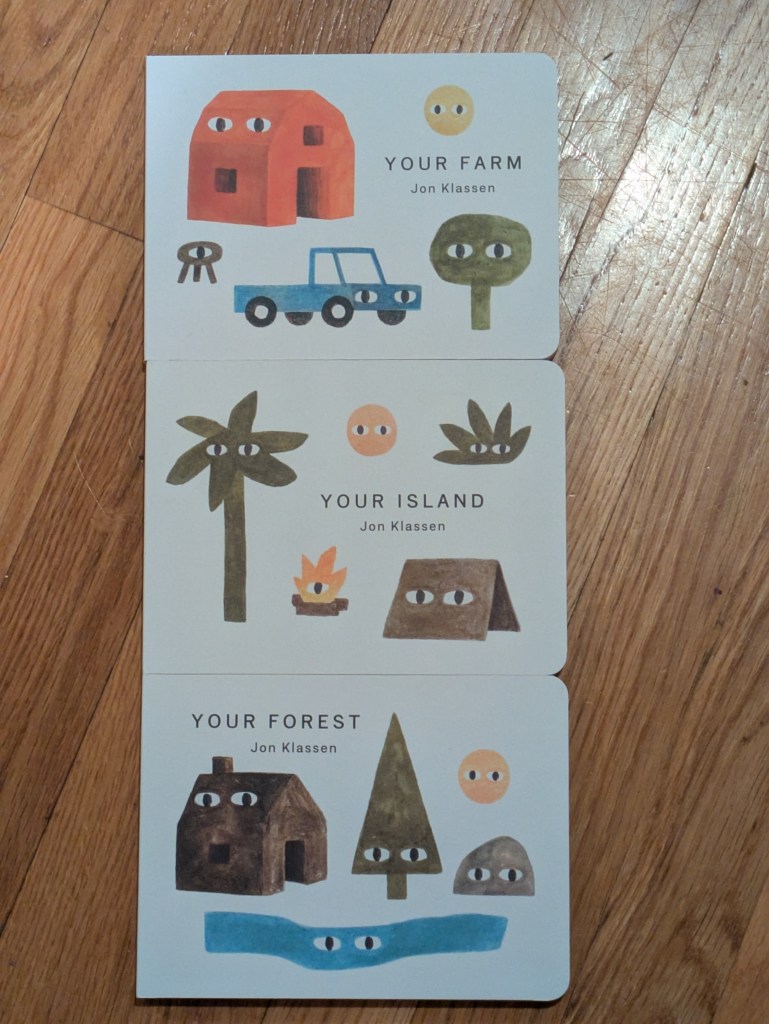
I was about to begin this post “I think that you’d have to be living under a rock not to have heard of Jon Klassen’s new board book series,” and then I paused. I reflected. I think that sentence says everything you need to know about me. If I’ve learned one thing in my years on this planet, it’s that, inexplicably, people don’t pay attention to children, and to things pertaining to children. I find this infuriating. So, while I was thinking, “Oh, everyone out there knows that Jon Klassen has made a board book series, I’m sure,” it turns out that, as a matter of fact, that assumption was incorrect. I am here to correct this problem. Please meet: Your Farm, Your Island, and Your Forest. The very titles, to me, gently but very definitively orient the books and the read-aloud scenario around the child.

I do not normally think of Jon Klassen and “inexorable” in the same sentence (I have not met him, alas, but he seems gentle and lovely), but he inexorably leads the reader to put the child first, and allows the child to play in these worlds as the prime mover of their own space. It seems (based on, I want to say, if I remember correctly, some Instagram posts on the Candlewick account, but you’ll have to dig it up yourself) that he was inspired in making these by felt books where you could arrange shapes to create scenes and stories. Not only did he have these growing up, but his mother has these sets (designed by him, made by her, I believe) for sale, because an insanely talented creator like that clearly gets his skills from somewhere! Jon Klassen’s mother seems amazing, I’m just saying.

You can easily imagine, looking at those simple, cleanly designed shapes, moved around and organized neatly on the page (each shape is introduced on the right side of each spread, then tidily placed on the left), a child picking up a tree or a rock and placing it somewhere. As an adult, you beam inside thinking how nicely behaved that child is. Then, reflecting for a minute, you probably acknowledge that at the end of the game it’s all going to get thrown in the air and the pieces will be scattered. A cat might chew on one of the felt shapes. But this? This is a board book. It stays put. It is calm, it is organized. And the gentle amusement, the chuckles we get from those shifting eyes, all come to a close with the beautiful rising moon, making these ideal sleepy-time books.

The loveliness of the atmosphere calls to mind Taro Gomi’s gorgeously balanced, occasionally mischievous board books. One of my favourites is Little Chicks in which the chicks run and move and– whoops, there’s someone to avoid!– until they’re safely all the way home. There’s a quietness, an atmosphere that rounds out the “start, middle, end” structure rather than relying on an overly engineered plot or a scene squashed helter-skelter into cardboard pages. Well, that comparison is clearly not by happenstance because in the NYT piece I linked above, but am linking to again because it’s better worth reading than this but not as well worth reading as the board books themselves, Jon Klassen cites two board book influences: Taro Gomi and Sandra Boynton. (Sandra Boynton: if you’re reading this, send me a note, because I have so many questions for you about The Going to Bed Book, a work of literary genius.)

If you’re a board book connoisseur, you will instantly be intrigued because those two are very different one from the other. You will also be impressed, because they are, simply and bluntly put, the best creators at this format.

Board books are hard. I will up and say right now that even Jon Klassen (and I love Jon Klassen and am angry he’s not yet received the Nobel Prize for Literature) did not get himself added to Sandra Boynton and Taro Gomi as “the best at this format” in my personal pantheon. He’s pretty damned close, though, because his method in this series and his approach to the format as a whole are both brilliant. He centres the child and forces the reader to accord the child the attention and agency of building a world. The feeling of reading these with a child on your lap is perfect love. Further, he gives a span to the book not by cramming a plot that’s too big and unwieldy for a board book (a common error) into the cardboard pages, but by giving each the natural arc of a day. Simple, natural. The absolute best of the trio, to my mind, is Your Forest because of the ghost. My co-reader adored that ghost and was so satisfied the ghost came out at night as promised. Every book creator should keep promises with the attention of Jon Klassen.

And why does he do that? Because Jon Klassen respects his readers, these small ones as well as the older child. I love these books, and I think he even has room to grow as a board book creator if he has a mind to. And one thing that satisfies me in my deepest heart, the soul of my soul, is that I know that if he doesn’t think he’s got another board book to share, Jon Klassen will not squeeze one out. Like that felt book above, like the places he hands to the smallest children for them, like the bear seeking his hat– Jon Klassen takes the quality of what he produces seriously.

He admires the witchery of Sandra Boynton; I admire the craftsmanship of Jon Klassen. And both of those creators admire and attend to the genuine readership of their non-reader audiences. They respect babies, toddlers, and children. I think we all should.

A World Tour of Beloved Book Shops, Part I

This is getting out of hand. Last summer, I went to book shops of New Brunswick, Nova Scotia, and Newfoundland. I swore to myself I would write them up when I was back. Except, of course, what happened is that I sprawled in an exhausted pile, panicked because my parents were coming in five minutes, and then started a school year– and never wrote. This year, we went to the UK, and I got approximately… well. I got every single Mog and Alfie book I saw that I didn’t already own, plus a few others.

The ultimate situation is that I have a whole lot of book shops I want to talk about, and, even beyond that, I want to pay tribute to what book shops can do, what purpose they serve.

For the record– because I know I have a reputation, I really need to give a disclaimer– I’ve actually been to book shops in my life that disappointed me. I’ve even been to a children’s book shop that felt to me like it lacked direction and curatorship standards. It was pretty, but far too big, had an adult book section (presumably so that adults could see themselves represented because it’s hard to feel marginalized as an adult in a kid’s space, I guess?), and the shelf talkers from the staff lacked substance and seriousness. I don’t recommend book shops that don’t meet my standards any more than I recommend books that don’t meet my standards. These, below, are all book shops I love.

What is a good book shop? What makes visiting a book shop special? And why, if you’ve been to a book shop yesterday, might you still be interested in going to another one today? And why not just go to the library?

These are all questions I’ve been asked– the latter questions usually less politely than that, usually by my father, back when I lived at home. Dad, for the record, the foundations of my house are fine and I give books away almost constantly. So there.

So let’s talk about good book shops.

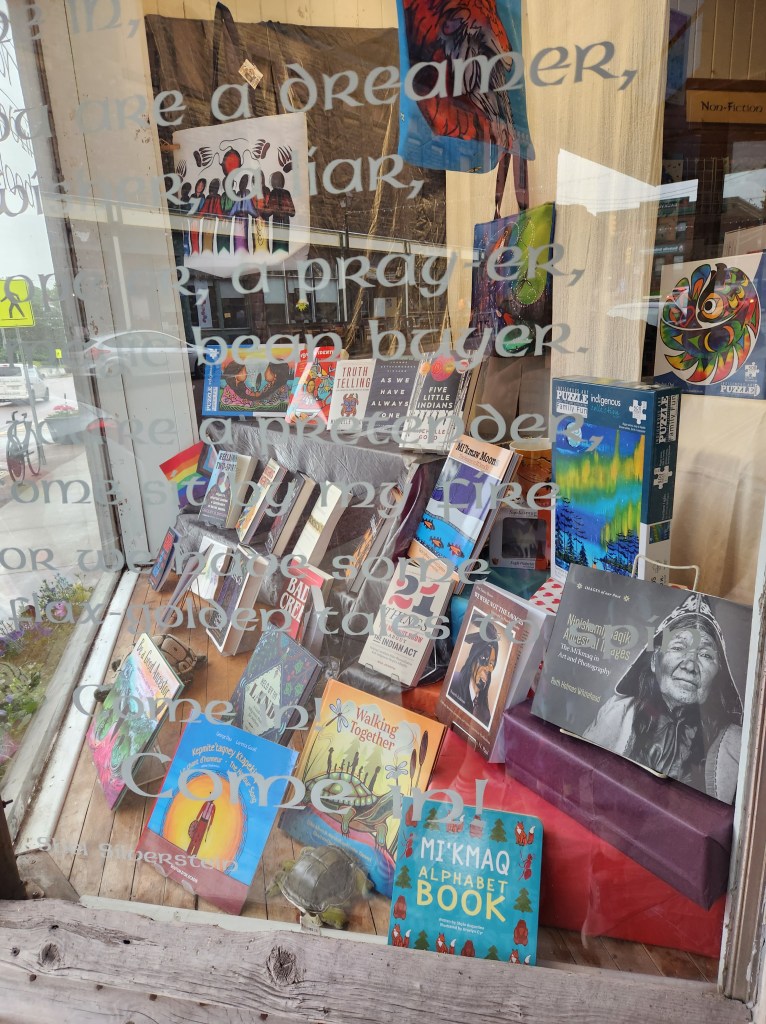
My first book shop growing up was Tidewater Books in Sackville, New Brunswick, a store that’s now moved from its original location and, through various twists and turns in shops in the town, now has a large gift section, but it’s still owned by Ellen Pickle and it’s still going strong. I remember my first solo purchase there: a pen with purple ink I thought was just the most sophisticated thing I’d ever seen. And I remember the last book I bought there before we moved to Toronto– my own paperback copy of Pride and Prejudice. Nostalgia can be a positive or a negative. I miss the old storefront, but I’m so glad the shop is still around, and that it still features local books prominently. The space is friendly, Ellen Pickle has good taste which informs the selections, and the store is engaged with the long story of the Maritimes. When I was there, the window display was filled with local Indigenous stories for National Indigenous Peoples Day. I have a feeling that, even if I weren’t so emotionally attached to the very name of “Tidewater Books,” I would still find a book to love on any visit.

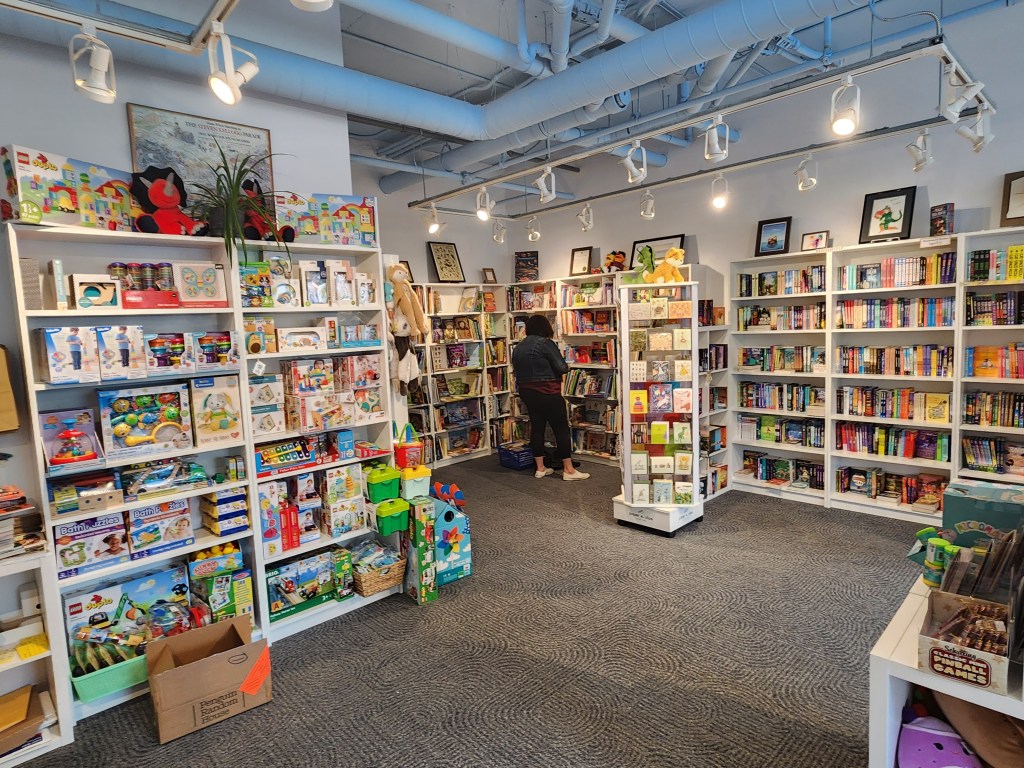
The two other big revelations to me on that trip were Woozles and Running the Goat. I was already in something of a long-distance relationship with both places. Woozles was known to me, of course, as the oldest children’s bookshop in Canada, but, more to the point, as the quiet label on the website says, it’s “a place for and about children.” Perfect. If children aren’t the point, it’s not at Woozles. As it should be. The place is open and cheery with a ton of wonderful art from local children’s book artists, some of the greatest, on the walls– the problem with writing so long after the fact is that I can’t remember them all! Lauren Soloy, Jon Klassen, I think Matthew Forsythe and– I can’t recall, I remember spinning around going “and LOOK! LOOOOOK!” a lot. My Spriggan, who was smaller then, fell passionately in love with the Very Giant Clifford plushie and the train table. My husband may possibly have stared at the counter at checkout and quietly asked if they had a box we could carry the books in. It was a bit of a situation. The local authors section– think of signed books from Lauren Soloy (with her charming doodles) and Sydney Smith who does the most beautiful miniature art in each volume he touches– more or less went home with me, but I’m sure they’ve restocked by now. The toy section is thoughtful and in no way overwhelms the books. I have mixed feelings about toys in book shops, but this section feels like it belongs there and enhances the “intelligently kid-oriented” atmosphere rather than simply caving to the inevitable drive towards merch rather than books. Above all: the booksellers! They are smart. They had a sense of what books my kids needed in about five seconds flat and, after quickly assessing the situation, let us do our browsing as well as offering thoughtful suggestions. They did not overwhelm us. I miss and will continue to miss my own beloved Children’s Book Shop forever, and this was a kind of stinging balm: a reminder of everything I loved, while also making me grateful that other places of equal quality, equally focused on providing children with good bookish spots, are still around. “What makes a good book shop?” Those smart, thoughtful booksellers go a long way towards answering that question, to my mind.

I put far too much thought into whether to put Running the Goat before or after Woozles. After all, we went to Woozles after Running the Goat. But there’s a pleasing orderliness to the provincial sequence of New Brunswick, Nova Scotia, then Newfoundland. And, finally, I wanted to go from general book shop to children’s book shop to publisher with a shop.

Because if you’re looking for a distinctive shop, a shop that embodies everything simply impossible to get or experience through an online monstrosity that named itself after a part of the world it’s massively contributing to destroying, for example, I can’t think of anywhere more representative of the best in books than Running the Goat. I’ve written about the books they publish before– I’ll link to Urchin by Kate Story, but if you search “Running the Goat” in my archives you’ll also find Andy Jones’s Jack books, for example, and many other fine stories. Marnie at Running the Goat has a very quick eye for what’s distinctive, what’s clever, and, in particular, for the strand in a story that keeps you sitting waiting with the tiniest tension for the end… and which, in that twist that feels so very much like a “told” rather than “written” story, gets resolved with an audible grin that leaves the reader (or, hopefully, audience) in a chuckle. The newest story that does that for me? Dan Yashinsky’s The Golden Apples with suitably twisted art by Ekaterina Khlebnikova is the narrative you may find yourself retelling even when the book isn’t to hand, and yet you just know that Dan Yashinsky would be thrilled to feel he’d taught you a story to tell.

And when you visit the shop, you will find yourself feeling that folkloric world is simply the world you now inhabit. Grey roads, greenery, odd tufts of plants and flowers and shrubs and lots of trees. Why wouldn’t a fox come along for a chat? May as well. And after travelling a while down the road, houses thicken, and maybe there’ll be someone who can tell you how to get East of the Sun and West of the Moon if need be, why not? May as well. And then over that hill that might be a cliff you see the fog rolling off the water towards you. And here you are at Tors Cove (in the UK, I think especially the west of England, coming from the Welsh, I think– tor is a type of promontory or rocky height or cliff, and I’ve often wondered if Tors Cove relates to that), home to Running the Goat. By the time you’ve spotted the sign, you may be thinking that this, yes right here, this is where you’ll find a Wise Woman, possibly with a feline familiar, who can direct your quest. Why not? May as well. You would be correct. This is where Marnie is, and she’s wise and has a cat named Millie and she will show you how her amazing printing presses work and can she give you advice on where to go in the area? That she can. Can she suggest a book to enliven your waking hours and animate your dreams with puffins and laughter? She can do that, too. And can she chat with you and your kids and then send you off armed for adventure along the foggy shores? Yes.

If you’re seeking a book, I’m sure you can get one from Marnie. But the real, true reason to go to Running the Goat is to find your steps wandering towards an adventure you didn’t even know you were having. Running the Goat is a Newfoundland fairy tale.

Deep breaths– I think I’m going to call this Part I and stop right here. Final note: I’ve been writing this off and on for months. If you’re in the USA reading this? I’m going to very grumpily recommend that you make a purchase or three from any of the places abovementioned right now. ’nuff said on that point, from your extremely put out and deeply book-loving writer and reviewer with dual citizenship.