
I’ve talked about Lauren Soloy rather a lot. If you listened to me right here, you already know about Tove and the Island with No Address because you pre-ordered it. And if you did, you have the book in hand, and you probably know what I’m thinking and feeling right now, which is, “What a beautiful, what a pleasing, book. What a satisfying, viscerally fulfilling, and sensory book. How on earth am I supposed to convey this to anyone?”
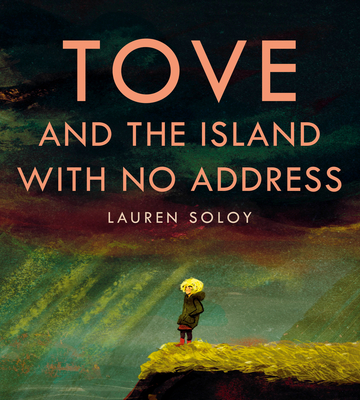
Let’s start with the probably category this book would be labelled as. It’s probably considered a “picture book biography.” Which is an iffy category, at best. Properly, it shouldn’t be. There are two kinds of books, of any books: Ones that are good (or achieve their potential) and ones that are not so good (or don’t achieve their potential). But there are certain types I approach with caution. I don’t mean ones like, say, romance novels, which can surely be fun and I’ve enjoyed thoroughly on occasion but it’s just not my thing for regular reading. Rather, I feel extra cautious around categories of books that, on a regular basis, I find fail to achieve their potential. A few groups I approach with extreme caution are ones listed for “social-emotional learning” and, yes, “picture book biographies.”
The problem is this. A good book needs a good narrative of some kind. That doesn’t mean it necessarily needs a perfect story arc. Freight Train, Circle Under Berry, and Le Chandail de hockey (The Hockey Sweater in English) are all books that have tricky to identify or unconventional plots. But there has to be some kind of inner cohesion to pull the book together in a tight, unified package, particularly if you want it to exceed those bounds with the explosiveness of a book that opens a portal of experience to whole new worlds beyond the space of the exquisitely smally parcel of words you set down. For example. Not that I have high standards.
You will not get boundary-pushing largeness without surgical precision in the conception and execution. It doesn’t happen.*
The problem picture book biographies face is that the trajectory the authors and illustrators often give themselves is dual: 1) the span of the subject’s life, and 2) the importance of their career. This doubleness isn’t insurmountable; in fact, it’s the same doubleness that adult biographers face and they manage it all the time. The only trouble is that it’s usually boring, likewise a trouble adult biographers face. But why would you want a shrunk down version of the life of Vladimir Putin in 32 heavily illustrated pages? To use a more appealing example, since Lauren Soloy helpfully handled these, why would you want that for Charles Darwin or Emily Carr, or Tove Jansson? They all did a lot and those details are better served in larger form. That’s not the job of a picture book, though.
If you want to give a four-year-old a lesson about Charles Darwin or Emily Carr, take the kid to the zoo or an art gallery and talk to them, listen to them, ask them questions, and listen to their answers. (For a beautiful example of having a serious and thoughtful conversation with your kid in an exquisitely rendered story which is enjoyable to read with a child, I commend you to Etty Darwin and the Four Pebble Problem, by Lauren Soloy.) If you want to read them a story, read them a story. None of Lauren’s books abovementioned will teach your child the entire history of the people in question. But they do encapsulate something particularly, keenly beautiful about them which will resonate with any reader. It will spark a feeling, a memory of an experience, or a vivid urge to experience.
“How many greens do you see?” I ask the Spriggan when we read When Emily Was Small. We count and finally he laughs and holds up his hands to the sky: “SO MANY! It’s twenty green!” (Twenty means “an unthinkably large quantity.”)
When we read Tove, I ask him what he thinks of the little girls, and so far I get different answers all the time, depending on his mood. Sometimes they’re very naughty and he wouldn’t want to play with them because they make him shy. Sometimes he thinks they’re pretty exciting. He always wants to explore the island, though, because of the myriad critters Tove doesn’t stop to see but are all around her on her excursion.
If you know anything at all about Tove Jansson and her writing, then you know that this reaction feels right for her. That this is an avenue she would be pretty peachy pleased about, and that if a kid felt like that when reading a story, she’d be pleased exactly as it was. And, therefore, I have no hesitation in thinking that she’d be thrilled that this book came from her and her story, out into the world as a Tove-adjacent book. It introduces the idea of Tove Jansson-style love of the wide wildness of an island with no name, the limits of the island only bursting the bounds of the possible, just like a tiny parcel of exquisite text can explode the boundaries of the imagination. Tove Jansson would love to know this book thought of her, and that kids reading this book today will, surely, hold one of her books tightly in hand while running across and island with no name tomorrow.
* This footnote is a holding place for the inevitable exception I think of later.**
**No, I still can’t think of one. I truly think that precision is simply necessary, I suppose. We’ll see if an exception crops up with time.
 The Children's Bookroom
Fun read. I’m anxiously awaiting the picture-book bio of Theophile Gautier. Or as the late Jacques Suffel would have said (had he ever asked me, “Gann, c’est quoi un picture book?), TG et les danseuses.
LikeLike
[…] if this weren’t already enough, I have already reviewed Tove and the Island with No Address, Emma Full of Wonders, and Round and Round the Year We Go and those links will bring you right back […]
LikeLike