
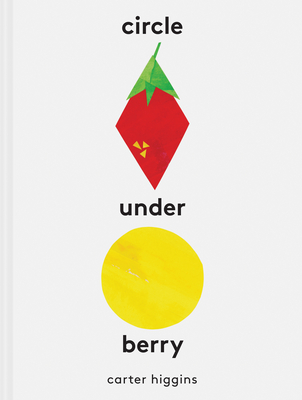
I’m always worried that people won’t believe me when I say, over and over again, that if I don’t review a book, even if I’m sent a review copy, it doesn’t mean I didn’t like it. It could mean any number of things (apart from, well, I didn’t like it, of course): I simply didn’t get a chance, I loved it but was at a loss for how to review it properly because it was so good, I liked it very much but didn’t really think I had anything to say beyond that… And in many, many cases “I really wanted to but just never got to it” is what happened, and that’s definitely what happened with Carter Higgins’s truly wonderful book Circle Under Berry. Which is why I’m so, so, so glad I got a second go with her new book, Some of These Are Snails, which is equally wonderful but in a different kind of way, so I can talk about BOTH. (You can actually tell I loved Circle Under Berry because I snuck it into another post, here, even though I never gave it a full review.)

Both of these are pretty much perfect books, and they’re definitely pretty books. My Spriggan has been a devoted fan of Circle Under Berry for over a year now, and when I recently brought home Some of These Are Snails, the look on his face was astonishing: I could see him processing that this wasn’t exactly Circle Under Berry but it looked similar and the dawning realization that there was more of the thing he loves was truly like seeing light slowly diffusing across his face. The practical impact was this: for the next three days he would hand me one of them, I’d start reading, and after a page he’d say, “no no no,” and run to get the other, and after two pages he’d realize that if I was reading this one he wasn’t hearing that one and… He has now settled down and the only issue is that I have to read them both, one after the other.
What is the ultimate point from the Spriggan’s perspective? These are two excellent works of creative literature and while they can each work as stand alone books, you want them both because they’re simply that good.
But what are they? Aren’t they just simple shape or colour books? I mean, they aren’t narrative, are they? Oh, dear readers, do not be deceived by the appearance of simplicity. Simplicity, you should know, at its most perfect essence, is elegance, and the thing that struck me about Circle Under Berry when I first read it to my Spriggan was its compact and elegant structure.
We start very small and simple with one pattern: the direction of shapes relative to each other, a circle under a berry on one page and the berry over a square on the next. Gradually, we branch out — colours and shapes are related to each other in this book! They swirl and loop as we realize, the adult reader’s mind admiring exactly the same revelations as the child’s, that the base of each more complex image (the berry or the lion) is a simple coloured shape: the scarlet diamond or the yellow circle. And then we get direct questions– is this oval? Is it orange? And the dynamic slowly grows in intensity until the éclat of a full, yet simply laid out, spread of shapes and pictures to explore, and a quiet conclusion looping back to the beginning with a fresh, and so satisfying, perspective.
It is, in other words, more complete a narrative than many novels, and it pulls in readers at least as completely. The page asking the reader whether the picture is orange, is it oval? I will never forget when my enthralled young Spriggan bounced on my lap and declared, “Sun! Sun!” I hadn’t thought that the orange oval might look like the sun,, and the book doesn’t offer it as an explicit option, but he was certainly right that it could have been! Why not? These days, when he sees the green square as a frog, he asks where Toad is? (Already a fan of Frog and Toad before he can even sit through more than the simplest of the stories, such a perfect child!) And he’s deeply concerned that the grasshopper (emerald rectangle) might get lost, so we have to check that it’s back in the book each time.
So, you might wonder, what’s left for Some of These Are Snails? I admit that I was a tiny bit concerned about that– well no. Honestly, I have perfect confidence in Carter Higgins so I wasn’t concerned at all; I thought, “If I didn’t have such confidence in Carter Higgins, I’d wonder if there were truly more to do with this concept.” My confidence remains unshaken, and I remain smug in my confidence, because she totally pulled this off.
What she brought over from Circle Under Berry wasn’t just the brilliant art in shapes and colours. (Did I mention that if you look closely, each berry and guppy and hummingbird is individually made? You can see the small variations of lovingly crafted art for each small image– I found it so exquisite and captivating that I’ve developed a homeschool project based on it with shapes cut from my pretty art papers, just to see what the Changeling will do with the materials. To return…) The true genius is that Carter Higgins maintains the same thrifty structure: a simple opening, gradually unfolding into a broadening perspective, the éclat of thrilling spreads to explore and discuss with those new perspectives, and the warm satisfaction of wrapping up with new eyes on the compact and familiar opening. It’s a quiet, unpretentious genius.
The new perspectives in Some of These Are Snails amount to, in reality, the toddler and preschool equivalent of discussion questions. “Let’s find all the yellow ones on this page! Can you count them? Which are the big circles? Hmm, I wonder if we can find all the small squares… Ooooh can we find all the pictures of animals with eyes? Which ladybug had the most spots?” Now, the real and true and brilliant genius in the text is that Carter Higgins doesn’t give you the questions. She opens the door quietly, and you get small prompts in that direction, a suggestion to sort by colour or size, perhaps, but you aren’t going to do all the exploring to be done on every single reading. That wouldn’t be fun and would be absurd, so she doesn’t tell you to do it because that would kill the book and the fun experience. She simply makes it available.
As for me… The clue to my delight in reading Some of These Are Snails is in the title. This book is deeply grammatical and syntactical. The most clever two page match to my mind is when “all the ladybugs have spots” and “each butterfly has none.” The Spriggan giggles over how funny that is, because the juxtaposition is so delightfully whimsical, while I giggle over the playfulness of the structure that lands that unexpected “none” as the final word. It’s delicious to read out loud with a child on your lap.
If I’m being honest, I want every author of any kind of work to read these for structure and method. Carter Higgins shows how little you have to put on the page to create a reading experience which draws you in over and over and over again, immersing you as you find new elements and new ideas. And I’m not just talking about the child audience; I realized only tonight that my Spriggan and I were discussing the tiny elephants through our laughter and I wondered aloud if they were small pictures of elephants or if elephants in this book were described as small relative to whales? What’s, he agreed, arms spread wide are “very, very BIG.” The cleverness of getting the folks reading together, at either end of a big age gap, to muse over the same kind of question from different angles, frequently with the child surprising the adult with a startlingly new idea, is breathtaking– and so simply elegant, so elegantly simple.
My Spriggan and I wholeheartedly recommend these books– and, we promise, you want them both. After all, if one gets stuck behind a couch cushion and you can’t find it for a day, you REALLY need the other. A day can’t go by without reading at least one of these, and that’s the simple truth.
 The Children's Bookroom
A delightful review. I don’t know these books, and I see that I must get acquainted with them.
LikeLike
[…] and lilting– perfect line flowing after perfect line with each page turn. I wondered how Some of These Are Snails would follow that act, and it somehow did, climbing in terms of what the cognitively developing […]
LikeLike